
Peter Contos
Murderer Russell Ellwood
Murderer · USA · 1991
Russell Ellwood was a former taxi driver. Authorities suspected him of killing…
20 victims
Russell Ellwood
Murderer · USA · 1991
Russell Ellwood was a former taxi driver. Authorities suspected him of killing…
20 victims
 Robert Martines Perez
Murderer · USA · 1994
Name: Robert Martines Perez · Other name used in proceedings: Robert Martinez P…
15 victims
Robert Martines Perez
Murderer · USA · 1994
Name: Robert Martines Perez · Other name used in proceedings: Robert Martinez P…
15 victims
 Billy Frank Vickers
Murderer · USA · 1993
Billy Frank Vickers Vickers was executed by lethal injection in Texas on Januar…
14 victims
Billy Frank Vickers
Murderer · USA · 1993
Billy Frank Vickers Vickers was executed by lethal injection in Texas on Januar…
14 victims
 Kim de Gelder
Murderer · Belgium · 2009
Kim de Gelder was a Belgian aged 20 from Sinaai. He was described as a silent b…
4 victims
Kim de Gelder
Murderer · Belgium · 2009
Kim de Gelder was a Belgian aged 20 from Sinaai. He was described as a silent b…
4 victims
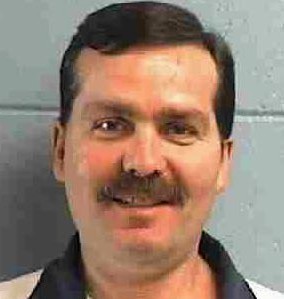 Anthony Goodin
Murderer · USA · 1987
Anthony Goodin was connected with homicide in the death of Marlin Carpenter, a…
1 victim
Anthony Goodin
Murderer · USA · 1987
Anthony Goodin was connected with homicide in the death of Marlin Carpenter, a…
1 victim
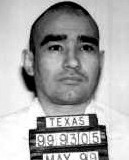 Joel Escobedo
Murderer · USA · 1998
Joel Escobedo (TDCJ Number 999305) · Date of Birth: 02/06/1962 · Race: Hispanic…
1 victim
Joel Escobedo
Murderer · USA · 1998
Joel Escobedo (TDCJ Number 999305) · Date of Birth: 02/06/1962 · Race: Hispanic…
1 victim
 Arthur Hans Halvorsen
Murderer · USA · 1985
March 31, 1985 — Arthur Hans Halvorsen drank at a bar during the afternoon; he…
2 victims
Arthur Hans Halvorsen
Murderer · USA · 1985
March 31, 1985 — Arthur Hans Halvorsen drank at a bar during the afternoon; he…
2 victims
- Gender
- male
- Country
- USA
- Location
- Lowell, Massachussetts, USA
- Date of birth
- 1965
- Age at first offence
- 32
- Characteristics
- convicted rapist, domestic violence, motive unknown, murder-suicide
- Victim profile
- H is mistress Catherine Rice, 35, and their two boys, Benjamin Rice, 4, and 2-month-old Ryan Contos
- Method of murder
- Ligature strangulation
- Date(s) of murder
- September 27, 1997
- Years active
- 1997
- Date of arrest
- —
- Status
-
Life imprisonment
Sentenced to life in prison without possibility of parole on February 5, 1999
Case overview
Peter Contos was convicted on three indictments charging murder in the first degree on a theory of deliberate premeditation. The convictions involved the deaths of Catherine Rice, and her two young children: Benjamin Rice, four years old, and Ryan Contos, two months old.
Timeline
- September 26, 1997 — Contos went to Catherine Rice’s home in Lowell after working Friday night.
- September 27, 1997 — Catherine Rice was found dead in her Lowell apartment; the body was found in a bathtub with blunt trauma wounds to her head and neck and she had been strangled to death with a ligature. Benjamin and Ryan were missing.
- Early the next morning — The bodies of Benjamin Rice and Ryan Contos were discovered stuffed in a knapsack located in a locker assigned to Contos at Otis Air Force Base on Cape Cod; both boys were strangled.
- February 6, 1999 — Catherine Rice’s parents, Cecil and Shirley Rice, presented a victim impact statement to the Middlesex, Massachusetts County Court.
- February 5, 1999 — Contos was sentenced to life in prison without possibility of parole.
People
- Peter Contos — defendant; traditional guardsman in the Air National Guard and worked security jobs.
- Catherine Rice — victim; Contos’s mistress; mother of Benjamin Rice and Ryan Contos.
- Benjamin Rice — victim; four years old.
- Ryan Contos — victim; two months old.
- Robyn Contos — Contos’s wife.
- Irene Finneral — Rice’s upstairs neighbor, landlord, and friend.
- Cecil and Shirley Rice — Rice’s parents.
- Stacy — friend of Robyn Contos who spoke outside the courtroom and identified herself as Stacy.
- Leslie Miller — Associated Press writer.
- Leslie Miller (Associated Press writer) — authored a report referenced in the case material.
- Judge Neil J. Walker — ordered Contos held without bail.
- Prosecutor Beth Merachnik — prosecutor who described police evidence and timeline.
- Middlesex County District Attorney spokesman Brian Heffron — provided information regarding autopsies.
- SPINA, J. — appellate judge writing the opinion.
- Maria I. Lopez, J. — heard pretrial motions to suppress evidence.
- Robert A. Barton, J. — tried the cases.
- Stephen Hrones — for the defendant.
- Marguerite T. Grant — Assistant District Attorney for the Commonwealth.
- Richard D. Grundy — Assistant District Attorney with her.
- Dr. Alison Fife — Commonwealth’s expert who examined Contos.
- Judge (charge conference) — ruled on voluntary manslaughter instruction based on hearsay.
- Angela I. Lopez, J. (motion judge for suppression) — referenced as a judge who heard suppression issues.
- Wayne Raymondo — ANG Master Sergeant who oversaw the military personnel involved in the search.
- Paul Worcester — ANG Lieutenant Colonel who authorized the search.
- John Stowe — ANG Sergeant who discussed information about the locker.
- Richard MacDonald — ANG Sergeant who discussed information and reported it.
- Colonel Shriver — base installation commander who provided required oral authorization to expand the search.
- James Plath — State trooper who oversaw the State police.
- Toby — Trooper Toby, a silent observer until he asked a question and participated in the inspection.
- Otis Air Force Base / Otis Air National Guard Base personnel — military personnel involved in the search and identification of locker contents.
- Marshall, C.J., Greaney, Spina, Sosman, & Cordy, JJ. — justices listed as present.
Background
Contos met Catherine Rice while working as a Sears security guard in 1992, and the relationship developed into a sexual relationship that continued, albeit intermittently, until the night of her death. Contos and Robyn became involved in the same year he met Rice; he moved in with Robyn in 1994, and they married in August 1996. During the period of the relationship, Contos bragged to at least one coworker that having a girl friend and a wife made him feel like a “king.” He did not tell anyone that he had children.
Benjamin was born in June 1993, and Ryan was born in July 1997. In 1995, at Rice’s request, Contos signed an acknowledgment of paternity of Benjamin. Although he visited Rice at the hospital after Ryan was born, he did not acknowledge paternity of Ryan. DNA tests confirmed that Contos was the father of both boys.
Contos served in the Air Force and worked security jobs. Until Friday night prior to the deaths, he worked as a technical sergeant with the 102nd Fighter Wing guarding F-15s at Otis Air National Guard Base on Cape Cod, and he wanted to be a state trooper.
The offence
Victim found and cause of death
Catherine Rice was found dead in her Lowell apartment on Saturday, September 27, 1997. She was strangled to death with a ligature and was left nude in her bathtub in a few inches of water. Police also described blunt trauma wounds to her head and neck and said she may have been trying to make her death appear to be a suicide.
Her two children, Benjamin Rice and Ryan Contos, were missing after her death.
Disposal of the children’s bodies
Benjamin and Ryan were discovered early the next morning stuffed in a knapsack located in a locker assigned to Contos at Otis Air Force Base on Cape Cod. The boys also had been strangled.
When the bodies were discovered in Contos’s gear locker, they were found inside a plastic bag placed inside a knapsack, which was itself enclosed with a plastic bag.
Account of events leading to the killings
Details of the murders were based exclusively on Contos’s hearsay statements to his expert witness, a psychologist. After working Friday night, September 26, 1997, Contos went to Rice’s home in Lowell, arriving around 1 A.M. He and Rice had sexual intercourse and talked. Contos told Rice that he wanted to settle the paternity question by having blood tests done on himself and the boys. He also told her that he wanted her to stop contacting him and that their relationship was over.
Rice and Contos argued, and each time they appeared to reach a resolution, Contos claimed Rice became “hysterical” and the argument started all over again. Ultimately, Rice declared that she “was going to handle it in her own way, that she was going to go see Robyn the next day and that she was going to settle this and get him back in her own way.” Contos believed Rice was going to reveal his relationship and the existence of his two children to his wife, thereby end his marriage.
Contos told his expert that this caused him to “snap” and go into what he described as “the zone,” in which he reverted to his military training and eliminated anyone he perceived as a threat. He strangled Rice and the two boys, put the boys’ bodies in a bag, and drove to the base.
Investigation
Based on information provided by Rice’s upstairs neighbor, landlord, and friend Irene Finneral, Lowell police contacted the base to locate Contos and inform him that his “wife” was dead and his children were missing. Military personnel, confused because they were under the impression that he had no children, contacted Contos at his home in Stoneham; Contos called Lowell police.
Police reported that Contos placed objects in the hatchback of his car and that the objects were the pajama-clad bodies of his two children. Police also reported that Contos strangled his young sons after strangling their mother, wrapped the boys’ bodies in a white trash bag, placed the bag in a green knapsack, and drove 75 miles to a Cape Cod military base where he hid them in his locker.
Prosecutor Beth Merachnik said Contos’s car was seen parked outside Rice’s first-floor apartment in Lowell around midnight Friday and that he was seen loading his car at 6:15 a.m. Saturday. The search for the boys began Saturday night after a neighbor discovered the body of their mother. Two hours later, at 9 p.m., Lowell and Stoneham police went to his home to tell him the news. He voluntarily accompanied them to Lowell Police headquarters, and police said he did not disclose the fate or location of the two boys.
During police questioning, Contos told police he had not seen Rice since Christmas. He then admitted he had been at her house late Friday but had not gone in, and later changed his story, saying he had gone into the home for only 30 minutes.
Autopsies showed all three victims were strangled with a foreign object, according to Middlesex County District Attorney spokesman Brian Heffron, who would not say with what they were strangled.
Arrest
Lowell police contacted the base and informed Contos that his wife was dead and his children were missing. A State trooper, accompanied by a Lowell police officer, drove to Contos’s home. Contos consented to a cursory search of his home for the children and then agreed to drive in his own car to the Lowell police department to be questioned.
Contos arrived at the police station at approximately 9:30 P.M. After several hours of questioning that did not result in a confession, he was placed under arrest at 1 A.M.
Trial
Charges and theory
The defendant was convicted on three indictments charging murder in the first degree on a theory of deliberate premeditation. The victims were Catherine Rice and their two young children: Benjamin Rice and Ryan Contos.
Plea
Contos pleaded innocent to three counts of murder in Lowell District Court. Judge Neil J. Walker ordered him held without bail.
Victim impact statements and remarks
Cecil and Shirley Rice presented a Victim Impact Statement to the Middlesex, Massachusetts County Court Feb. 6, 1999.
After thanking the judge, the police, and the prosecutors, Cecil and Shirley Rice addressed the defense attorney and stated:
“Mr. Hrones you had a very difficult job to do, but you did it. It was important to us that Mr. Contos should get as good a defense as possible. We wanted to be sure Mr. Contos was the guilty party, and we wanted to be sure that justice was not circumvented by an inadequate defense. Yours was not a popular task, but we are glad you did it....However, Mr. Hrones, it is inexcusable that you maligned Cathy in the press and in some of your remarks in the court.... Saying this was a case of fatal attraction or that his mistress made him do it seeks to reduce or excuse the guilt and responsibility of Peter Contos by blaming Cathy. This is not simply a viable but unpopular defense, as some have suggested, it is gratuitously malevolent and simply adds to and supports the horrendous behavior of your client....So, sir, while we understand that your task was difficult, and are grateful that you took it on and did it as well as the evidence would allow, we ask that you never again malign a woman victim in the press or in the court to defend any alleged criminal, however deserving or innocent.”
They then concluded with a request for maximum sentencing and reparation, stating:
“Lastly, we have a wish that may or may not fit into the legal framework. Besides asking for the maximum sentence that the law allows, we ask that the court require Mr. Contos to make reparation to society, as we believe all who act criminally should. If we thought Mr. Contos' death would bring back our children, we would recommend you slay him now. However, his death cannot bring them back. Reparation will not bring them back either, but it can shape the future. It may bring some usefulness out of a wasted, benighted life, and add value and perpetuity to the lives of our family who died before their time. "So, we ask that while in prison, we require Mr. Contos to work gainfully, earning a specified sum of money each year. And we ask that we require him, after paying taxes, to give that money to an organization or organizations, which we, with the court, will specify, that work for the understanding and treatment of children and families, especially those subjected to violence. Further, if the court is unable to act on this immediately because no adequate laws exist to permit it, then we ask this court to recommend that the Massachusetts Legislature create such a law and make it retroactive to include Mr. Contos. "If we do this, we can marry punishment to reparation, making it productive, and not just momentarily satisfying. We can turn our understandable rage, disgust and thirst for revenge and for blood, into seeds for the future. And Mr. Contos can make expiation to the family and to the society he so fiendishly raped. Surely, if we can apply such principles to nations that wage aggressive war on other nations, it is the least we can do to require it of citizens who behave in the same way. Thank you."
Sentencing
On February 5, 1999, Contos received an automatic life prison sentence without possibility of parole after receiving three first-degree murder convictions involving the deaths of Catherine Rice and their two boys: Benjamin Rice and Ryan Contos.
Appeals
Appellate claims
On appeal, the defendant claimed error in:
- The failure to give a voluntary manslaughter instruction.
- The allowance of the Commonwealth’s motion for a psychiatric evaluation after the defendant said he was not advancing an insanity defense and after counsel announced he did not want the Commonwealth’s psychiatrist to interview the defendant.
- The denial of motions to suppress:
- statements made to police, and
- physical evidence, in this case the bodies of the children, discovered in the course of a military search of the defendant’s gear locker for improperly stored ammunition.
The defendant also asked for a new trial in accordance with G. L. c. 278, § 33E.
Voluntary manslaughter instruction ruling
The appellate court held that there was no error in the judge’s failure to give a voluntary manslaughter instruction. The judge ruled that because the only information that might support reasonable provocation was hearsay evidence admitted through an expert witness as a basis for the opinion (and not for its probative value), the defendant was not entitled to the instruction.
Psychiatric examination issues
The appellate court held there was no error in permitting the Commonwealth’s expert to testify, despite scheduling of the Blaisdell examination without notice to defense counsel. The appellate court reasoned that defense counsel was aware of the order for the examination and its purpose and was on notice that an examination would occur imminently.
The appellate court also held that there was no error in admitting expert opinion testimony offered over objection, where the defendant’s expert had not given opinion testimony on direct examination. The appellate court reasoned that by using an expert who did not provide an opinion, the defendant did not prevent the Commonwealth from eliciting an opinion from the defendant’s expert or its own expert on the defendant’s state of mind.
Suppression of statements
The appellate court concluded that it was clearly erroneous for the motion judge to admit an inculpatory statement made after Contos invoked his right to counsel. The court held that the statement “I think I’m going to get a lawyer” was an unambiguous invocation of the right to counsel and that questioning should have ceased.
The appellate court determined that continued questioning was improper and that statements obtained following invocation were presumed involuntary unless the Commonwealth proved waiver. The court concluded that the Commonwealth failed to prove waiver and that statements should have been suppressed as obtained in violation of Miranda rights and without a voluntary, knowing, and intelligent waiver.
However, the court held the error was harmless beyond a reasonable doubt because the admissions obtained were cumulative of evidence already available at the time the statements were made.
The opinion included the following verbatim exchange (with emphasis as shown):
Q.: “What happened in that house?”
A.: “I didn’t see or hear anything in that house.”
Q.: “But you went in?”
A.: “I think at this point we need to stop.”
Q.: “Why do we need to stop?”
A.: “I think we’re going to stop, and I think I’m going to get a lawyer.[(11)] [Emphasis added.] If this is the way this is going, you’re either accusing me or charging me.”
Q.: “I’m not charging you. I’m asking you what happened.”
A.: “Okay. Well, at this point, we’re going to stop.”
Q.: “Okay; 12:04, September 28th.”
A.: “Go ahead, you can stop.” [The defendant gestured to the tape recorder.]
Q.: “You don’t want to talk anymore? You don’t want to talk on tape?”
A.: “I want to talk off tape.”
Q.: “You want to talk off tape?”
A.: “I have questions I would like to ask.”
Q.: “Okay. We can talk off tape.”
A.: “Yes.”
Q.: “Okay.”
The tape recorder was turned off for two minutes. When the tape was turned back on, questioning resumed.
The opinion stated that whether Contos said “I’m going to get a lawyer” or “I think I’m going to get a lawyer” was disputed because a trooper was speaking simultaneously; the appellate court concluded that the motion judge’s finding that Contos said “I think I’m going to get a lawyer” was not clearly erroneous.
Suppression of physical evidence
The appellate court held that suppression of the physical evidence was properly denied. It summarized the search and concluded:
- ANG Master Sergeant Wayne Raymondo oversaw the military personnel involved in the search on the base, and State Trooper James Plath oversaw the State police.
- At approximately 2 A.M., Raymondo obtained oral authorization from ANG Lieutenant Colonel Paul Worcester to search the defendant’s rooms for the children.
- At approximately 4 A.M., the search was expanded to the entire area of Camp Edwards after a request from State police and authorization from Colonel Shriver.
- Sergeant John Stowe and Sergeant Richard MacDonald discussed hope that the allegations were a mistake; MacDonald reported Stowe’s information to Raymondo regarding ammunition stored in the defendant’s gear locker.
- Raymondo planned to search the locker for improperly stored ammunition and informed Trooper Plath to have Trooper Toby accompany them while maintaining radio contact.
- MacDonald directed them to the defendant’s locker, located next to his own locker; he cut off the lock with bolt cutters.
- MacDonald removed a clear plastic bag containing a knapsack stored on top of a crate, noted it was unusually heavy, and asked if he should open it.
- Trooper Toby asked whether the military had “issued . . . weapons or ammunition that would fit in such size of a bag.”
- MacDonald proceeded to open the outer plastic bag and unzipped the knapsack; he and Raymondo pulled open the inner plastic bag.
- MacDonald jumped back “in horror” upon observing the hand of a small child, and Trooper Toby saw two small bodies. Trooper Toby conducted a capillary refill test using the tip of a pen and concluded both children were dead.
- After securing the building, police arrived with a search warrant and seized the knapsack.
The appellate court accepted that military personnel initiated the search for safety reasons related to improper ammunition storage and that Trooper Toby’s participation was minimal and did not taint the search. The appellate court held the search was a proper inspection under Mil. R. Evid. 313(b), and also stated that even if it were not proper under 313(b), the search was proper under Mil. R. Evid. 314(d) because Contos did not have a reasonable expectation of privacy in his gear locker in building 868. The opinion also noted it was “troubled” by the fact that information about improper storage dated back to July.
Sentence review under G. L. c. 278, § 33E
The appellate court reviewed the entire record, including transcripts, briefs, and arguments, and declined to reduce convictions or order a new trial. Judgments were affirmed.
Outcome
Judgments were affirmed and relief was declined under G. L. c. 278, § 33E.
Other details
Contos was described as a traditional guardsman in the Air National Guard, and details of the murders were based exclusively on his hearsay statements to his expert witness, a psychologist. The opinion referenced that Contos had been at Rice’s apartment, had argued with her, and had told his expert about going into “the zone” and reverting to military training.
The case material also included an arraignment description: Contos “accused of killing his girlfriend and their two young children, sits with his attorney James Curtis, left, during his arraignment in Lowell District Court.” It also stated that a friend of Robyn Contos said she was devastated and stated: “She’s a mess.” It further stated that the friend said “No one knew.”
The Sun of Lowell reported that Rice met Contos about five years before the death when she worked for a tax preparation agency and he was a security guard at a store in the Pheasant Lane Mall in Nashua, N.H., and that she worked for New England Investment Companies of Boston.
Spotted an error, or have more information about this case?