
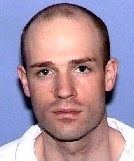
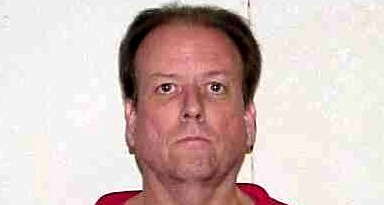
Arthur Hans Halvorsen
Murderer Brian Kevin Rosenfeld
Murderer · USA · 1985
Brian Kevin Rosenfeld Brian Kevin Rosenfeld was sentenced to three concurrent l…
23 victims
Brian Kevin Rosenfeld
Murderer · USA · 1985
Brian Kevin Rosenfeld Brian Kevin Rosenfeld was sentenced to three concurrent l…
23 victims
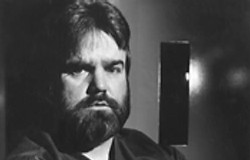 Marvin Gray
Murderer · USA · 1975
Marvin Gray was convicted killer who claimed responsibility for 23 slayings and…
23 victims
Marvin Gray
Murderer · USA · 1975
Marvin Gray was convicted killer who claimed responsibility for 23 slayings and…
23 victims
 Yahweh ben Yahweh
Murderer · USA · 1980
Yahweh ben Yahweh was born and legally named Hulon Mitchell Jr. (October 27, 19…
23 victims
Yahweh ben Yahweh
Murderer · USA · 1980
Yahweh ben Yahweh was born and legally named Hulon Mitchell Jr. (October 27, 19…
23 victims
 Russell Ellwood
Murderer · USA · 1991
Russell Ellwood was a former taxi driver. Authorities suspected him of killing…
20 victims
Russell Ellwood
Murderer · USA · 1991
Russell Ellwood was a former taxi driver. Authorities suspected him of killing…
20 victims
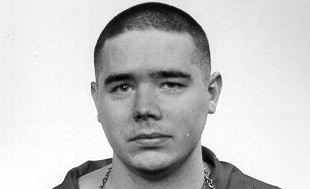 Joseph Corcoran
Mass murderer · USA · 1992
Joseph Corcoran was convicted of four counts of murder for shooting and killing…
6 victims
Joseph Corcoran
Mass murderer · USA · 1992
Joseph Corcoran was convicted of four counts of murder for shooting and killing…
6 victims
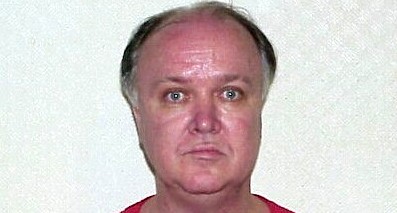 David Skaggs
Murderer · USA · 1981
David Leroy Skaggs (DOB 6-2-50) was charged with Murder for the deaths of Herma…
2 victims
David Skaggs
Murderer · USA · 1981
David Leroy Skaggs (DOB 6-2-50) was charged with Murder for the deaths of Herma…
2 victims
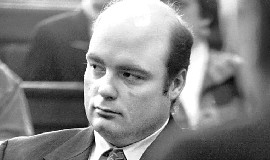 Frederick Treesh
Murderer · USA · 1994
Frederick Treesh was executed in Ohio for killing Henry Dupree on August 27, 19…
2 victims
Frederick Treesh
Murderer · USA · 1994
Frederick Treesh was executed in Ohio for killing Henry Dupree on August 27, 19…
2 victims
 Lan Anh Le
Murderer · USA · 2010
Lan Anh Le was a 22-year-old woman at sentencing. She was 20 at the time of the…
1 victim
Lan Anh Le
Murderer · USA · 2010
Lan Anh Le was a 22-year-old woman at sentencing. She was 20 at the time of the…
1 victim
- Gender
- male
- Country
- USA
- Location
- Wilmington, Los Angeles County, California, USA
- Date of birth
- 1942
- Age at first offence
- 43
- Characteristics
- revenge, alcohol, history of mental illness, mentally ill
- Victim profile
- Calvin Ferguson, 42, and Vicente Perez, 45 ( ex co-workers )
- Method of murder
- Shooting
- Date(s) of murder
- March 31, 1985
- Years active
- 1985
- Date of arrest
- —
- Status
-
Sentenced to death
Sentenced to death on November 18, 1988; conviction for two counts of first-degree murder was affirmed by the California Supreme Court in 2007 while the death sentence was reversed.
Case record: Arthur Hans Halvorsen
Timeline
- March 31, 1985 — Arthur Hans Halvorsen drank at a bar during the afternoon; he then shot Benjamin Alcala, fatally shot Calvin Ferguson (at Hammett Vacuum Service), fatally shot Vicente Perez in a vehicle marked Community Alert Patrol, and shot Eugene Layton in the chest.
- August 25, 1987 — The penalty phase of the first trial ended in a mistrial.
- November 18, 1988 — Halvorsen was sentenced to death.
- 2007 — The California Supreme Court reversed the death sentence and affirmed the guilty verdict.
- (Legal citation) — People v. Halvorsen, 165 P.3d 512 (Cal. 2007).
Background
Arthur Hans Halvorsen was diagnosed with bipolar disorder and had symptoms of paranoia and depression. He had a strong family history of mental illness and suicidal behavior. Several members of Halvorsen’s family testified to a deterioration in his behavior in the period before the crimes. The defense sought to prove that the crimes were a result of Halvorsen’s mental illness, alcohol use, and financial difficulties. Prosecutors called Halvorsen a frustrated businessman who sought revenge for his failures. Halvorsen lost his job at the trucking firm, had a crumbling business relationship with Layton, and shot Alcala while looking for someone who broke into his truck.
Halvorsen demanded that he be put to death immediately. On his sentencing day, Halvorsen told the judge: “I insist on it.” “Send me to the gas chamber. I’m going to call your bluff".
The offence
On the afternoon of March 31, 1985, Halvorsen made some business arrangements with a colleague. After Halvorsen left the bar, he was upset to discover that Roberto Martinez, who had come into the bar, had not followed through on his promise to put an air compressor in the back of Halvorsen’s truck.
Halvorsen proceeded to Roberto Martinez’s house, where he encountered Benjamin Alcala. Halvorsen believed that Alcala was lying about Martinez’s whereabouts to protect him. Halvorsen shot Alcala, wounding him.
Halvorsen then got in his car and drove to Hammett Vacuum Service, where he had worked the previous year. Calvin Ferguson, an employee of the company, saw Halvorsen drive up in his truck. Ferguson approached the vehicle, and Halvorsen pointed his gun in Ferguson’s face and fatally shot him for reasons Halvorsen could not explain later. After shooting Ferguson, Halvorsen drove off.
Vicente Perez, in a vehicle marked Community Alert Patrol, pulled up alongside Halvorsen. Halvorsen leaned out of his truck and fired his gun, killing Perez for reasons Halvorsen could not articulate. After these shootings, Halvorsen made a U-turn and got on the freeway to go to the house of a business associate, Eugene Layton.
Within a minute of entering Layton’s home, Halvorsen shot Layton in the chest. Layton then cut Halvorsen’s throat with a piece of glass. Halvorsen was transported to the hospital, and Layton survived the attack.
Halvorsen was “laughing about” these events.
Investigation
Halvorsen’s colleague testified that Halvorsen drank at a bar throughout the afternoon, had slurred speech, and behaved in a loud, erratic fashion. The forensic psychiatrist who testified, Dr. William Vicary, stated that Halvorsen had bipolar disorder with symptoms of paranoia and depression and that he had a strong family history of mental illness and suicidal behavior. Dr. Vicary did not believe that Halvorsen’s mental illness provided a basis for a psychiatric defense.
Trial
Halvorsen’s case proceeded through a penalty mistrial and retrial. The jury convicted Halvorsen of two counts of first-degree murder and found multiple-murder special circumstances. For one count, the jury fixed the penalty at life in prison. For the other, the court declared a mistrial when the jury was unable to reach a decision regarding the penalty.
During the retrial, Halvorsen requested on four occasions to represent himself, and the court denied those requests. The court believed Halvorsen was incompetent to do so. After the retrial, the jury fixed the penalty for the second murder count at death.
During the first trial’s penalty phase, the penalty phase ended in a mistrial on August 25, 1987.
Competence to proceed pro se and denial of self-representation
After the retrial, the case came before the Supreme Court of California in 2007. The California Supreme Court reversed the death sentence and affirmed the guilty verdict.
The California Supreme Court held that the trial court erred in denying Halvorsen’s motions for self-representation. It noted that in Faretta v. California, 422 U.S. 806 (1975), the U.S. Supreme Court held that the right to self-representation was rooted in the Sixth Amendment and could be asserted by any defendant who was competent to stand trial. The California Supreme Court held that the trial court’s reason for denying the motion—incapacity that did not rise to the level of incompetence to stand trial—was not valid.
The California Supreme Court cited Godinez v. Moran, 509 U.S. 389 (1993), and held that the relevant inquiry was whether Halvorsen’s waiver of his right to the assistance of counsel was knowing and voluntary. The court rejected Halvorsen’s argument that the trial court erred in not holding a competency hearing, holding that competency hearings were not required by the Fourteenth Amendment or the California Penal Code because there was no substantial evidence of incompetence.
The defense argued that Halvorsen’s competence should have been called into question for four reasons:
- Family members testified that Halvorsen’s mood and behavior had changed before the shootings.
- Dr. Vicary testified that Halvorsen had a mental illness.
- The trial court determined that Halvorsen was not competent to represent himself.
- Halvorsen focused on and testified about religious and moral issues.
The California Supreme Court also rejected the defense argument that the trial court erred in allowing Dr. Vicary to testify on cross-examination that he did not believe there was sufficient evidence to support a “psychiatric defense.” The court found that, even if the testimony was inadmissible, it did not prejudice the jury. It reasoned that Dr. Vicary repeatedly stated that the question of whether Halvorsen was guilty of murder or manslaughter was properly left to the jury. The court further noted that Dr. Vicary’s opinion that the primary reason for the killings was Halvorsen’s psychotic state was “repeatedly undercut” on cross-examination.
Sentencing
For one murder count, the jury fixed the penalty at life in prison. For the other, following the retrial, the jury fixed the penalty at death.
Halvorsen demanded immediate execution. On the sentencing day, Halvorsen told the judge: “I insist on it.” “Send me to the gas chamber. I’m going to call your bluff".
Halvorsen was sentenced to death on November 18, 1988.
Appeals
The California Supreme Court considered the case in 2007. The court reversed the death sentence and affirmed the guilty verdict.
The California Supreme Court’s reasoning discussed the competence standard for self-representation. It referenced Dusky v. United States, 362 U.S. 402 (1960), and noted that the standard for competence to stand trial assumes the assistance of counsel. It addressed whether a different standard applies when proceeding pro se.
The court discussed Westbrook v. Arizona, 384 U.S. 150 (1966), and described that the U.S. Supreme Court vacated a decision where there had not been a hearing or inquiry on competence to waive the right to counsel.
The court further discussed Seiling v. Eyman, 478 F.2d 211 (9th Cir. 1973), and the reasoned-choice standard. It then discussed Godinez v. Moran, 509 U.S. 389 (1993), including that the U.S. Supreme Court reversed the Ninth Circuit and held that competence to waive the right to counsel or plead guilty did not require a higher standard than competence to stand trial, but that courts had to be satisfied that waiver was “knowing and voluntary” (quoting Johnson v. Zerbst, 304 U.S. 458, 465 (1938)).
The court also discussed Indiana v. Edwards, 128 S. Ct. 2379 (2008). It noted that Edwards held that states may apply a separate standard of competence to proceed pro se, and that if a defendant lacks mental capacity to conduct proceedings, the defendant may be required to proceed with the assistance of counsel. The court quoted that this cautions against using a single competency standard, and it stated that the right to self representation would not “affirm the dignity” of a defendant who lacks the capacity to conduct the trial and may undercut the fairness of the trial. The court also stated that whether a higher standard is required for a defendant to proceed pro se would probably depend on whether the state adopted a higher standard.
Outcome
The California Supreme Court reversed the death sentence and affirmed the guilty verdict in People v. Halvorsen, 165 P.3d 512 (Cal. 2007).
Other details
Calvin Ferguson was an employee at Hammett Vacuum Service. Vicente Perez was in a vehicle marked Community Alert Patrol. Roberto Martinez had promised to put an air compressor in the back of Halvorsen’s truck. Halvorsen’s family testified about deterioration in his behavior before the crimes. Halvorsen made four unsuccessful motions to proceed pro se.
A key medical witness was Dr. William Vicary, a forensic psychiatrist.
Halvorsen shot four men in three separate incidents on the same day, killing two of them. The jury fixed the penalty at life in prison for one count of first-degree murder and fixed the penalty at death for the second murder count after the retrial.
Spotted an error, or have more information about this case?