Eleuterio Cortijo
Homicide Edward Charles Allaway
Homicide · USA · 1976
Edward Charles Allaway Edward Charles Allaway was found not guilty by reason of…
7 victims
Edward Charles Allaway
Homicide · USA · 1976
Edward Charles Allaway Edward Charles Allaway was found not guilty by reason of…
7 victims
 Clinton Bankston
Homicide · USA · 1987
15 August 1987 — Ann Morris (63), her sister Sally Nicholson (59), and Sally’s…
5 victims
Clinton Bankston
Homicide · USA · 1987
15 August 1987 — Ann Morris (63), her sister Sally Nicholson (59), and Sally’s…
5 victims
 Gary Duane Rardon
Murderer · USA · 1962
Gary Duane Rardon killed a man in 1962 and later served 4 years for manslaughte…
4 victims
Gary Duane Rardon
Murderer · USA · 1962
Gary Duane Rardon killed a man in 1962 and later served 4 years for manslaughte…
4 victims
 Roger Girerd
Mass murderer · France · 1965
Roger Girerd was the perpetrator of a mass murder in Charvieu-Chavagneux on May…
10 victims
Roger Girerd
Mass murderer · France · 1965
Roger Girerd was the perpetrator of a mass murder in Charvieu-Chavagneux on May…
10 victims
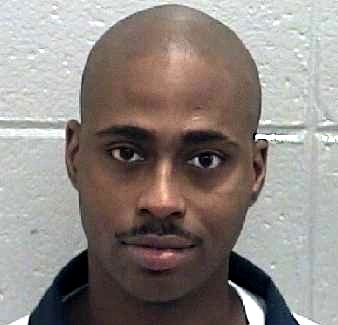 Demarcus Ali Sears
Murderer · USA · 1990
Demarcus Ali Sears was 25 years old when he was sentenced to death in September…
1 victim
Demarcus Ali Sears
Murderer · USA · 1990
Demarcus Ali Sears was 25 years old when he was sentenced to death in September…
1 victim
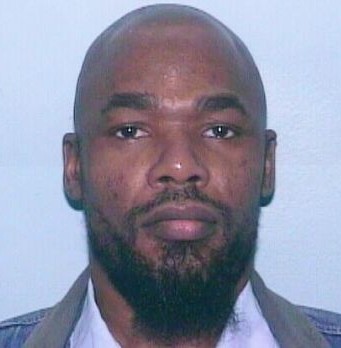 Gregory Clepper
Murderer · USA · 1996
1991 — The killings began. · April 24, 1996 — Patricia Scott was found in a tra…
1 victim
Gregory Clepper
Murderer · USA · 1996
1991 — The killings began. · April 24, 1996 — Patricia Scott was found in a tra…
1 victim
 Vasiliy Kulik
Serial killer · Russia · 1984
Vasiliy Kulik was a Russian serial killer. He was responsible for the murders o…
13 victims
Vasiliy Kulik
Serial killer · Russia · 1984
Vasiliy Kulik was a Russian serial killer. He was responsible for the murders o…
13 victims
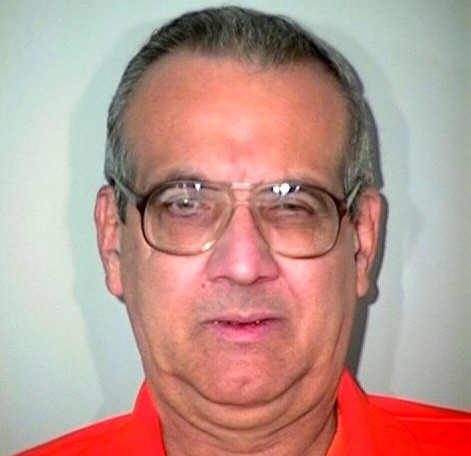 Edward Schad
Murderer · USA · 1978
Edward Schad was tried for the killing of Lorimer “Leroy” Graves, a 74-year-old…
1 victim
Edward Schad
Murderer · USA · 1978
Edward Schad was tried for the killing of Lorimer “Leroy” Graves, a 74-year-old…
1 victim
- Gender
- male
- Country
- USA
- Location
- New York City, New York, USA
- Date of birth
- 1960
- Age at first offence
- 17
- Characteristics
- juvenile (17), parricide, history of mental illness, drug dealer, mentally ill
- Victim profile
- His father, Jose Antonio Cortijo, 47
- Method of murder
- Shooting ( 16-gauge shotgun )
- Date(s) of murder
- December 12, 1977
- Years active
- 1977
- Date of arrest
- April 11, 1995 (18 years later)
- Status
-
Life imprisonment
Sentenced to life in prison
Case record
Eleutorio Cortijo was sentenced to life in prison after being charged in the 1977 shotgun slaying of his father, Jose Cortijo.
Background
Eleutorio Cortijo was the son of Jose Cortijo. Jose Cortijo worked as a building superintendent at 300 Park Ave. South. Eleutorio lived on the 15th floor in a single room and visited Jose’s family on occasion. Eleutorio spent much of his life with his mother and three siblings in Puerto Rico, and was then shuffled back and forth between his mother on the island and his father in the city. In the days leading up to Jose’s death, Eleutorio’s relationship with his father’s second family was strained, and Jose threatened to send Eleutorio back to Puerto Rico before Christmas despite Eleutorio’s desire to stay in New York.
Witnesses reported that Jose and Eleutorio had a history of conflict. Witnesses reported that Jose had taken a $10 roll of quarters and bloodied Eleutorio’s son’s face with makeshift brass knuckles in one fight. Parham told police he had heard Jose “kicking his son’s ass” in Jose’s basement workshop. Eleutorio was described as known to be violent, and as having suffered from nightmares and episodes of psychosis. Witnesses reported that he heard voices from time to time.
The offence
On December 12, 1977, Jose Cortijo was shot in the head in the sub-basement of an office building he worked in at 300 Park Ave. South.
At the time Parham discovered Jose, the radio in Jose’s workshop was blasting disco music and there was a smell of something unusual in the air. Parham saw what he thought to be a pile of clothes and then saw that it was Jose’s body. Part of Jose’s head was missing. Parham suspected Jose had suffered a heart attack and knelt down and shook his friend; he then realized the smell in the air was burnt gunpowder.
Responding police found that Jose had been shot in the back of his head and was still carrying his keys. In Jose’s workshop, police found two shotguns and an inoperable pistol. Also in the workshop was a beige trench coat, later identified as belonging to Jose, and a leather jacket, belonging to Jose’s son, Eleutorio Cortijo.
The autopsy found Jose was killed by a single shotgun blast to the back of his head fired from no further away than two feet. The pellets and wadding were consistent with a 16-gauge shotgun, meaning that neither of the two 12-gauge weapons found in the workshop had been the murder weapon. Despite a search of the grounds and the public areas of the building, the shotgun used to kill Jose was never found.
Investigation
The case was reopened by detectives at the 13th Precinct after it was tipped off by probation officials.
Detective Walter Burnes, a department spokesman, said Eleutorio was charged in the murder of his father after Eleutorio mentioned the slaying to a probation officer. Burnes said: “There was bad blood between them.” A police source added that the patricide happened because of a fight over cash, and the source said: “The son believed the father owed him some money.”
An early suspect in the case was Eleutorio due to a stormy relationship with his father. Despite evidence of a bad relationship and a possible motive, police felt there wasn’t enough to charge Eleutorio with the murder, and it remained unsolved for many years.
In 1986, Richard Cortijo, Eleutorio’s half-brother, was visited by Eleutorio after Eleutorio was released from serving a term in Attica. Eleutorio wanted to speak to him in private. At that time, Eleutorio admitted his deed, with Richard Cortijo saying: “I did it, I killed Popi [the name by which Jose was known to his children],” and “He wasn’t a good father anyway.” The material stated that Eleutorio declined to repeat the statement and that Richard, who had a criminal past of his own, said nothing to anyone.
In 1995, Eleutorio implicated himself in the killing when he told the wrong person.
Arrest
Eleutorio was being interviewed for a presentence investigation report by probation officer Urania Vullo.
At the 100 Centre Street holding cells on April 11, 1995, Vullo and Eleutorio sat down to talk. Vullo asked “pedigree questions,” and then asked Eleutorio about his father. Eleutorio said: “I killed my father.” When Vullo repeated the question, Eleutorio replied: “I killed my father.” Eleutorio then backtracked and said: “No, I didn’t kill him, somebody else did.” Vullo asked what happened to the person who killed Jose, and Eleutorio said: “I don’t know.” The material reported that Eleutorio paused again and then said: “No, I killed my father.”
Eleutorio told Vullo he had had suicidal thoughts and was currently taking an antipsychotic medicine.
After Vullo reported the confession to NYPD detective Frank Colaianni, Colaianni and two other officers went to interview Eleutorio at Fishkill Correctional Facility. The material reported that before the officers could ask any questions, Eleutorio stated he was hearing voices that said he shot his father and he heard a loud noise. After that statement, the officers Mirandized Eleutorio and asked if he was willing to talk. Eleutorio declined to answer the officers’ questions but said: “he had been sleeping on the subway on the day that his father was killed,” according to the detective’s testimony.
Authorities later charged Eleutorio with his father’s murder.
Trial
Eleutorio opted not to try an insanity defense, but put his psychiatrists on the stand. His psychiatrists testified he was a paranoid schizophrenic and had no idea what he was confessing to. A U.S. magistrate judge wrote about the defense that “in light of Cortijo’s contentious relationship with his father and in light of the fact that Cortijo was only 17 years old when his father died, Cortijo would have been experiencing feelings of guilt, a sense of responsibility in having perhaps at times wished his father dead, and a sense of ambivalence over the loss of his father on the one hand and increased independence on the other,” and that “a fragile mental state” would lead him to believe he killed his father or to be confused about whether he did or didn’t.
The defense, through the testimony of Dr. Robert Berger, presented Eleutorio’s long history of mental illness and hospitalizations and evidence that his grasp of reality was tenuous at best.
In his closing argument, defense counsel argued:
“This case always comes back to the exact same issue, the statements of that mental patient, the mental patient, are they truthful and [has the prosecution] proved that his statements are truthful?” counsel argued. “The answer is no, not now, not ever. It cannot be done.”
In response, the prosecutor pointed out no one else had motive to kill Jose Cortijo, that the angle of the fatal wound was consistent with the heights of Jose and Eleutorio, and that Jose was unlikely to turn his back on anyone else besides his son. The prosecutor also argued:
“The most important powerful persuasive argument of all,” the prosecutor argued was that none of the defense experts could say Eleutorio wasn’t being truthful when he confessed.
The trial material included the questions and answers about Eleutorio’s diagnosis from Dr. Berger and everyone else’s treatment:
What is Eleutorio’s diagnosis from Dr. Berger and from everyone else’s treatment? He’s a paranoid schizophrenic. Absolutely true. Does that prevent him from being truthful? No. Dr. Berger said so. Does that prevent him from being accurate? No, Dr. Berger said so. Is there any evidence whatsoever that the defendant is more or less likely to be truthful, to be accurate? No, none whatsoever. There is no single piece of evidence in the record that indicates that the defendant because he is a paranoid schizophrenic is any more likely or less likely to be truthful or accurate.
The jury agreed with the prosecution and Eleutorio Cortijo was convicted of killing his father.
Sentencing
Eleutorio Cortijo was serving a nine-year sentence for a 1995 drug-peddling conviction at the time he was being charged for his father’s murder.
He was sentenced to life in prison.
Timeline
- December 12, 1977 — Jose Cortijo was shot in the head in the sub-basement of an office building at 300 Park Ave. South.
- 1986 — Richard Cortijo was visited by Eleutorio after Eleutorio was released from serving a term in Attica; Eleutorio admitted killing Jose.
- 1995 — Eleutorio was interviewed for a presentence investigation report by probation officer Urania Vullo and confessed to killing his father.
- April 11, 1995 — Vullo and Eleutorio sat down to talk in the 100 Centre Street holding cells.
- After April 11, 1995 — NYPD detective Frank Colaianni and two other officers interviewed Eleutorio at Fishkill Correctional Facility.
- Two years after 1995 — Another set of detectives revisited Eleutorio after he was moved to Sing Sing prison.
- After conviction — Eleutorio was sentenced to life in prison.
Other details
Eleutorio was 37 years old at the time he was described as serving time at Sing Sing and facing an extended prison stay after being charged.
The material described that officials at Rikers Island noted: “Cortijo was hearing voices, actively hallucinating, and seeing a powerful light coming from behind him.”
During the subsequent interview after he had been moved to Sing Sing, a detective told him: “We are here to ask you about why you killed your father in 1977,” after Eleutorio was read his rights and signed a waiver. The material reported that Eleutorio said in a raised voice: “Yeah, I killed him, so what.” He also said: “What the f— are you guys going to do about it. You are the second guys to come up here and break my balls about this. I killed him. If I get taken to court I’ll say the same thing.” When asked why he killed his father, he responded: “I killed him because I felt like it.”
The material described presentence investigation procedures, including that a presentence investigation requires the State to interview the defendant and that the defendant is under no obligation to cooperate in any way, and that defendants are not usually given a Miranda warning in these interviews.
Spotted an error, or have more information about this case?