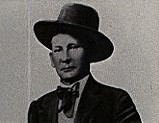
Gregorio Cortez Lira
Murderer John S. Williams
Murderer · USA · 1910
John S. Williams was convicted of murder and sentenced to life imprisonment on…
18 victims
John S. Williams
Murderer · USA · 1910
John S. Williams was convicted of murder and sentenced to life imprisonment on…
18 victims
 Jackson Lee Davis
Murderer · USA · 1896
Jackson Lee Davis, also known as Diamondfield Jack, was an inmate. · June 4, 18…
2 victims
Jackson Lee Davis
Murderer · USA · 1896
Jackson Lee Davis, also known as Diamondfield Jack, was an inmate. · June 4, 18…
2 victims
 Robert Stroud
Murderer · USA · 1909
Robert Stroud, known to the public as the “Birdman of Alcatraz,” was a federal…
2 victims
Robert Stroud
Murderer · USA · 1909
Robert Stroud, known to the public as the “Birdman of Alcatraz,” was a federal…
2 victims
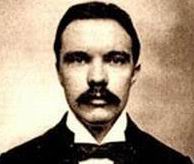 Theodore Durrant
Murderer · USA · 1895
Theodore Henry Durrant was born 1871 in Toronto, Canada. He was the son of Will…
2 victims
Theodore Durrant
Murderer · USA · 1895
Theodore Henry Durrant was born 1871 in Toronto, Canada. He was the son of Will…
2 victims
 Saber & Mahmoud Abu el-Ulla
Mass murderers · Egypt · 1993
This case concerns Saber Abu el-Ulla and his brother, Mahmoud Abu el-Ulla, who…
13 victims
Saber & Mahmoud Abu el-Ulla
Mass murderers · Egypt · 1993
This case concerns Saber Abu el-Ulla and his brother, Mahmoud Abu el-Ulla, who…
13 victims
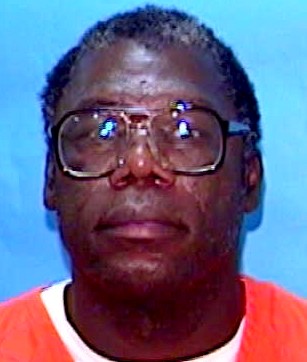 Kenneth Quince
Murderer · USA · 1979
Kenneth Darcell Quince (also known as Rasikh Abdul-Hakim) was the appellant in…
1 victim
Kenneth Quince
Murderer · USA · 1979
Kenneth Darcell Quince (also known as Rasikh Abdul-Hakim) was the appellant in…
1 victim
 Gregory John Brazel
Serial killer · Australia · 1982
Gregory John “Bluey” Brazel was an Australian arsonist and armed robber who was…
3 victims
Gregory John Brazel
Serial killer · Australia · 1982
Gregory John “Bluey” Brazel was an Australian arsonist and armed robber who was…
3 victims
- Gender
- male
- Country
- USA
- Location
- Texas, USA
- Date of birth
- J une 22, 1875
- Age at first offence
- 26
- Characteristics
- fugitive, abuse, domestic violence
- Victim profile
- Karnes County sheriff W.T. "Brack" Morris
- Method of murder
- Shooting
- Date(s) of murder
- June 12, 1901
- Years active
- 1901
- Date of arrest
- 10 days after
- Status
-
Died in custody
Sentenced to life in prison; pardoned in 1913; died on February 28, 1916
People
- Gregorio Cortez Lira — defendant; Mexican American folk hero; tenant maize farmer and farmhand/vaquero; born June 22, 1875 near Matamoros, Tamaulipas; died February 28, 1916
- Romaldo Cortez — brother of Gregorio Cortez Lira; charged with horse theft; sheriff W. T. "Brack" Morris shot and wounded him; he died in the Karnes City jail after Romaldo Cortez was wounded
- Tomás Cortez — brother of Gregorio Cortez Lira; charged in a separate horse-theft incident; received a pardon from Texas governor Lawrence Ross; sentenced to five years in the penitentiary for horse theft in the early 1900s
- W. T. "Brack" Morris — Karnes County sheriff; went to the Thulemeyer ranch after learning Gregorio had acquired a mare by trade; shot and wounded Romaldo; was shot and killed by Gregorio Cortez Lira
- Gregorio’s deputy-interpreter Boone Choate — interpreter; accompanied Morris in the search; poor job of interpreting led to major misunderstanding between Gregorio and Choate
- John Trimmell — deputy; accompanied Morris in the search
- Andrés Villarreal — Kenedy resident; informed Morris and the deputies that he had recently acquired a mare by trading a horse to a man named Gregorio Cortez
- Sheriff W. A. Thulmeyer — connected to the W. A. Thulmeyer ranch where Gregorio and Romaldo rented land and raised corn
- Glover — Gonzales County sheriff; found Gregorio at the Robledo home; killed in the exchange of shots
- Schnabel — linked to the Robledo home encounter; killed in the exchange of shots
- Martín and Refugia Robledo — hosted Gregorio during his escape at their ranch on Schnabel property near Belmont
- Ceferino Flores — friend; provided Gregorio a horse and saddle as Gregorio walked nearly 100 miles toward Laredo
- Jesús González — acquaintance of Gregorio; located him and led a posse to him on June 22, 1901
- Governor Joseph D. Sayers — offered a $1,000 reward for Cortez’s capture
- Karnes citizens — offered a $1,000 reward for Cortez’s capture
- Sheriff Ortiz — Webb County sheriff; participated in the hunt
- assistant city marshall Gómez — Laredo; participated in the hunt
- Leonor Díaz — Gregorio Cortez Lira’s wife; divorce proceedings alleged physical and verbal abuse and fear; divorce was granted on March 12, 1903
- Estéfana Garza — Gregorio Cortez Lira’s wife while in jail; married on December 23, 1904
- Ester Martínez — mentioned as a person who petitioned Governor Oscar B. Colquitt for his release; also mentioned as a possible marriage in 1916
- María — sister-in-law of Gregorio Cortez Lira; held in custody during the posses’ efforts
- Richard Mertz — historian who discovered/recorded claims about horse theft involvement by the Cortezes
- Américo Paredes — folklorist associated with popularization of the legend
- Pablo Cruz — editor of El Regidor of San Antonio; played a key role in the defense network
- B. R. Abernathy — one of Gregorio’s lawyers; proved to be the most committed to attaining justice for him
- A. L. Sanders — juror mentioned as the exception in the first trial finding
- Oscar B. Colquitt — governor who issued conditional pardon in July 1913
- Victoriano Huerta — recipient of Gregorio’s participation with Huertist forces in the Mexican Revolution
- Francisco A. Chapa — Col. Francisco A. Chapa, politically influential publisher of El Imparcial in San Antonio; took up the Cortez case
- Secretary of State F. C. Weinert of Seguin — worked for Cortez’s pardon
- Board of Pardons Advisers — recommended a full pardon
- F. C. Weinert of Seguin — secretary of state who worked for the pardon
- Victoriano Huerta forces / Huertist forces — group Gregorio joined after release
- Victoriano Huerta — joined with Gregorio in the Mexican Revolution context
- Karnes County sheriff W. T. "Brack" Morris — referenced as the sheriff in official testimony and in the incident sequence
- Texas Rangers — authorities involved in evading; hundreds of men searched for Gregorio including the Texas Rangers
- International-Great Northern Railroad — train route used to bring in new posses and fresh horses
Timeline
- 1887 — Gregorio’s family moved to Manor, Texas near Austin
- 1889 — Gregorio began working as a farmhand in various Texas counties
- 1890 — Gregorio was married; the couple had four children
- 1901 (June 12) — Karnes County sheriff W. T. "Brack" Morris went to the Thulemeyer ranch after learning Gregorio had acquired a mare by trade; misunderstandings followed; Morris shot and wounded Romaldo; Gregorio shot and killed Morris
- 1901 (June 22) — Gregorio was apprehended when Jesús González led a posse to him
- 1901 (July 24) — the first trial began in Gonzales
- 1902 (January 15) — the Texas Court of Criminal Appeals reversed the Gonzales verdict
- 1903 (March 12) — Leonor Díaz’s divorce was granted
- 1903 — Leonor Díaz filed for divorce, alleging Gregorio physically and verbally abused and intimidated her and that she remained with him only out of fear
- 1904 (April) — the last trial was held in Corpus Christi
- 1904 (December 23) — Gregorio married Estéfana Garza of Manor while in jail
- 1913 (July) — Governor Oscar B. Colquitt issued Gregorio Cortez Lira a conditional pardon
- 1916 — Gregorio married again; died shortly afterwards
- 1916 (February 28) — Gregorio Cortez Lira died of pneumonia
- 1958 — Américo Paredes published With His Pistol in His Hand
- 1982 — the film The Ballad of Gregorio Cortez was produced
Background
Gregorio Cortez Lira became a folk hero among some Mexican Americans in the early 1900s for evading the Texas Rangers during their search for him on murder charges. He was a tenant farmer and vaquero and was born on June 22, 1875, near Matamoros, Tamaulipas, to Román Cortez Garza and Rosalía Lira Cortina, transient laborers. In 1887, his family moved to Manor, near Austin. From 1889 to 1899, he worked as a farmhand and vaquero in Karnes, Gonzales, and nearby counties on a seasonal basis, and that transiency provided him with knowledge of the region and terrain. Around that time, he owned two horses and a mule. He had limited education and spoke English. He owned horses.
His family included brothers Tomás and Romaldo. In 1889, Romaldo was charged with horse theft but the charges were dropped for lack of evidence. Around that time, Tomás was also charged in a separate horse-theft incident and received a pardon from Texas governor Lawrence Ross. In the early 1900s, Tomás was sentenced to five years in the penitentiary for horse theft.
Richard Mertz discovered that Gregorio, his father, and brothers Tomás and Romaldo may have been involved in horse theft with members of his family during the 1880s. Historian Richard Mertz recorded that a horse-theft charge against Romaldo around 1887 was dropped due to lack of evidence, and a similar charge against Tomás ended with an executive pardon from Governor Lawrence S. Ross. Mertz also recorded that Chicano historians typically interpreted horse theft as resistance to racial oppression. Américo Paredes noted that, before the encounter with Sheriff Morris on June 12, 1901, Cortez was considered “a likeable young man,” who had not been in much legal trouble.
Gregorio married Leonor Díaz on February 20, 1890, and they had four children. Leonor began divorce proceedings against Gregorio in early 1903. Her divorce petition alleged that Gregorio physically and verbally abused her during the early years of their marriage and that she remained with him only out of fear. The divorce was granted on March 12, 1903. Gregorio remarried the next year and again in 1916. Gregorio married Estéfana Garza of Manor on December 23, 1904, while he was in jail. He married again in 1916, perhaps to Ester Martínez.
During the escape and hunt that followed the June 12, 1901 incident, Leonor and the children, Gregorio’s mother, and his sister-in-law María were illegally held in custody while posses mobilized to catch Gregorio.
The offence
On June 12, 1901, Karnes County sheriff W. T. “Brack” Morris went to the Thulemeyer ranch outside of Kenedy after learning Gregorio had acquired a mare from a Mexican Kenedy resident by way of trade. Morris and deputies John Trimmell and Boone Choate approached the Cortez brothers, Gregorio and Romaldo, who lived on the W. A. Thulmeyer ranch, ten miles west of Kenedy, where they rented land and raised corn.
The deputies’ poor translation work caused multiple misunderstandings. Choate interpreted Romaldo’s statement to Gregorio, “ Te quieren ” (“Somebody wants you”), as “You are wanted,” leading Morris to understand that Gregorio was the wanted man the authorities were seeking. Choate asked Gregorio if he had traded a “ caballo ” (“horse”) and Gregorio answered “no” because he had traded a “ yegua ” (“mare”). A third misinterpretation involved another response from Gregorio: “ No me puede arrestar por nada ” (“You can’t arrest me for nothing”). Morris understood this as “ A mi no me arresta nadie ” and translated it as “No white man can arrest me.”
As a result of the misunderstandings, Morris shot and wounded Romaldo and narrowly missed Gregorio. Gregorio responded by shooting and killing Morris. Cortez then fled and was on the lam for ten days, repeatedly evading authorities, at times with the aid of compatriots.
After a later encounter at the Robledo home, Glover and Schnabel were killed in an exchange of shots. Cortez escaped that encounter again and walked nearly 100 miles to Ceferino Flores, who provided a horse and saddle. He then headed toward Laredo.
Investigation and flight
Gregorio was a fugitive and spent ten days on the lam, repeatedly evading authorities, including the Texas Rangers. During his escape, Texas newspapers were highly critical of Cortez, with some lamenting that he had not been lynched. Popular hatred for Cortez among Anglos provoked violence against Mexican communities in Gonzales, Refugio, Hays, and other counties.
While Cortez fled, he stopped at the ranch of Martín and Refugia Robledo on Schnabel property near Belmont. At the Robledo home, Gonzales county sheriff Glover and his posse found Cortez. Shots were exchanged, and Glover and Schnabel were killed. Cortez escaped again and walked nearly 100 miles to the home of Ceferino Flores, who provided him with a horse and saddle, after which Cortez headed toward Laredo.
Newspaper accounts during the hunt portrayed Cortez as a “bandit” with a “gang” at his assistance. The Express noted that Cortez “is at the head of a well organized band of thieves and cutthroats.” The Seguin Enterprise referred to him as an “arch fiend.” Governor Joseph D. Sayers and Karnes citizens offered a $1,000 reward for his capture.
Cortez found it more difficult to evade capture around Laredo because Tejanos typically served as lawmen in the region. Sheriff Ortiz of Webb County and assistant city marshall Gómez of Laredo participated in the hunt. While anti-Cortez sentiment grew, numbers of people who sympathized with him also increased. Tejanos who saw him as a hero evading the evil rinches also experienced retaliatory violence in Gonzales, Refugio, and Hays counties and in and around the communities of Ottine, Belmont, Yoakum, Runge, Beeville, San Diego, Benavides, Cotulla, and Galveston.
By the time the chase ended, at least nine persons of Mexican descent had been killed, three wounded, and seven arrested. In parallel, admiration of Cortez by Anglo-Texans increased, and the San Antonio Express touted his “remarkable powers of endurance and skill in eluding pursuit.”
The posses searching for Cortez involved hundreds of men, including the Texas Rangers. A train on the International-Great Northern Railroad route to Laredo was used to bring in new posses and fresh horses. Cortez was finally captured on June 22, 1901, ten days after the encounter between Cortez and Sheriff Morris, when Jesús González located him and led a posse to him. Some Tejanos later labeled González a traitor to his people and ostracized him.
Arrest
Gregorio Cortez Lira was apprehended on June 22, 1901, when an acquaintance, Jesús González, located him and led a posse to him. After his apprehension, a legal-defense campaign began and a network of supporters developed.
Trial
After Cortez’s capture, his supporters formed organizations to publicize the case and raise money for his defense. The Sociedad Trabajador Miguel Hidalgo in San Antonio wrote a letter of support that appeared in newspapers as far away as Mexico City. Pablo Cruz, editor of El Regidor of San Antonio, played a key role in the defense network, located in Houston, Austin, and Laredo. Funds were collected through donations, sociedades mutualistas, and benefit performances to provide for Cortez’s legal representation. B. R. Abernathy was among his lawyers and proved committed to attaining justice for him.
The first trial began in Gonzales on July 24, 1901. Eleven jurors, except juror A. L. Sanders, found him guilty of the murder of Schnabel. Through a compromise among the jurors, a fifty-year sentence for second-degree murder was assessed. The defense’s attempt to appeal the case was denied.
While appeals were being denied, a mob of three hundred attempted to hang him. Immediately following Cortez’s capture, his supporters began forming organizations to publicize the case and raise money for his defense. He was also tried and convicted in Karnes City and Pleasanton.
At his first trial in Gonzales, he was sentenced to fifty years’ imprisonment for second-degree murder. After that sentencing, the Texas Court of Criminal Appeals reversed all verdicts. On January 15, 1902, the Texas Court of Criminal Appeals reversed the Gonzales verdict. The same court reversed the verdicts in the trials held in Karnes and Pleasanton. In April 1904, the last trial was held in Corpus Christi. By the time he began serving life in prison for the murder of Sheriff Glover, he had been in eleven jails in eleven counties.
He was sentenced to life in prison following the Corpus Christi trial in 1904.
Sentencing
At the Gonzales trial that began on July 24, 1901, the jury assessed a fifty-year sentence for second-degree murder, after a compromise among the jurors. The Texas Court of Criminal Appeals later reversed the verdicts.
After the final trial in Corpus Christi in 1904, Cortez began serving a life sentence, connected to the murder of Sheriff Glover. He had been sentenced across multiple trials and then had those verdicts reversed by the Texas Court of Criminal Appeals, before the life sentence following the last trial.
Appeals
That same court reversed verdicts in the trials held in Karnes and Pleasanton.
Outcome
Governor Oscar Colquitt issued Gregorio Cortez Lira a conditional pardon in July 1913. Efforts to have him pardoned began with his incarceration and then succeeded in 1913.
Aftermath
After his release, Cortez thanked those who helped him recover his freedom. He then joined the Huertist forces of the Mexican Revolution in Nuevo Laredo and fought with Victoriano Huerta. He married for the last time in 1916 and died shortly afterwards of pneumonia on February 28, 1916.
While he was in prison, he worked as a barber. He also enjoyed empathy of some jailers, who provided him the entire upper story of the jail as a “honeymoon suite” when he married Estéfana Garza.
The legend about Cortez inspired ballads called “El Corrido de Gregorio Cortez,” which appeared as early as 1901. The ballad was similar to those that depicted Juan Nepomuceno Cortina and Catarino Garza.
Américo Paredes popularized the story of Gregorio Cortez in With His Pistol in His Hand: A Border Ballad and Its Hero, originally published in 1958. Between 1958 and 1965, the book sold fewer than 1,000 copies, and a Texas Ranger angered by it threatened to shoot Paredes. Later, the book was recognized as a classic of Texas Mexican prose and sold quite well. The legend was turned into the film The Ballad of Gregorio Cortez, starring Edward James Olmos, in 1982.
After Romaldo Cortez was wounded by Morris, Romaldo Cortez died in the Karnes City jail.
Other details
- Gregorio became a folk hero among Mexican Americans in the early 1900s and was also described as a symbol of willingness to fight for equal rights.
- Cortez’s escape included repeated evasion of authorities and at times aid by compatriots.
- During his flight, Leonor and the children, his mother, and his sister-in-law María were illegally held in custody while posses mobilized to catch him.
- Some newspapers described him as a “bandit” with a “gang,” and the Express stated he “is at the head of a well organized band of thieves and cutthroats.”
- Governor Joseph D. Sayers and Karnes citizens offered a $1,000 reward.
- The hunt for “sheriff killer” Cortez intensified.
- The posses involved hundreds of men, including the Texas Rangers, and used a train on the International-Great Northern Railroad route to Laredo to bring in new posses and fresh horses.
- Some Tejanos later labeled Jesús González a traitor to his people and ostracized him.
- Cortez’s story was also noted as having many variations due to oral-history embellishments.
Bibliography and cultural works
- Richard J. Mertz, “No One Can Arrest Me: The Story of Gregorio Cortez,” Journal of South Texas 1 (1974)
- Cynthia E. Orozco
- Américo Paredes, With His Pistol in His Hand: A Border Ballad and Its Hero (published 1958)
- Film: The Ballad of Gregorio Cortez (1982), starring Edward James Olmos
- Ballads: “El Corrido de Gregorio Cortez” (as early as 1901)
Spotted an error, or have more information about this case?