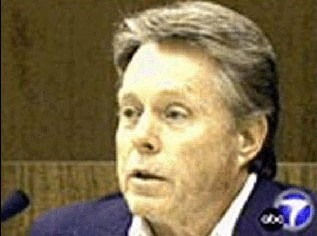
Edward Charles Allaway
Homicide Wyley Gates
Homicide · USA · 1986
Wyley Gates was a 17-year-old computer whiz and honors student who was describe…
4 victims
Wyley Gates
Homicide · USA · 1986
Wyley Gates was a 17-year-old computer whiz and honors student who was describe…
4 victims
 Gina Spann
Murderer · USA · 1997
Gina Spann pleaded guilty and was sentenced to life in prison without parole on…
1 victim
Gina Spann
Murderer · USA · 1997
Gina Spann pleaded guilty and was sentenced to life in prison without parole on…
1 victim
 Terry Johnson
Murderer · USA · 1991
Terry Johnson (born 1969) was a single man. He had two children by different wo…
1 victim
Terry Johnson
Murderer · USA · 1991
Terry Johnson (born 1969) was a single man. He had two children by different wo…
1 victim
 Edward Alexander CRrowley
Murderer · United Kingdom · 2000
Defendant: Edward Alexander Crowley (also described as “Edward Alexander CRrowl…
1 victim
Edward Alexander CRrowley
Murderer · United Kingdom · 2000
Defendant: Edward Alexander Crowley (also described as “Edward Alexander CRrowl…
1 victim
 David Mark Hill
Murderer · USA · 1996
Name: David Mark Hill · Pronounced dead: 6:17 p.m. in the state’s death chamber…
3 victims
David Mark Hill
Murderer · USA · 1996
Name: David Mark Hill · Pronounced dead: 6:17 p.m. in the state’s death chamber…
3 victims
 Emma Hall
Murderer · United Kingdom · 2012
Emma Hall was sentenced to life in prison with a minimum term of 15 years on Ap…
1 victim
Emma Hall
Murderer · United Kingdom · 2012
Emma Hall was sentenced to life in prison with a minimum term of 15 years on Ap…
1 victim
 Kenneth Kenley
Murderer · USA · 1984
Kenneth Kenley Kenneth Kenley was executed by lethal injection in Missouri on F…
1 victim
Kenneth Kenley
Murderer · USA · 1984
Kenneth Kenley Kenneth Kenley was executed by lethal injection in Missouri on F…
1 victim
- Gender
- male
- Country
- USA
- Location
- Fullerton, California, USA
- Date of birth
- 1939
- Age at first offence
- 37
- Characteristics
- abuser, history of mental illness, rape, drug addict, spree killer
- Victim profile
- Seth Fessenden; Stephen L. Becker, 32; Paul F. Herzberg; Bruce A. Jacobson; Donald Aarges, 41, and Frank Teplansky, 51 ( employees of the college)
- Method of murder
- Shooting ( .22-caliber rifle)
- Date(s) of murder
- July 12, 1976
- Years active
- 1976
- Date of arrest
- Same day (surrenders)
- Status
-
Acquitted / overturned
Found not guilty by reason of insanity; confined to State Hospital in 1977; transferred in 1992 to less restrictive Napa State Hospital for release into the community; later doctors at Patton State Mental Hospital in 2003 were not recommending release
Case record
Name
Edward Charles Allaway
Overview
Edward Charles Allaway was found not guilty by reason of insanity for a homicidal rampage in 1976 at the library at Cal State Fullerton, where he worked as a janitor. He was confined to a State Hospital in 1977.
In 1992, he was transferred to the less restrictive Napa State Hospital. He was later deemed well enough to be released into the community, with a state psychiatrist and UC Irvine professor describing his psychopathic behavior as “to be in full remission.” Subsequent reporting in 2003 said doctors at Patton State Mental Hospital were not recommending release, and it described earlier hearings and victim-family objections.
Current legal status
He remained confined under hospital care for the purpose of treating and retaining him after recommendations and hearings regarding outpatient release.
Timeline
- 1975 — He began working for the college.
- 1976 — He shot nine people at the college library at Cal State Fullerton, killing seven and injuring two.
- 1977 — He was found not guilty by reason of insanity and was confined to a State Hospital.
- 1992 — He was transferred to the less restrictive Napa State Hospital.
- 1995 — He lived at Patton State Hospital in San Bernardino County.
- 2001 — A treating clinicians’ report recommended his release and he sought a “restoration of sanity” hearing; a judge later denied his petition for conditional outpatient release.
- 2003 — Doctors at Patton State Mental Hospital were not recommending release.
Background
Allaway had worked for California State University, Fullerton, as a janitor and custodian. The reporting described him as a likable man and “a ‘loner’ who had been brooding during the last few days because of difficulties with his wife.” Another statement described him as “a quiet type; whenever he went on a break, he would go alone and he never seemed to eat lunch with anyone but he did his work and he had a good attendance record. He's clean cut, and you never heard him cuss, or blame something that was wrong on someone else.” He was described as seeming depressed in the last few days, and it was said: “He had a problem,” and “He told me he had a family problem, and the last two days he worked, he was awful hard to get along with.”
In a 1987 interview referenced in the reporting, Allaway said he went “crazy because co-workers had taunted him about pornographic movies” that were said to have erroneously featured his then-22-year-old wife. He also said he was deeply offended by obscene graffiti and homosexual activities he encountered in a men’s restroom; he said, “I would walk in to clean, and the men would say, 'Let's make it a threesome' or something, and I would say, 'Gosh no, I'm trying to make a buck, leave me alone,' ”.
A judge found Allaway not guilty by reason of insanity. He also had a history of paranoid behavior prior to being employed at CSUF, according to family testimony; a statement was that at the time his sister was killed he was angry that a background check was not conducted.
The offence
Location and method
Allaway entered the basement of a college library at California State University, Fullerton and then went from room to room, methodically opening fire with a .22-caliber automatic rifle. The shooting occurred on the Fullerton campus of California State University, described as a modern, 225-acre college lined with trees 25 miles south of Los Angeles.
Witnesses reported that the assailant carried a rifle and appeared shortly before 7 A.M. in an area of special-purpose activity rooms with audiovisual aids and special library facilities. He loaded his rifle as he went along, and some witnesses said he fired indiscriminately, while it was not immediately established whether he consciously selected his victims beforehand. Some witnesses compared the rapid fire to a machine gun in a war movie; others said they heard only a “popping” noise.
Victims and injuries
The shooting killed seven college employees and injured two employees. The seven killed were:
- Seth Fessenden, professor emeritus of speech
- Stephen L. Becker, 32, a son of the college’s director of placement, and employed at the school
- Paul F. Herzberg, a college photographer
- Bruce A. Jacobson, an audio-visual technician
- Donald Aarges, 41, a custodian
- Frank Teplansky, 51, a graphics department employee
- One additional victim count was included in the narrative that seven were killed; the reporting listed those named above among the seven killed.
The two injured employees were:
- Maynard Hoffman, 65, a custodial supervisor
- Donald Karar, an associate librarian
Course of events described by witnesses
A witness said a man with a rifle brushed past him in the basement area, and the witness stated he saw .22 caliber cartridges strewn about the floor. The witness described the man as “looking like an all-American boy.”
The same witness, Richard Corona, said the man said: “He doesn't belong here; he doesn't belong here.” Corona said the man aimed a rifle at Richard Corona and also at another Upward Bound counselor, Marcie Martinez, then lowered his gun and ran in the opposite direction, after which firing started again. Corona said: “There was one bullet after another,” and said he went into a library room with 15 students working, shouted: “Everybody has to get out of here; there's a crazy guy loose with a gun.” The witness said “Nobody would listen to me.”
Demetra Bailey, a 14-year-old Fullerton girl, was quoted saying: “Nobody believed they were gunshots.” She added: “We all thought it was firecrackers.”
A later account described that Allaway entered through a side door, descended a flight of stairs to the basement, walked from office to office shooting some people and sparing others. It also described:
- He chased two custodians, Debbie Paulsen and Donald Karges, down the hall and shot them.
- Bruce Jacobson, the audio technician, was shot at point-blank range after hitting Allaway on the head with a metal statue.
- He gunned down professor emeritus Seth Fessenden and photographer Paul F. Herzberg.
- He took a service elevator to the first floor and shot Teplansky and Stephen Becker (described as a library assistant and the son of Ernest A. Becker, one of the university’s founders).
- It said by the time Pat Almazan arrived at the hospital, her father was unconscious and had been shot three times in the back, with one bullet striking his head.
- It included a direct quote from Pat Almazan describing holding her father’s hand: “I remember putting my hand in his, and he squeezed my hand,” and “He died holding my hand. I can never forget that scene, ever.”
Allaway’s later statements in interviews referenced uncertainty about his ability to remember pulling the trigger; it said: “Allaway also killed two other custodians, a photographer, a retired professor, a library assistant and an audio technician. Two others were wounded.”
Investigation
Police said Allaway was a college employee and that policemen arrested him shortly after the shooting. Reporting said that friends described him as a “loner” and that he had been brooding during the previous days because of difficulties with his wife.
Arrest
Allaway was arrested shortly after the shooting at a Hilton Inn Hotel not far from the college. He was described as being arrested at the hotel where his wife was employed. One police official said he believed he had been pleading with her for a reconciliation.
He was held on a murder charge at the Fullerton jail.
Trial
A judge ruled that Allaway was insane and therefore innocent. He was found not guilty by reason of insanity in 1977 and committed to a mental institution.
A later account described Allaway’s trial testimony:
- At his trial, he said he remembered nothing except cowering in a stairwell, afraid and unarmed.
- It described his testimony that a group of homosexual men in a bathroom he cleaned were plotting to kill him.
- It said he testified that his wife had been recruited to appear in pornographic movies being shown in the library basement.
- It reiterated that a judge found him not guilty by reason of insanity.
Sentencing
Allaway was committed to a mental institution after being found not guilty by reason of insanity. He was confined to Atascadero State Hospital and later transferred to Napa State Hospital in 1992, and later lived at Patton State Hospital.
Appeals
Allaway sought release transfers and hearings related to outpatient release and a restoration of sanity.
- In 1992, a state psychiatrist described his psychopathic behavior as “to be in full remission” and the reporting said he was deemed well enough to be released into the community.
- The reporting described a 2001 “restoration of sanity” hearing request supported by a clinicians’ report, but his release was denied.
- It said a Santa Ana Superior Court Judge ruled that Allaway “could still be a danger to society and denied his petition for conditional outpatient release.”
- It described doctors’ progress reports being submitted every six months “as required by law.”
- In 2003, it said the most recent recommendation to “retain and treat” him was submitted in July, and that doctors were not recommending release.
Outcome
Hospital confinement and recommendations
In 1977, Allaway was found not guilty by reason of insanity and confined to a State Hospital.
He was transferred in 1992 to Napa State Hospital and later deemed well enough to be released into the community. A state psychiatrist, Dr. Paul Blair, said Allaway’s “psychopathic behavior appears 'to be in full remission.'”
Subsequent reporting in 2003 stated that doctors at Patton State Mental Hospital were not recommending release for Edward Allaway. It described him as having spent the past 27 years in mental institutions and being confined under continued evaluation with progress reports submitted every six months.
It also stated that a treating clinicians’ report in 2001 recommended release and with that support Allaway sought a restoration of sanity hearing; his release was denied, and it cited the Santa Ana Superior Court Judge’s ruling about being a danger to society.
Aftermath
Victim family responses
Relatives of the victims objected to any potential release. Pat Almazan of Upland was quoted saying: “I don't want my father's death to have been in vain,” and said: “As long as there's a chance that he'll be released - and I feel that he's very close to that - there will not be closure there for me.”
In a later 2003 reporting, Paul Paulsen, brother of Deborah Paulsen, was quoted describing frustration with hearings and the lack of victim-family influence compared with parole:
- “Unlike a parole hearing, you cannot say anything about how this massacre - and it was a massacre - has changed our lives.”
- “It is not fair that the suffering of the victims’ family members bear no weight on whether or not Allaway is released.”
It also said:
- Paulsen said “It is very difficult for my mother, who is 83. I watch her become depressed and her pain in reliving the murder of her only daughter over and over again,” and that it was difficult for the mother because of repeated reliving.
District Attorney Tony Rackauckas was quoted responding to this:
- “Although we have seen an increase in the role of victims in court over the years, that is not the case in these sanity hearings. When you are sentenced to prison it is a matter of punishment and here it is about present sanity.”
- “In general, the report says that they are not able to say that he does not represent a general risk to the public.”
- “I certainly am relieved that we don't have to go through the emotional turmoil of a hearing at this time,”
- “Whether a positive recommendation from clinicians would result in future hearings is not known.”
- He said his office would oppose Allaway’s release at future hearings and estimated “that it costs the community approximately $100,000 each time a hearing is conducted.”
- It quoted him saying: “This was a horrendous case were seven people were killed. I hope he is never released.”
Defence and community supervision discussion
Attorney John Bovee, who represented Allaway since 1992, was quoted stating:
- “He's doing well, well enough for the hospital to recommend outpatient,”
- “And it's a safe bet that the hospital treated this case more critically because of the political ramifications.”
- “He's doing well, well enough for the hospital to recommend outpatient,” (appears as a repeated claim but is stated once here.)
- “It is my belief, or opinion, that Ed could look forward to most and maybe all of his life under community supervision,”
- “To his credit, Ed has been stable since he has been hospitalized,”
- “Ed does not need that, but it would be available to whatever community clinician was assigned to him. That is another protection that the community has.”
- Bovee said that if released, “a community clinician would constantly supervise him and if he showed signs of any unstable behavior he would be hospitalized immediately. Hospitalization would not require any kind of formal process. A hearing would take place after he was hospitalized.”
- He also said, “life might not be very pleasant for Ed for a while.”
It was also stated that Bovee said Allaway had never needed any kind of anti-psychotic medication for stability, and that most people released into the community were required to take an anti-psychotic medication.
Background checks and employment policy
Maria Plimpton, an employment manager for Human Resources, was quoted:
- “CSUF does not hire staff, including custodians, without a thorough background check.”
- She said the check includes verification of previous employment.
- She also said: “Although there are companies that have policies to provide limited information in order to protect themselves from lawsuits, they would be negligent not to supply information about an employee’s unstable or violent acts in the work environment.”
Interview and meeting with a victim’s relative
A 2006 account described a meeting between Patricial Almazan and Edward Charles Allaway. It said Allaway agreed to his first-ever meeting earlier in the month with a relative of a victim “out of a sense of duty,” and he said: “It's the least I can do for her.”
It described the details of the meeting at Patton State Hospital, surrounded by razor wire, and mentioned that two Patton officials, including Allaway’s social worker, watched silently.
The account reproduced multiple verbatim statements:
- Demetra Bailey: “Nobody believed they were gunshots.” and “We all thought it was firecrackers.”
- Richard Corona: “He doesn't belong here; he doesn't belong here.”
- Richard Corona: “There was one bullet after another,”
- Richard Corona: “Everybody has to get out of here; there's a crazy guy loose with a gun.”
- One quoted response from Demetra Bailey already included above.
- Allaway addressing Almazan: “If I had believed that you were just a crazy person, that you just happened on campus and just started indiscriminately shooting, I could have laid my father to rest 30 years ago,” is attributed as an Almazan statement in the later narrative, and it was included verbatim below as part of the meeting dialogue:
- “If I had believed that you were just a crazy person, that you just happened on campus and just started indiscriminately shooting, I could have laid my father to rest 30 years ago,”
- “But that's not the case.”
- Almazan: “I really, honestly have to get at the truth in order for me to rest,” and “And in order ...”
- Allaway: “I really don't have a whole lot of answers I was insane at the time, and when you're insane, there's just not a good reason or rhyme how things work out.”
- Allaway: “I have no idea,” and “I don't think it's a good thing for me to not be able to remember, but ... I don't remember hurting those people – killing them.”
- Almazan: “I know you're not going to tell me the truth,” and “I know that now. I knew from the onset.”
- Allaway: “No,” and “I think you're finding that I don't really have all the answers.”
- Almazan: “You killed a part of every one of us,”
- Allaway: “Very true. You're right.”
- Almazan: “I loved my father very much, and you just have no idea how much I miss him.”
- Almazan: “I'm 60. You think I'd be over it by now. But I'm not.”
- Almazan: “You had no right to do what you did,”
- Allaway: “Your father didn't deserve what happened. I didn't do it because he was your father. I didn't do it because he was an evil person. I didn't do it because I knew him.”
- Allaway: “It's a hell of a word to say, but I was totally insane,”
- Allaway: “That's all I can say. Honestly.”
- Allaway: “If I knew it was your father who was standing in front of me that morning, he'd be alive today. And so would the rest of them.”
- Allaway: “I've done what I can do this far,”
- Almazan: “I've done what I can do this far,” is stated as Almazan in the dialogue; it was included as it appears in context.
- Almazan: “I wanted to see my father's murderer, and I'm going to move on now.”
- Allaway: “Good,”
- Almazan: “But if you ever – make no mistake – ever try to get out, I will be there, every single day until I die, to see that you don't. Because you took a lot of people's freedom.”
- The account included an Allaway quote about punishment:
- “In my heart and my mind, I really would like to be able to do something to show my sorrow for the sorrow I brought to these people. You can all punish me, but you can't come close to what's already there,”
- “I punish myself every day. Every day, I know why I'm here. I couldn't put it across the table to (Almazan), but I wish I could.”
- Allaway: “As far as God judging me, I know it will be fair and honest,”
- Allaway: “And that's where I leave it. I'm going to let him call the cards.”
- Almazan: “I looked into his eyes,'' she said, “and there was no soul there.”
- Allaway: “I couldn't put it across the table to (Almazan), but I wish I could.” (verbatim included above in the same quotation block)
The article also described Almazan’s statement after 31 minutes:
- “Just by being able to ask the man who took my father's life why he did it gave me some modicum of relief, and put me one step closer to closure,”
Memorial and grave detail
The account described that a memorial still reminded passersby of the morning of the massacre and that Frank Teplansky was buried at Holy Sepulcher Cemetery in Orange “under a tree.” It said Teplansky “loved trees.”
The meeting account described Almazan’s favorite photo showing a 6-year-old Almazan and her 5-year-old brother, dressed for church, with their father standing between them, smiling, “his arms around them.” It said: “All of them together – under a tree.”
Other details
Employment and residence references
Allaway was described as having worked at CSUF since May 1975. It stated he worked as a janitor and custodian at the time of the killings.
After confinement stretches, it said he lived at Patton State Hospital in San Bernardino County since 1995.
Hotel and arrest details
He was arrested at a Hilton Inn Hotel not far from the college where his wife was employed.
Descriptions by acquaintances
Amol Navarro, chief custodian at the university, described Allaway as “a quiet type” and said he would go alone on breaks and never ate lunch with anyone but had good attendance and was clean cut. Navarro said: “He had seemed depressed the last few days,” and said: “He had a problem.”
Petition and judicial hearing details mentioned in reporting
It said Allaway was entitled to annual hearings, but in 2003 doctors were not recommending release so he did not seek another hearing, which included a statement by Bovee: “I assume he will not.”
The reporting described a hearing before Judge Richard L. Weatherspoon scheduled for June 15 in Orange County Superior Court in the 1998 narrative.
Quotes used for statutory/medical review
The 2003 narrative said progress reports were submitted to the court every six months as required by law, and it said the most recent recommendation was to “retain and treat” Allaway.
Diagnoses and remission statement
The 1992 narrative said a state psychiatrist and UC Irvine professor, Dr. Paul Blair, said that Allaway’s “psychopathic behavior appears 'to be in full remission.'”
Spotted an error, or have more information about this case?