Charles Meach
Homicide Edward Charles Allaway
Homicide · USA · 1976
Edward Charles Allaway Edward Charles Allaway was found not guilty by reason of…
7 victims
Edward Charles Allaway
Homicide · USA · 1976
Edward Charles Allaway Edward Charles Allaway was found not guilty by reason of…
7 victims
 Anthony Barbaro
Homicide · USA · 1974
December 30, 1974 — Anthony F. Barbaro left his house with his mother's car, we…
3 victims
Anthony Barbaro
Homicide · USA · 1974
December 30, 1974 — Anthony F. Barbaro left his house with his mother's car, we…
3 victims
 Thomas John Ley
Murderer · Australia/United Kingdom · 1946
Thomas John Ley (28 October 1880 — 29 July 1947) was an Australian politician w…
1 victim
Thomas John Ley
Murderer · Australia/United Kingdom · 1946
Thomas John Ley (28 October 1880 — 29 July 1947) was an Australian politician w…
1 victim
 Mark Errin Rust
Murderer · Australia · 1999
Mark Errin Rust Mark Errin Rust was described as having started following prett…
2 victims
Mark Errin Rust
Murderer · Australia · 1999
Mark Errin Rust Mark Errin Rust was described as having started following prett…
2 victims
 Kenneth Dessaure
Murderer · USA · 1999
Name: Kenneth Dessaure · Date of birth: 01/28/78 · Supreme Court of Florida opi…
1 victim
Kenneth Dessaure
Murderer · USA · 1999
Name: Kenneth Dessaure · Date of birth: 01/28/78 · Supreme Court of Florida opi…
1 victim
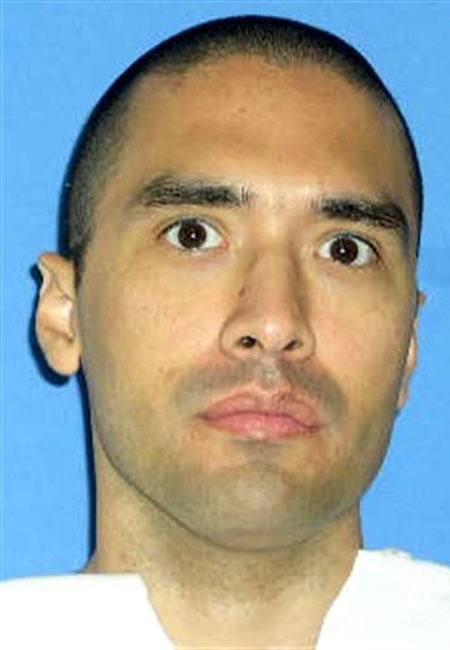 Rolando Ruiz
Murderer · USA · 1992
Rolando Ruiz was convicted of capital murder and was sentenced to death in Bexa…
1 victim
Rolando Ruiz
Murderer · USA · 1992
Rolando Ruiz was convicted of capital murder and was sentenced to death in Bexa…
1 victim
 Julia Andrews
Murderer · USA · 2012
Julia Andrews was sentenced to 44 years in prison on August 8, 2013. A jury of…
1 victim
Julia Andrews
Murderer · USA · 2012
Julia Andrews was sentenced to 44 years in prison on August 8, 2013. A jury of…
1 victim
 Craig Zebroski
Murderer · USA · 1996
Craig Zebroski was a White male born on 09/06/1977. He was sentenced to death o…
1 victim
Craig Zebroski
Murderer · USA · 1996
Craig Zebroski was a White male born on 09/06/1977. He was sentenced to death o…
1 victim
- Gender
- male
- Country
- USA
- Location
- Anchorage, Alaska, USA
- Date of birth
- 1948
- Age at first offence
- 25
- Characteristics
- history of mental illness, mentally ill, shooting spree, torture
- Victim profile
- A mentally retarded Alaskan Indian / Joseph Kimler, 19; Vern Sylvester, 19; Sabrina Imlach, 16, and Rebecca Phillips, 16
- Method of murder
- Beating / Shooting
- Date(s) of murder
- 1973 / 1982
- Years active
- 1973–1982
- Date of arrest
- May 6, 1982
- Status
-
Died in custody
Acquitted on grounds of insanity, 1973; sentenced to 396 years without parole in four counts, 1983; died in prison
Case record: Charles Meach
Background
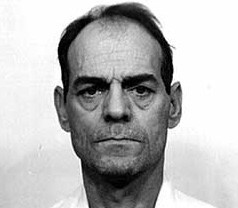
Charles L. Meach III was born and lived with a history of mental illness. He had been confined at a California mental hospital for an earlier killing and was later sent to the Alaska Psychiatric Institute. He used a plea of “not guilty because of mental disease or defect” successfully in a 1973 murder trial.
In 1973, after confinement at a California mental hospital for the earlier killing, Meach was sent to Atascadero State Hospital in California and later returned to Anchorage. Under Alaska law, if he was not insane, he had to be set free, but the institute delayed that step. Instead, it gave him day passes to freedom.
Psychiatrists later said that in 1980 Meach’s mental illness was in remission, and he was returned to Anchorage and held at the Alaska Psychiatric Institute.
The offence
Meach was accused of killing four teenagers in Russian Jack Springs Park after he was on a pass from the Alaska Psychiatric Institute.
A “blue bicycle” had been seen in connection with the case, and the police examined sales records at local bicycle shops, discovering a bicycle had been sold to Meach. After police turned up records of his earlier crime, he confessed to shooting the teen-agers.
Meach’s confession described his sequence of events. He said his favorite shirt had been stolen, which upset him, so he went to a bar. He then decided to steal something himself. He remembered seeing cassette tapes in a tent. He got a gun that he had bought from a man on the street and then buried it. He bicycled to the park and was caught by the owner as he prepared to rummage through the tent.
According to his confession, Meach concealed the gun until the youth, Joseph Kimler, turned his back, then shot him in the back of the head. When a second teen-ager, Vern Sylvester, came to see what had happened, he was shot in the back of the head. When the two girls, Sabrina Imlach and Rebecca Phillips, came to the tent, each was killed by a shot to the head.
Meach said of the day of the killings:
“I'm a fool. I'll admit it. I had some drinks in a bar. I did all the things I wasn't supposed to do.”
Investigation
On May 3, the bodies of two 19-year-old men and two 16-year-old girls were found in Russian Jack Springs Park.
Three days later, the police went to the psychiatric institute to interview Meach. Someone at the park had recalled seeing a new blue bicycle, leading police to examine every sales receipt at local bicycle shops, which led them to records that a bicycle had been sold to Meach.
Newspapers printed his confession.
While he was in Atascadero, Meach composed a paper titled “How to Survive a Multidisciplinary Meeting,” in which a mental patient is examined. The paper came into the possession of Dave Wexler, a law professor at the University of Arizona, who made it available to The Anchorage Times.
The newspaper account said that, along with advice to show remorse and sympathy for victims, Meach advised mental patients undergoing examination to express fear of alcohol, while accepting full responsibility and thereby perhaps drawing sympathy.
Arrest
Meach entered a plea on June 15 of “not guilty because of mental disease or defect.”
Governor Jay S. Hammond urged revisions to Alaska’s statutes on dealing with the criminally insane within a week of Meach’s arrest. In a month, the law was revised. Meach’s case did not fall under the new law because it was not in effect at the time of the killings.
Trial
Meach’s plea was not guilty because of mental disease or defect and had been expected, because he had used it nine years earlier after he beat and kicked to death a mentally retarded Alaskan Indian whom he met in a topless bar.
He later told the police that his victim had an irritating voice.
In 1973, after two psychiatrists and a psychologist testified that Meach was a paranoid schizophrenic, a judge found him not guilty by reason of insanity. He was then sent to Atascadero State Hospital in California.
Sentencing
After the 1973 murder trial, Meach was acquitted on grounds of insanity and later sent to Atascadero State Hospital in California.
In 1983, Meach was sentenced to 396 years without parole in four counts.
Appeals
No appeal outcome or appellate proceedings were stated.
Outcome
Meach entered his June 15 plea of “not guilty because of mental disease or defect.” His earlier case resulted in an acquittal on grounds of insanity in 1973, and in 1983 he received a 396-years-without-parole sentence in four counts. He died in prison.
Aftermath
The speed with which the revised Alaska law on insanity pleas was passed created some dispute and brought the Meach case under examination.
Many Alaskans compared the Meach case to the case of John W. Hinckley Jr. A Washington jury found Hinckley not guilty by reason of insanity in the shooting of President Reagan and three other men.
Natalie Gottstein, executive director of the Alaska Mental Health Association, spoke for those disturbed by the legislative haste in acting on the proposed change. She wrote in a formal statement:
“We suppport the Governor's prompt attention to the matter but are concerned with the legislative haste in acting on this proposed change in the law,”
The revised law increased possible verdicts in a criminal trial. Formerly, verdicts were “guilty,” “not guilty,” and “not guilty by reason of insanity.” The new law provided for a verdict of “guilty, but mentally ill.” The convicted person was then to be sentenced to a term to be served in a mental hospital as long as the mental illness persisted. When the illness disappeared, confinement was to be in a prison for the balance of the term.
A problem for the defense was stated to be that Meach’s doctors had found him sane and a candidate for release only a few weeks before the killings.
Other details
Meach got a job as a dishwasher and enrolled for two semesters at the University of Alaska. He had a student loan and worked as a bookkeeper, then as a clothing salesman.
Those who learned he lived in the psychiatric institute were told that he had a drinking problem. The institute was prevented by privacy laws from telling his new associates of his past.
Victims named in connection with the park killings were Joseph Kimler, Vern Sylvester, Sabrina Imlach, and Rebecca Phillips.
A motive and specific method were described through the confession as shooting in the back of the head and shooting to the head of each named victim, after he was caught rummaging through a tent.
Spotted an error, or have more information about this case?