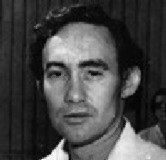
Douglas Crabbe
Mass murderer Julian Knight
Mass murderer · Australia · 1987
Julian Knight was a 19-year-old former Australian Army officer cadet who was ar…
7 victims
Julian Knight
Mass murderer · Australia · 1987
Julian Knight was a 19-year-old former Australian Army officer cadet who was ar…
7 victims
 Wade Frankum
Mass murderer · Australia · 1991
Wade Frankum Committed suicide by shooting himself the same day; in 1991 Wade F…
7 victims
Wade Frankum
Mass murderer · Australia · 1991
Wade Frankum Committed suicide by shooting himself the same day; in 1991 Wade F…
7 victims
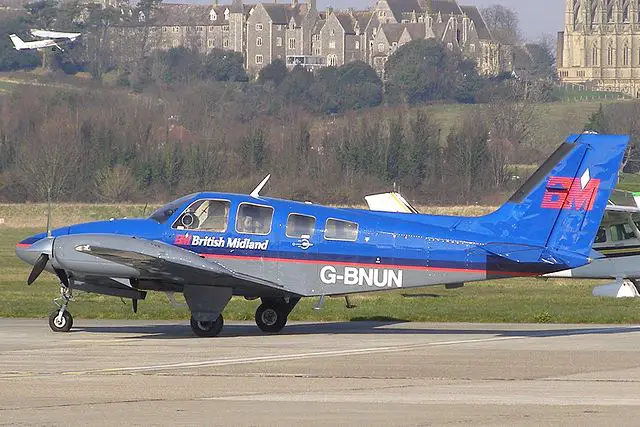 Colin Richard Forman
Mass murderer · Australia · 1977
5 January 1977 — Colin Richard Forman carried out an aircraft suicide attack at…
4 victims
Colin Richard Forman
Mass murderer · Australia · 1977
5 January 1977 — Colin Richard Forman carried out an aircraft suicide attack at…
4 victims
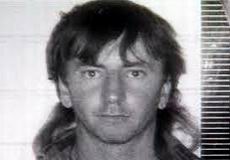 William Patrick Mitchell
Mass murderer · Australia · 1993
William Patrick Mitchell, also known as “Bill Mitchell,” committed the Greenoug…
4 victims
William Patrick Mitchell
Mass murderer · Australia · 1993
William Patrick Mitchell, also known as “Bill Mitchell,” committed the Greenoug…
4 victims
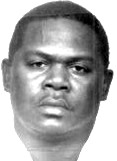 Tony Lee Walker
Murderer · USA · 1978
Tony Lee Walker was convicted of capital murder for the killing of Virginia Sim…
3 victims
Tony Lee Walker
Murderer · USA · 1978
Tony Lee Walker was convicted of capital murder for the killing of Virginia Sim…
3 victims
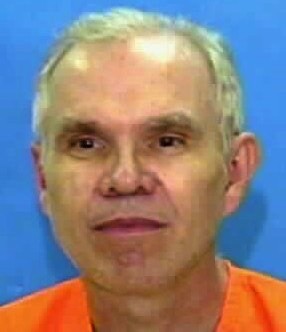 George James Trepal
Murderer · USA · 1988
George James Trepal was convicted and sentenced to death for the murder of Pegg…
1 victim
George James Trepal
Murderer · USA · 1988
George James Trepal was convicted and sentenced to death for the murder of Pegg…
1 victim
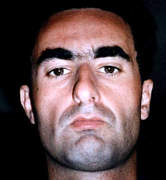 Richard Durn
Mass murderer · France · 2002
Richard Durn Richard Durn was a 33-year-old gunman who opened fire at the end o…
8 victims
Richard Durn
Mass murderer · France · 2002
Richard Durn Richard Durn was a 33-year-old gunman who opened fire at the end o…
8 victims
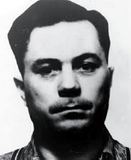 William Raymond Nesbit
Murderer · USA · 1936
William Raymond Nesbit (June 1, 1899 – August 1983) was a 1930s jewel thief. He…
1 victim
William Raymond Nesbit
Murderer · USA · 1936
William Raymond Nesbit (June 1, 1899 – August 1983) was a 1930s jewel thief. He…
1 victim
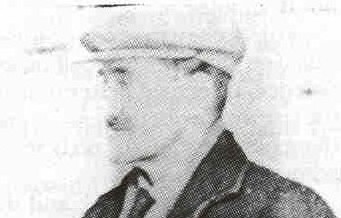 Frederick Nodder
Murderer · United Kingdom · 1937
Frederick Nodder lived at 9 Neill Road, Sheffield in 1934, in the Hunters Bar d…
1 victim
Frederick Nodder
Murderer · United Kingdom · 1937
Frederick Nodder lived at 9 Neill Road, Sheffield in 1934, in the Hunters Bar d…
1 victim
- Gender
- male
- Country
- Australia
- Location
- Yulara, Northern Territory, Australia
- Date of birth
- 1948
- Age at first offence
- 35
- Characteristics
- revenge, alcohol, drug addict
- Victim profile
- Two men and three women
- Method of murder
- Drove his 25 ton Mack Truck into a crowded bar
- Date(s) of murder
- August 18, 1983
- Years active
- 1983
- Date of arrest
- Next day
- Status
-
Life imprisonment
Sentenced to five consecutive terms of life imprisonment (non-parole period of 30 years) on October 7, 1985
Case overview
Douglas John Edwin Crabbe (b. 1948) was sentenced to five consecutive terms of life imprisonment with a non-parole period of 30 years. He was convicted of five counts of murder arising from a multiple murder committed when he rammed his 25 ton Mack truck through a hotel wall at the Inland Hotel at Yulara in the Northern Territory on August 18, 1983, killing five people and seriously injuring sixteen others. The incident was sometimes referred to as the Mack Truck murders. He was detained in Darwin following the offence.
Timeline
- August 18, 1983 — Douglas John Edwin Crabbe drove a 25 ton Mack truck into a crowded bar at the Inland Hotel at Yulara; five people were killed and sixteen others were seriously injured.
- March 24, 1983 — Crabbe attended a country and western function in Curtin Springs and became involved in a fight on two occasions involving police.
- February 1983 — Crabbe was arrested and charged for assault on a car load of youths at a service station near Tennant Creek.
- October 1983 — A court hearing occurred at which a police video taken on August 18, 1983 was shown; Crabbe was charged with five counts of murder.
- March 1984 — At trial, Crabbe was convicted of all five counts of murder by a jury.
- 1984 — Crabbe was sentenced to life imprisonment.
- 7 October 1985 — At a second trial in the Darwin, Northern Territory Supreme Court, a second jury convicted Crabbe on all five counts of murder and he was sentenced to five consecutive terms of life imprisonment with a thirty-year minimum non-parole period backdated to August 18, 1983.
- Early 2005 — Crabbe was moved to a prison in Perth, Western Australia after strong pleas from his family, including his sister, Flo.
- 8 December 2004 — The High Court of Australia decision The Queen v Crabbe [2004] NTSC 63 was delivered.
- August 2013 — Crabbe would have been eligible for release on parole on August 18, 2013 at the age of 66.
Background
Crabbe worked as a truck driver and began driving at the age of 14. He was a truck driver all his working life.
In February 1983, Crabbe was arrested and charged for assault on a car load of youths at a service station near Tennant Creek. The youth were harassing the service station console operator and also provoked Crabbe, who retaliated by jumping up and down on the bonnet of the victims car.
On March 24, 1983, Crabbe attended a country and western function in Curtin Springs and became involved in a fight on two occasions involving police.
The offence
In the early hours of August 18, 1983, Crabbe drove his 25 ton Mack Truck into a crowded bar of the Inland Hotel at Yulara in the Northern Territory. Five persons were killed and sixteen were injured.
Earlier that evening, Crabbe went to the Inland Hotel. He drank at the bar for about an hour. He was refused service for intoxication, walked behind the bar, confronted bar staff, became involved in a fight, and was ejected from the premises at 12.30am. He then walked approximately 500 metres to his parked Mack truck.
Crabbe drove the truck to a nearby motel where he unhitched one of two attached trailers. According to witness Martin Fisher, "Crabbe then manoeuvred the 25 ton Semi and trailer, at speed, around a blind bend, through a car park, around a minibus, turned and drove it through the bessa brick wall into the crowded bar, crushing the people there. Leaving the engine running, he then got out of the truck, smiled down at one of his victims, stepped over some bodies and ran. This was at 1.10am. It had been 40 minutes between being thrown out and driving the truck into the bar. He was captured the next morning walking out of the bush 22 kilometres away."
Witnesses described the impact of the truck hitting the hotel to that of a bomb exploding.
The truck penetrated the building to the length of one trailer. The truck remained in place after impact, and was the only thing holding up the building's roof. After the crash, the dining room adjacent to the bar became an emergency clinic for the injured.
Four people were killed instantly in the crash. A fifth person died in a hospital in Alice Springs, Northern Territory after surgeons worked for five and a half hours to save her life. The 35 year old woman had sustained severe internal injuries.
Investigation and capture
Crabbe was captured the next morning walking out of the bush 22 kilometres away.
The capture occurred at the Yulara Tourist Village construction site after a search by police and Aboriginal trackers.
William Hugh O'Neill, the catering manager from the Yulara Construction Camp, testified that he found Crabbe walking towards him near the construction camp on the morning of August 18. Crabbe waited with O'Neill for police to arrive, asking the extent of the damage to the motel. Crabbe was informed by O'Neill that at least four people had died, including "one of my boys from the kitchen".
Trial: first trial (March 1984)
At an October 1983 court hearing, a police video taken on August 18, 1983 was shown. The video showed the bodies of four people killed instantly in a make shift mortuary set up at the back of the motel. It also showed damage to the bar area of the motel, with clothes and boots embedded in the ground under the truck and near its bloodstained bull bar, from which the officer who took the video said many of the dead had been pulled.
Crabbe, charged with five counts of murder at the hearing, sat expressionless as the video was shown.
Ronald Slinn, a building manager from Yulara, told the court he was hit by the truck, jamming his left leg under the front axle. He managed to drag himself out and found his 45-year-old wife Patricia Slinn half underneath with her face downward; she had been killed instantly.
A motel guest testified he saw a man, later identified from police photographs as Crabbe, running as if fleeing something. The man told the guest "Okay mate, I'm not going any further. I've gone far enough." After leaving to get help, the guest found that the man had disappeared.
At the trial in March 1984, a witness testified that Crabbe had been rude and aggressive in the bar. The witness reported she had later seen Crabbe on the floor of the bar, being held down by three men.
A second witness corroborated that a man had been involved in a scuffle with three men. This witness testified that after the truck crashed into the bar, he saw the man who had been involved in the scuffle leave the truck's cabin and exit "very quickly" towards the rear of the truck via the gaping hole the truck left in the side of the building. The witness had been knocked down by the truck.
Crabbe offered no reason for his actions.
At trial, Crabbe pleaded memory loss from his removal of the second trailer until waking to the sound of the truck's exhaust amid the damaged bar room after impact. He was convicted of all five counts of murder by a jury.
The judge sentenced Crabbe to the mandatory term of life imprisonment on each count of murder, with each term to run consecutively.
Asked if he had anything to say, Crabbe replied "No, nothing."
Appeals and retrial
Crabbe later appealed to the High Court of Australia. The High Court found that the judge at the original trial had erred in his summing up to the jury and the convictions were set aside. A retrial was ordered.
Trial: second trial (1985)
Crabbe pleaded not guilty at his second trial held in the Darwin, Northern Territory Supreme Court in 1985.
This trial concluded on October 7, 1985, when a second jury convicted him on all five counts of murder.
Sentencing (October 7, 1985)
Crabbe was again sentenced to five consecutive terms of life imprisonment, with a thirty-year minimum non-parole period. The thirty-year minimum was backdated to 18 August 1983, the day of the murders and his arrest, and it was to be served at the Alice Springs Correctional Centre. The longest in the Northern Territory's history was referenced in the sentencing description.
Post-sentencing and eligibility for parole
In early 2005, Crabbe was moved to a prison in Perth, Western Australia after strong pleas from his family, including his sister, Flo.
Crabbe would have been eligible for release on parole on 18 August 2013 at the age of 66. If he was paroled, he would have been on parole for the rest of his life. At the expiration of the non-parole period, release would be determined by the Parole Board and he would not be entitled to an automatic release.
Court reasons: The Queen v Crabbe [2004] NTSC 63
A sentencing application was heard in the Supreme Court of the Northern Territory. The decision is identified as The Queen v Crabbe [2004] NTSC 63 with parties THE QUEEN v CRABBE, Douglas John Edwin. The judgment was delivered 8 December 2004. Hearing dates were 26 November 2004. The judgment and reasons were by MARTIN (BR) CJ.
Application and request
The application was made by the Director of Public Prosecutions pursuant to the Sentencing (Crime of Murder) and Parole Reform Act 2003.
The Director sought an order revoking the non-parole periods of 25 years fixed by the Act in respect of those sentences together with an order fixing non-parole periods longer than 25 years. The Director did not apply for an order refusing to fix a non-parole period.
The respondent was serving sentences of life imprisonment for five crimes of murder.
Findings and reasoning relevant to the non-parole period
The court described the criminal conduct as occurring in the early hours of 18 August 1983. Crabbe was 36 at the time of the murders and had been driving since the age of 14.
The court was satisfied that when Crabbe left the bar after the scuffle or soon after leaving the bar, he formed an intention to drive his truck through the wall of the hotel. The court was also satisfied that he knew that a significant number of people were in the bar and that driving through the wall was highly likely to kill or seriously injure persons in the bar.
The court was satisfied that Crabbe was utterly indifferent to whether death or grievous bodily harm ensued, and that when he exited from the truck and the bar he was utterly indifferent to the harm he had caused. The court addressed evidence about Crabbe smiling at Mr Hannigan and stepping over him and over the rubble within the bar.
The court considered alcohol. The court was satisfied that Crabbe had consumed alcohol and that alcohol had contributed to the commission of the offence, but that Crabbe was not significantly affected by alcohol in the sense of being unable to form the required mental state. The court regarded intoxication as not significantly reducing moral culpability and regarded the addiction to alcohol as not a mitigating factor.
The court considered evidence about Crabbe's mental state and found that Crabbe was not suffering from any mental illness, psychological illness or psychological symptoms suggestive of psychosis.
The court considered prior offending including a February 1983 incident near Tennant Creek and a March 24, 1983 incident at Curtin Springs.
The court concluded that the crimes fell within the worse category of crimes of murder, and that there were no circumstances that significantly mitigated the objective seriousness of the crimes. It also found no subjective circumstances which mitigated the seriousness of the criminal conduct.
The court discussed rehabilitation and found that Crabbe had made every conceivable possible effort to rehabilitate himself and that he had been described as a model prisoner. The court also described him as deeply remorseful and acutely aware of the ongoing impact, and noted he was highly regarded by Correctional Services officers.
The court concluded that despite subsequent remorse and rehabilitation, they did not justify fixing the absolute minimum of 25 years.
Orders
The non-parole periods of 25 years in respect of each of the five sentences of life imprisonment were revoked.
A single non-parole period of 30 years commencing on 18 August 1983 was fixed. Crabbe would be eligible for parole in August 2013 when he would be 66 years of age.
Other details
Crabbe's crime was sometimes referred to as the Mack Truck murders.
The incident was documented by Australian rock band Hunters and Collectors on their 1984 album The Jaws of Life, with the lyrics of the opening track, "42 Wheels", sung from Crabbe's point of view. The artwork of the original vinyl LP included the memorial plaque at the pub where the incident happened.
Crabbe later appealed to the High Court of Australia, and the High Court decision noted that the judge at the original trial had erred in summing up to the jury, resulting in the convictions being set aside and a retrial ordered.
The high court discussion included quoting: "Crabbe then manoeuvred the 25 ton Semi and trailer, at speed, around a blind bend, through a car park, around a minibus, turned and drove it through the bessa brick wall into the crowded bar, crushing the people there. This was at 1.10am.
The High Court reasons also included quotation from Hannigan describing the timing: "Almost immediately. He opened up the door, swung it open. I called to him. He looked down at me, recognised me, smiled, stepped over me and was gone almost – in – in – in the one movement. There was no stopping."
The High Court reasons included this quotation by Crabbe in response to a question about driving into the wall with people in the bar: "It would be highly likely".
The High Court reasons included this quotation when Crabbe responded to the judge at trial: "No, nothing."
A quoting of Dr Wake was also included: "ventured" and the phrase "in one moment of madness" describing Crabbe's crimes.
The High Court reasons referenced a passage in The Queen v Crabbe (1985) 156 CLR 464: “the conduct of a person who does an act, knowing that death or grievous bodily harm is a probable consequence, can naturally be regarded for the purposes of the criminal law as just as blameworthy as the conduct of one who does an act intended to kill or to do grievous bodily harm. … If an accused knows when he does an act that death or grievous bodily harm is a probable consequence, he does the act expecting that death or grievous bodily harm will be the likely result, for the word “probable” means likely to happen. That state of mind is comparable with an intention to kill or to do grievous bodily harm.”
Spotted an error, or have more information about this case?