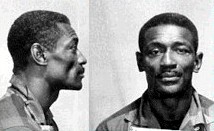
Lonnie Craft
Murderer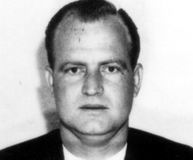 Gary Gene Tison
Murderer · USA · 1967
Gary Gene Tison was serving life sentences at the Arizona state prison. He had…
7 victims
Gary Gene Tison
Murderer · USA · 1967
Gary Gene Tison was serving life sentences at the Arizona state prison. He had…
7 victims
 Gary Duane Rardon
Murderer · USA · 1962
Gary Duane Rardon killed a man in 1962 and later served 4 years for manslaughte…
4 victims
Gary Duane Rardon
Murderer · USA · 1962
Gary Duane Rardon killed a man in 1962 and later served 4 years for manslaughte…
4 victims
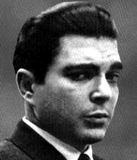 Charles Howard Schmid
Murderer · USA · 1964
Charles Howard Schmid was born on 8 July 1942 and was adopted by Charles and Ka…
3 victims
Charles Howard Schmid
Murderer · USA · 1964
Charles Howard Schmid was born on 8 July 1942 and was adopted by Charles and Ka…
3 victims
 Karl Ludwig Sand
Murderer · Germany · 1819
Karl Ludwig Sand was a German university student and a member of a liberal Burs…
1 victim
Karl Ludwig Sand
Murderer · Germany · 1819
Karl Ludwig Sand was a German university student and a member of a liberal Burs…
1 victim
 Constance Kent
Homicide · United Kingdom · 1860
Constance Kent was named Constance Emily Kent and was born 6 February 1844. She…
1 victim
Constance Kent
Homicide · United Kingdom · 1860
Constance Kent was named Constance Emily Kent and was born 6 February 1844. She…
1 victim
 Karl Bluestone
Murderer · United Kingdom · 2001
Karl Bluestone was a Gravesend police officer. · 28 August 2001 — Karl Blueston…
3 victims
Karl Bluestone
Murderer · United Kingdom · 2001
Karl Bluestone was a Gravesend police officer. · 28 August 2001 — Karl Blueston…
3 victims
 Chevie Kehoe
Murderer · USA · 1996
Chevie Kehoe was born on January 19, 1973, and was identified as the oldest of…
3 victims
Chevie Kehoe
Murderer · USA · 1996
Chevie Kehoe was born on January 19, 1973, and was identified as the oldest of…
3 victims
- Gender
- male
- Country
- USA
- Location
- Maricopa County, Arizona, USA
- Date of birth
- April 6, 1917
- Age at first offence
- 40
- Characteristics
- —
- Victim profile
- His ex-wife Virginia Cook
- Method of murder
- Shooting
- Date(s) of murder
- March 6, 1957
- Years active
- 1957
- Date of arrest
- Same day (suicide attempt)
- Status
-
Executed
Executed by asphyxiation-gas in Arizona on March 7, 1959
Case information
Defendant: Lonnie Craft Victim: Virginia C. Craft (ex-wife) County Attorney: Charles C. Stidham Trial judge: Judge Lorna E. Lockwood Trial court: Division #5 of the Superior Court of the State of Arizona, County of Maricopa Appellate court: Arizona Supreme Court Case/appeal references: CAUSE # 30249; Arizona Supreme Court STATE OF ARIZONA, APPELLEE, v. LONNIE CRAFT, APPELLANT December 31, 1958 Occupation (defendant): Mason Tender Education (defendant): Eighth grade education Citizenship (defendant): American citizen
Timeline
- 3-27-57 — CAUSE # 30249 was listed in the statement of facts of conviction.
- 4-12-57 — Defendant was arraigned in Superior Court and entered a plea of Not Guilty, waiving the 60 day waiting period.
- 8-14-57 — Trial was had in Division #5 of the Superior Court of the State of Arizona, County of Maricopa, with the jury returning a verdict of Guilty to the crime as charged on the 20th day of August, 1957.
- 20th day of August, 1957 — Jury returned a verdict of Guilty to the crime as charged.
- 20th day of September, 1957 — Defendant was sentenced to death in the gas chamber, Arizona State Prison at Florence, Arizona on the 6th day of December, 1957 between the hours of 5:00 A.M. and 6:00 A.M.
- 6th day of December, 1957 — Defendant was sentenced to death in the Gas Chamber at Arizona State prison, Florence, Arizona, between the hours of 5:00 am and 6:00 am.
- March 6, 1957 — Defendant picked up his paycheck and bought a gun.
- September 1956 — Defendant was divorced by his wife, Virginia Cook, after having been married approximately 13 months.
- December 31, 1958 — Arizona Supreme Court decision is identified with the case caption.
- March 7, 1959 — Defendant was executed by asphyxiation-gas in Arizona.
The offence
The defendant was charged with Murder 1st Degree, and an information was filed in the Superior Court of Maricopa County, State of Arizona, on the 27th day of March, 1957, charging defendant with the crime of MURDER, 1st Degree, a Felony.
The defendant was formerly the husband of Virginia C. Craft, the victim of the alleged homicide. Virginia C. Craft was an employee of the Dispatch Laundry, across the street from the Sublette restaurant.
The defendant bought a pistol and ammunition, met the victim for lunch, and shot her while they were having a conversation. He shot twice, and Virginia fell to the floor. He continued shooting her to death while she was on the floor and then shot and wounded himself.
In a statement, the defendant said the victim told him while at the restaurant she was tired of him and was going to leave him. The defendant also stated that he purchased the pistol to use on both of them because she wanted to leave him and didn't want him around.
The defendant admitted buying the gun with the intention of killing his ex-wife if she refused to return to him.
Investigation
The facts and circumstances surrounding the commission of the crime were described in the statement of facts of conviction as follows:
- The defendant stated that during the marriage a lot of trouble was brought on by interference from his father-in-law.
- On March 6, 1957, the defendant picked up his paycheck and bought a gun.
- From the store where he purchased the gun, he went to the Dispatch Laundry, 1600 block of East Washington, where Virginia Cook was employed, and asked her to go to lunch with him. She replied that she would think about it.
- The defendant went to Sublett's Cafe and waited for her.
- The victim came in, joined him at the counter, and lunch was ordered.
- The defendant asked her to come back to him.
- The victim replied that it was no good and that she was going to leave town because Phoenix wasn't big enough for both of them.
- At that point, the defendant drew the gun from his right pants pocket with his right hand and shot her twice in the back.
- She fell to the floor.
- The defendant rose from his stool and fired two more shots into her body; these last two shots were fired into her back.
- The defendant then turned the gun on himself and fired two shots into his chest area and then emptied the gun by firing aimlessly at his wife.
- He went to his knees on the floor, reloaded the gun, and fired one more shot into himself.
In the appellate recitation of facts, the description included that the defendant was attempting a reconciliation, accompanied the victim downtown, arranged to meet her at the restaurant for lunch, and met as planned after waiting until 10:00 o'clock for the Savings and Loan Association to open where he had funds on deposit.
Arrest / prosecution initiation
An information was filed in Superior Court of Maricopa County, State of Arizona, on the 27th day of March, 1957, charging defendant with MURDER, 1st Degree, a Felony.
Trial
Plea and arraignment:
- On the 12th day of April, 1957, defendant was arraigned in the Superior Court of Maricopa County, State of Arizona, and entered a plea of not guilty to the crime as charged, waiving the 60 day period.
- On the 4-12-57 entry, defendant was arraigned in Superior Court and entered a plea of Not Guilty, waiving the 60 day waiting period.
Jury verdict:
- Trial was held in Division No. 5 of the Superior Court of the State of Arizona, County of Maricopa.
- The jury returned a verdict of guilty to the crime as charged on the 20th day of August, 1957.
Sentencing:
- Sentencing occurred in Division #5 of the Superior Court of the State of Arizona, County of Maricopa, with Judge Lorna E. Lockwood presiding.
- The sentence was death in the Gas Chamber at Arizona State prison, Florence, Arizona on the 6th day of December, 1957 between the hours of 5:00 am and 6:00am.
Appeals
Claims and appellate discussion
The defendant appealed, contending:
- The evidence was insufficient to warrant a conviction of first degree murder.
- The court refused to instruct the jury that proof of a homicide by means of a revolver does not itself compel the presumption of premeditation or deliberation and that there may be an intention to kill which may not amount to a premeditated design and that shooting intentionally is not necessarily the same as doing so with premeditation.
- During defense counsel’s argument, he was interrupted by a disturbance created by the mother of decedent exclaiming within hearing of the jury: "He killed my baby, he killed my baby."
- The instruction given by the trial court to the jury after rereading the instructions tended to coerce and importune the jury and deprive defendant of a free unbiased judgment, and that it was erroneous due to an insufficient period of deliberation to warrant the same.
- A procedural error occurred because the court did not hold a formal hearing on the defendant’s mental condition.
Appellate rulings described
The appellate court concluded:
- There was no merit to the contention that the evidence was insufficient, and that the jury was justified in finding that in killing the victim, the defendant was prompted by malice aforethought and that the same was premeditated.
- The trial court’s instructions had carefully defined first degree murder as a premeditated killing with malice aforethought; defined premeditation and malice; told the jury that both must be proven beyond a reasonable doubt to convict of first degree; and that the defendant was presumed to be innocent.
- Under the trial court’s instructions, the appellate court found no possibility that the jury arrived at its verdict by presuming premeditation merely because the homicide was committed by means of a revolver.
- Since the matters in the requested instructions were adequately covered, there was no error in refusing the same.
Regarding the disturbance during argument, the appellate court stated:
- There was no request for a mistrial or cautionary instruction at the time of the incident.
- The matter was raised on motion for new trial.
- The record did not contain what happened except the argument of counsel and memory of the trial judge on motion for new trial.
- Defense counsel and the prosecuting attorney presented different versions of what transpired.
- The county attorney stated he was sitting close to the alleged offender and heard a muttering and interrupted defense counsel, conferred with the court, and then the trial judge had the bailiff enter the back of the courtroom and cause the lady to leave the room.
- The court heard no remark and saw no evidence that any juror heard the same, and the appellate court did not feel the defendant was prejudiced under these circumstances.
Regarding the jury instruction after rereading, the appellate court described the giving of a further instruction that began with:
"I am going to give you a further instruction, ladies and gentlemen, at this time. You are instructed that although the verdict to which each juror agrees must, of course, be his own verdict and the result of his own convictions and not a mere acquiescence in the conclusion of his fellows, yet in order to bring twelve minds to a unanimous result you must examine the question submitted to you with candor and with proper regard and deference to the opinions of each other. There is no reason to suppose that this case will ever be submitted to twelve more fair and impartial and intelligent jurors than yourselves or those more competent to decide it, or that more and clearer evidence will be produced on one side or the other. Now, with this in view, it is your duty to decide this case if you can without yielding your conscientious convictions. In conferring together you ought to pay proper attention to each other's opinions and listen with a disposition to be convinced by each other's arguments; and, on the other hand, if a larger number of your panel are for conviction, a dissenting juror should consider whether a doubt in his own mind is a reasonable one which makes no impression on the minds of so many jurors equally honest, equally intelligent with himself, who have heard the same evidence and have taken the same oath; and if, on the other hand, the majority are for the defendant, the minority should ask themselves whether they may not and ought not to reasonably doubt seriously the correctness of a judgment which is not concurred in by most of those others with whom they are associated, and distrust the weight and sufficiency of that evidence which fails to carry conviction to the minds of their fellow jurors. Now, this instruction has been given you in order to assist you in attempting to arrive at a verdict if you possibly can under all of the instructions of the Court which I have heretofore given you and that which I have just now given you. With this instruction, ladies and gentlemen, I will request that you continue your deliberations."
The appellate court held that the instruction did not encourage a juror to surrender individual judgment, and that there was nothing indicating the court desired conviction or overemphasized the importance of any verdict. The court stated it had been approved twice previously, citing State v. Voeckell, 69 Ariz. 145, 210 P.2d 972 and State v. Lubetkin, 78 Ariz. 91, 276 P.2d 520. It found no coercion, particularly noting the jury deliberated about two hours after the instruction before reaching a verdict, and that there was no indication the court would demand long deliberation.
Regarding mental condition, the appellate court recounted that:
- Defendant’s counsel filed a motion requesting the appointment of two qualified experts to examine the defendant with regard to his mental condition, supported by an affidavit of counsel that he believed the defendant was unable to understand the proceedings against him and assist in his defense.
- The judge appointed Drs. McGrath and Bendheim to examine the defendant and directed them to file copies of their conclusions with the county attorney and defense counsel.
- The doctors examined the defendant and filed separate reports to the effect that defendant was able to understand the nature of the proceedings against him and assist counsel in his defense.
- Copies were sent to respective counsel.
- No hearing was held and no ruling had concerning the defendant’s present mental condition, and the case went to trial about two months subsequent to the examinations and reports of the doctors.
- At no time did the defense request a hearing or object to going to trial without one.
- Rule 250, subd. A, Rules of Criminal Procedure, 17 A.R.S. was discussed as requiring a hearing if the court has reasonable ground to believe defendant is insane or mentally defective to the extent he is unable to understand proceedings or assist in his defense, and allowing appointment of two disinterested and qualified experts.
- The appellate court stated it was a procedural error not to set a hearing as the rule provides, but concluded the defendant should not have been allowed to sit by and take advantage of the error after it occurred.
- The appellate court stated there was slight lay evidence concerning mental condition at trial and no expert evidence of insanity at the time of the commission of the offense.
- The court submitted the issue of defendant’s insanity at the time the offense was committed to the jury, and the jury found the defendant sane.
- The appellate court concluded it failed to see how defendant could possibly have been prejudiced by the procedural error.
The appellate court concluded: after thorough consideration, the judgment and sentence were affirmed.
Separate opinions
Concurrence (specially concurring):
- UDALL, C. J., and STRUCKMEYER, J., specially concurring, agreed defendant was accorded a fair and impartial trial and that the evidence warranted the jury finding him guilty of murder in the first degree and fixing the penalty at death.
- They stated they were convinced the trial court exercised no coercion to force a verdict and concurred in affirming the judgment.
Further commentary within the special concurrence: The specially concurring judges stated:
- The instruction’s coercive effect depended on circumstances.
- They expressed convictions that, though they did not claim giving the instruction itself constituted reversible error, wisdom would dictate its use by trial judges should be rare indeed.
- They stated they were pleased the court’s opinion made it clear that: "It is not imperative that the instruction be given at all * * *."
- They stated they would scrutinize circumstances and would vote for a reversal if it reasonably appeared the jury had been subjected thereby to duress or coercion.
Outcome / disposition
The Arizona Supreme Court affirmed the judgment and sentence.
Aftermath
The defendant was executed by asphyxiation-gas in Arizona on March 7, 1959.
Other details
Defendant’s personal history as described
The defendant named as LONNIE CRAFT stated:
- He was born at Phoenix, Arizona on the 6th day of April, 1917.
- His parents were deceased.
- Two brothers and two sisters were living.
- He was divorced, having been married twice.
- No children were born of either marriage.
- He spent 18 months in the merchant marine.
- He had an eighth grade education.
- He had been in the State of Arizona, County of Maricopa for 40 years.
- He was a Mason Tender by occupation.
Prior record
The defendant’s FBI record consisted of:
- Four felony convictions, including the one detailed above.
- Two misdemeanor convictions.
Court personnel and procedural notes
The statement of facts of conviction included:
- "Respectfully submitted this 15th day of November, 1957."
- Arizona Supreme Court STATE OF ARIZONA, APPELLEE, v.
The appellate recitation included:
- The jury was given the case after five o'clock in the evening.
- About 11:00 o'clock the next morning, the jury requested a rereading of the instructions, which was done.
- After that, the court sua sponte gave the further instruction, and the verdict was returned two hours and fifteen minutes after the instruction was given.
Spotted an error, or have more information about this case?