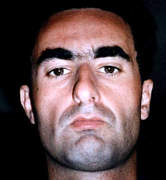
Richard Durn
Mass murderer David Hotyat
Mass murderer · France · 2003
David Hotyat was convicted of murdering the five members of the Flactif family…
5 victims
David Hotyat
Mass murderer · France · 2003
David Hotyat was convicted of murdering the five members of the Flactif family…
5 victims
 Serge Fortin
Mass murderer · France · 1999
October 2001 — His sentence was commuted to 30 years in prison. · October 2003…
4 victims
Serge Fortin
Mass murderer · France · 1999
October 2001 — His sentence was commuted to 30 years in prison. · October 2003…
4 victims
 Roger Girerd
Mass murderer · France · 1965
Roger Girerd was the perpetrator of a mass murder in Charvieu-Chavagneux on May…
10 victims
Roger Girerd
Mass murderer · France · 1965
Roger Girerd was the perpetrator of a mass murder in Charvieu-Chavagneux on May…
10 victims
 Jules-Alexandre Ughetto
Mass murderer · France · 1928
Paris, 17th September. A woodcutter made a plea at the trial of two lads. He sa…
5 victims
Jules-Alexandre Ughetto
Mass murderer · France · 1928
Paris, 17th September. A woodcutter made a plea at the trial of two lads. He sa…
5 victims
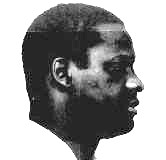 Charlie Livingston
Murderer · USA · 1983
Charlie Livingston was executed by lethal injection in Texas on November 21, 19…
1 victim
Charlie Livingston
Murderer · USA · 1983
Charlie Livingston was executed by lethal injection in Texas on November 21, 19…
1 victim
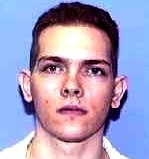 Robert Gene Will
Murderer · USA · 2000
Robert Gene Will, II (TDCJ Number 999402) was convicted of capital murder and s…
1 victim
Robert Gene Will
Murderer · USA · 2000
Robert Gene Will, II (TDCJ Number 999402) was convicted of capital murder and s…
1 victim
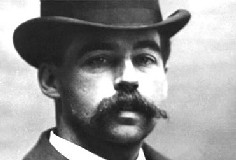 Herman Webster Mudgett
Serial killer · USA - Canada · 1886
Herman Webster Mudgett (May 16, 1861 – May 7, 1896), better known under the ali…
27 victims
Herman Webster Mudgett
Serial killer · USA - Canada · 1886
Herman Webster Mudgett (May 16, 1861 – May 7, 1896), better known under the ali…
27 victims
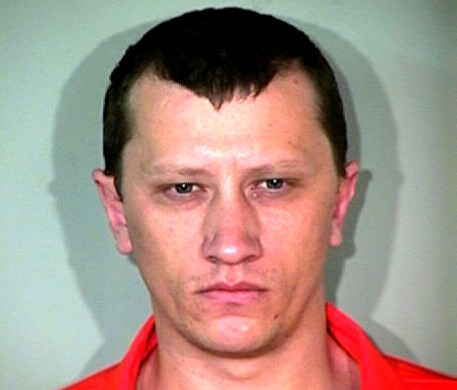 Beau John Greene
Murderer · USA · 1995
Beau John Greene was sentenced to death on August 26, 1996. Greene wrote a lett…
1 victim
Beau John Greene
Murderer · USA · 1995
Beau John Greene was sentenced to death on August 26, 1996. Greene wrote a lett…
1 victim
 Ronald Allen Smith
Murderer · USA · 1982
Ronald Allen Smith (born September 7, 1957) was a Canadian man. He was sentence…
2 victims
Ronald Allen Smith
Murderer · USA · 1982
Ronald Allen Smith (born September 7, 1957) was a Canadian man. He was sentence…
2 victims
- Gender
- male
- Country
- France
- Location
- Nanterre, Île-de-France , France
- Date of birth
- 1969
- Age at first offence
- 33
- Characteristics
- revenge
- Victim profile
- Monique Leroy-Sauter, 43 / Louiza Benakli, 40 / Michel Raoult, 58 / Christian Bouthier, 46 / Olivier Mazzotti, 38 / Pascal Sternberg, 30 / Valérie Méot, 40 / Jacotte Duplenne, 48 (councilors)
- Method of murder
- Shooting
- Date(s) of murder
- March 27, 2002
- Years active
- 2002
- Date of arrest
- Same day
- Status
-
Died in custody
Committed suicide the following day by leaping from a police station window during questioning
Name
Richard Durn
Background
Richard Durn was a 33-year-old gunman who opened fire at the end of a council meeting in the Nanterre commune of Paris, France. He was originally from Slovenia and held a Masters degree in political science and a degree in history. Police said he had been an environmental activist and a former member of the Socialist Party before joining the Greens. He was also a member of the Ligue des droits de l'homme. He held licenses for weapons and had been described as unemployed, depressive, and suicidal.
Durn had been a municipal hall monitor at a local school and had worked part-time as a hall monitor. He volunteered at the local branch of France's Human Rights League and was treasurer of the local branch of the Human Rights League. Prosecutors said he had failed several exams for teaching and other positions. The prosecutor said he made several trips to Bosnia with relief organizations beginning in 1998. He had visited Kosovo on aid missions.
Several statements described Durn’s lack of a criminal record. He had attended council meetings frequently and sat quietly in the public gallery. A Green party councillor, Christian Demercaster, greeted Durn at the start of Tuesday night’s session. Christian Demercaster said: “He was somebody opposed to the directives of the city hall.” A spokeswoman for the Greens denied any links to Durn, and officials said he had been kept at arm’s length because he had been considered unbalanced.
Durn sent letters and left notes describing his plan and mental state. In a letter sent to a friend, Durn explained his plan: “Because I have by my own will become a kind of living-dead, I have decided to end it all by killing a small local elite which is the symbol of, and who are the leaders and decision makers in, a city that I have always detested.” He explained that he intended to kill the mayor, and then “as many people as possible [...] I will become a serial killer, a mad killer. Why? Because I am frustrated and I do not want to die alone, because I have had a shitty life. I want to feel powerful and free just once.”
“I want to have the same stature as bin Laden, Hitler, Stalin, Pol Pot, Milosevic...,” Richard Durn, 33, wrote, said the daily Le Parisien on Friday.
He also left a letter quoted as follows: “I've decided to put an end to my life, but before that, I'm going to be a serial killer,” and “I've gone mad, become a drop out and therefore I must die,” along with “For months now, thoughts of carnage and death have filled my head.” In a farewell letter to his mother, Reuters reported that Durn wrote: “Mama, I should have died a long time ago. I don't know what to do with my life, not even how to die without hurting others. ”
“But now, I'm fed up with this cowardice... I should die at least with the feeling of being free and getting a kick out of it. That's why I should kill some people. For once in my life, I'll have an orgasm.”
His final words in the letter to his mother were: “Be happy and brave, especially with all the idiots who'll hassle you. Love, Richard.”
After the shootings, police found a 13-page letter at Durn's home recounting a failed life and saying he was disgusted with himself and Nanterre and wanted police to kill him. Durn also told police during interrogation that he often “thought about killing someone and killing himself afterward.” His mother, Stephanie, said Durn began psychotherapy in 1990, asking the therapist to “Help me to die.”
In several letters sent to acquaintances, Durn wrote: “I've gone mad, become a dropout and must therefore die.” His mother said: “Richard felt worthless, crap, burnt out and a loser. He couldn't bear life any longer,” and: “For him, death was the only solution. But, he didn't want to die alone, he wanted to kill as many people as possible.” Nanterre Public Prosecutor Yves Bot told journalists: “The explanation for his act lies in the feeling he had of total personal failure for which he blamed the society in which he lived.” Yves Bot added: “He said he had been blocked at every turn and used. He wanted to control events, control his life, kill people and then himself.” Criminologist Stephane Bourgoin was quoted: “Since this type of person cannot bear his existence as a loser, he seeks to make others responsible for his own failures.”
The offence
On March 27, 2002, Richard Durn opened fire at approximately 1:15 a.m. (CEST) at the Nanterre town hall at the end of a meeting of the municipal council chaired by Mayor Jacqueline Fraysse. Durn rose from his seat, removed firearms previously hidden under his jacket, and opened fire after the meeting ended.
Durn killed eight councilors and injured 19 others, with 14 critically injured. He fired from the public gallery at council members after Mayor Jacqueline Fraysse closed the meeting. Witnesses said he did not speak during the shooting and opened fire without a word, shooting with both hands at about 40 people. About 50 shells were found scattered across the floor of the meeting room.
During the attack and as he was being subdued, Durn shouted “Kill me!” and also shouted “Kill me, kill me!” Durn was eventually overpowered by Gerard Perreau-Bezouille and other councilors. One account said an official threw a chair at Durn; that official was then seriously wounded when the suspect started firing again with his free hand. No police were present during the attack.
A police source was quoted as saying: “He said during questioning he went there to end his life but that he did not want to die anonymously.” Police said Durn fired three guns: two Glock automatic handguns and a .357 magnum Smith & Wesson, and that the .357 magnum revolver was never used. Other reports said he used two Glock semiautomatics and was also armed with a Smith & Wesson .357 magnum revolver, which was never used, and that the revolver was never used.
The attack was described as methodical, with Durn taking aim at about 40 city officials who were putting on their coats to leave. The victims were mostly young men and women councillors, including four members of the Communist Party.
Investigation
After the shootings, Durn was interrogated at the police station at 36 Quai des Orfèvres, Paris, on March 28. After confessing, Durn committed suicide by throwing himself from the fourth floor window.
A confession published in Le Parisien was referenced: “I had only intended to kill Nanterre mayor Jacqueline Fraysse.” Fraysse later asked: “How was (Durn) authorised to own weapons?” and “How could a man this dangerous, who had clearly stated his intention to commit suicide ... escape surveillance?”
After Durn’s death, prosecutors opened an immediate inquiry into his death, and the Justice and Interior ministries opened an inquiry as well. Interior Minister Daniel Vaillant was quoted: “I can tell you that if there was proven malfunctioning, sanctions will be taken,” and police were described as attempting to hold Durn by his legs during his suicide attempt.
Justice officials later cleared French police from accountability. The Justice Ministry statement said prosecutors expected “no legal action” against the officers who were questioning Durn. It added: “The report resulting from the inquiry...finds that there were errors of judgment due to an under-estimation of the risks linked to Richard Durn's personality and the layout of the premises,” and: “But these errors do not justify the launching of disciplinary procedures.” Lawyers representing Durn’s mother, Stefania Durn, said they would file a complaint seeking to establish what happened to Durn while he was in custody. Her lawyers said: “Madame Durn hopes, for the sake of the victims and those close to them, that the full story behind her son's death comes to light.”
Arrest and custody events
After the shooting, police arrested and detained Richard Durn. Witnesses said Durn did not speak during the shooting, and officials said he did not make any clear statement when he was arrested. He shouted “Kill me, kill me” as he was subdued before police arrived to make the arrest in the council chamber.
While he was in police custody at Paris headquarters, Durn leapt from a window. He was being questioned by a police captain in the Criminal Brigade building in Paris. Accounts described officers attempting to hold him: “The two officers tried to hold him by his legs, but the determination of the crazed gunman, most of whose body was already hanging outside, made their attempt fruitless,” a police statement said. Another quote from a police captain’s questioning situation described the leap: he got up, rushed to a small window, climbed up, and threw himself out, falling to the courtyard below.
Trial
No trial occurred because Richard Durn died by suicide while in custody.
Sentencing
No sentencing occurred because Richard Durn died by suicide.
Outcome
Richard Durn committed suicide the following day by leaping from a police station window during questioning. The immediate legal consequence was his death in custody, so there was no criminal trial.
Timeline
- 27 March 2002 — Richard Durn opened fire at the Nanterre town hall at approximately 1:15 a.m. (CEST), killing eight councilors and injuring 19 others.
- 28 March 2002 — Durn was interrogated at 36 Quai des Orfèvres, Paris, and then committed suicide by throwing himself from the fourth floor window during questioning.
Victims
Richard Durn killed eight councilors:
- Monique Leroy-Sauter, 43
- Louiza Benakli, 40
- Michel Raoult, 58
- Christian Bouthier, 46
- Olivier Mazzotti, 38
- Pascal Sternberg, 30
- Valérie Méot, 40
- Jacotte Duplenne, 48
Other details
Mayor and political figures
Mayor Jacqueline Fraysse was chaired over the municipal council meeting that ended before the shooting. President Jacques Chirac and Prime Minister Lionel Jospin were both involved in responses to the massacre. Interior Minister Daniel Vaillant was quoted as responding to Durn’s death in custody and to inquiries around it. Prime Minister Lionel Jospin called the rampage “a case of furious dementia” and said: “a horrifying tragedy that harms democracy -- a city council meeting in action,” and: “a case of furious dementia, a horrifying tragedy that harms democracy”. President Jacques Chirac described the events as “a completely unimaginable drama.” Alain Madelin called the shooting, “This American-style byproduct, we wished not to have in France.” Chirac later said it followed a pattern of rising lawlessness. Chirac was quoted at a seminar on violence in French schools in Savigny-sur-Orge: “The breakdown of law and order extends from everyday crime to the drama we saw during the night in Nanterre.”
Tribute
An official tribute was paid to the victims on April 2 in the presence of President Jacques Chirac, Prime Minister Lionel Jospin and Interior Minister Daniel Vaillant.
Letters and interrogation statements
During interrogation and as quoted in coverage, Durn was described as having said he often “thought about killing someone and killing himself afterward.” He also left letters stating “I've gone mad, become a dropout and must therefore die.” One police account said a 13-page letter was found at his home.
Weapons and ammunition
Police said Durn used two Glock semiautomatic pistols and a revolver. Another account said the revolver was a Smith & Wesson .357 Magnum, which was never used. French officials said about 50 shells were scattered across the floor.
Survivors’ statements and aftermath questions
A survivor, Samuel Rijik, was quoted expressing disappointment that Durn would never stand trial: “I would have liked to know the truth about his past ... to know where the fault lines were.” Nanterre’s deputy mayor, Lucien Batard, asked: “How can you kill yourself at police headquarters?” and said: “I didn't think someone at criminal police headquarters would have so much liberty of movement that he could jump out a window,” adding: “He killed the largest possible number of elected officials and he killed himself afterward.” Nanterre Mayor Jacqueline Fraysse said: “There is no excuse for this suicide,” and: “It is odious, indescribable and unjust. Families will be deprived of justice.” Fraysse added: “Councillors risked their lives and the police can't even watch him properly.” Daniel Vaillant called the suicide: “a serious blunder”.
Literature and analysis
French philosopher Bernard Stiegler discussed the massacre in his book, Acting Out. Stiegler argued that Durn’s feeling of non-existence was symptomatic of a society which tends to destroy the love of oneself and others, and that Durn’s actions represented a “hyper-diachronic” acting out made possible by this feeling of non-existence.
Classification and counts repeated in reporting
Multiple reports described the attack as killing eight people and wounding 19 others, with 14 injured seriously or critically, and stated that the meeting ended and Durn advanced wordlessly with a gun in each hand.
Spotted an error, or have more information about this case?