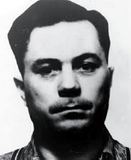
William Raymond Nesbit
Murderer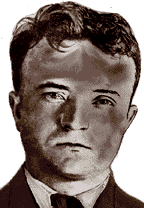 Paul Jaworski
Murderer · USA · 1926
Paul Jaworski was born in Poland as Paul Poluszynski in 1900. He later immigrat…
20 victims
Paul Jaworski
Murderer · USA · 1926
Paul Jaworski was born in Poland as Paul Poluszynski in 1900. He later immigrat…
20 victims
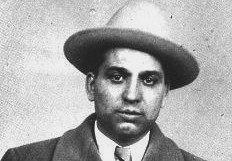 Harry Maione
Murderer · USA · 1937
Harry “Happy” Maione (1908 – February 19, 1942) was a New York mobster who serv…
12 victims
Harry Maione
Murderer · USA · 1937
Harry “Happy” Maione (1908 – February 19, 1942) was a New York mobster who serv…
12 victims
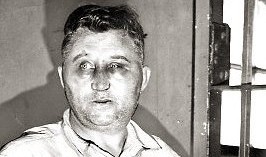 Harry Powers
Murderer · USA · 1931
Harry Powers was executed by hanging on March 18, 1932, at the West Virginia Pe…
5 victims
Harry Powers
Murderer · USA · 1931
Harry Powers was executed by hanging on March 18, 1932, at the West Virginia Pe…
5 victims
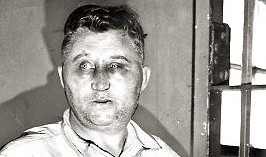 Herman Drenth
Murderer · USA · 1931
Herman Drenth was also known by the aliases Harry F. Powers and Cornelius O. Pi…
5 victims
Herman Drenth
Murderer · USA · 1931
Herman Drenth was also known by the aliases Harry F. Powers and Cornelius O. Pi…
5 victims
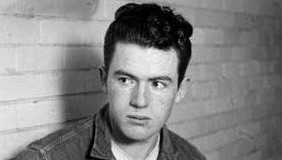 William Edward Hickman
Murderer · USA · 1926
William Edward Hickman was a man who tried to solve his financial problems by k…
5 victims
William Edward Hickman
Murderer · USA · 1926
William Edward Hickman was a man who tried to solve his financial problems by k…
5 victims
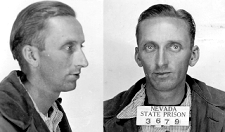 Luther Jones
Murderer · USA · 1936
Luther Jones Luther Jones was executed by asphyxiation-gas in Nevada on January…
4 victims
Luther Jones
Murderer · USA · 1936
Luther Jones Luther Jones was executed by asphyxiation-gas in Nevada on January…
4 victims
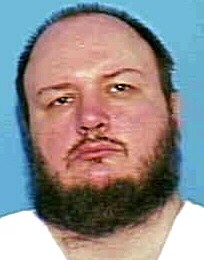 William Zuern
Murderer · USA · 1983
William G. Zuern was executed by lethal injection in Ohio on June 8, 2004. He w…
2 victims
William Zuern
Murderer · USA · 1983
William G. Zuern was executed by lethal injection in Ohio on June 8, 2004. He w…
2 victims
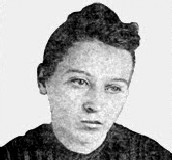 Mary Farmer
Murderer · USA · 1908
Mary Farmer was convicted of murdering Sarah Brennan and was executed by electr…
1 victim
Mary Farmer
Murderer · USA · 1908
Mary Farmer was convicted of murdering Sarah Brennan and was executed by electr…
1 victim
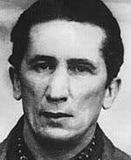 Zdislaw Marchwicki
Serial killer · Poland · 1964
Zdislaw Marchwicki, called the "Zagłębie vampire", was a Polish serial killer.…
14 victims
Zdislaw Marchwicki
Serial killer · Poland · 1964
Zdislaw Marchwicki, called the "Zagłębie vampire", was a Polish serial killer.…
14 victims
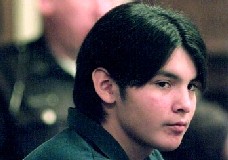 Omer Ninham
Homicide · USA · 1998
Omer Ninham was sentenced to life in prison without the possibility of parole o…
1 victim
Omer Ninham
Homicide · USA · 1998
Omer Ninham was sentenced to life in prison without the possibility of parole o…
1 victim
 Cynthia Galens
Murderer · USA · 2009
Cynthia Galens was convicted in Ontario County Court of first-degree manslaught…
1 victim
Cynthia Galens
Murderer · USA · 2009
Cynthia Galens was convicted in Ontario County Court of first-degree manslaught…
1 victim
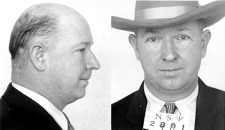 Robert H. White
Murderer · USA · 1928
Robert H. White was born in Texas in 1889 and was 39 at the time of his convict…
1 victim
Robert H. White
Murderer · USA · 1928
Robert H. White was born in Texas in 1889 and was 39 at the time of his convict…
1 victim
- Gender
- male
- Country
- USA
- Location
- Minnehaha County, South Dakota , USA
- Date of birth
- June 1, 1899
- Age at first offence
- 37
- Characteristics
- escape, jewelry store robbery
- Victim profile
- Harold Baker (fellow thief)
- Method of murder
- Gunpowder explosion
- Date(s) of murder
- December 31, 1936
- Years active
- 1936
- Date of arrest
- February 26, 1937
- Status
-
Life imprisonment
Sentenced on May 28, 1937 to life imprisonment; on February 18, 1946 the sentence was commuted to 20 years incarceration.
Case record: William Raymond Nesbit
Background
William Raymond Nesbit (June 1, 1899 – August 1983) was a 1930s jewel thief. He was born in Marshalltown, Iowa.
The offence
On December 22, 1936, William Raymond Nesbit, together with three other men, including Harold Baker and his girlfriend, burglarized a wholesale jewelry company at Sioux City, Iowa. The proprietor reported more than $37,000 worth of jewels had been stolen.
Later in December 1936, the participants drove into Minnehaha County, South Dakota, five miles east of Sioux Falls, South Dakota, to obtain some dynamite to make nitroglycerin. After getting out of the car, three of the men became involved in a fight. Harold Baker’s girlfriend got out of the automobile and attempted to stop the fight. Nesbit struck her on the head with a hammer several times, and one of the other men shot her.
Harold Baker’s girlfriend was dragged into a powder house. Baker was lying in the powder house apparently unconscious. One of the men lit a fuse to some powder and fled the scene. The fuse exploded 3,500 pounds of dynamite and 7,000 pounds of black powder, killing Harold Baker. The explosion rocked the countryside, shattering windows, mirrors, and glassware in Sioux Falls, five miles away.
During the police investigation into the blast, they were advised that a woman had been brought to the hospital and was suffering from bullet wounds, exposure, and shock. The investigation revealed information concerning the three men, including Nesbit, who had been responsible for the murder of Baker and for the shooting of Baker’s girlfriend. Although severely beaten and wounded, Baker’s girlfriend remained conscious and was able to crawl away.
Investigation
Police investigated the blast and were advised that a woman had been brought to the hospital with bullet wounds, exposure, and shock. The investigation revealed information concerning the three men, including Nesbit.
After the life term was commuted and Nesbit later failed to return from running errands, a federal complaint was filed, and a warrant was issued for his arrest. The FBI entered the search.
In March 1950, a news article carried Nesbit’s picture, his description, and his fugitive status, and was published in a St. Paul, Minnesota, newspaper as well as in other newspapers.
Arrest
Nesbit was apprehended in Oklahoma City, Oklahoma, on February 26, 1937. He was returned to Sioux Falls for trial.
In St. Paul, Minnesota, Nesbit was arrested in a cave in Saint Paul, Minnesota, three days after he appeared on the Federal Bureau of Investigation’s first-ever ten most wanted fugitives list.
On March 17, 1950, a 14-year-old boy arrived home from school and noticed a newspaper on the kitchen floor. He cut out the article after noting a photograph of Nesbit and the accompanying article advising Nesbit was wanted by the FBI. The boy and his 13-year-old friend had played along the Mississippi River bank with other boys from the neighborhood and had become acquainted with “Ray,” a man who lived in a cave in the river bank. They had visited “Ray” about once a week for four months beginning in November 1949 and had been allowed access to his cave, where he occasionally told stories about his travels. In early March 1950, “Ray” told the boys to stay away from the cave because they were liable to get hurt. The next day the boys went down to the cave to make sure “Ray” was indeed the man in the photograph and then telephoned the police to report their suspicion. On Saturday morning, March 18, 1950—two days after Nesbit was placed on the “Top Ten” list—he was apprehended by the St. Paul Police.
Trial
Nesbit was arrested on February 26, 1937 and was tried and convicted in Sioux Falls, South Dakota.
He was convicted for murder and received life imprisonment in South Dakota State Penitentiary.
Sentencing
On May 28, 1937, Nesbit was sentenced to life imprisonment.
Nine years later, his life term was commuted to 20 years.
Appeals
No appeals are described in the provided information.
Outcome
Nesbit was sentenced to life imprisonment on May 28, 1937, and on February 18, 1946 the sentence was commuted to 20 years incarceration.
Aftermath
Nesbit was imprisoned in Sioux Falls, South Dakota, where he eventually became a “trusty” and the personal chauffeur of the warden.
On September 4, 1946, he failed to return from running errands; he was missing at the time of the night check. On December 26, 1946, he was charged in absentia with unlawful flight to avoid confinement.
On December 26, 1946, a federal complaint was filed before the United States Commissioner at Rapid City, South Dakota, charging William Raymond Nesbit with unlawful flight to avoid confinement and a warrant was issued for his arrest. The FBI entered the search.
On March 17, 1950, Nesbit was listed among the Federal Bureau of Investigation’s first-ever ten most wanted fugitives.
He was apprehended in a cave in Saint Paul, Minnesota, three days later.
Timeline
- December 22, 1936 — Nesbit, with three other men including Harold Baker and Baker’s girlfriend, burglarized a wholesale jewelry company at Sioux City, Iowa.
- December 31, 1936 — A gunpowder explosion in Minnehaha County, South Dakota, killed Harold Baker.
- February 26, 1937 — Nesbit was apprehended in Oklahoma City, Oklahoma.
- May 28, 1937 — Nesbit was sentenced to life imprisonment after a conviction for murder.
- February 18, 1946 — The life imprisonment sentence was commuted to 20 years incarceration.
- September 4, 1946 — Nesbit failed to return from running errands and was missing at the night check.
- December 26, 1946 — Nesbit was charged in absentia with unlawful flight to avoid confinement; a federal complaint was filed at Rapid City, South Dakota, and a warrant was issued for his arrest.
- March 17, 1950 — Nesbit was named as part of the Federal Bureau of Investigation’s first-ever ten most wanted fugitives list.
- March 18, 1950 — Nesbit was apprehended by the St. Paul Police in Saint Paul, Minnesota.
Other details
Nesbit eventually was allowed to leave prison to perform housework, landscaping, and duties as a chauffeur.
Spotted an error, or have more information about this case?