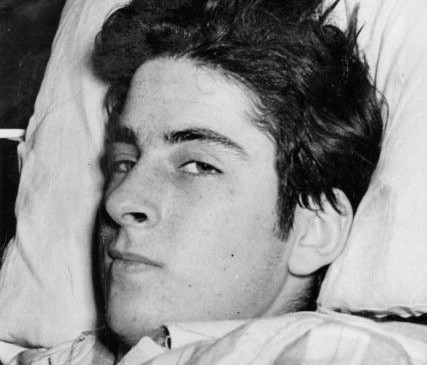
Christopher Craig
Homicide Michael John Davies
Homicide · United Kingdom · 1953
Michael John Davies was a twenty-year-old labourer from Turret Grove, Clapham.…
1 victim
Michael John Davies
Homicide · United Kingdom · 1953
Michael John Davies was a twenty-year-old labourer from Turret Grove, Clapham.…
1 victim
 Kenneth Regan
Mass murderer · United Kingdom · 2003
Kenneth Regan (born 1953) was a British murderer and drug dealer. He was found…
5 victims
Kenneth Regan
Mass murderer · United Kingdom · 2003
Kenneth Regan (born 1953) was a British murderer and drug dealer. He was found…
5 victims
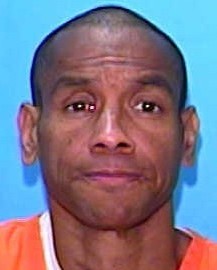 Albert Holland
Murderer · USA · 1990
Defendant: Albert Holland Date of birth: 03/24/58 Jurisdiction: Seventeenth Jud…
1 victim
Albert Holland
Murderer · USA · 1990
Defendant: Albert Holland Date of birth: 03/24/58 Jurisdiction: Seventeenth Jud…
1 victim
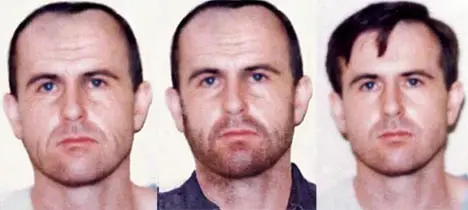 James Francis Hurley
Murderer · United Kingdom · 1988
James Francis Hurley (born circa 1966) was an English convicted murderer and lo…
1 victim
James Francis Hurley
Murderer · United Kingdom · 1988
James Francis Hurley (born circa 1966) was an English convicted murderer and lo…
1 victim
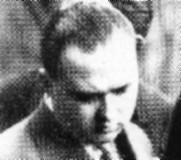 Kürt Erich Tetzner
Murderer · Germany · 1929
Kürt Erich Tetzner (also known as Stranelli) was a German businessman born in 1…
1 victim
Kürt Erich Tetzner
Murderer · Germany · 1929
Kürt Erich Tetzner (also known as Stranelli) was a German businessman born in 1…
1 victim
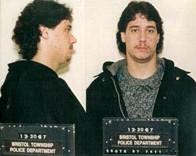 Frank Chester
Murderer · USA · 1987
Frank Chester · October 23, 1968 — Frank Chester was born. · December 14, 1987…
1 victim
Frank Chester
Murderer · USA · 1987
Frank Chester · October 23, 1968 — Frank Chester was born. · December 14, 1987…
1 victim
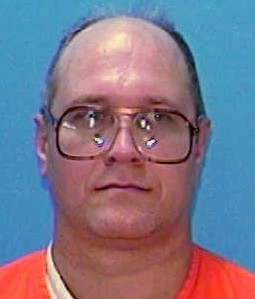 Thomas Michael Overton
Murderer · USA · 1991
Defendant: Thomas Michael Overton (born 11/05/55) DOB: 11/05/55 Age: Sixteen ju…
2 victims
Thomas Michael Overton
Murderer · USA · 1991
Defendant: Thomas Michael Overton (born 11/05/55) DOB: 11/05/55 Age: Sixteen ju…
2 victims
- Gender
- male
- Country
- United Kingdom
- Location
- Croydon, London, England, United Kingdom
- Date of birth
- 1936
- Age at first offence
- 16
- Characteristics
- juvenile (16), robbery
- Victim profile
- Police Constable Sidney George Miles, 42
- Method of murder
- Shooting (Colt New Service .455 Eley calibre revolver)
- Date(s) of murder
- November 2, 1952
- Years active
- 1952
- Date of arrest
- Same day
- Status
-
Released
Ordered to be detained at Her Majesty's Pleasure on December 12, 1952; released in 1963 after serving 10 years' imprisonment
Name
Christopher Craig
Status / legal outcome
Christopher Craig was ordered to be detained at Her Majesty's Pleasure on December 12, 1952. He was released in 1963 after serving 10 years' imprisonment.
Characteristics
Christopher Craig was 16 at the time of the offence. He was armed with a revolver during the incident.
Timeline
- 2 November 1952 — Christopher Craig and Derek Bentley tried to break into the warehouse of confectionery manufacturers and wholesalers Barlow & Parker on Tamworth Road, Croydon, England; PC Sidney George Miles was shot dead during the police confrontation; Craig later jumped from the roof and was arrested.
- 9 December 1952 to 11 December 1952 — Trial took place at the Old Bailey in London before Lord Chief Justice of England and Wales Lord Goddard.
- 11 December 1952 — Derek Bentley was sentenced to death with a plea for mercy; Craig was ordered to be detained at Her Majesty's Pleasure.
- 28 January 1953 — Derek Bentley was hanged at Wandsworth Prison, London by Albert Pierrepoint.
- 6 January 1953 — Awards of the George Cross and other medals to participating police officers were published in the London Gazette (including Fairfax on the George Cross).
- December 12, 1952 — Craig was ordered to be detained at Her Majesty's Pleasure.
- March 1966 — Bentley’s remains were removed from Wandsworth Prison and reburied in a family grave.
- 29 July 1993 — Bentley was granted a royal pardon in respect of the sentence of death passed upon him and carried out.
- 30 July 1998 — The Court of Appeal set aside Bentley's conviction for murder 45 years earlier.
- Thursday, July 30, 1998 — Christopher Craig spoke of his relief after the Court of Appeal decision to quash Derek Bentley's conviction for murder.
Background
Christopher Craig and Derek Bentley broke into a London warehouse on 2 November 1952. Craig was aged 16 and Bentley was aged 19.
The offence
On the night of 2 November 1952, Christopher Craig and Derek Bentley tried to break into the warehouse of confectionery manufacturers and wholesalers Barlow & Parker on Tamworth Road, Croydon, England.
The two youths were spotted climbing over the gate and up a drain pipe to the roof of the warehouse by a nine-year-old girl in a house across from the building. The girl alerted her parents. Her father walked to the nearest telephone box and called the police.
When the police arrived, the two youths hid behind the lift-housing.
Craig was armed with a revolver. He also had a knife and a spiked knuckle-duster in his pocket. He had made the knuckle-duster himself. Craig had recently given both weapons to Bentley.
Following an attempt to escape and the police response, Police Constable Sidney George Miles reached the roof first and was immediately killed by a shot to the head.
Investigation
Detective Sergeant Frederick Fairfax climbed the drain pipe onto the roof and grabbed hold of Bentley. Bentley broke free. Craig fired a revolver, grazing Fairfax's shoulder.
Bentley was arrested after Fairfax managed to continue after the wound.
Craig's ammunition was exhausted and he was cornered. Craig jumped some thirty feet from the roof, fracturing his spine and left wrist when he landed on a greenhouse, and he was arrested at that point.
When sent on to the roof, Police Constable Sidney Miles was shot dead by a shot to the head. Fairfax repeatedly risked death in continuing the chase until both men were captured.
Arrest
Craig was arrested after jumping from the roof and fracturing his spine and left wrist. Fairfax arrested Bentley after Fairfax was wounded and Bentley broke free and after Craig fired.
Trial
The trial took place before Lord Chief Justice of England and Wales Lord Goddard at the Old Bailey in London between 9 December 1952 and 11 December 1952.
The jury took 75 minutes to decide that both Bentley and Craig were guilty of PC Miles's murder.
The doctrine of 'constructive malice' meant that a charge of manslaughter was not an option, as the "malicious intent" of the armed robbery was transferred to the shooting.
Craig was below the age of 18 at the time of PC Miles was shot, so he would not have faced execution if found guilty.
Bentley’s best defence was that he was effectively under arrest when PC Miles was killed; however, this was only after an attempt to escape, during which a police officer had been wounded.
As the trial progressed, the jury had details to consider. The prosecution was unsure how many shots were fired and by whom. A ballistics expert cast doubt on whether Craig could have hit Miles if he had shot at him deliberately: the fatal bullet was not found, Craig had used bullets of different under-sized calibres, and the sawn-off barrel made it inaccurate to a degree of six feet at the range from which he fired.
There was also the question of what Bentley had meant by "Let him have it", if indeed he had said it. It could be construed as signifying that Bentley wanted Craig to surrender the gun.
Bentley was described as illiterate and of low intelligence, almost borderline retarded. Dr Matheson referred Bentley to Dr Hill, a psychiatrist at the Maudsley Hospital.
Matheson was of the opinion that whilst Bentley was of low intelligence, he was not suffering from epilepsy at the time of the alleged offence, that he was not a "feeble-minded person" under the Mental Deficiency Acts and that he was sane and fit to plead and stand trial.
English law at the time did not recognise the concept of diminished responsibility due to retarded development. Criminal insanity—where the accused was unable to distinguish right from wrong—was then the only medical defence to murder. Bentley, while suffering severe debilitation, was not insane.
Craig was sentenced to being detained at Her Majesty's Pleasure. Bentley was sentenced to death with a plea for mercy on 11 December 1952.
Sentencing
On 11 December 1952, Derek Bentley was sentenced to death with a plea for mercy. Christopher Craig was ordered to be detained at Her Majesty's Pleasure.
Appeals
Bentley’s lawyers filed appeals highlighting ambiguities of the ballistic evidence, Bentley’s mental age, and the fact that he did not fire the fatal shot. These efforts failed to reverse his conviction, and the death sentence was mandatory.
After reading the Home Office psychiatric reports, David Maxwell Fyfe refused to request clemency from the Queen despite a petition signed by over 200 of his fellow MPs. Parliament was not allowed to debate Bentley's sentence until it had been carried out. The Home Office also refused Dr Hill permission to make his report public.
Following the execution, a public sense of unease led to a campaign, mostly led by Bentley's sister Iris, to secure a posthumous pardon.
Following the execution, protests outside the prison led to two people being arrested and later fined for damage to property.
On 30 July 1998, the Court of Appeal set aside Bentley's conviction for murder 45 years earlier.
Lord Bingham of Cornhill ruled that Lord Goddard had not made it clear to the jury that the prosecution was required to have proved Bentley had known that Craig was armed. Lord Bingham also ruled that Lord Goddard had failed to raise the question of Bentley's withdrawal from their joint enterprise, requiring proof of the absence of any attempt by Bentley to signal to Craig that he wanted Craig to surrender his weapons to the police.
Lord Bingham ruled that Bentley's trial had been unfair, as the judge misdirected the jury and, in summing up, put unfair pressure on the jury to convict. Lord Bingham ruled that there were defects in the trial process and that Bentley was not necessarily innocent.
A “confession” recorded by Bentley, which was claimed by the prosecution to be a “verbatim record of dictated monologue”, was shown by forensic linguistics methods to have been largely edited by policemen. Linguist Malcolm Coulthard showed that patterns such as the frequency of the word "then" and the grammatical use of "then" after the grammatical subject (“I then” rather than “then I”) was not consistent with Bentley's use of language (his idiolect), as evidenced in court testimony. The patterns fitted better the recorded testimony of the policemen involved. This was described as one of the earliest uses of forensic linguistics on record.
Outcome / after the case
After the execution of Bentley on 28 January 1953, Craig served 10 years in prison before being released. He was eventually released in 1963 and described as a law abiding citizen.
In March 1966, Bentley’s remains were removed from Wandsworth Prison and reburied in a family grave.
On 29 July 1993, Bentley was granted a royal pardon in respect of the sentence of death passed upon him and carried out; in English law it did not quash his conviction for murder.
Eventually, on 30 July 1998, the Court of Appeal set aside Bentley's conviction for murder 45 years earlier.
Police awards
Various medals were awarded to participating police officers, including:
- The George Cross to Detective Sergeant Frederick Fairfax, posthumously to Miles.
- Police Constables Norman Harrison and James McDonald received the George Medal (London Gazette 6 January 1953 Page 167).
- Police Constable Robert Jaggs received the British Empire Medal.
- Police Constable Miles received the Queen's Police Medal for Gallantry (posthumously).
Other details
Weapons and ammunition
Craig had made a sawn-off half-barrel so that the weapon would fit in his pocket. He was alleged to have had a revolver described as a Colt New Service .455 Eley calibre revolver with undersized rounds, some modified to fit. Craig had also sawn off half of the weapon's barrel.
Bentley had a knife and a spiked knuckle-duster and was said never to have used either.
“Let him have it” phrase
It was alleged by a number of police witnesses that Bentley shouted "Let him have it, Chris". Both Craig and Bentley denied that those words were ever spoken.
Craig’s statement after the 1998 appeal decision
Christopher Craig’s statement was:
"Today, after 46 years, the conviction of Derek Bentley has been quashed and his name cleared. While I am grateful and relieved about this, I am saddened that it has taken those 46 years for the authorities in this country to admit the truth. "I am truly sorry that my actions on 2 November 1952 caused so much pain and misery for the family of Pc Miles, who died that night doing his duty. Also, for the Bentley family, I regret that Iris, Derek's sister, who fought all those years for Derek's pardon, died recently before this appeal was concluded. Finally, I apologise to my family, who have had to endure Press attention over the years. Innocence proved "At the end of the day, the lawyers decided it was not necessary for me to give evidence at the appeal hearing but I was ready and willing to do so in the interests of justice. "A day does not go by when I don't think about Derek and now his innocence has been proved with this judgment. "Now at last this case is over. My gratitude goes to those who have fought so tirelessly for justice."
Spotted an error, or have more information about this case?