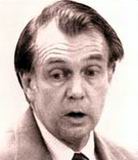
Richard Crafts
Murderer Brian Kevin Rosenfeld
Murderer · USA · 1985
Brian Kevin Rosenfeld Brian Kevin Rosenfeld was sentenced to three concurrent l…
23 victims
Brian Kevin Rosenfeld
Murderer · USA · 1985
Brian Kevin Rosenfeld Brian Kevin Rosenfeld was sentenced to three concurrent l…
23 victims
 Yahweh ben Yahweh
Murderer · USA · 1980
Yahweh ben Yahweh was born and legally named Hulon Mitchell Jr. (October 27, 19…
23 victims
Yahweh ben Yahweh
Murderer · USA · 1980
Yahweh ben Yahweh was born and legally named Hulon Mitchell Jr. (October 27, 19…
23 victims
 Russell Ellwood
Murderer · USA · 1991
Russell Ellwood was a former taxi driver. Authorities suspected him of killing…
20 victims
Russell Ellwood
Murderer · USA · 1991
Russell Ellwood was a former taxi driver. Authorities suspected him of killing…
20 victims
 Richard Allen Masterson
Murderer · USA · 2001
Name: Richard Allen Masterson · TDCJ Number: 999414 · Date of Birth: 03/05/1972…
1 victim
Richard Allen Masterson
Murderer · USA · 2001
Name: Richard Allen Masterson · TDCJ Number: 999414 · Date of Birth: 03/05/1972…
1 victim
 Rodney Reed
Murderer · USA · 1996
Rodney Reed (TDCJ Number 999271) was born on 12/22/67 and was received into cus…
1 victim
Rodney Reed
Murderer · USA · 1996
Rodney Reed (TDCJ Number 999271) was born on 12/22/67 and was received into cus…
1 victim
 Ronnie Joe Neal
Murderer · USA · 2004
Ronnie Joe Neal had prior prison sentences in Texas. TDCJ-ID #525256 reflected…
1 victim
Ronnie Joe Neal
Murderer · USA · 2004
Ronnie Joe Neal had prior prison sentences in Texas. TDCJ-ID #525256 reflected…
1 victim
 Craig Gregerson
Murderer · USA · 2006
Craig Roger Gregerson (born c. 1986) was a Salt Lake City, Utah man convicted o…
1 victim
Craig Gregerson
Murderer · USA · 2006
Craig Roger Gregerson (born c. 1986) was a Salt Lake City, Utah man convicted o…
1 victim
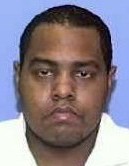 Ynobe Matthews
Serial killer · USA · 1999
Ynobe Matthews was convicted of capital murder in June 2001 and was sentenced t…
6 victims
Ynobe Matthews
Serial killer · USA · 1999
Ynobe Matthews was convicted of capital murder in June 2001 and was sentenced t…
6 victims
 Clover Boykin
Murderer · USA · 1993
Clover Boykin killed her 5-month-old son, Dayton Boykin, in Florida on October…
2 victims
Clover Boykin
Murderer · USA · 1993
Clover Boykin killed her 5-month-old son, Dayton Boykin, in Florida on October…
2 victims
- Gender
- male
- Country
- USA
- Location
- Newtown, Fairfield County, Connecticut , USA
- Date of birth
- December 20, 1937
- Age at first offence
- 49
- Characteristics
- the bodies were never found, parricide
- Victim profile
- His wife, Helle Crafts, 39
- Method of murder
- Beating with blunt object?
- Date(s) of murder
- November 19, 1986
- Years active
- 1986
- Date of arrest
- January 11, 1987
- Status
-
Imprisoned
Sentenced to 50 years in prison on January 9, 1990
Case record: Richard Crafts
Status / legal outcome
Richard Crafts was sentenced to 50 years in prison on January 9, 1990.
Background
Helle Crafts (born Helle Lorck Nielson, July 4, 1947 – November 19, 1986) was a Danish flight attendant who was murdered by her husband, Richard Crafts, an airline pilot and special constable. The murder was sometimes called the "Woodchipper Murder" because of the method by which Richard Crafts disposed of her body.
Her death brought about the first murder conviction in the state of Connecticut in which a body was never found.
Richard Crafts was an airline pilot and special constable.
Helle Crafts had known about her husband Richard's affairs with other women and had begun divorce proceedings against him.
Helle once said: "If something happens to me, don't think it was an accident."
The offence
Helle Crafts was last seen alive on November 19, 1986.
Police theorized that, in their bedroom, Crafts first struck Helle unconscious with something blunt, which would explain the blood stains found. Police further postulated that Crafts carried her body to the freezer where he left it for some time. Police further postulated that Crafts took Helle's body out of the freezer on the night he was seen at the river by the witness, chopped it into several large portions with the chainsaw, and then put them through the woodchipper. Police believed the dismembered pieces of Helle Crafts' body were scattered into the river and the area around it.
Prosecutors said Crafts cut the body with a chain saw and fed parts through a wood chipper on a bridge between Newtown and Southbury. Police found body parts, including a fingernail and human tissue, on the banks of the Housatonic River.
Investigation
A friend of Helle’s dropped her off at home in Newtown, Connecticut. This was the last time anyone but her husband saw her.
During the next few weeks, friends of Helle tried to contact her, but were told different stories by her husband. Richard told some that Helle had gone to visit her mother in Denmark. He told others that she had left, and he did not know where she was. Richard also stated that she was in the Canary Islands with a friend.
Friends grew suspicious and concerned about Helle's safety because they already knew about Richard's aggression and fiery temper.
By December 25, police had obtained a warrant to search the Crafts' premises. They uncovered several pieces of carpet from Richard and Helle's bedroom removed from the floor. The family's nanny told police of a dark, grapefruit-sized stain she had seen on the carpet of the bedroom, but that patch of carpet had apparently been removed. A blood smear was uncovered on the side of the Crafts' bed.
Police found among Richard's credit card records evidence that he had made several purchases before and after his wife's disappearance. The purchases included a new freezer that was not found in the home, new bed sheets, a comforter, and US$900 for the rental of a woodchipper.
A private investigator hired by Helle Crafts found, in papers provided to him by Helle, a receipt for a chainsaw. The chainsaw was later found in Lake Zoar in Newtown, Connecticut, and forensics experts determined that it was covered in hair and blood that matched those of Helle.
A snowplow driver who knew Richard Crafts came forward and said he had seen Crafts using a woodchipper at night near the shore of Lake Zoar during a severe snowstorm. This was late on the night of November 19, the night Helle Crafts was last seen. With this new information, police focused their search around that area for many days and scanned the icy cold lake for clues.
Police found many pieces of metal, less than 3 ounces (85 g) of human remains, including a tooth with unique dental work, a toenail covered in pink nail polish, bone chips, 2,660 bleached, blonde human hairs, fingernails and O type blood, the same type as Helle Crafts'. Analysis led police to conclude the remains had gone through a woodchipper.
The forensic investigation was led by renowned forensic scientist Dr. Henry Lee.
Police theorized that Crafts had taken Helle's body to a freezer, then later chopped her into several large portions and put them through the woodchipper.
After a forensic dentist confirmed that the found tooth was a match to Helle's dental records, the Connecticut State Medical Examiner's Office accepted this evidence and issued a death certificate for her.
Richard Crafts was arrested for Helle's murder in January 1987.
Polygraph and interviews
On November 29, a friend obtained Helle's mother's phone number in Denmark and called her. Helle's mother said she did not expect to see Helle until the following April.
The friend told police of a disturbing statement made by Helle in early November: "If anything happens to me," Helle had said, "don't assume it was an accident."
Investigators interviewed Dawn Marie Thomas, the Crafts' au pair. On the morning of November 19, Crafts awakened Thomas at 6:00 a.m. and said Helle was driving to his sister's house in Westport and that they would meet her there later. Thomas thought this was strange because Newtown had been hit with a severe winter storm during the night and visibility was very poor. Because of a power failure, Richard insisted on taking the children to his sister's house right away. He woke up his three children at 6:30 a.m., loaded them into the family car with Dawn Thomas, and drove over to his sister's house. Richard dropped off the kids and Thomas and "left almost immediately." Dawn told investigators Richard did not return to pick them up until later that day at 7:00 p.m., and Helle still did not appear at his sister's house. Later that night, Dawn asked Richard where Helle was and Richard replied, "I don't know." The next day when she asked Richard the same question again, he told her that Helle was in Denmark with her sick mother.
Thomas told investigators she noticed pieces of carpet were cut out and missing from the master bedroom. Richard told her he had spilled kerosene on the rug and they needed to be replaced.
Newtown police requested that Crafts submit to a lie detector test. He agreed and passed the test on December 4. Despite the results, some detectives believed otherwise. One investigator wrote in his report that "based on the polygraph examination and my numerous conversations with Mr. Crafts, he does not know where his wife is."
On December 11, investigators located Crafts on duty at the Southbury Police Department where he was working the night shift. Newtown detectives called Southbury and asked that they send Officer Crafts for further questioning. Lt. Michael DeJoseph and Detective Robert Tvardzik conducted the interview. According to police reports, the interview proceeded as follows:
Q. "Richard, did you know that your wife hired a private investigator?" A. "No."
Q. "Did you know that the P.I. has documented your relationship with a New Jersey woman?" A. "No."
Q. "Why would your wife tell her friends she was afraid for herself regarding serving you divorce paper, and tell them to check on her if something happened?" A. "I cannot imagine her saying this, it is completely out of character for her to say this."
Q. "On November 18th, when Helle came home, when and why did she leave?" A. "Those answers are in my statement."
Q. "What is the story with your bedroom rug? Apparently you removed it, or cut some pieces out of it. Can you explain this to me?" A. "All the rugs in the house are being removed and replaced."
Q. "What was spilled on the rug in your bedroom?" A. "Kerosene."
Q. "Did you cut pieces out of the rug?" A. "Yes. Two feet at a time. It's easier to remove it that way."
Q. "What did you do with the rug you took out of the bedroom?" A. "Dumped bedroom rug in the Newtown landfill one week ago. It was blue in color."
Q. "Why have you been telling everyone different things about Helle being missing? Like her mother being sick? A. "I didn't want to say my wife was gone and I did not know where she was."
Q. "Has Helle received any mail since she has been missing?" A. "No. She has gotten no letters since she left. She usually gets about two letters a week."
After the interview, Crafts was released after providing a brief one-page statement that was less than helpful.
Search warrant and evidence at the residence
For days before December 25, police assembled a search warrant for the Crafts' residence at 5 Newfield Lane. On Christmas Day, a team of State Police Investigators and crime scene technicians entered the premise through a back window.
The home was empty and in disarray, with furniture strewn about and dirty clothes everywhere. Dishes and kitchen utensils were unwashed in the sink and on countertops. Mattresses lay on the bare floor in the living room along with boxes of toys and other items. The carpets were already pulled up and discarded.
A freezer was located and searched, but it contained no body.
Detectives did not realize at the time that the freezer searched was Crafts' old freezer; the new freezer purchased on November 17 had been removed and later discarded.
Dozens of weapons were located and tagged. Evidence included Smith and Wesson .357 revolvers, .38 caliber revolvers, Colt Python .38 caliber pistols, Ruger carbine rifles, Finnish semiautomatic weapons, 12-gauge pump shotguns, Winchester rifles, Beretta handguns with clips, .380 automatic handgun, two hand grenades, Beretta Crossbow, Walther PPK handgun, two 9mm semiautomatic handguns, Heckler-Koch .45 caliber pistol, an "over and under" style Universal shotgun, numerous clips, and an assortment of ammunition. Also seized were hand towels, washcloths, fiber samples, and a king size mattress with bedding.
Dr. Henry Lee performed a luminol test in various locations throughout the house, which tested positive for blood. Some seized towels also later tested positive for blood at the State laboratory, and the blood was type O-positive, the same as Helle's.
The affidavit included the statement: "That based upon the foregoing facts and information," Det. Quartiero wrote, "the affiants have probable cause to believe and do believe that evidence of Murder ... will be found within and upon" the premise of 5 Newfield Lane.
Woodchipper, Lake Zoar, and forensic findings
Investigators learned that a US$900 charge on Crafts' Master Card at Darien Rentals was payment for a woodchipper.
On the afternoon of December 30, 1986, Detectives Patrick McCafferty and T.K. Brown located Joseph Hine, the utility man from Southbury, plowing snow on River Road during a storm. Hine described observing a U-Haul van with an attached woodchipper at night. He also said that "I would describe the vehicle as a U-Haul van, box van, 1 to 1 ton with dual wheels," and that "the box of the van was an off-white or dirty white, square type the cab was orange colored." He later said: "I didn't see anyone in or around the truck or chipper," and that "the back of the box was open," and that he "could see some wood chips inside." He also said: "That was strange," and "that a person would be out so early in the morning, in the middle of a storm, chipping wood."
Detectives drove Hine to the shores of the Housatonic River just outside of Southbury, where he pointed out the spot he had observed the truck towing a woodchipper. The location was known as Lake Zoar.
Detectives saw piles of wood chips along the banks of the river and searched the area. Dr. Lee later wrote: "As I knew from my past experience," writes Dr. Lee in Cracking Cases, "we would have to prove beyond any reasonable doubt that those remains were those of Helle Crafts and that she was murdered. Otherwise, there had been no homicide, and thus, Richard Crafts could not be charged."
During the search at Lake Zoar, divers located a Stihl chain saw embedded in the muddy bottom of the river. The serial number had been filed off.
Dr. Lee said: "Our team's efforts at Lake Zoar eventually led to the discovery of 2,660 strands of blond hair, 69 slivers of human bone, 5 droplets of human blood, 2 teeth, a truncated piece of human skull, 3 ounces of human tissue, a portion of human finger, 1 fingernail, and 1 portion of toe nail."
Arrest
On January 11, an arrest warrant was issued in Newtown Court for Richard Crafts.
A dozen Connecticut state troopers and detectives responded to 5 Newfield Lane at about 9:00 p.m. They surrounded the ranch-style house and called Crafts on the phone, ordering him to come outside and surrender.
Crafts replied: "I'm tired. I'll take care of it in the morning." When police insisted he surrender immediately, Crafts became angry. He shouted: "Don't call me back!" and hung up. After phone calls and promises of surrender which were never fulfilled, Crafts agreed to come outside.
At 12:30 a.m., Crafts told police over the phone, "I'll be out in five minutes!" He then surrendered to the police.
After an arraignment in nearby Danbury court, he was taken to the Bridgeport jail facility to await further developments. Bail was set at $750,000.
Trial
Due to extensive publicity, the trial of Richard Crafts was moved to New London, Connecticut.
Trial began in May 1988. On July 15, 1988, a mistrial was declared after the jury became deadlocked 11 to 1 in favor of conviction when one juror walked out of deliberations after refusing to vote to convict.
He was retried with the trial moved to Norwalk, Connecticut due to massive publicity surrounding the case and the subsequent mistrial in New London.
He was found guilty on November 21, 1989, three years and two days since Helle was last seen alive.
Evidence presented at trial and witness statements
The prosecution was led by State Attorney Walter Flanagan.
Dr. Henry Lee testified about the collection and analysis of thousands of pieces of evidence found in and around Lake Zoar. Dr. Lee determined that 65 pieces of bone were "cut with a heavy-type cutting edge that produced a crushing and cutting force." He also testified that "the bone, human tissue fibers and hair were all mixed together with wood chips and vegetative debris," and that "most importantly, the same machine cut it all."
The chainsaw recovered at the bottom of the Housatonic River was presented. It was a Stihl chainsaw with its serial number filed off. Technicians found remnants of human tissue, blonde hair, and blue fibers in the teeth of the blade. The blue fibers matched the rug inside the Crafts home.
Technicians restored the serial number even though it was heavily damaged, and it matched a receipt belonging to Richard Crafts. The receipt indicated Richard purchased the chainsaw on January 9, 1981, paying $644.95. Keith Mayo had given that receipt to police. When Helle first hired Mayo, she gave him a box of personal papers belonging to Richard, and the receipt was found with those papers.
Dr. Constantine P. Karazulas testified that a recovered tooth was removed from the mouth with "traumatic force that sheared it off and took the bone with it." He also testified:
"In my opinion," Karazulas said, "this fracture occurred by a blunt force that fractured it to the center line and took the jaw with it."
Karazulas stated that after taking several hundred X-rays of the recovered tooth, he performed a comparison between the evidence and images of Helle's teeth and concluded the recovered tooth perfectly matched Helle's lower left bicuspid. Karazulas said: "medically absolutely certain" of the positive comparison.
Dr. Lowell Levine, a forensic scientist from the New York State Police, testified that he agreed with Karazulas about the tooth with the attached crown and said: "That tooth, the lower left second bicuspid", "belonged to Helle Crafts when she was alive."
The case went to the jury on June 23. A mistrial was declared after a 53-day trial and testimony from 100 witnesses and presentation of 650 exhibits.
Accounts included juror statements to reporters. One juror later said: "It was like reasoning with a child," and that "He had real difficulty retaining." Another juror, Janis Rosseau, said: "It wasn't chaos, it was hell!"
In the second trial, the case went to the jury on November 20 and a unanimous verdict was reached within eight hours. Eleven men and one woman felt the evidence supported a guilty verdict.
One juror said: "Richard Crafts could not have asked for a more fair jury," and another said: "It's corny, but the system works."
Another juror said: "The totality of the evidence was overwhelming," and the verdict was announced on November 21, 1989.
Sentencing
In January 1990, Richard Crafts received a sentence.
The sentence outcome included: sentenced to serve 50 years in state prison on January 9, 1990.
A New York Times - AP report also described sentencing as imposed to 50 years in prison and included the following statements.
Richard Crafts told Judge Martin L. Nigro of Superior Court that he had been wrongly portrayed as a cold-blooded killer. Before sentence was imposed, Richard Crafts said: "A great deal has been said about my apparent lack of emotion: 'He has ice water in his veins,' " and "I have feelings like everyone else."
Karen Rodgers, Richard Crafts's sister who had custody of the couple's three children, urged Judge Nigro to impose the maximum sentence and said: "He Has Paid Lip Service" and "I am concerned that Mr. Crafts has not publicly nor privately demonstrated any remorse for the murder of his wife," and "I believe he has paid lip service only to the concerns of his children."
Judge Nigro rejected a defense motion to set aside the conviction and order a new trial. The judge said there was no evidence that the case had been tainted by tape recordings by the state police.
A defense lawyer, Thomas E. Farver, conceded that he had no direct evidence that the police had illegally taped any telephone conversations by Mr. Crafts, and said he planned to raise the taping issue again on appeal. The lawyer said the defense planned to argue that Mr. Crafts was deprived of a fair trial because of the publicity surrounding the case.
Prosecutors said he cut the body with a chain saw and fed parts through a wood chipper on a bridge between Newtown and Southbury, and that the police found body parts including a fingernail and human tissue on the banks of the Housatonic River.
Appeals
On July 7, 1993, the state Supreme Court upheld the conviction of former airline pilot Richard Crafts.
The ruling upheld the conviction in a 4-1 decision and rejected arguments by Crafts' lawyers that the pilot's trial had been unfair.
The lawyers had argued: that not enough evidence had been presented to convict him of murder; that the judge's instructions to the jury had been improper; that comments made by Crafts' wife before her murder should not have been presented to the jury; and that extensive publicity had prevented Crafts from receiving a fair trial.
The majority ruled that the jury had had enough evidence to convict Crafts. The ruling was written by Chief Justice Ellen Ash Peters.
Justice Robert I. Berdon dissented and wrote that Crafts should receive a new trial. Berdon wrote that it was unfair to permit the jury to hear Helle Crafts's voice notwithstanding the defendant's inability to confront or cross-examine her statements. Berdon wrote:
"The majority allows the jury to hear Helle Crafts's voice, notwithstanding the defendant's inability to confront or cross-examine her statements,"
and that:
"The majority of the justices, however, said the prosecution had a right to inform the jury about these statements because they countered the defense's position that Helle Crafts had simply decided to disappear, and that she was still alive."
The justices rejected Crafts' position that the jury may have been influenced by nationwide publicity.
The ruling stated that enough time had passed from Crafts' arrest in January 1987 to the first trial 18 months later and then to the second trial in 1989.
The ruling also stated: "Although the press at times drew dramatic conclusions on the basis of the information, and at times engaged in speculation, none of the coverage was so inflammatory as to prevent the empaneling of a jury dedicated to objectivity and to following the trial court's instructions,"
Other details
In January 1987, Richard Crafts had been arrested after police searched for evidence.
Police obtained evidence that involved a freezer, carpet pieces, blood smears, and credit card records.
In December 1986, when state police divers began looking for his wife, Crafts told his brother-in-law: "Let them dive. There's no body. It's gone."
The case was described in popular culture, including a film and a forensic television series.
The 1989 film Woodchipper Massacre depicted children who kill their aunt, freeze her corpse, dismember it, and then put it in a woodchipper.
The case inspired filmmakers Joel and Ethan Coen to write their 1996 Academy Award winning film, Fargo.
The pilot episode of Forensic Files (1996) documented the investigation.
In 1997, New Detectives outlined the events in an episode titled "Body of Evidence".
In 1998, the case was featured on History Television's series, Crime Stories.
In July 2012, Investigation Discovery revisited the investigation of the case in their Blood, Lies, and Alibis episode entitled "Woodchipper Killer," focusing particularly on Lee's forensic analyses.
Spotted an error, or have more information about this case?