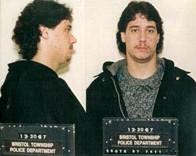
Frank Chester
Murderer Brian Kevin Rosenfeld
Murderer · USA · 1985
Brian Kevin Rosenfeld Brian Kevin Rosenfeld was sentenced to three concurrent l…
23 victims
Brian Kevin Rosenfeld
Murderer · USA · 1985
Brian Kevin Rosenfeld Brian Kevin Rosenfeld was sentenced to three concurrent l…
23 victims
 Yahweh ben Yahweh
Murderer · USA · 1980
Yahweh ben Yahweh was born and legally named Hulon Mitchell Jr. (October 27, 19…
23 victims
Yahweh ben Yahweh
Murderer · USA · 1980
Yahweh ben Yahweh was born and legally named Hulon Mitchell Jr. (October 27, 19…
23 victims
 Russell Ellwood
Murderer · USA · 1991
Russell Ellwood was a former taxi driver. Authorities suspected him of killing…
20 victims
Russell Ellwood
Murderer · USA · 1991
Russell Ellwood was a former taxi driver. Authorities suspected him of killing…
20 victims
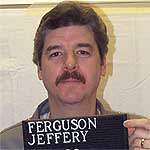 Jeffrey Ferguson
Murderer · USA · 1989
Jeffrey Ferguson was convicted of first-degree murder and sentenced to death fo…
1 victim
Jeffrey Ferguson
Murderer · USA · 1989
Jeffrey Ferguson was convicted of first-degree murder and sentenced to death fo…
1 victim
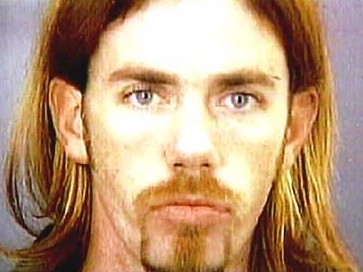 Patrick McIntyre
Murderer · USA · 1997
Patrick McIntyre was the son of a former Vero Beach police detective. Molly McI…
1 victim
Patrick McIntyre
Murderer · USA · 1997
Patrick McIntyre was the son of a former Vero Beach police detective. Molly McI…
1 victim
 Pauline Parker
Homicide · New Zealand · 1954
Pauline Parker was born on 26 May 1938. She was from Christchurch, New Zealand,…
1 victim
Pauline Parker
Homicide · New Zealand · 1954
Pauline Parker was born on 26 May 1938. She was from Christchurch, New Zealand,…
1 victim
- Gender
- male
- Country
- USA
- Location
- Bucks County, Pennsylvania, USA
- Date of birth
- October 23, 1968
- Age at first offence
- 19
- Characteristics
- hate crime, rape
- Victim profile
- Anthony Milano, 26 ( gay man )
- Method of murder
- S lashing his throat
- Date(s) of murder
- December 15, 1987
- Years active
- 1987
- Date of arrest
- —
- Status
-
Sentenced to death
Sentenced to death in July 1989
Case identification
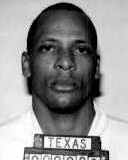
Frank Chester
Timeline
- October 23, 1968 — Frank Chester was born.
- December 14, 1987 — Anthony Milano went to his father’s home to advise his father that he intended to go out for the evening; Anthony left his father’s residence at approximately 11:15 p.m.
- December 15, 1987 — Police responded to a report of a car fire involving a Chevrolet Nova, searched adjacent wooded areas and discovered the body of Anthony Milano; Anthony’s mother had reported him as a “missing person” when he failed to return in the early morning hours; at approximately 1:30 a.m. a response was made to a reported stolen car found in a parking lot of the Edgely Inn; at approximately 2:10 a.m. Chester, Laird, and Anthony left the Inn together; at approximately 4:00 a.m. Chester and Laird approached on foot a friend’s apartment less than a mile from the murder scene; in July 1989 Chester and his codefendant, Richard Laird, were sentenced to death.
- July 1989 — Chester and his codefendant, Richard Laird, were sentenced to death for the first-degree murder of 26-year-old Anthony Milano.
Background
Frank Chester and his friend, Richard Laird, met Anthony Milano at a bar in Bucks County, Pennsylvania. Chester and Laird had been in the tavern for quite some time prior to Anthony’s arrival at the Edgely Inn. Both Chester and Laird exhibited quarrelsome and aggressive behavior before Anthony arrived. Chester had skills in the art of Karate and had threatened to assault one of the male guests at the establishment, while Laird was loud and argumentative that evening in the premises.
Laird was heard yelling, “I hate fucking faggots” during the evening. The three men left the bar together after Anthony arrived and shortly after closing time. There was also testimony that during the time that the three men were in the tavern Chester and Laird taunted Milano as to his masculinity.
The offence
Anthony Milano was murdered a few hours after he left the bar together with Chester and Laird. The body of Anthony Milano was discovered in a wooded area adjacent to where the Chevrolet Nova was parked.
The body lay face up with the left eye partially open, contusions in the facial area, and multiple “slashings” on the neck and throat. A postmortem examination revealed that the victim had been assaulted about the face and sustained lacerations about the face, throat, neck and shoulder. The pathologist concluded that Anthony had been kicked and/or punched in both the right and left temple areas and the chin. A hairline fracture at the base of the skull was attributed to a blunt instrument striking the head. The lacerations were made by a sharp instrument consistent with a utility knife. The pathologist opined that the “slashings” were hard enough and deep enough to sever the fifth and sixth vertebrae and were too numerous to count. The postmortem concluded that Anthony aspirated on his own blood for five to ten minutes before expiring.
The fire marshal for the township testified that in his opinion the fire which involved the Milano vehicle was deliberately and intentionally ignited.
Chester and Laird were convicted and sentenced to death for kidnapping, conspiracy, half a dozen other related offenses, and the first degree murder of Anthony Milano, a gay man, on December 15, 1987.
Investigation
A police officer testified that when he arrived at the scene he first observed the vehicle ablaze and assisted in extinguishing the fire. The vehicle was a Chevrolet Nova identified as being the 1976 Chevrolet Nova registered in the name of the mother of the deceased.
Police records established that Anthony’s mother reported the deceased as a “missing person” when he failed to return to the family home in the early morning hours of December 15, 1987.
Earlier, at approximately 1:30 a.m. on December 15, the officer responded, with two fellow officers, to a reported stolen car found in a parking lot of the Edgely Inn. To pursue their investigation, they began interrogating the customers in the Edgely Inn. The officer observed Chester, Laird, and Anthony Milano at the bar, requested identification from each of these individuals, and was satisfied that they were not involved in the car theft.
At approximately 2:10 a.m., while he was still in the parking lot, the officer observed Anthony, Chester, and Laird leave the Inn together. This testimony was confirmed by the other two officers that responded to the stolen car complaint.
At approximately 4:00 a.m., on December 15, Chester and Laird approached on foot the apartment of a friend of Chester’s, located less than a mile from the murder scene. The friend testified that both were visibly agitated and were covered with blood. Chester attempted to explain their condition by stating that they had been engaged in a fight and “the dude is dead.” The friend took both men to Laird’s apartment where they attempted to remove and conceal their bloody clothing.
The Commonwealth presented evidence to establish that Chester and Laird made incriminatory statements and actions that reflected their complicity in the murder. The Commonwealth also produced a transcription of a consensually intercepted telephone call between Chester and Laird. During that call, Laird suggested that Chester leave town, recommended ways Chester could pass a polygraph examination, and commented on the Commonwealth’s inability to prove a case without evidence.
Arrest and custodial status
Chester was on death row at Graterford Prison in Montgomery County, Pennsylvania.
Trial
Chester and Laird both testified at trial and admitted being at the scene. Chester denied taking part in beating Milano and fatally slashing his throat.
Sentencing
In July 1989, Chester and his codefendant, Richard Laird, were sentenced to death for the first-degree murder of 26-year-old Anthony Milano.
Outcome
Chester remained on death row.
Other details
Frank Chester In July 1989, Chester and his codefendant, Richard Laird, were sentenced to death for the first-degree murder of 26-year-old Anthony Milano.
Along with a friend, Richard Laird, Chester met Milano at a bar (non-gay specific) in Bucks County, Pennsylvania. The three men were last observed in the Nova with Milano driving and Laird supplying directions as to their destination.
A transcription of a consensually intercepted telephone call between Chester and Laird was presented at trial, during which Laird suggested that Chester leave town, recommended ways Chester could pass a polygraph examination, and commented on the Commonwealth’s inability to prove a case without evidence.
Chester cooperated with the police: he produced the clothes he was wearing at the time, gave police the names of all his friends and patrons in the bar, submitted to a lie detector test and passed, and agreed to be wire-tapped in a phone conversation with Laird to help implicate Laird for the murder.
Chester described the question “How did I get here when all I did was try to help the police?” as something he asked himself every day.
Chester was described as a model prisoner and was said to have never committed a violent act or done drugs in prison.
Chester was described as having Celiac Disease, a degenerative condition that slowly erodes the body within; it was stated that he needed treatment to help save his life.
During the trial narrative, it was stated that “I hate fucking faggots” was heard during the evening.
It was also stated that the media portrayed both Frank and Rick as evil-gay bashers and that the trial received much publicity, with the trial quickly becoming national headlines.
The narrative asserted that Chester cooperated with police and that a wire-tapped phone conversation was used to convince the jury Chester had done the crime.
The narrative stated that Rick Laird attempted to have his sentence reduced, asserting that because he was so strung out on drugs and alcohol, he had no way of knowing what he was doing on the night of the murder.
The narrative stated that Laird’s effort somewhat exonerated Chester but that Chester still was on Death Row.
Spotted an error, or have more information about this case?