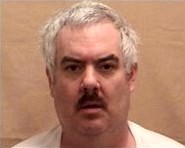
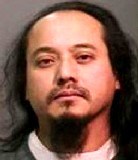
David Lauren Crespi
Murderer Robert Glen Jones
Murderer · USA · 1996
Defendant: Robert Glenn Jones (ADC#070566) · Co-defendant: Scott Nordstrom (ADC…
7 victims
Robert Glen Jones
Murderer · USA · 1996
Defendant: Robert Glenn Jones (ADC#070566) · Co-defendant: Scott Nordstrom (ADC…
7 victims
 Joshua Wayne Andrews
Murderer · USA · 2000
Joshua Wayne Andrews was a serial killer accused of killing several people in V…
5 victims
Joshua Wayne Andrews
Murderer · USA · 2000
Joshua Wayne Andrews was a serial killer accused of killing several people in V…
5 victims
 Juan Carlos Alvarez
Murderer · USA · 1998
Juan Carlos Alvarez, born on March 9, 1977, in San Luis, Mexico, was a Hispanic…
5 victims
Juan Carlos Alvarez
Murderer · USA · 1998
Juan Carlos Alvarez, born on March 9, 1977, in San Luis, Mexico, was a Hispanic…
5 victims
 Leon Davis Jr.
Murderer · USA · 2007
Leon Davis Jr. was sentenced to death on April 29, 2011, for the execution-styl…
5 victims
Leon Davis Jr.
Murderer · USA · 2007
Leon Davis Jr. was sentenced to death on April 29, 2011, for the execution-styl…
5 victims
 Raymond Lee Oyler
Murderer · USA · 2006
Raymond Lee Oyler was convicted for starting the 2006 Esperanza fire in Riversi…
5 victims
Raymond Lee Oyler
Murderer · USA · 2006
Raymond Lee Oyler was convicted for starting the 2006 Esperanza fire in Riversi…
5 victims
 Toribio Rodriguez
Murderer · USA · 1988
Toribio Rodriguez attacked Dawn Dearing in her Tucson apartment. On August 25,…
1 victim
Toribio Rodriguez
Murderer · USA · 1988
Toribio Rodriguez attacked Dawn Dearing in her Tucson apartment. On August 25,…
1 victim
 Annika Östberg
Murderer · USA · 1981
Annika Maria Östberg Deasy was born January 6, 1954, in Stockholm, Sweden. She…
2 victims
Annika Östberg
Murderer · USA · 1981
Annika Maria Östberg Deasy was born January 6, 1954, in Stockholm, Sweden. She…
2 victims
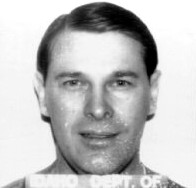 George Junior Porter
Murderer · USA · 1988
George Junior Porter was convicted of first degree murder for the death of his…
1 victim
George Junior Porter
Murderer · USA · 1988
George Junior Porter was convicted of first degree murder for the death of his…
1 victim
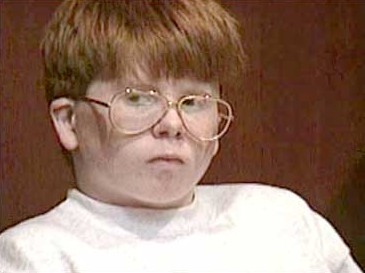 Eric Smith
Homicide · USA · 1993
Eric M. Smith was an incarcerated American criminal. Derrick Robie was a four-y…
1 victim
Eric Smith
Homicide · USA · 1993
Eric M. Smith was an incarcerated American criminal. Derrick Robie was a four-y…
1 victim
 Scott William Cox
Serial killer? · Several States USA / Canada · 1980
Name: Scott William Cox Tia Hicks vanished in 1990 after Scott William Cox was…
20 victims
Scott William Cox
Serial killer? · Several States USA / Canada · 1980
Name: Scott William Cox Tia Hicks vanished in 1990 after Scott William Cox was…
20 victims
- Gender
- male
- Country
- USA
- Location
- Mecklenburg County, North Carolina, USA
- Date of birth
- January 11, 1961
- Age at first offence
- 45
- Characteristics
- parricide, child killer, history of mental illness
- Victim profile
- His twin daughters Samantha and Tessara, 5
- Method of murder
- St abbing with knife
- Date(s) of murder
- January 20, 2006
- Years active
- 2006
- Date of arrest
- Same day
- Status
-
Life imprisonment
Sentenced to two life terms in prison without the possibility of parole on July 29, 2006
Case record: David Lauren Crespi
Background
David Lauren Crespi was a 45-year-old bank executive. He worked as a senior vice president and managing director of internal audit at Wachovia and had been in the bank’s audit division. He served on the parish finance council at St. Matthew Catholic Church in the Ballantyne area.
Crespi was also described as having a history of depression and mental illness over the past 20 years, and he had been transferred to Raleigh’s Central Prison on suicide watch. Family members later described his depression as lasting for 20 years and referenced medication changes.
Crespi had been home on medical leave due to his depression. He had been visiting his therapist, where he spoke of depression and his thoughts, though he did not speak of thoughts of killing his children, wife, or himself in that office visit.
Crespi and Kim Crespi had a family with children including twin daughters Samantha and Tessara. Their other children were Jessica, 17, Dylan, 14, and Joshua, 9. Kim Crespi did not see Crespi since he was arrested and later visited him almost every week at Raleigh’s Central Prison, where he was being held in a mental hospital unit.
Crespi’s father, Lauren Crespi of Angels Camp, Calif., described David as suffering from depression for years and said David recently did not like a new medication for insomnia. Lauren Crespi also said David had been diagnosed with testicular cancer, which was in remission.
The offence
Crespi stabbed his twin daughters, Samantha and Tessara, to death in his home on Creek Pointe Drive in the south end of Mecklenburg County. The twins were 5-year-old daughters. Police said the twins were stabbed to death at the Crespi home and investigators found their bodies shortly after 1 p.m.
Crespi arranged knives on the kitchen counter and stabbed Samantha repeatedly, eventually striking her 18 times. Tessara found him and ran upstairs to hide. Crespi pulled Tessara from a closet and stabbed her 14 times. Both girls begged him to stop.
Crespi made a call to 911 after the killings, and during the call he admitted to killing his two daughters and was thinking of killing himself.
Autopsy results later stated that both girls had cuts on their hands, and detectives had not said whether the cuts were defensive wounds or whether the twins were held down when they were stabbed. Police also said Samantha and Tessara were stabbed more than a dozen times.
Investigation
Charlotte-Mecklenburg police were dispatched after the 911 call and arrived shortly to find Crespi sitting outside his $500,000 home in the Ballantyne neighborhood. Police arrested Crespi and began a search of the house, finding the bodies of Samantha and Tessara.
Charlotte-Mecklenburg police declined to disclose details about the possible motive or weapon used. A police spokesperson said, “Our investigators will go over that tape,” in reference to investigators reviewing the 911 call.
Investigators found the crime scene described as one of the worst police scenes they had witnessed during their time on the police force.
Crime scene technician L.R. Barbour testified about photographs she took at the scene. During testimony, she responded to a question about a close-up photo of Tess’ face:
“Whose hand is that?”
“It’s mine,” she said.
During the testimony of an officer identified as Adrew Molatch, he testified that he thought he felt a pulse when he carried Tessara downstairs. When asked whether what he saw in the house continued to affect him, Molatch looked up with damp eyes and said:
“You think?”
Arrest
Police arrived at Crespi’s home after a dispatcher told them a man had called 911 and said he had stabbed his twin daughters to death and was about to kill himself. Officers found Crespi outside and he surrendered without resistance. Officers handcuffed him, and police said he was cooperative and easily handcuffed.
Police notified Kim Crespi of the murders and blocked the street to prevent her from arriving unaware. Crespi was booked into Charlotte Mecklenburg County Jail.
After his arrest, Crespi was taken into custody and questioned about what happened and why he killed his children.
Statements and confession
Crespi told homicide detectives he was struggling with depression when he killed the twins. He described battles with depression as triggering thoughts of killing his children, his wife, and his parents, and he also discussed thoughts of running down strangers with his car. He told detectives he knew what he had done was wrong.
In an interview, Crespi described how during earlier periods with the twins, when they were 3 or 4, he began carrying a butcher knife in his back pocket and thought of hurting them, but then said he came to his senses and did not do it. He said he had convinced himself financially it could work.
When asked about what happened on January 20, 2006, Crespi stated:
“I was home. I was typing. And then I said, `If I do this, then I won’t have to take care of everybody anymore.’ “
“If you do what?” the detective asked.
“I kill Tess and Sam. And the thoughts kept going.”
He said he stabbed Samantha more than once:
“I wanted it to be over. I wanted it to be over for both of them.”
When asked if he thought he could have stopped himself from killing his twins, he responded:
“Probably — no. Had to happen today.”
He explained he did not want to go to the doctor:
“Had to happen today because the thoughts weren’t — the thoughts weren’t stopping … I didn’t want to go to the doctor this afternoon.”
When asked why he could not kill just one, Crespi said:
“Because they’re twins. They go together.”
He told detectives he did not talk to anyone about the thoughts, including not telling the therapist he had seen yesterday. He said:
“Never talked to anybody about them — not even the therapist I saw yesterday.”
Asked if he liked being married and having children, Crespi said:
“I did. I didn’t see a way to pay for it … I didn’t see a way to take care of everything.”
He said he viewed a remedy as something “awful”:
“I guess to do some — to do something that would be awful like this.”
When asked if killing the twins would resolve that problem, Crespi replied:
“Maybe it will — in a way.”
He said he would not have to be focused and obsess about it:
“I don’t have to be as focused about it. You know, I don’t have to obsess about it.”
Asked whether killing his children was the reason for his actions, Crespi said:
“No … It’s not right … It’s not a reason to kill.”
He said:
“Right now I fear what’s going to happen to me because I know it’s going to be ugly.”
He also told detectives:
“I can’t hurt anybody else.”
He said that after three days he would return to work and he asked how that made him feel. Crespi responded:
“In one way … I just have another problem now, other problems, you know.”
When asked what those problems were, Crespi said:
“Being here, where I’m headed.”
When asked if the problem before had been bigger than the problem he had before, Crespi answered:
“Now, yeah. Yeah, it’s bigger. It’s bigger for a lot of people.”
He described going back and forth in his mind:
“I was going back and forth.
Don’t do this. Don’t do this.’ And then I was going back,You have to do it.’ ”
When asked why he had to do it, Crespi said:
“Because then I’ll be bad, and I’m already feeling bad … If you’re bad, you do stuff like this.”
He said he was not a bad person:
“But you’re not a bad person.”
And Crespi replied:
“I guess I am now.”
When asked what was going through his mind before the attacks, Crespi told detectives:
Trial
Crespi pleaded guilty to two counts of first-degree murder. During the plea hearing, defense lawyers were expected to put on evidence that a psychiatrist concluded Crespi was competent to enter the guilty pleas. The judge was to question Crespi about his decision to plead guilty, his rights to a jury trial, whether he was in fact guilty, and whether he understood what he was doing and the consequences of his guilty pleas.
Sentencing
Crespi was sentenced immediately after pleading guilty. The sentence was two life terms in prison without the possibility of parole.
Crespi’s day in court included the guilty plea to two counts of first-degree murder and immediate sentencing to two life terms without parole.
Appeals
No appeal information was included.
Outcome
Crespi pleaded guilty to murder in connection with the stabbing deaths of twin daughters Samantha and Tessara and received two life terms in prison without the possibility of parole on July 29, 2006. The legal case ended after sentencing.
Other details
Crespi was held at Raleigh’s Central Prison on suicide watch and had been placed on suicide precaution. A Mecklenburg County Sheriff’s Office spokeswoman described the order:
“made a statement that Mr. Crespi is suicidal and is under a Level Two suicide precaution,” and said such a precaution was used for inmates who had not made an attempt on their life but officials believed should be observed.
Crespi was moved from the Mecklenburg County Jail to a prison mental health facility in Raleigh after a judge signed an order. The order required he be housed in a room with a window and observed constantly by medical or jail employees via cameras, and he was given clothing that was tear resistant to prevent it being used to hurt himself.
Kim Crespi said she did not want her husband put on trial for his life and said:
“I do not believe that taking David's life could in any way make right what went so tragically wrong on Jan. 20,” and: “Seeking the death penalty for David would be yet another layer of injury upon our already deeply hurt family.” She said her family was thankful he did not take his own life and wrote: “His life will be of value wherever he is on earth, including in prison,” and: “When there is life there is hope for healing.”
Defense counsel Jim Cooney and Jean Lawson said Crespi had been overwhelmed by mental illness on the day he stabbed his daughters to death. Cooney told the Observer:
“David committed these acts while in the midst of a psychotic episode,” and: “He will pay for them with the rest of his life.” Lawson said: “They followed every treatment plan given to them, and David took every medication prescribed to him,” and: “Unfortunately ... only after the deaths of Samantha and Tessara was David diagnosed with psychotic depression and features of bipolar mental illness. " Lawson also said: “In light of these diagnoses, his prior treatment and medication were completely inadequate to control his mental illness.”
Defense lawyers said Crespi was taking Paxil for depression, Trazodone for anxiety, and Ambien to help him sleep, and that he gained more than 50 pounds while on Paxil and no longer wanted to take the antidepressant. In January, Crespi began taking Prozac. The day before the killings, medical records showed he was taken off Ambien and Trazodone and put on Lunesta.
Medical documents were referenced as showing his depression medication was changed 4 days before the killings, moving from Paxil to Prozac. A doctor’s notes were quoted as stating:
“Prozac was continued so depression would not deepen (crash). It obviously is not a good drug for the patient. [He] ultimately needs safe keeping and a mood stabilizer.” The doctor’s notes also stated: “[Crespi] was treated at psychotherapy, usually Paxil, usually 3-6 months and then stopped because he got better. (manic episodes?),” The doctor’s notes also quoted Crespi as saying: “It makes me feel spacey.” The doctor’s notes also stated: “Slow thinking, showing mild confusion,” and: “lost track of their joy.”
Crespi also referenced thoughts of killing family and told detectives:
“I thought I could control it, you know, and I thought it wasn’t real,” and: “I thought I’d never actually do it.”
In remarks attributed to Crespi, he said: and:
“I didn't see a way to pay for it … I didn't see a way to take care of everything.”
Kim Crespi spoke during her daughters’ funerals and referenced fear that if David had not called 911, Jessica, Dylan, Joshua and she “may not have been here today for you.” She also said:
“We will never forget their humor, their love of life, and their love for all of us and especially their love for each other.” In the interview, Kim Crespi said Crespi made a comment: “I am sad that this world is so dark sometimes, and they would be a part of it.” and: “And I said, ‘You wouldn’t ever do anything, would you? And he said, ‘No, no,’” She later said: “He (once) said, when he got depressed, he said, ‘I am sad that this world is so dark sometimes, and they would be a part of it.’ ” and:
Kim Crespi also described the day of the murders, saying she left for a hair appointment after noon and returned at 1:20 p.m. She said the twins were eating mashed potatoes and gravy when she left and that police were at the home when she returned. She said her first thought was that her husband had killed himself, and after what police told her after interviewing him, she believed he was prepared to kill the whole family. She said:
“He said his darkness was for all of us,” and:
A neighbor described the incident as:
“I just honestly and truly believe that this was some kind of terrible thing that just went wrong,” and another neighbor said: “I can’t describe to you how horrific and how sad this is,” while Keith Bridges said: “It’s horrible.” Bridges also said officers initially hoped one girl would survive and that: “They brought her out to try and get her to Medic as quickly as possible, but that wasn’t the case. She had already died.” Bridges also stated: “As is typical in any situation, the police officer would give the suspect commands to do certain things. That should be no indication that he was not cooperative. Everything that I’ve heard is that he was cooperative and easily handcuffed,” and: “Police would not confirm that.”
A report described Crespi’s attempted avoidance of a capital murder trial and possible death sentence by pleading guilty, and said prosecutors told Crespi’s attorneys they would not seek the death penalty if he pleaded guilty.
Sgt. Lee Ann Oehler said she could not comment on what led to the killings. Police said they would not release the 911 recording because it was part of the investigation.
Spotted an error, or have more information about this case?