William Henry Thorpe
Murderer Albert Burrows
Murderer · United Kingdom · 1920
Albert Burrows (also named Albert Edward Burrows): married farm labourer who to…
4 victims
Albert Burrows
Murderer · United Kingdom · 1920
Albert Burrows (also named Albert Edward Burrows): married farm labourer who to…
4 victims
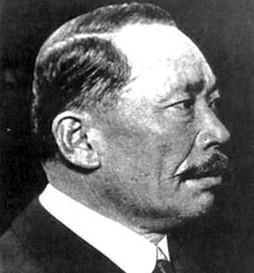 Lock Ah Tam
Murderer · United Kingdom · 1925
Lock Ah Tam was 54 when he killed his wife and two daughters. He had been a suc…
3 victims
Lock Ah Tam
Murderer · United Kingdom · 1925
Lock Ah Tam was 54 when he killed his wife and two daughters. He had been a suc…
3 victims
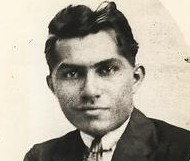 Buck Ruxton
Murderer · United Kingdom · 1935
Buck Ruxton (21 March 1899, Bombay – 12 May 1936, Manchester) was also known as…
2 victims
Buck Ruxton
Murderer · United Kingdom · 1935
Buck Ruxton (21 March 1899, Bombay – 12 May 1936, Manchester) was also known as…
2 victims
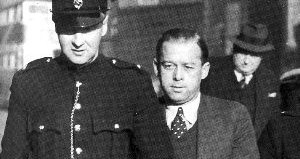 Walter Graham Rowland
Murderer · United Kingdom · 1934
Defendant: Walter Graham Rowland Age: 39 (labourer) Residence/Origin: from Mell…
2 victims
Walter Graham Rowland
Murderer · United Kingdom · 1934
Defendant: Walter Graham Rowland Age: 39 (labourer) Residence/Origin: from Mell…
2 victims
 Tina Lunney
Murderer · USA · 2009
Tina Lunney was sentenced to 40 years in prison on August 13, 2013. · July 22,…
1 victim
Tina Lunney
Murderer · USA · 2009
Tina Lunney was sentenced to 40 years in prison on August 13, 2013. · July 22,…
1 victim
 Javed Iqbal
Serial killer · Pakistan · 1998
Javed Iqbal (born 1956 in Lahore, Punjab, Pakistan; died October 8, 2001, in La…
100 victims
Javed Iqbal
Serial killer · Pakistan · 1998
Javed Iqbal (born 1956 in Lahore, Punjab, Pakistan; died October 8, 2001, in La…
100 victims
 James David Autry
Murderer · USA · 1980
James David Autry was convicted of shooting a convenience store clerk and of sh…
2 victims
James David Autry
Murderer · USA · 1980
James David Autry was convicted of shooting a convenience store clerk and of sh…
2 victims
 Kevin Stanford
Homicide · USA · 1981
Kevin Stanford was sentenced to death in 1982. The death sentence was commuted…
1 victim
Kevin Stanford
Homicide · USA · 1981
Kevin Stanford was sentenced to death in 1982. The death sentence was commuted…
1 victim
 Paul Kreutzer
Murderer · USA · 1992
Paul Kreutzer lived less than a quarter of a mile from the Hemphill residence i…
1 victim
Paul Kreutzer
Murderer · USA · 1992
Paul Kreutzer lived less than a quarter of a mile from the Hemphill residence i…
1 victim
- Gender
- male
- Country
- United Kingdom
- Location
- Bolton, Great Manchester, North West, England, United Kingdom
- Date of birth
- 1880
- Age at first offence
- 45
- Characteristics
- alcohol, mentally ill, fugitive
- Victim profile
- Frances Clarke, 39 ( his former sweetheart)
- Method of murder
- Cutting her throat with a razor
- Date(s) of murder
- November 20, 1925
- Years active
- 1925
- Date of arrest
- Same day (suicide attempt)
- Status
-
Executed
Executed by hanging in Manchester on March 16, 1926
Case record: William Henry Thorpe
Background
William Henry Thorpe was a forty five year old one-legged watchman. He was an ex-soldier who had lost the lower part of his left leg during the war. He worked as a labourer and watchman at a building site at Breightmet, Bolton.
Thorpe had an on-off relationship with Frances Clarke. He had last seen Frances Godfrey in June 1925, just before the “Wakes” holiday. When he learned Frances was to marry, he wrote her a long, affectionate letter “pouring out his heart,” “perhaps in the vain hope that it might prompt her to leave her husband.” He heard nothing since, and then, in the last few days, he moped around the building site.
The only woman Thorpe had ever truly loved had recently married.
Frances Clarke lived with her new husband and elderly mother in a small terraced house at 9 Clarke Street, Victory, Bolton.
The offence
On Thursday evening, 19th November, 1925, a couple of days after discovering that Frances had got married, Thorpe went out and got very drunk.
In the early hours of the following morning, Thorpe waited outside Frances’s mother’s house, where the couple were staying. After Frances’s husband had gone to work, Thorpe entered and cut her throat as she lay in bed.
At 5 a.m., William Clarke left home and made his way to the Little Lever chemical works where he worked as a labourer, leaving Frances asleep in the front bedroom.
Less than an hour later, Frances’s mother was woken by a piercing scream. She heard a “curiously familiar clumping sound coming from the staircase” as though “i someone was making a clumsy exit.” She rushed to Frances’s room and found her lying on the bed bleeding heavily from a gash in her throat. As her nightgown turned “a deep crimson,” she moaned: “Billy Thorpe.”
Frances Clarke died by the time the ambulance arrived.
Investigation
Detective Superintendent Hall led the murder enquiry.
The investigation found that Thorpe had entered the house by breaking a back kitchen window and scaling the back wall.
Arrest
A search was made for Thorpe. The hunt for the killer was short.
By lunchtime, Thorpe was in custody. He was arrested by two detectives who found him holding a razor to his throat as they burst a door open. He was quickly disarmed and taken to the local police station.
Thorpe said that he had already made two unsuccessful suicide bids since committing the murder.
On leaving Frances’s home, Thorpe had thrown himself in front of a tram. The tram was crawling in fog and the driver stopped in time, climbing down to remonstrate and being pushed to the ground by Thorpe, who then disappeared into the gloom.
Thorpe said he then tried to drown himself in the canal close to his home but had been unable to hold his head under the water long enough.
In custody that afternoon, Thorpe made a further attempt to hang himself with his braces in the police station lavatory. This attempt was thwarted when “His escort kicked down the door.” Thorpe “seemed to be ‘going off his head.’”
Trial
Thorpe’s trial at Manchester Assizes took place on February 23rd, 1926.
His defence counsel strove to convince the jury that Thorpe was insane at the time of the murder.
The son of his landlady testified that at times Thorpe seemed to be “going off his head” and that he had tried to kill himself on more than one occasion.
When Thorpe took the stand, he looked pale and drawn. He said that he had first lodged with Frances and her mother in 1922. Soon afterwards he and Frances had begun to keep company, but he had heard of her marriage only when he met a mutual friend.
Thorpe claimed that the razor police took from him on his arrest was merely for shaving. He said a lethal glasscutter taken from his pocket was to fix a broken window pane in his hut at the building site. He denied using this to kill Frances Clarke, although bloodstains were found on it.
He claimed he had no idea what had happened on the night of November 19th because he had been very drunk. He admitted he was angry because Frances had married, but he denied killing her because she had chosen someone else.
In summing up, Mr Justice Wright said:
“We all know from sad experience that drunkenness does weaken a man's self-control, and as a result he does things he would not do when sober.”
The judge also pointed out that a man might be so drunk as to be unable to form the necessary intention to commit a crime.
After retiring for less than half an hour, the jury found Thorpe guilty of murder, and added a strong recommendation for mercy.
Thorpe stood unmoved as he was sentenced to death.
Sentencing
Thorpe was sentenced to death by Mr Justice Wright at Manchester Assizes on 24th February.
Appeals
Numerous petitions were launched in the hope of saving him from the gallows.
One petition in his home town of Blackpool was signed by more than 7,000, and others in Bolton gathered similar numbers.
Outcome
Thorpe was hanged by William Willis in Manchester on the 16th March 1926.
Other details
Thorpe had lodged with Frances’s mother several years earlier, and she recognised the sound of his wooden leg on the staircase because he had lodged with her when he first came to Bolton. Frances’s mother had disapproved of Thorpe’s relationship with her daughter.

Spotted an error, or have more information about this case?