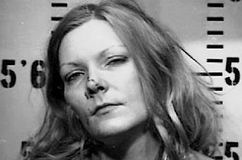
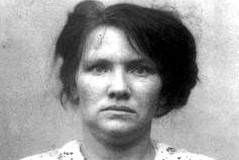
Annika Östberg
Murderer Bobbie Sue Terrell
Murderer · USA · 1984
Bobbie Sue Dudley Terrell was a Pinellas County nurse and worked as the night s…
12 victims
Bobbie Sue Terrell
Murderer · USA · 1984
Bobbie Sue Dudley Terrell was a Pinellas County nurse and worked as the night s…
12 victims
 Marybeth Tinning
Murderer · USA · 1972
Marybeth Tinning (née Roe, born on September 11, 1942) was an American prisoner…
9 victims
Marybeth Tinning
Murderer · USA · 1972
Marybeth Tinning (née Roe, born on September 11, 1942) was an American prisoner…
9 victims
 Debbie Fornuto
Murderer · USA · 1972
Deborah Fornuto was the mother of six children whose deaths were initially rule…
7 victims
Debbie Fornuto
Murderer · USA · 1972
Deborah Fornuto was the mother of six children whose deaths were initially rule…
7 victims
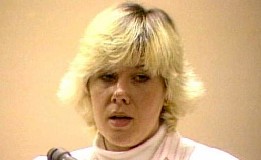 Catherine May Wood
Murderer · USA · 1987
Catherine May Wood was an American caregiver who worked at the Alpine Manor Nur…
5 victims
Catherine May Wood
Murderer · USA · 1987
Catherine May Wood was an American caregiver who worked at the Alpine Manor Nur…
5 victims
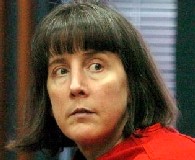 Amy Bishop
Murderer · USA · 1986
Amy Bishop — biology professor and perpetrator · James Anderson — Bishop’s husb…
4 victims
Amy Bishop
Murderer · USA · 1986
Amy Bishop — biology professor and perpetrator · James Anderson — Bishop’s husb…
4 victims
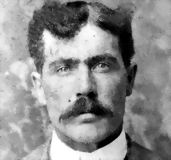 Wallace Wilkerson
Murderer · USA · 1877
Wallace Wilkerson (c. 1834 – May 16, 1879) was an American stockman. He was bor…
1 victim
Wallace Wilkerson
Murderer · USA · 1877
Wallace Wilkerson (c. 1834 – May 16, 1879) was an American stockman. He was bor…
1 victim
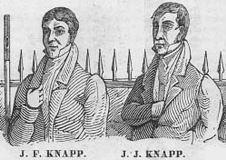 Francis & Joseph Knapp
Murderers · USA · 1930
Francis Knapp and Joseph Jenkins Knapp were the brothers known as the Knapps. T…
1 victim
Francis & Joseph Knapp
Murderers · USA · 1930
Francis Knapp and Joseph Jenkins Knapp were the brothers known as the Knapps. T…
1 victim
 Stanley Allison Baker
Murderer · USA · 1994
Sept. 28, 1994 — Stanley Allison Baker, Jr., killed Wayne Walters during the co…
1 victim
Stanley Allison Baker
Murderer · USA · 1994
Sept. 28, 1994 — Stanley Allison Baker, Jr., killed Wayne Walters during the co…
1 victim
 James Hunt
Murderer · USA · 2004
James Hunt was sentenced to death on July 28, 2006 in Floyd County for Burglary…
1 victim
James Hunt
Murderer · USA · 2004
James Hunt was sentenced to death on July 28, 2006 in Floyd County for Burglary…
1 victim
 Grace Marks
Homicide · Canada · 1843
Grace Marks (c. 1828 – after c. 1873) was a Canadian maid who was convicted in…
2 victims
Grace Marks
Homicide · Canada · 1843
Grace Marks (c. 1828 – after c. 1873) was a Canadian maid who was convicted in…
2 victims
- Gender
- female
- Country
- USA
- Location
- San Joaquin County/Lake County, California, USA
- Date of birth
- January 6, 1954
- Age at first offence
- 27
- Characteristics
- robbery, to avoid arrest
- Victim profile
- Joe Torre (ex-restaurant owner) / Sergeant Richard J. Helbush, 34 (Lake County Sheriff's Office)
- Method of murder
- Shooting
- Date(s) of murder
- April 30/May 2, 1981
- Years active
- 1981
- Date of arrest
- May 2, 1981
- Status
-
Imprisoned
Released on May 2, 2011 after being sentenced to 25 years to life in 1983; transferred to Sweden in April 2009 and incarcerated in the Hinseberg women's prison north of Örebro
Case record: Annika Östberg
Identity and background
Annika Maria Östberg Deasy was born January 6, 1954, in Stockholm, Sweden. She was a Swedish citizen.
Annika Östberg grew up in Hässelby in Stockholm. She moved with her mother to California in the 1960s. She ran away from home to San Francisco, where she became a drug addict.
She married Brian Deasy and gave up drugs, but when the marriage failed she resumed her drug habit.
She had moved to the United States from Sweden with her mother when she was 11 years old. Her mother’s remarriage brought a wealthy American businessman as a stepfather. She spoke little English and experienced problems at school, including being picked on by classmates. At the age of 12 she was sent to a youth detention center. The following year, in the spring of 1967, she ran away to San Francisco with a musician in his 20s.
In San Francisco she later met Greene Johnston, father of her only child, Sven. She got into drugs and worked as a stripper and prostitute to support herself and her son while still a teenager. She later married Brian Deasy and moved with him to Stockton, getting off drugs and becoming a housewife. After a few years her marriage broke up, she returned to drug use and met Cox, a drug dealer with a long criminal record.
A passage found at her Web site, annikadeasy.org, described her as having a history of drug abuse from a young age and living irresponsibly as a young adult, and stated that “unfortunately she has become a pawn in the misguided agenda of California politics.”
Other details
Family and advocacy
Maj-Britt, described as her elderly mother, advocated for having Östberg released home to Sweden. Helbush’s family chose not to comment publicly.
Prior criminal record
In 1973 Östberg was convicted of theft and received 18 months probation.
Also in 1973, she was convicted of possession of a controlled substance and received three years probation.
In 1976 she was convicted of providing liquor to a minor and received 12 months probation, one day in jail, and was ordered to pay a $65 fine.
In 1972, a man was stabbed to death in Östberg’s apartment in San Francisco. Östberg admitted perpetrating the crime and was found guilty.
In 1974, she admitted killing McKay. There were allegations that another man, an ex-boyfriend, had actually done the killing. Östberg was being investigated for welfare fraud at the time, and she was convicted, given a suspended sentence, and did five years’ probation.
The offence (1981 murders and related conduct)
On April 30, 1981, Östberg and her boyfriend Bob Cox robbed and killed ex-restaurant owner Joe Torre. Östberg sold stolen meat to restaurants and had made an appointment in a warehouse with Torre. While she pretended to bring the meat out of the truck, Bob Cox shot him. They robbed Torre and drove away.
While the vehicle broke down on the highway on the next day, Sgt Helbush stopped to render aid.
Evidence existed that Östberg may have shot Sgt Helbush as he walked back to his patrol car. Östberg stated that while she pretended to search for her driver’s licence, Cox shot Helbush in the back of the head.
Östberg told Cox to get rid of the body. They stole the policeman’s wallet and the police car.
Investigation and events around the crimes
After Helbush failed to report back, a patrol found his body. Policeman Don Anderson discovered his colleague’s stolen police car on a road in the Cobb Mountain area. After a short pursuit, Cox crashed the stolen car on a sharp curve near intersection 175 at Dry Creek Road.
During a shootout in which Östberg helped Cox to reload, Cox was wounded by several shots from the police and surrendered.
Östberg tried to reach a gun before a police officer arrested her.
Arrest, hearings, and disputed responsibility
Östberg explained the crimes in detail at her hearings and blamed her drug abuse. Drug tests showed that she was not using narcotics at the time.
A defense account described Cox sending Östberg to look for his driver’s licence while he spoke with Helbush, with Östberg helping distract Helbush, who Cox then shot. The defendant’s position was that she did not shoot Helbush.
Mitchell expressed that he was baffled by Östberg’s folk hero status and said he was not entirely convinced that Östberg herself did not shoot Helbush.
Anderson said he believed Östberg did take responsibility for what happened, but she felt she was being punished as if she was the one who pulled the trigger. Anderson also said Deasy’s position was that she did not shoot Cox.
Timeline
- January 6, 1954 — Annika Maria Östberg Deasy was born in Stockholm, Sweden.
- 1960s — Östberg moved with her mother to California.
- 1972 — A man was stabbed to death in Östberg’s apartment in San Francisco; she admitted the perpetration and was found guilty.
- 1973 — Östberg was convicted of theft and received 18 months probation.
- 1973 — Östberg was convicted of possession of a controlled substance and received three years probation.
- 1974 — Östberg admitted killing McKay; she was convicted and, given a suspended sentence, did five years’ probation.
- 1976 — Östberg was convicted of providing liquor to a minor; she received 12 months probation, one day in jail, and was ordered to pay a $65 fine.
- April 30, 1981 — Östberg and Bob Cox robbed and killed Joe Torre.
- May 2, 1981 — Sgt Richard Helbush was shot; Cox and Östberg took his wallet, service revolver, and patrol car, left his body, and were later apprehended after a chase and gun fight.
- 1983 — Östberg received a sentence of 25 years to life for the 1981 murders.
- 1997 — Östberg was refused transfer to Sweden.
- 2000 — Parole practices changed for life prisoners.
- 2002 — Östberg was refused transfer to Sweden.
- May 2007 — Swedish Prime Minister Fredrik Reinfeldt met with Gov. Arnold Schwarzenegger in California and discussed Östberg’s case.
- August 2005 — California governor Arnold Schwarzenegger refused in an interview with Swedish television to let her be transferred to Sweden to serve the remaining period.
- 2005 — Östberg was refused transfer to Sweden.
- April 7, 2009 — A woman who pleaded guilty to the 1981 murder of a Lake County sheriff’s sergeant was described as having been sent back to Sweden.
- March 25, 2009 — Östberg was transferred from the California Institution for Women in Chino to federal authority.
- March 26, 2009 — Swedish officials received the agreement from US authorities for Östberg’s transfer.
- April 2009 — Östberg was handed over to Swedish authorities and transferred to Sweden.
- November 16, 2009 — A Swedish court decided that her life sentence should be time-limited so she could be released in May 2011.
- August 8, 2010 — Östberg hosted the program “Sommar” on Sveriges Radio.
- May 2, 2011 — Östberg was released.
Trial
Östberg pleaded guilty to two charges of first-degree murder for the deaths of Helbush and Torre in a deal with then-District Attorney Steve Hedstrom.
Each charge carried a sentence of 25 years to life.
Sentencing
In 1983, Annika Östberg received a sentence of 25 years to life for the 1981 murders.
Appeals
No appeals outcome was stated in the provided text.
Parole, transfer, and decisions affecting release
Östberg was denied parole and was refused transfer to Sweden in 1997, 2002, 2005, 2008, and again on a separate parole denial for transfer in September of a year referenced as her most recent denial.
She was refused transfer to Sweden several times before the April 2009 transfer.
A prosecutor, Lake County District Attorney Jon Hopkins, had attended Östberg’s parole hearings to speak against her release.
The Board of Prison Terms determined that Östberg was not ready for parole because she had acted in a cold-blooded manner and the motive was trivial.
Campaigns by relatives of the victims, the police, and other Americans pushed for Östberg to remain in jail. California’s Governor supported keeping her in jail and declared that she was a vicious killer.
In Sweden, campaigns urged her sentence to be time-determined and that she be allowed to serve the remaining imprisonment in her home country. Claims were made that her sentence was inhumane and that she was not the one who personally shot the restaurant owner and policeman. Other arguments noted that Östberg pleaded guilty and that her sentence was fair and correct under California law and that she had limited connection to Sweden. It was also stated that she had been treated no differently than any other inmate convicted of similar crimes.
Swedish reactions included claims that she was not armed and did not commit any murder. Swedish media claimed she was only present on the scene and did not do anything, and she was described as a scapegoat for her boyfriend, who committed suicide before his trial. Later Swedish media admitted a higher degree of involvement. It was stated that she implied she committed the killings in statements to the police. She was described as confessing to avoid a death penalty and it was noted that avoiding a death penalty would have been hard if she actually shot the victims. Some believed that if she was convicted in her home country she would get 6–7 years imprisonment.
The police academy professor Leif GW Persson said:
“She is a very heavy criminal. Media has touched that very gently. I assume that is because they want her to be released, then it is hard to do a correct description of the case.”
Transfer to Sweden and release details
The question of being transferred to a Swedish prison was described as outside the scope of a parole hearing.
California governor Arnold Schwarzenegger refused in an interview in August 2005 with Swedish television to let her be transferred to Sweden to serve the remaining period in her native country.
In April 2009 she was transferred after years of diplomatic activity. It was stated that the financial crisis in the United States and the fact that prisoners were a burden on the economy were reasons for the transfer. Östberg was described as being one of the first prisoners to be transferred under new rules.
Östberg became incarcerated in the Hinseberg women’s prison north of Örebro.
On March 25, 2009, she was transferred from the California Institution for Women in Chino to federal authority. The narrative described that federal law grants prisoners privacy rights.
It was stated that Swedish prison officials flew Östberg to Sweden on a private chartered jet costing the Swedish government $62,000. Martin Valfridsson, press secretary to Swedish Minister for Justice Beatrice Ask, said she had landed in Sweden earlier in the morning aboard the chartered jet. Valfridsson said she was being held at Hinseberg, described as the most highly secured Swedish prison for women.
The Swedish Foreign Ministry Office in Stockholm could not offer comment. The Swedish Ministry of Justice was expected to comment.
A Swedish court decided on November 16, 2009, that her life sentence should be time-limited so she could be released in May 2011, more than 30 years after her arrest.
She was released on May 2, 2011, after being locked up for 30 years.
Notable persons mentioned
- Annika Maria Östberg Deasy — defendant.
- Bob Cox — her boyfriend; co-participant named in the offences.
- Joe Torre — restaurant owner who was killed.
- Sgt Richard Helbush — Lake County sheriff’s sergeant who was killed.
- Don Anderson — discovered the stolen police car and was later described in connection with the apprehension.
- Lester Fleming — Lake County district attorney; statement referenced regarding evidence that Östberg may have shot Helbush.
- Jon Hopkins — District Attorney who attended parole hearings to oppose release.
- Steve Hedstrom — then-District Attorney; involved in the plea deal.
- Terry Thornton — California Department of Corrections and Rehabilitation spokesperson.
- Sheriff Rod Mitchell — Lake County sheriff; described as calling release outrageous.
- Gordon Hinkle — deputy press secretary for the California Department of Corrections and Rehabilitation.
- Arnold Schwarzenegger — California governor.
- Fredrik Reinfeldt — Swedish Prime Minister.
- Beatrice Ask — Swedish Minister for Justice.
- Alberto Gonzalez — then-US Attorney General.
- Martin Valfridsson — press secretary to Swedish Minister for Justice Beatrice Ask.
- Leif GW Persson — police academy professor who made a quoted statement.
- Maj-Britt — Östberg’s mother, described as a vocal advocate for her release.
- Greene Johnston — father of Östberg’s only child, Sven.
- Sven — Östberg’s only child.
- Brian Deasy — spouse mentioned in relation to her giving up drugs and later separation.
- Donald McKay — referenced in connection with a 1974 manslaughter conviction.
- William “Bob” Cox — named in another phrasing as the boyfriend; linked to the suicide before his trial.
Quoted statements
Sheriff Rod Mitchell said:
“I just would never have believed that this would happen,”
District Attorney Jon Hopkins said:
“It’s really got me hot.”
“The Swedish media has created a cult following which believes Ms. Deasy is a victim of American justice who has done nothing wrong.”
District Attorney Jon Hopkins wrote in a February letter:
District Attorney Jon Hopkins wrote in his February letter (quoted):
“She has not been found suitable for parole at any of the several Lifer Hearings held over the years,” “She has not been found suitable for the International Prison Transfer program, in spite of regular requests to be sent back to Sweden to serve out her sentence.”
District Attorney Jon Hopkins added (quoted):
“It is clear that she would be released from custody soon after arriving in Sweden, should she be transferred.”
Anderson said:
“She knew exactly what was going to happen,”
Mitchell said:
“I’m baffled by Deasy’s folk hero status,”
Anderson said:
“Now they’re going to let a cop killer go. It’s kind of disheartening.”
Hopkins said:
“My thoughts exactly,”
Anderson said he was portrayed in Sweden as “a ruthless and brutal cop who beat up Annika at the scene,” and he said:
“I had no clue what they were talking about.”
Spotted an error, or have more information about this case?