Larry Cutter
Murderer Brian Kevin Rosenfeld
Murderer · USA · 1985
Brian Kevin Rosenfeld Brian Kevin Rosenfeld was sentenced to three concurrent l…
23 victims
Brian Kevin Rosenfeld
Murderer · USA · 1985
Brian Kevin Rosenfeld Brian Kevin Rosenfeld was sentenced to three concurrent l…
23 victims
 Russell Ellwood
Murderer · USA · 1991
Russell Ellwood was a former taxi driver. Authorities suspected him of killing…
20 victims
Russell Ellwood
Murderer · USA · 1991
Russell Ellwood was a former taxi driver. Authorities suspected him of killing…
20 victims
 Robert Martines Perez
Murderer · USA · 1994
Name: Robert Martines Perez · Other name used in proceedings: Robert Martinez P…
15 victims
Robert Martines Perez
Murderer · USA · 1994
Name: Robert Martines Perez · Other name used in proceedings: Robert Martinez P…
15 victims
 Billy Frank Vickers
Murderer · USA · 1993
Billy Frank Vickers Vickers was executed by lethal injection in Texas on Januar…
14 victims
Billy Frank Vickers
Murderer · USA · 1993
Billy Frank Vickers Vickers was executed by lethal injection in Texas on Januar…
14 victims
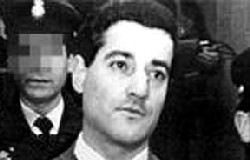 José Antonio Rodríguez Vega
Serial killer · Spain · 1987
José Antonio Rodríguez Vega was a Spanish serial killer nicknamed El Mataviejas…
16 victims
José Antonio Rodríguez Vega
Serial killer · Spain · 1987
José Antonio Rodríguez Vega was a Spanish serial killer nicknamed El Mataviejas…
16 victims
 Daniel Rakowitz
Homicide · USA · 1989
Daniel Rakowitz was born in 1960 in Rockport, Texas. He moved to New York aroun…
1 victim
Daniel Rakowitz
Homicide · USA · 1989
Daniel Rakowitz was born in 1960 in Rockport, Texas. He moved to New York aroun…
1 victim
 Doreen Starrish
Murderer · USA · 2012
Doreen Starrish was a Shoreline woman who stabbed her long-time boyfriend to de…
1 victim
Doreen Starrish
Murderer · USA · 2012
Doreen Starrish was a Shoreline woman who stabbed her long-time boyfriend to de…
1 victim
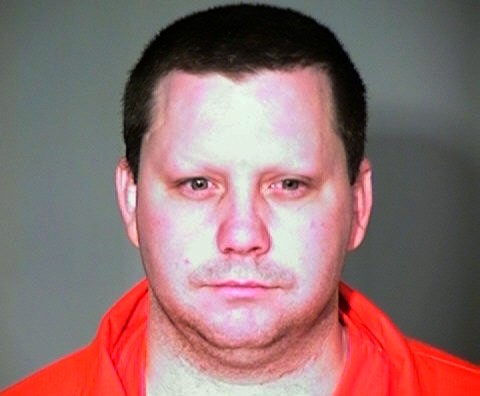 Chad Alan Lee
Murderer · USA · 1992
Chad Alan Lee was convicted in two separate proceedings involving kidnapping, s…
3 victims
Chad Alan Lee
Murderer · USA · 1992
Chad Alan Lee was convicted in two separate proceedings involving kidnapping, s…
3 victims
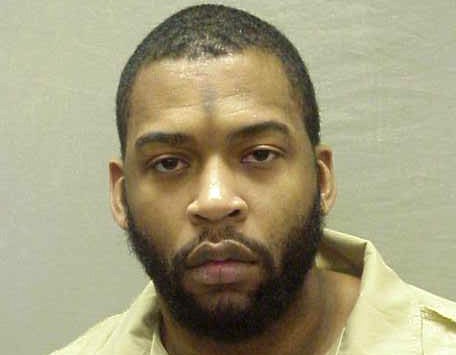 Brian Wakefield
Murderer · USA · 2001
Brian Wakefield was sentenced to death on March 4, 2004 for killing an elderly…
2 victims
Brian Wakefield
Murderer · USA · 2001
Brian Wakefield was sentenced to death on March 4, 2004 for killing an elderly…
2 victims
- Gender
- male
- Country
- USA
- Location
- Marion County , Ind iana, USA
- Date of birth
- February 1964
- Age at first offence
- 28
- Characteristics
- rape
- Victim profile
- Linda Berry
- Method of murder
- Strangulation
- Date(s) of murder
- November 28, 1992
- Years active
- 1992
- Date of arrest
- —
- Status
-
Life imprisonment
Sentenced to life in prison on November 17, 1995
Parties and court
Larry Cutter was the appellant (defendant below) in Larry Cutter v. State of Indiana, in the Indiana Supreme Court.
The case was styled:
- Larry Cutter, Appellant (Defendant Below), v. State of Indiana, Appellee (Plaintiff Below)
- Indiana Supreme Court Cause No. 49S00-9603-CR-204
- Appeal from the Marion County Superior Court
- Honorable Gary L. Miller, Judge
- Cause No. 49G05-9212-CF-172011
Timeline
- November 28, 1992 — Jeff Toschlog, Lonnie Cox, Daryel Barngrover, and Kevin Sites gathered at Barngrover's house to drink alcohol and play cards; later they went to McShane's Lounge on the east side of Indianapolis in Marion County and encountered Cutter, who joined their table; Linda Berry was also a patron and arrived noticeably intoxicated.
- November 30, 1992 — Jack Jarrett reported to police that he saw a car similar to the one owned by Cutter on the edge of his property at approximately the same location where Berry's body was later found.
- Two days after Berry disappeared — Victoria Long, Berry's life partner, reported her missing.
- Four days after Berry disappeared — Linda Berry's body was discovered on the edge of Jack Jarrett's farm in Delaware County.
- In October 1995 — Larry Cutter was convicted of the murder, felony murder, rape, and criminal confinement of Linda Berry.
- March 17, 2000 — The Indiana Supreme Court issued a direct appeal decision.
- Sentenced to sixty years for murder and fifty years for rape (as a Class A felony), to be served consecutively — This sentencing occurred after the October 1995 convictions and before the appeal decision in March 2000.
- November 17, 1995 — Larry Cutter was sentenced to life in prison.
Background
On November 28, 1992, Jeff Toschlog, Lonnie Cox, Daryel Barngrover, and Kevin Sites gathered at Barngrover's house to drink alcohol and play cards. Later that evening, they went to McShane's Lounge on the east side of Indianapolis in Marion County, where they encountered Cutter and asked him to join them at their table. Linda Berry was also a patron of McShane's Lounge that evening.
Berry arrived at McShane's noticeably intoxicated. She first stumbled at the waitresses' station and then blocked access to the bar. At some point, Berry befriended Cutter. Several witnesses saw Berry dancing with Cutter and sitting at his table.
While Cutter and Sites were still in the lounge, Cutter told Sites that he intended to offer Berry a ride home. As Sites exited, he saw Cutter helping Berry into Cutter's car. Berry did not return home.
Two days after Berry disappeared, Victoria Long, Berry's life partner, reported her missing. After another four days, Berry's body was discovered on the edge of Jack Jarrett's farm in Delaware County.
Berry was found without undergarments and her dentures were missing. Her blouse was pulled down below her breasts, and her jeans were pulled down to mid-thigh. The pathologist testified that Berry's injuries, including hemorrhaging of the eyes and bruises on the neck, indicated that Berry had died from manual strangulation. Berry's other injuries were extensive. Her hands, back, breasts, and face were bruised. Her vagina was bruised in a manner inconsistent with sexual intercourse. She had two torn fingernails, one of which had broken off at or below the quick and bled at the base. There were scratches on her face, neck, and hands consistent with defensive wounds. The pathologist concluded that all of these injuries were incurred before death.
Cutter was linked to Berry's disappearance by several eyewitnesses from McShane's Lounge. In addition, Jarrett reported to police that on November 30, 1992, he had seen a car similar to the one owned by Cutter on the edge of his property at approximately the same location where Berry's body was later found.
When Cutter was first questioned by police, he maintained that he slept in his car outside his house the night of Berry's disappearance. Cutter subsequently consented to a search of his car, where investigators found one of Berry's fingernails and several of her head and pubic hairs. Finally, Cutter's sperm was found on a vaginal swab taken from Berry's body.
The offence
Cutter was convicted in October 1995 of:
- murder,
- felony murder,
- rape,
- criminal confinement of Linda Berry.
Trial
Proceedings on direct appeal
On direct appeal, Cutter argued that:
- a search warrant was deficient;
- the trial court erred by admitting an inflammatory picture into evidence;
- two witnesses were not qualified to offer opinion testimony;
- the trial court erroneously denied his motion for judgment on the evidence on all charges after the State's case-in-chief;
- the trial court erroneously denied his tendered instruction on the weight of the evidence necessary to sustain a conviction;
- the trial court erroneously refused his jury instruction regarding venue and violated his constitutional right to be tried in the county in which the offense occurred; and
- his conviction for rape as a Class A felony violated the Indiana Double Jeopardy Clause.
Legal issues on appeal and the court’s decision
I. The search warrant and law of the case
Cutter sought to revisit an issue raised in an interlocutory appeal to the Court of Appeals, namely whether the trial court erred when it denied his motion to suppress evidence obtained during the execution of a search warrant.
In the interlocutory appeal (Cutter v. State, 646 N.E.2d 704 (Ind. Ct. App. 1995), trans. denied), the Court of Appeals made several determinations:
- police were authorized by the warrant to seize Cutter in order to obtain body samples;
- the warrant was supported by probable cause; and
- the warrant was not defective for allegedly failing to describe Cutter with particularity, to state the offense that had occurred, or to describe the place to be searched and the property to be seized with sufficient specificity.
The Court of Appeals also determined that the probable cause hearing by telephone substantially complied with Indiana Code ' 35-33-5-8.
The Indiana Supreme Court held that Cutter presented no new facts or issues for it to consider in evaluating the trial court’s decision to deny the motion to suppress. The Court applied the doctrine of the law of the case and affirmed the trial court’s ruling denying the motion to suppress.
II. Autopsy photograph
At trial, the State offered a photograph of the pathologist holding open Berry's vagina. The photograph was admitted into evidence without objection and was used by the pathologist to show the jury bruising to Berry's vagina. Long was shown this photograph and testified that Berry's vagina appeared much larger than usual in the photograph.
Cutter argued that he was prejudiced by the photograph’s admission and that it was not relevant to any charge or issue before the jury. The Court described the usual waiver rule for evidentiary objections and reviewed the trial court’s decision to admit photographic evidence for abuse of discretion.
The Court concluded that the photograph showed the pathologist's hand holding open Berry’s vagina to display bruises relevant to the force element of the rape charge. The Court stated that the photograph bore on the State’s contention that the rape was of unusual force accompanied by penetration from an object “like a fist.” It also expanded upon Long’s testimony that the vagina appeared unnaturally large. The Court held that the trial court did not commit error by admitting the photograph.
III. Qualification of the witnesses
A. Long’s testimony
Cutter claimed Long was not qualified as an expert to testify as to the unusual dilation of Berry’s vagina. The Court held that Long testified as a lay witness, not as an expert.
The Court noted that Indiana Rule of Evidence 701 permits lay witnesses to testify in the form of “opinions or inferences which are (a) rationally based on the perception of the witness and (b) helpful to a clear understanding of the witness’s testimony or the determination of a fact in issue.” From Long’s testimony that Berry’s vagina, as pictured in the photograph, appeared larger than usual, the Court held that the jury could draw inferences that penetration had occurred and, together with the bruise, that it was accomplished by force. The Court held the trial court did not abuse its discretion.
B. Dr. Willman’s testimony
Cutter also argued that the pathologist was not qualified to testify regarding the dilated state of Berry’s vagina.
The Court described that the State asked Dr. Willman, the pathologist, to render an opinion regarding whether Berry’s vagina appeared unusually dilated at death, to estimate the extent of that dilation, and to explain what would cause it. Cutter objected as calling for speculation about whether the dilation was unusual for Berry and if so, what caused it.
The Court stated that expert testimony is admissible if the expert’s specialized knowledge assists the trier of fact. The Court stated that Dr. Willman had performed between 1000 and 1200 autopsies and that Cutter did not challenge Dr. Willman’s qualifications at trial. The Court held Dr. Willman’s testimony fell within specialized knowledge and the trial court did not abuse its discretion.
IV. Motion for judgment on the evidence (directed verdict)
Cutter argued that the trial court erroneously denied his motion for judgment on the evidence as to all charges at the close of the State’s case-in-chief. The Court described the standard for such a motion and its appellate review.
Murder
To prove murder, the Court stated the State had to establish that “a person … knowingly or intentionally kill[ed] another human being.” The Court reviewed the State’s evidence and concluded there was sufficient evidence to infer that Cutter took Berry from McShane’s and knowingly or intentionally killed her.
Rape
To prove rape as a Class B felony, the Court stated it required proof that the defendant knowingly or intentionally had sexual intercourse with a member of the opposite sex when the other person was compelled by force or imminent threat of force. For rape as a Class A felony, the Court stated it required the additional deadly force element.
The Court described evidence including that Berry’s body was found partially clothed, without undergarments; her blouse was below her breasts and her jeans were pulled down to mid-thigh; expert testimony and DNA evidence indicating Cutter’s semen was found in Berry’s vagina; the autopsy revealed Berry’s vagina was unusually dilated and bruised by penetration including an object “the size of a fist”; and that Berry died by strangulation. The Court held it was reasonable to infer sexual intercourse by force or threat of force and that the trial court did not err by denying the motion.
V. Jury instructions (weight of evidence)
Cutter argued the trial court erroneously refused his tendered instruction regarding the weight of the evidence required to sustain convictions.
The refused instruction stated: “Evidence which merely tends to establish a suspicion of guilt, or evidence which tends to establish mere opportunity to commit the offense charged, is clearly insufficient to sustain a conviction. [A] verdict based merely on suspicion, opportunity, probability, conjecture, speculation, and unreasonable inference of guilt gleaned from vague circumstances or evidence is not sufficient.”
The trial court gave Instructions No. 8 and 16. Instruction No. 8 stated: “A reasonable doubt is a fair, actual and logical doubt that arises in your mind after an impartial consideration of all the evidence and circumstances in the case. It should be a doubt based upon reason and common sense and not a doubt based upon imagination or speculation. To prove the defendant's guilt of the elements of the crimes charged beyond a reasonable doubt, the evidence must be such that it would convince you of the truth of it, to such a degree of certainty that you would feel safe to act upon such conviction, without hesitation, in a matter of the highest concern and importance to you.”
Instruction No. 16 stated: “The law presumes the Defendant to be innocent of the crimes charged, and this presumption continues in his favor throughout the trial of this cause. It is your duty, if it can be reasonably and conscientiously done to reconcile the evidence upon the theory that the defendant is innocent, and you cannot find the defendant guilty of the crimes charged in the information unless the evidence satisfies you beyond a reasonable doubt of his guilt.”
The Court held the tendered instruction’s content was sufficiently addressed by Instructions 8 and 16 and found no abuse of discretion.
VI. Venue
Cutter argued he was denied the right to be tried in the county where the offense occurred. The Court discussed the constitutional and statutory right to venue and the concept that venue is not an element of the offense, with the State able to establish venue by a preponderance of the evidence.
The Court described that Cutter raised the issue by tendering a jury instruction on venue and, when rejected, moving for a directed verdict on venue.
The Court stated the right to be tried in the county where the offense was committed is grounded in the Indiana Constitution, but the legislature provided that trial is proper in any county in which an act in furtherance of the offense occurred when the county cannot readily be determined.
Cutter first raised venue by submitting the proposed instruction from Conrad v. State, 262 Ind. 446, 450, 317 N.E.2d 789, 791 (1974): “If you find from the evidence that the offense charged in the information occurred outside of Marion County, Indiana, but that the offenses were not part of a common plan, design, and intent to confine, rape, and kill Linda Berry which originated in Marion County, Indiana, and was not part of one continuous course of action by the defendant, but was a separate and independent set of facts occurring outside of Marion County, then the State would have no jurisdiction to prosecute the defendant for the offenses as charged. You must find the defendant not guilty.”
The Court concluded the trial court properly refused the instruction because there was not evidence in the record to support giving it. The Court stated that Cutter did not testify and that the victim was dead; no one else was present in the vehicle where at least some criminal acts occurred; the two entered the car in Marion County, perhaps without any crime yet in progress; and the victim's body was found two counties away. The Court held that where venue could not be established readily, Indiana Code ' 35-32-2-1(d) applied and required the State to show by a preponderance of the evidence that an act in furtherance of the offense occurred in Marion County. The Court found that several witnesses testified to Cutter and Berry talking and dancing at McShane’s Lounge in Marion County on November 28, 1992, and that Sites saw Cutter exit the lounge with Berry and help her into Cutter’s car, which the Court held, as a matter of law, satisfied the State’s burden for venue. The Court held there was no conflicting evidence and that the trial court properly rejected Cutter’s instruction and denied the motion for a directed verdict.
VII. Double Jeopardy and reduction of rape conviction
Finally, Cutter argued that his conviction for murder, along with rape as a Class A felony (as opposed to a Class B felony), violated the State Double Jeopardy Clause.
The Court described that rape as a Class B felony was defined by statute as knowingly or intentionally having sexual intercourse with a member of the opposite sex when the other person was compelled by force or imminent threat of force. The Court described elevation to a Class A felony if the rape was committed by using or threatening the use of deadly force, if it was committed while armed with a deadly weapon, or if it resulted in serious bodily injury to a person other than a defendant.
Cutter argued the deadly force element of the rape charge should merge with the deadly force element of the murder charge. The Court described the murder charge alleged death by manual strangulation and the rape charge alleged sexual intercourse by threat of deadly force or deadly force. The jury was presented with the charging information and the jury instructions.
The Court stated that, in light of its holding in Richardson v. State, 717 N.E.2d 32 (Ind. 1999) and the evidence presented, Cutter’s rape conviction could not be elevated to a Class A felony by the same evidence of deadly force that formed the basis of the murder conviction. The Court stated the jury was presented with evidence that Berry was brutally raped. It noted that the pathologist testified that the bruises to Berry's vagina were such that a human penis could not have inflicted them. The Court concluded that, based on the charging information and jury instructions, it was highly likely that the same evidence constituting the essential elements of murder—strangulation as a deadly force—was included among the evidence establishing the “using or threatening the use of deadly force” element of rape as a Class A felony. The Court remanded to reduce the rape conviction to a Class B felony.
Sentencing
After the October 1995 convictions, the trial court:
- merged the felony murder and criminal confinement convictions into the murder conviction; and
- sentenced Cutter to sixty years for murder and fifty years for rape as a Class A felony, to be served consecutively.
After the appeal decision, the Court directed that the trial court reduce Cutter’s rape conviction from a Class A felony to a Class B felony and impose:
- twenty-year sentence on that count to run consecutive to the sixty-year sentence for murder.
Outcome
The Indiana Supreme Court:
- affirmed the trial court on all issues except the last; and
- reduced the rape conviction to a Class B felony consistent with Richardson v. State, 717 N.E.2d 32 (Ind. 1999).
Other details
The appeal decision was issued by BOEHM, Justice, on March 17, 2000, with SHEPARD, C.J., and DICKSON, SULLIVAN and RUCKER, JJ., concur.
Spotted an error, or have more information about this case?