Dr. Philip Henry Cross
Murderer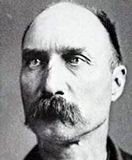 John Makin
Murderer · Australia · 1892
John Makin (14 February 1845 – 15 August 1893) was an Australian baby farmer wh…
12 victims
John Makin
Murderer · Australia · 1892
John Makin (14 February 1845 – 15 August 1893) was an Australian baby farmer wh…
12 victims
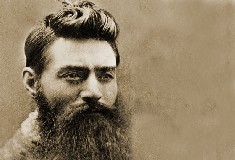 Ned Kelly
Murderer · Australia · 1878
Edward “Ned” Kelly (June 1854 or 1855 – 11 November 1880) was an Irish Australi…
6 victims
Ned Kelly
Murderer · Australia · 1878
Edward “Ned” Kelly (June 1854 or 1855 – 11 November 1880) was an Irish Australi…
6 victims
 Maria del Rosio Alfaro
Murderer · USA · 1990
Maria del Rosio Alfaro, also known as “Rosie” Alfaro, was sentenced to death on…
1 victim
Maria del Rosio Alfaro
Murderer · USA · 1990
Maria del Rosio Alfaro, also known as “Rosie” Alfaro, was sentenced to death on…
1 victim
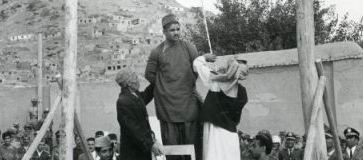 Abul Djabar
Serial killer · Afghanistan · 1960
Abul Djabar died on October 21, 1970. He was an Afghan serial killer who had ki…
65 victims
Abul Djabar
Serial killer · Afghanistan · 1960
Abul Djabar died on October 21, 1970. He was an Afghan serial killer who had ki…
65 victims
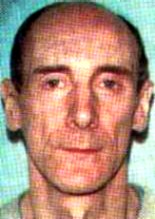 Edward Alexander CRrowley
Murderer · United Kingdom · 2000
Defendant: Edward Alexander Crowley (also described as “Edward Alexander CRrowl…
1 victim
Edward Alexander CRrowley
Murderer · United Kingdom · 2000
Defendant: Edward Alexander Crowley (also described as “Edward Alexander CRrowl…
1 victim
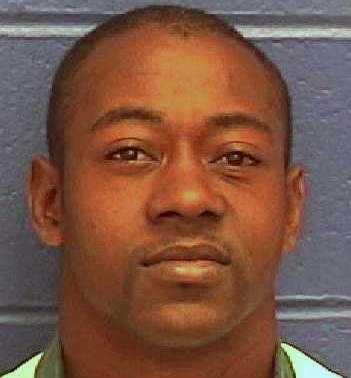 Timothy Tyrone Foster
Murderer · USA · 1986
Timothy Tyrone Foster was 29 when he was sentenced to death in Floyd County in…
1 victim
Timothy Tyrone Foster
Murderer · USA · 1986
Timothy Tyrone Foster was 29 when he was sentenced to death in Floyd County in…
1 victim
 Ronald Taylor
Murderer · USA · 2000
Ronald Taylor was a 39-year-old man from Wilkinsburg who went on a racially mot…
3 victims
Ronald Taylor
Murderer · USA · 2000
Ronald Taylor was a 39-year-old man from Wilkinsburg who went on a racially mot…
3 victims
 Richard Lewis Brimage
Murderer · USA · 1987
Richard Lewis Brimage, Jr. Mary Beth Kunkel, 19-year-old Texas A&M University b…
1 victim
Richard Lewis Brimage
Murderer · USA · 1987
Richard Lewis Brimage, Jr. Mary Beth Kunkel, 19-year-old Texas A&M University b…
1 victim
- Gender
- male
- Country
- Ir eland
- Location
- Shandy Hall , County Cork, Ir eland
- Date of birth
- 1825
- Age at first offence
- 62
- Characteristics
- poisoner, parricide
- Victim profile
- His wife, Laura Cross, 47
- Method of murder
- Poisoning (arsenic)
- Date(s) of murder
- June 1, 1887
- Years active
- 1887
- Date of arrest
- J uly 28, 1887
- Status
-
Executed
Executed by hanging at Cork Jail on January 10, 1888
Case name
Dr. Philip Henry Cross (Coachford Poisoning Case)
Background
Dr. Philip Henry Eustace Cross lived at Dipsey, County Cork, with his wealthy young wife and their five children; two of the children suffered from epilepsy. In the summer of 1886, the family employed Effie Skinner, aged 20, as a governess for the children. Effie began an affair with the old doctor. When Mrs Cross found out, she ordered Effie to be dismissed. Dr. Cross immediately terminated Effie’s employment and she left for Dublin.
Mrs Cross’s health became a central focus of the case. Dr. Cross examined his wife and diagnosed typhoid fever. Her condition deteriorated and she died in June 1887. Dr. Cross signed her death certificate.
Local gossip spread to such an extent that police ordered an exhumation of the dead woman, and traces of arsenic were discovered in the body. Dr. Cross was found guilty despite protesting his innocence. He claimed that his wife had self-administered arsenic to aid her complexion.
The offence
Dr. Cross was convicted of the murder of his wife, Laura Cross. The death was originally registered as typhoid fever, and arsenic and strychnine were later identified during the exhumation and examination.
People involved
- Dr. Philip Henry Eustace Cross — accused; a retired army surgeon.
- Laura Cross (Mrs Cross) — victim; Dr. Cross’s wife.
- Effie Skinner — governess; involved in an affair with Dr. Cross.
- James Berry — hangman who officiated at Dr. Cross’s execution.
- Henry Tyacke — District Inspector; led or directed the investigation work leading to an inquest and exhumation.
- Professor Charles Yelverton Pearson — medical analyst employed by the Crown; performed the examination and chemical testing after the exhumation.
- Mervynia Jefferson — an old school friend from Yorkshire who visited Shandy Hall.
- M.J. Horgan — coroner who gave the go-ahead to exhume the body.
- John Cross — the couple’s son, born on 23rd December.
- Richard Marriott — Laura Cross’s father.
- Theresa Caulfield — member of the Caulfield family; friend of Laura and involved in employing Effie.
- John Caulfield — Theresa Caulfield’s husband; friend of the Cross family.
Timeline
- In the summer of 1886 — Effie Skinner was employed as a governess and began an affair with Dr. Cross.
- Within a week of Effie’s leaving — Dr. Cross told his wife he had to go away on business and spent five days with Effie in a Dublin hotel.
- In June 1887 — Laura Cross died.
- 20th July 1887 — a coffin belonging to Laura Cross was loaded onto a waiting cart for transit to the post mortem after being buried nearly seven weeks earlier.
- 4th July — Laura Cross was buried in Magourney cemetery in Coachford.
- 28th July — Dr. Cross was arrested on the afternoon and lodged in the County Gaol.
- 14th December — Dr. Cross’s trial began at the Cork Winter Assizes.
- 10th January 1888 — Dr. Cross was hanged at Cork Jail by James Berry.
Investigation
After Laura Cross’s death, Dr. Cross registered the cause of death as typhoid fever and he went to England afterward. The police were tipped off, most probably by Theresa Caulfield.
The case was assigned to District Inspector Henry Tyacke of the Royal Irish Constabulary in Ballincollig. Tyacke persuaded the Coroner that there were reasonable grounds to hold an inquest. The Coroner, M.J. Horgan, gave Tyacke the go-ahead to exhume the body. The task was given to Professor Charles Yelverton Pearson, a young medical analyst employed by the Crown and based at Queen’s College, Cork.
Professor Pearson had one week to examine the internal organs and announce his conclusions. Despite the hot weather and expectations of putrefaction, most internal organs appeared remarkably well preserved. There was no evidence of typhoid fever. Professor Pearson removed the organs, placed them in vessels, and transported them to his laboratory at Queen’s College to examine them closely with a microscope. White particles smaller than a pin’s head were observed along the stomach membrane. A chemical test revealed arsenic. Further traces of arsenic were found in the liver, kidney, and spleen, and strychnine was identified in the stomach. Professor Pearson notified Tyacke that there was good cause to launch a full-scale murder investigation.
Arrest
Dr. Cross was arrested on the afternoon of 28th July and lodged in the County Gaol.
Trial
The trial began at the Cork Winter Assizes on 14th December. By that time, Tyacke had worked out why Dr. Cross had married Effie quickly; the young woman was heavily pregnant. Their son John Cross was born on 23rd December.
Dr. Cross was found guilty of murder and sentenced to hang on 10th January 1888. Dr. Cross maintained his innocence until the end and made no confession.
An appeal for clemency was presented to the Lord Lieutenant’s desk for three weeks before its rejection.
Sentencing
Dr. Cross was sentenced to hang on 10th January 1888.
Appeals
An appeal for clemency sat on the Lord Lieutenant’s desk for three weeks before its ultimate rejection.
Outcome
Dr. Cross was hanged on 10th January 1888 at Cork Jail by James Berry. By the time it came for the execution, Cross’s hair had turned white. Dr. Cross told his guards that he did not fear death as he had faced it many times on the battlefield.
Berry would later say that Dr. Philip Cross was the bravest man he ever executed.
Aftermath
The governor of the prison did not attend the execution and sent a deputy to represent him because of his feelings about Cross. Friends from the area of Cork attended to give Cross emotional support in his last moments.
During the execution, Berry traditionally faced his subjects towards the wall. Each time Berry turned Cross to the wall, Cross turned around to face his friends again. Cross did not reply when Berry protested. An official ordered Berry to stop this “silliness” and allow Cross to die facing his friends, reminding Berry of two points: Cross was a respected soldier, and the turning back and forth might twist the rope and cause an accident. Berry had experienced several bad executions where criminals were badly injured before they died or strangled to death. Berry did as he was told, and Cross died.
Berry was not happy when he officiated at executions in Ireland because of the dangerous hostility of the Irish to him as an English-born hangman. He had been threatened at least once. After being paid for his work, he returned to his home in Bradford, England. Subsequently, he received word to return to Cork because he was needed at an inquest hearing before a coroner’s jury on the execution. Berry did not return, but the inquest was eventually completed.
Other details
The Caulfeild’s governess narrative placed Effie Skinner as 20-year-old employed by a family friend, Dr. Philip Henry Cross, at Shandy Hall in Coachford. It stated that in the summer of 1886, shortly after starting work, Effie began an affair with the 63-year-old doctor. It also stated that Effie told Theresa Caulfield toward the end of October 1886 that she planned to leave her employ the following January, and Theresa responded by dismissing her with one month’s notice.
The narrative also stated that in the weeks after Effie’s dismissal, Dr. Cross entered into a mood of constant cursing and threatening of his wife, and began a secretive correspondence with the governess.
The narrative described that at the start of June, a heatwave across Ireland lasted 34 days and produced the highest temperatures yet known in Ireland. On 1st June, a house servant at Shandy Hall heard Laura Cross retching in her bedroom, followed by a series of screams and then silence. The following morning, Dr Cross announced that his wife had died at one o’clock in the morning and registered the cause of death as typhoid fever. It also stated that Laura was buried in Magourney cemetery in Coachford on 4th July.
The narrative included biographical detail: Laura Cross was the daughter of Richard Marriott, an English gentleman from Essex. She married Dr. Philip Cross in 1869 at St. James’s Church, Piccadilly, London. It stated that the couple sailed for Canada so the surgeon could rejoin his regiment, and that Laura returned to England five years later, after her father was dead. It further stated that by 1837, the Cross family were ensconced at Shandy Hall outside the post-town of Coachford, County Cork, and that Philip was born at Shandy Hall in 1823.
The narrative included military history: Philip went to Dublin to study medicine at the Royal College of Surgeons; in 1848 he joined the British Army; and over the next ten years he bore witness to the Crimean War and the Indian Mutiny. It also included further detail about Philip marrying Laura in August 1869, about Laura’s inheritance of £5,000 and stipend of £50 a year, and about children being born in Canada and later in London.
The narrative stated that Philip retired from the British Army with the rank of Surgeon Major, moved back to the family home in Coachford, and ran both farm and house. It also stated that when a neighbouring farmer objected to Cross hunting on his land, Cross struck the man such a blow that his ear came off; the farmer was granted £200 damages; and Dr. Cross was subsequently banned from hunting with the Ballincollig Hussars.
The narrative included that Dr. Cross called upon the Caulfields shortly after Laura’s departure; they introduced him to Miss Effie Skinner, the governess for the Caulfield children. It described Effie as a daughter of a Scottish Episcopalian minister, born in St. Andrew’s, with teenage years spent in Germany and Switzerland, and it stated that she never had been to Ireland before she began work as governess to the Caulfields on 22nd June. It also stated that toward the end of October 1886, Effie told Theresa Caulfield she planned to leave her employ the following January.
The narrative included that Laura Cross left Ireland on an extended visit to her relations in Essex in early July 1886, and it stated that she returned home from England after that visit. It also included that in the weeks that followed Effie’s dismissal Dr. Cross escaped to Dublin for three nights and stayed at the Hibernian Hotel on Dawson Street, and that the lovers also stayed together at the LNWR Hotel on Dublin’s North Wall.
The narrative described that Mervynia Jefferson visited Shandy Hall by the end of March, and that by the middle of May Laura had taken a serious turn for the worse and was confined to bed. It stated that Dr. Cross oversaw her medication, describing symptoms as vomiting and diarrhoea, and that when the local dispensary doctor called, he deduced Laura was also assailed with a bilious attack. It also stated that servants noted Dr. Cross slept in another bed in the same room at night.
The narrative stated that on the following day after Laura was buried, Dr. Cross went to England to give news to his children at their schools and to explain to Miss Jefferson in London the cause of his wife’s death, and it added that he called by the church in Piccadilly where he had married Laura eighteen years earlier to marry his mistress, Effie Skinner. The narrative stated that few in the Coachford neighbourhood could believe the doctor’s gall after his return with a new bride less than four weeks after his wife’s death.
The narrative included details about the hangman’s return to Bradford England and the subsequent inquest hearing in Cork before a coroner’s jury, which was eventually completed without Berry’s return.
Spotted an error, or have more information about this case?