Daniel Ray Troyer
Murderer Brian Kevin Rosenfeld
Murderer · USA · 1985
Brian Kevin Rosenfeld Brian Kevin Rosenfeld was sentenced to three concurrent l…
23 victims
Brian Kevin Rosenfeld
Murderer · USA · 1985
Brian Kevin Rosenfeld Brian Kevin Rosenfeld was sentenced to three concurrent l…
23 victims
 Marvin Gray
Murderer · USA · 1975
Marvin Gray was convicted killer who claimed responsibility for 23 slayings and…
23 victims
Marvin Gray
Murderer · USA · 1975
Marvin Gray was convicted killer who claimed responsibility for 23 slayings and…
23 victims
 Yahweh ben Yahweh
Murderer · USA · 1980
Yahweh ben Yahweh was born and legally named Hulon Mitchell Jr. (October 27, 19…
23 victims
Yahweh ben Yahweh
Murderer · USA · 1980
Yahweh ben Yahweh was born and legally named Hulon Mitchell Jr. (October 27, 19…
23 victims
 Russell Ellwood
Murderer · USA · 1991
Russell Ellwood was a former taxi driver. Authorities suspected him of killing…
20 victims
Russell Ellwood
Murderer · USA · 1991
Russell Ellwood was a former taxi driver. Authorities suspected him of killing…
20 victims
 Troisville Sykes
Homicide · USA · 1883
Troisville Sykes. Kate Townsend was Troisville Sykes’s mistress. She owned a ho…
1 victim
Troisville Sykes
Homicide · USA · 1883
Troisville Sykes. Kate Townsend was Troisville Sykes’s mistress. She owned a ho…
1 victim
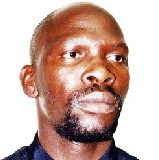 Chippa Mateane
Mass murderer · South Africa · 2006
Chippa Mateane was a police superintendent who went on a killing spree in the W…
8 victims
Chippa Mateane
Mass murderer · South Africa · 2006
Chippa Mateane was a police superintendent who went on a killing spree in the W…
8 victims
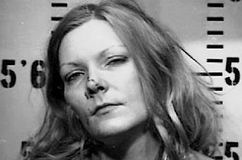 Annika Östberg
Murderer · USA · 1981
Annika Maria Östberg Deasy was born January 6, 1954, in Stockholm, Sweden. She…
2 victims
Annika Östberg
Murderer · USA · 1981
Annika Maria Östberg Deasy was born January 6, 1954, in Stockholm, Sweden. She…
2 victims
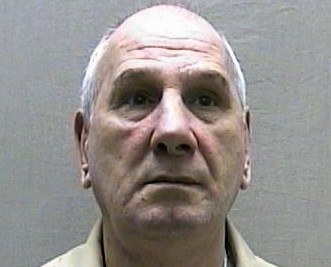 James Koedatich
Serial killer · USA · 1971
James Koedatich was born in 1948. Koedatich committed his first known murder in…
3 victims
James Koedatich
Serial killer · USA · 1971
James Koedatich was born in 1948. Koedatich committed his first known murder in…
3 victims
 David James Gates
Homicide · New Zealand · 1999
David James Gates was charged in connection with the murder of Gavin Edward Das…
1 victim
David James Gates
Homicide · New Zealand · 1999
David James Gates was charged in connection with the murder of Gavin Edward Das…
1 victim
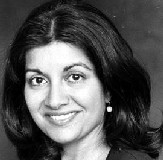 Reetika Vazirani
Murderer · USA · 2003
Reetika Vazirani (1962–2003) was an American poet and educator. On July 16, 200…
1 victim
Reetika Vazirani
Murderer · USA · 2003
Reetika Vazirani (1962–2003) was an American poet and educator. On July 16, 200…
1 victim
- Gender
- male
- Country
- USA
- Location
- Salt Lake County, Utah, USA
- Date of birth
- 1960
- Age at first offence
- 25
- Characteristics
- rape, mentally ill
- Victim profile
- Drucilla Ovard, 83, and Ethel Luckau, 88
- Method of murder
- Strangulation / Suffocation
- Date(s) of murder
- 1985 / 1988
- Years active
- 1985–1988
- Date of arrest
- —
- Status
-
Life imprisonment
Sentenced to two consecutive life sentences
Case record: Daniel Ray Troyer
Background
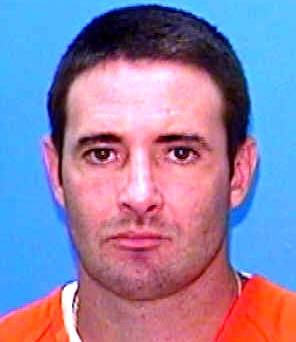
Daniel Ray Troyer was 39 at the time he pleaded guilty to killing Drucilla Ovard and Ethel Luckau. He was a former house burglar. He was born with an unknown date and was not yet shown as dead.
Investigators believed former house burglar Daniel Ray Troyer may have been responsible for the deaths of as many as 13 older women, though investigators referenced “two definite + 2 probable = 4 total” and also referred to “12 or 13 women” from independent sources.
Mike George, an investigator for the Salt Lake District Attorney's Office, said:
"We have information from two independent sources who say Troyer killed 12 o 13 women"
Investigators said Troyer almost always went after elderly women, usually suffocating or strangling them without leaving marks, and then posing their bodies so there was no sign of struggle. They said those deaths were so often chalked up to heart attacks or old age that it had been harder to detect the crimes. Investigators said even the two murders Troyer pleaded guilty to almost passed as “unattended deaths.”
The offence
Killings to which Troyer pleaded guilty
Troyer pleaded guilty to killing Drucilla Ovard, 83, and Ethel Luckau, 88, both in 1985. The record described him receiving two consecutive life sentences and spending the rest of his life in prison.
Evidence of the crimes was described as scarce. Police found semen-soaked towels near each victim. The record stated that in 1985 DNA testing was not honed enough to narrow the field.
The record described similarities between the two murders: both victims were elderly and lived alone; there were no obvious signs of break-in; robbery was not a motive; Ovard was strangled; Luckau was strangled and suffocated; and the perpetrator left semen on towels at both murder scenes.
Other suspected killings mentioned in the record
The record stated that Troyer was suspected of murdering two other elderly Salt Lake area women, but prosecutors said there was insufficient evidence to bring charges:
- Thelma Lillian Blodgett, 69, of South Salt Lake, died July 11, 1985—six days before Ovard was killed.
- Lucille Westerman, 73, a neighbor of Luckau, died Aug. 23, 1988—six days after Luckau was killed.
Investigation
The record described investigators as seeking to determine how many rapes and homicides Troyer might have committed and why.
Arrest
Two weeks after the Ovard murder, the record described Troyer being arrested less than two blocks away for breaking into the home of 70-year-old Carol Nelson. Nelson was not there, but a neighbor called police.
Trial
Ovard homicide evidence and proceedings described in the record
In the Ovard killing, Troyer was charged with first-degree felony murder and aggravated burglary, punishable by up to life in prison.
The record described Ovard as beaten and strangled July 17, 1985, in the bathroom of her home at 1457 E. Logan Ave. (1420 South). It stated Ovard was not sexually assaulted, but the killer unclothed and exposed her body and apparently masturbated, according to testimony at a 1997 preliminary hearing. The record stated semen found on a yellow towel allegedly had been matched to Troyer's.
Troyer denied killing Ovard and there was little other evidence.
Evidence suppression and appeal in the Luckau homicide
In 1988, Troyer was charged with Luckau’s murder, and the record stated he was charged with capital murder, punishable by execution. It also stated no trial date had been set in that case.
The record described that prosecutors appealed the evidence suppression to the Utah Supreme Court, which in 1997 ruled it could be used against Troyer.
The record described that the charges in the Luckau case were dismissed two years later when a judge suppressed crucial evidence, including:
- a statement from Troyer’s sister that he had asked her for an alibi;
- statements from two prison inmates, who claimed Troyer admitted the murder to them; and
- DNA testing of Troyer’s hair.
The record stated that since then, prosecutors had submitted new samples for DNA testing and claimed they positively matched Troyer’s semen to the Luckau murder scene.
The record stated Troyer allegedly told a fellow inmate elderly women were “easy prey,” according to testimony from a December 1997 preliminary hearing in the Ovard case.
Sentencing
The record stated that Troyer received two consecutive life sentences after pleading guilty to killing Drucilla Ovard and Ethel Luckau. It also stated that he would spend the rest of his life in prison.
The record included a reference to a 15-year sentence for a 1985 burglary conviction and described that it was about to expire, but the stated current status was two consecutive life sentences.
Appeals
The record stated prosecutors appealed the evidence suppression to the Utah Supreme Court, and the court in 1997 ruled the evidence could be used against Troyer.
The record also referenced a four-day hearing set to begin June 1 regarding the defense challenging the admissibility of DNA evidence.
A 3rd District Judge Pat Brian ruled May 3 that evidence from the Luckau homicide could be presented at Troyer’s June 23 trial for Ovard’s murder. The record described Utah rule of evidence 404(b) and stated that defense attorney Edward Brass claimed the two cases were not similar and that allowing any evidence of the other murder was “extremely prejudicial” to Troyer. The record stated Judge Brian called the two crimes “shockingly and astonishingly similar,” described them as a “hand-in-glove” fit, and said:
"If ever there was a case where the evidence of one crime was permissible at the trial of another, this is the case."
The record also included the claim that the time gap could be explained by Troyer’s prison history.
Outcome
Troyer was sentenced to two consecutive life sentences for the killings he pleaded guilty to.
The record stated that prosecutors cleared a major hurdle May 3 when Judge Pat Brian ruled Luckau-homicide evidence could be presented at Troyer’s June 23 trial for Ovard’s murder.
Aftermath
The record stated that prosecutors were racing against time to keep Troyer behind bars and that Salt Lake District Attorney Ernest Jones hoped Troyer would be serving life in prison—or awaiting execution—for the murder of two Salt Lake City women. The record stated Ernest Jones feared Troyer would kill again if he was freed next year and included Ernest Jones’s statement:
"We'd like to get him tried before [the] 21st century"
It also included:
"On both murders."
Timeline
- July 17, 1985 — Drucilla Ovard was beaten and strangled in the bathroom of her home at 1457 E. Logan Ave. (1420 South).
- July 11, 1985 — Thelma Lillian Blodgett, 69, died in South Salt Lake, described as six days before Ovard was killed.
- Aug. 17, 1988 — Ethel Luckau was murdered at her home, 357 E. 1700 South, described as about two weeks after Troyer left a halfway house to apply for work at a barber college.
- Aug. 23, 1988 — Lucille Westerman, 73, died, described as six days after Luckau was killed.
- May 3 (year not specified) — Judge Pat Brian ruled evidence from the Luckau homicide could be presented at Troyer’s June 23 trial for Ovard’s murder.
- June 23 (year not specified) — Troyer’s trial for Ovard’s murder was set to occur.
- 1997 — DNA evidence technology became sophisticated enough to link Troyer to Ovard’s murder and allow charges to be filed; the Utah Supreme Court ruled suppressed evidence could be used against Troyer.
- December 1997 — A preliminary hearing included testimony that Troyer told a fellow inmate elderly women were “easy prey.”
- June 1 (year not specified) — A four-day hearing set to begin included a defense challenge to the admissibility of DNA evidence.
- October 9, 1999 — While serving life in prison for killing two elderly Utah women, Daniel Ray Troyer confessed to murdering three other women after prosecutors promised he would not face additional charges.
Other details
The record stated that Troyer was previously in jail for an attack on an elderly woman in 1978, when he beat, choked and attempted to rape a 71-year-old quadriplegic woman, who survived. It stated Troyer pleaded guilty and went to prison. Ten years later, he won parole, which was revoked following the Ovard murder and his arrest for the Nelson burglary.
The record stated that Troyer spent three years in prison for the Nelson burglary before being paroled to a halfway house, and about two weeks later Luckau was murdered.
In the Ovard killing, the record stated Troyer had been charged with first-degree felony murder and aggravated burglary, punishable by up to life in prison, and Ovard’s case included an account that Ovard’s body was transported to either a mortuary or the medical examiner before it was discovered she had been murdered.
The record described Luckau’s nude body being found in her bed.
The record described the defense attorney Edward Brass and noted that Brass claimed the two cases were not similar and that Judge Brian found the similarities sufficient to allow evidence of the other murder.
The record described Troyer allegedly being “a former mental patient” and tagged him as “mentally ill” in the record’s characteristics.
Spotted an error, or have more information about this case?