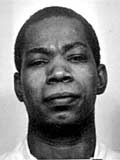
Jeffery Henry Caldwell
Murderer Brian Kevin Rosenfeld
Murderer · USA · 1985
Brian Kevin Rosenfeld Brian Kevin Rosenfeld was sentenced to three concurrent l…
23 victims
Brian Kevin Rosenfeld
Murderer · USA · 1985
Brian Kevin Rosenfeld Brian Kevin Rosenfeld was sentenced to three concurrent l…
23 victims
 Yahweh ben Yahweh
Murderer · USA · 1980
Yahweh ben Yahweh was born and legally named Hulon Mitchell Jr. (October 27, 19…
23 victims
Yahweh ben Yahweh
Murderer · USA · 1980
Yahweh ben Yahweh was born and legally named Hulon Mitchell Jr. (October 27, 19…
23 victims
 Russell Ellwood
Murderer · USA · 1991
Russell Ellwood was a former taxi driver. Authorities suspected him of killing…
20 victims
Russell Ellwood
Murderer · USA · 1991
Russell Ellwood was a former taxi driver. Authorities suspected him of killing…
20 victims
 Robert Martines Perez
Murderer · USA · 1994
Name: Robert Martines Perez · Other name used in proceedings: Robert Martinez P…
15 victims
Robert Martines Perez
Murderer · USA · 1994
Name: Robert Martines Perez · Other name used in proceedings: Robert Martinez P…
15 victims
 Rachael Mullenix
Homicide · USA · 2006
Defendant: Rachael Scarlett Mullenix (also referred to as Rachael Mullenix), 16…
1 victim
Rachael Mullenix
Homicide · USA · 2006
Defendant: Rachael Scarlett Mullenix (also referred to as Rachael Mullenix), 16…
1 victim
 Sinedu Tadesse
Murderer · USA · 1995
Sinedu Tadesse (1974 - May 28, 1995) was a junior at Harvard University when sh…
1 victim
Sinedu Tadesse
Murderer · USA · 1995
Sinedu Tadesse (1974 - May 28, 1995) was a junior at Harvard University when sh…
1 victim
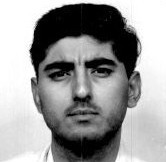 Eliseo Hernandez Moreno
Spree killer · USA · 1983
Eliseo Hernandez Moreno was executed by lethal injection in Texas on March 4, 1…
6 victims
Eliseo Hernandez Moreno
Spree killer · USA · 1983
Eliseo Hernandez Moreno was executed by lethal injection in Texas on March 4, 1…
6 victims
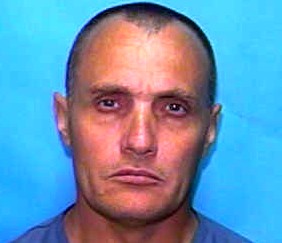 Mario Lara
Murderer · USA · 1981
Mario Lara · July 16, 1981 — A Miami police officer was dispatched to meet Fran…
2 victims
Mario Lara
Murderer · USA · 1981
Mario Lara · July 16, 1981 — A Miami police officer was dispatched to meet Fran…
2 victims
- Gender
- male
- Country
- USA
- Location
- Dallas County, Texas, USA
- Date of birth
- March 1, 1963
- Age at first offence
- 25
- Characteristics
- parricide
- Victim profile
- Henry, 47, and Gwendolyn Caldwell, 46 (his parents) and Kimberly Caldwell, 19 (his sister)
- Method of murder
- Stabbing with knife
- Date(s) of murder
- July 25, 1988
- Years active
- 1988
- Date of arrest
- Next day
- Status
-
Executed
Executed by lethal injection in Texas on August 30, 2000
Case identification
Jeffery Henry Caldwell
Status / outcome
Jeffery Henry Caldwell was executed by lethal injection in Texas on August 30, 2000.
The offence
Jeffery Caldwell was convicted and sentenced to death for the July 1988 murders of his mother and father, Gwendolyn and Henry Porter Caldwell, Jr., and his sister, Kimberly Caldwell.
The bodies of all three victims were discovered wrapped in blankets and stuffed into a camper-trailer parked behind the family’s south Dallas home. Autopsies later revealed that:
- Caldwell’s parents were each stabbed once through the heart.
- Kimberly Caldwell was stabbed twice in the chest, once through her heart.
- The victims had also been beaten on their heads with a blunt instrument.
The Caldwell’s other son, who was not at home at the time of the murders, found the bodies of his family.
Caldwell was convicted of the murder of Henry, Gwendolyn, and Kimberly Caldwell in March 1989.
Investigation and arrest
Caldwell was arrested the next day after the bodies of his parents and sister were found.
Henry Caldwell III went to check on his parents at their home in southwest Dallas after neighbors told him they hadn’t seen them in several days. He checked inside the house and found no one, but noticed a foul odor coming from the motor home parked in the driveway. Looking inside, he discovered the bodies of his father, Henry Caldwell (47), his mother, Gwendolyn Caldwell (46), and his sister, Kimberly Caldwell (19). Mrs. Caldwell’s car was also missing.
Caldwell was arrested the next day, driving his mother’s car, and gave a voluntary statement to police.
In the voluntary statement, Caldwell said he was having an argument with his father because his father gave money to his sister but not to him. During the argument, he said all three family members accidentally fell onto his knife.
Caldwell also told police that he accidentally killed his mother, father and sister after they refused to give him money for insulin.
Caldwell signed a written statement voluntarily admitting to the murders. In that written statement, he admitted he had lied about the fight with his parents being over not getting money for insulin. Caldwell told police that there was actually insulin in the family’s refrigerator.
In a recorded phone conversation with his brother, Caldwell said the murders accidentally happened after his parents and sister refused to give him money for insulin. Caldwell told his brother that if he had not been caught, he would have run and gotten away with the murders.
When Caldwell was in jail awaiting his trial for the murders, he told a friend who was in jail with him that he killed his parents but had been so good at hiding it that he would not be convicted.
Over the years, Caldwell gave conflicting accounts of the crime to authorities, reporters, and his family. One story he settled on was that his family was killed by Jamaican mobsters. He claimed he had stolen some drugs from the mobsters and they came looking for him, and that when they did not find him, they killed his parents and sister. He also said he did not know his parents and sister were dead until after his arrest and that he was arrested and convicted because of his criminal past.
Criminal history
Caldwell had prior convictions of:
- Burlary in 1983, for which he received a five year sentence.
- Robbery in 1986, for which he received a ten year sentence.
Caldwell was released on parole in April 1988, less than four months before the murders.
Caldwell’s parole officer testified that Caldwell repeatedly failed to meet his parole conditions.
Trial and sentencing
Henry and another brother testified against Caldwell during the sentencing hearing. Prosecutors used the brothers’ testimonies to show that Caldwell was a continuing threat to society who deserved the death penalty. During the punishment phase, Caldwell’s two brothers testified that they believed he would be a continuing threat to society, an element a jury had to consider before deciding on a death sentence.
Appeals
State appellate history
- Oct. 16, 1991 — The Court of Criminal Appeals affirmed Caldwell’s conviction and death sentence.
- April 4, 1994 — The trial court recommended denial of state writ of habeas corpus.
- Oct. 31, 1994 — The Court of Criminal Appeals adopted the trial court’s findings and denied relief.
- March 30, 1995 — The Court of Criminal Appeals denied second state habeas relief.
A Texas Court of Criminal Appeals decision affirmed the conviction and death sentence in 1991. Caldwell v. State, 818 S.W.2d 790 (Tex. Crim. App. 1991), cert. denied, 112 S.Ct. 1684 (1992).
United States Supreme Court
- April 20, 1992 — The United States Supreme Court denied Caldwell’s petition for writ of certiorari.
Federal habeas proceedings and related orders
- May 30, 1995 — Caldwell filed a federal petition for writ of habeas corpus in the United States District Court for the Northern District of Texas, Dallas Division.
- Jan. 8, 1999 — The district court agreed with a recommendation of a magistrate judge to deny relief.
- Jan. 28, 1999 — The district court denied Caldwell’s motion to reconsider.
- May 20, 1999 — The district court denied Caldwell permission to appeal.
- Feb. 18, 2000 — The United States District Court of Appeals for the Fifth Circuit granted permission to appeal but affirmed the district court’s denial of relief.
In a Fifth Circuit decision dated August 30, 2000, the court concluded that Texas had afforded the petitioner all process constitutionally due and refused to issue a certificate of appealability or to stay the scheduled execution.
Competency to be executed and federal challenge
Caldwell’s federal petition combined claims challenging procedures for evaluating competency to be executed under Article 46.04.
A sequence of relevant dated events included:
- April 11, 1999 — The trial court scheduled Caldwell’s execution for August 30, 2000.
- August 23, 2000 — The Supreme Court denied certiorari and a stay of execution.
- June 28, 2000 — The State of Texas filed with Judge Meier a “Request for Psychiatric Examinations and Determination of Competency,” pursuant to Texas Code of Criminal Procedure, Article 46.04.
- August 9, 2000 — The district court granted the state’s motion appointing two psychiatrists to examine Caldwell.
- August 16, 2000 — Caldwell filed an application for state writ of habeas corpus, claiming he was not competent and requesting funding to obtain mental health experts of his own choosing.
- August 18, 2000 — Judge Meier filed a “notation of subsequent writ application” concluding that the pleadings failed to make a substantial showing of Caldwell’s incompetency to be executed as required by Article 46.04(f) and directed forwarding of the relevant papers to the Texas Court of Criminal Appeals.
- August 28, 2000 — A divided Texas Court of Criminal Appeals dismissed Caldwell’s subsequent application.
- August 29, 2000 — Caldwell filed a petition for writ of habeas corpus and stay of execution with the United States District Court, Northern District of Texas.
- August 30, 2000 — The United States District Court for the Northern District of Texas denied a stay of execution and denied a certificate of appealability.
Names of evaluators and content of their findings
Two psychiatrists were appointed to examine Caldwell:
- Dr. James Grigson
- Dr. Michael Pitman
Both reported back to the district court that Caldwell did not cooperate and refused to confer with them.
The State’s motion referenced Dr. Phillip J. Murphy and an opinion from a psychiatrist obtained in connection with Caldwell’s earlier proceedings, based on a hypothetical question, that Caldwell was a sociopath.
Dr. Phillip J. Murphy’s affidavit stated:
- His preliminary examination demonstrated serious mental illness that could only be conclusively determined through further examination and testing; he was unable to do so without funding.
- He was of the view that “the defendant's reality level was best described as psychotic.”
- Bender-Gestalt test indicated brain damage.
- While additional tests were needed, execution may not be appropriate for a person with these disorders.
Caldwell’s state and federal challenges raised:
- Claims that there was no right of appeal from a decision by the state trial court finding competency for execution as construed by the Texas Court of Criminal Appeals.
- Claims that the statute denied Caldwell the right “to be evaluated by mental health professionals of his own choosing.”
- Claims that since Caldwell was indigent, he would be unable to hire such assistance and hence was entitled to state funding.
- Claims that Texas denied him medical experts in preparing for his competency hearing.
- A contention that his Ford claim was entitled to a hearing in federal court because it had never been determined on the merits by any court.
- A challenge to the state trial court’s holding that he did not make a substantial showing of incompetence.
The Fifth Circuit concluded Texas afforded the petitioner all process constitutionally due and refused to stay the scheduled execution.
Other proceedings, testimony, and character evidence
Henry Caldwell III, who checked on the parents, testified and discovered the bodies.
Witness testimony and criminal conduct evidence presented
Terrence Strange testified:
- Caldwell took him to health clubs on several occasions.
- Caldwell would break into lockers and steal money.
- After Strange had robbed someone of their jewelry, Caldwell took the stolen jewelry and pawned it.
Lewis Gipson, a high school friend of Caldwell, testified:
- Caldwell would break into lockers and cars to steal money in order to “get high.”
- Caldwell sold drugs and often carried a .38 revolver.
- On the morning Gipson was scheduled to testify in Caldwell’s punishment phase, Caldwell went to Gipson’s holdover cell without authorization, told Gipson, “I teach you about testifying” and beat him up.
- In a phone conversation with his brother, Caldwell warned, “just remember, some day I'll be out.”
An assistant principal testified:
- Caldwell once admitted to stealing a wallet.
- Caldwell was later suspended from school for possession of marijuana.
Henry Caldwell testified that Caldwell began stealing at an early age.
Evidence presented at the punishment phase of Caldwell’s trial included that he had been convicted of:
- burglary of a habitation in 1983, receiving a five year sentence.
- robbery in 1986, receiving a ten year sentence.
Parole and prison history details
Caldwell served 15 months of a 3-year sentence for burglary and 1½ years of an 8-year sentence for robbery.
Execution
Jeffery Henry Caldwell, 37, was executed by lethal injection in Huntsville, Texas on August 30, 2000.
He was pronounced dead at 6:25 p.m. CDT, after coughed, gasped, and made a snoring sound as drugs began taking effect.
Statements at execution and before execution
In a lengthy statement, Caldwell expressed love for his family and his daughter, thanked his attorneys, and urged fellow death row inmates to “keep your heads up.”
To his brothers, who testified against him at his trial, he said he loved them with all his heart and told them: “You will have to face the justice of God.” “I can forgive you all but you must ask for forgiveness from God. I leave now to join my parents and my only sister.”
Caldwell issued a written statement before the lethal injection stating: “I still to this day scream out that I did not kill them,” he wrote. “Although these lifes [sic] being taken was my fault because I robbed some drug dealers three times, I accept the blame for what happened to my parents and my only sister but did not kill them or beat them or shoot them.”
Caldwell’s lawyer’s contention included that psychiatric testimony regarding future dangerousness that was used to convict Caldwell was purely hypothetical.
Notes on related claims and procedural posture
The Fifth Circuit’s August 30, 2000 decision stated: “Today we examine Texas's response to the decision of the Supreme Court 1 that the Constitution forbids the execution of an insane person.” “Securing this "right" turns the focus from validity of conviction and sentence with its search for historical fact to an inquiry into the present mental state of an accused, more precisely his present mental state, and at a point of time in the near future.” “We conclude that Texas has afforded the petitioner all process constitutionally due.” “We refuse to issue a certificate of appealability or to stay the scheduled execution.”
The decision also included: “Jeffrey Henry Caldwell is scheduled to be executed on August 30, 2000, by the State of Texas for the crime of capital murder.”
Other details
- Caldwell was moved with his family to Texas in 1980 from their native Chicago.
- Caldwell did not attend the execution of himself; Henry Caldwell III did not attend the execution.
- Caldwell told police he believed the fatal knifings began with an argument with his father over money.
- Caldwell declined to speak with reporters in the weeks leading up to his execution and said earlier he would die in peace.
- The statement included: “I'll let God handle everything.”
- The statement included: “I don't feel depressed or upset about being executed.”
- The statement included: “I don't say I'm glad about it.”
- The statement included: “I know it's going to happen someday.”
- The statement included: “The first few years I was bitter, angry because my own family had abandoned me.”
- A quote attributed to Henry Caldwell III: “I don't want my brother to die.”
- A quote attributed to Henry Caldwell III: “But nevertheless, he committed a wrong. He has to face judgment for them.”
- Caldwell issued written statement reiterating his claim of innocence and made calls to support other inmates on death row.
Timeline
- July 1988 — Jeffery Caldwell killed his mother and father, Gwendolyn and Henry Porter Caldwell, Jr., and his sister, Kimberly Caldwell.
- April 1988 — Caldwell was released on parole.
- **Oct.
- April 4, 1994 — Trial court recommended denial of state writ of habeas corpus.
- **Oct.
- Jan. 8, 1999 — District court agreed with recommendation of magistrate judge to deny relief.
- Jan. 28, 1999 — District court denied motion to reconsider.
- May 20, 1999 — District court denied Caldwell permission to appeal.
- Feb. 18, 2000 — United States District Court of Appeals for the Fifth Circuit granted permission to appeal but affirmed the district court’s denial of relief.
- Aug 30, 2000 — Caldwell’s execution was carried out in Texas; he was pronounced dead at 6:25 p.m. CDT.
- August 30, 2000 — Fifth Circuit decision refused to issue a certificate of appealability or stay the scheduled execution.

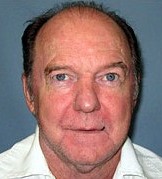
Spotted an error, or have more information about this case?