Pierre Basson
Serial killer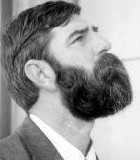 Louis Van Schoor
Serial killer · South Africa · 1986
Louis van Schoor was a security guard and an ex-policeman who was convicted and…
39 victims
Louis Van Schoor
Serial killer · South Africa · 1986
Louis van Schoor was a security guard and an ex-policeman who was convicted and…
39 victims
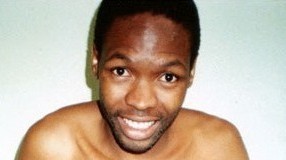 Moses Sithole
Serial killer · South Africa · 1994
Moses Sithole (November 17, 1964) was a serial rapist and serial killer in Sout…
38 victims
Moses Sithole
Serial killer · South Africa · 1994
Moses Sithole (November 17, 1964) was a serial rapist and serial killer in Sout…
38 victims
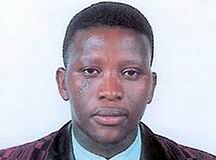 Norman Afzal Simons
Serial killer · South Africa · 1986
Norman Afzal Simons was a former teacher. He later converted to Islam in 1993,…
22 victims
Norman Afzal Simons
Serial killer · South Africa · 1986
Norman Afzal Simons was a former teacher. He later converted to Islam in 1993,…
22 victims
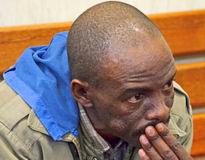 Bulelani Mabhayi
Serial killer · South Africa · 2007
Bulelani Mabhayi was a serial killer who terrorised the rural villagers of Thol…
20 victims
Bulelani Mabhayi
Serial killer · South Africa · 2007
Bulelani Mabhayi was a serial killer who terrorised the rural villagers of Thol…
20 victims
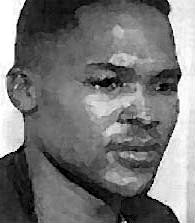 Velaphi Ndlangamandla
Serial killer · South Africa · 1998
Velaphi Ndlangamandla, known as the “saloon killer”, was convicted in connectio…
19 victims
Velaphi Ndlangamandla
Serial killer · South Africa · 1998
Velaphi Ndlangamandla, known as the “saloon killer”, was convicted in connectio…
19 victims
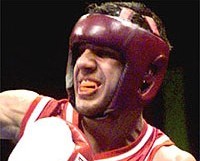 Jeremy Molitor
Murderer · Canada · 2002
Jeremy Molitor was a former Canadian boxer and Commonwealth Games gold medalist…
1 victim
Jeremy Molitor
Murderer · Canada · 2002
Jeremy Molitor was a former Canadian boxer and Commonwealth Games gold medalist…
1 victim
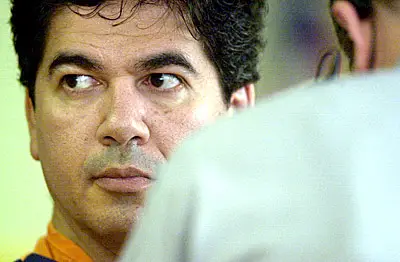 Reinaldo Rivera
Serial killer · USA · 1999
Reinaldo Rivera was arrested in a motel room where he tried to kill himself by…
4 victims
Reinaldo Rivera
Serial killer · USA · 1999
Reinaldo Rivera was arrested in a motel room where he tried to kill himself by…
4 victims
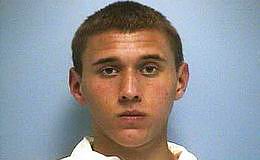 Tyler Hadley
Homicide · USA · 2011
Tyler Hadley was convicted of killing his parents, Mary Jo Hadley and Blake Had…
2 victims
Tyler Hadley
Homicide · USA · 2011
Tyler Hadley was convicted of killing his parents, Mary Jo Hadley and Blake Had…
2 victims
 Ashley Coulston
Murderer · Australia · 1992
Ashley Coulston was an Australian sailor and triple murderer who was serving th…
3 victims
Ashley Coulston
Murderer · Australia · 1992
Ashley Coulston was an Australian sailor and triple murderer who was serving th…
3 victims
- Gender
- male
- Country
- South Africa
- Location
- South Africa
- Date of birth
- 1880
- Age at first offence
- 23
- Characteristics
- domestic dispute
- Victim profile
- His brother Jasper, 17 / Acquaintances
- Method of murder
- Drowning - Shooting - Strangulation
- Date(s) of murder
- 1903 - 1906
- Years active
- 1903–1906
- Date of arrest
- —
- Status
-
Died in custody
Committed suicide by shooting himself to avoid arrest on January 22, 1906; posthumously convicted of murder in 1906
Case Record: Pierre Basson
Pierre Corneille Faculys Basson was posthumously convicted of murder in 1906 after committing suicide by shooting himself to avoid arrest on January 22, 1906.
Background
Basson was described by Inspector Easton, the police officer who went to investigate his death, as "a scoundrel from infancy". He was believed to have killed eight or nine people and was in all probability South Africa's first mass murderer.
Physically, Basson was described as having dark hair, deep-set brown eyes and being of average height and build. He had a sharp mind and a keen nose for a shady deal, and he was also violent and highly disturbed.
In his early life, Basson attacked a boy with a knife when he was only twelve and took pleasure in causing pain to animals. He liked to catch birds and torture them to death, and he chopped the feet off cats so that he could watch them writhe in agony.
In his teens in Cape Town, Basson earned himself a reputation as a petty thief, which led to bitter conflicts at home. When Basson's father died suddenly after a short illness, Pierre, who was then 17 or 18 at the time, showed little or no concern. After his father’s death, Pierre became head of the household, which comprised his mother, two younger brothers and a younger sister, and he used this freedom, along with insurance money, to enter a new and more lucrative field of criminal operations: insurance fraud.
The offence
Basson killed a dozen victims, but not in anger. His crimes were inspired by greed and executed with cunning and deliberation. His crimes included murder-for-profit and insurance schemes intended to make certain he collected insurance money.
Basson’s first victim was his brother Jasper. He insured his 17-year-old brother Jasper for £3 500 and paid the first year’s premium. At an invitation to go fishing at Gordon’s Bay on 14th February 1903, Basson murdered Jasper. The body was never found.
Basson also believed that money could be made by offering loans on easy terms on the security of the cession of an insurance policy on the debtor’s life. Several of Basson’s friends (and debtors) were found dead, shot or drowned, and he was paid their insurance cover. In no case could it be proved that he was responsible for their sudden deaths.
The murder of Wilhelm Schaefer, aged 54, who farmed Highlands on the Cape Flats, finally led to Basson’s undoing.
Investigation and arrest
After Schaefer disappeared, the newspapers speculated, and the police were unable to proceed without a body or any hard evidence.
After Caroline Mochella saw suspicious activity and did not contact the police immediately, she sent an anonymous note to the head of the CID. Her note read: "Go and search Mr P. Bassons fowl run for the missing man. Dig the grown up Heatherton Avenue for Mr Schafer the missing man."
She later wrote a second letter. It read: "Sir this is the hole story of the missing man Mr Shafer the first notice I send was for the police to no that the missing man is on the property of Mr P Basson in his fowl hock under the floor there is a lot of sand on the top Not the hock but where they sleep in."
On 9 February, the police offered a £50 reward to anyone who could offer information that would help resolve the mystery of Schaefer's disappearance. The missing man was described as: "‘German, aged 54, unmarried, height 5 feet 7 inches. Medium build, broad shoulders, stoops when walking. Light brown cast in one eye. Was wearing when last seen, a dirty grey jacket, striped cotton shirt with collar, brown tie with white spots an old brown felt hat and old yellow Blucher Boots.’"
On 10 February, an interview with Basson appeared in The Argus in which he denied any knowledge of Schaefer's disappearance. He had agreed to the interview, he claimed: "because of the stories that were circulating and the garbled and unfair stuff published in some papers'
On the same day, the police received Caroline Mochella's second note. In response, Inspector Easton, detective Head Constable Walker, Detective Sergeant Bree and two other detectives immediately went to The Arums, where they begun to dig up the hencoop. Pierre emerged after about ten minutes.
Basson’s big brother, Johan, said: "“They’re digging up the fowl house, Pierre.”"
Basson then whispered: "It was Louw," Pierre whispered. "The police will find the body if they dig deep enough. I’ll be arrested; they’ll arrest me. The detectives will find Schaefer's body and they will bring Louw and me into it. We did it together."
Basson returned to his room. Shortly afterwards, his mother went in to him. He kissed her, and she left. After she left, only moments later, a shot rang out. He put a gun to his head and committed suicide.
Timeline
- February 13, 1903 — Basson invited Jasper to go fishing together at Gordon’s Bay; Jasper was murdered and the body was never found.
- December 1905 — Basson went to see Wilhelm Schaefer and made an offer to purchase the farm; after bargaining, they agreed on a price of £1 020.
- Early January 1906 — Basson arrived at Hermann Hirschberg's office with a receipt for the outstanding £1 020.
- January 22, 1906 — Wilhelm Schaefer visited Basson at The Arums; Basson committed suicide by shooting himself.
- January 1906 — Basson was posthumously convicted of murder in 1906.
- February 1906 — The case attracted police attention and newspaper coverage, including the Arus story "CAPE FLATS MYSTERY MURDER THEORY FAVOURED INFORMATION VOLUNTEERED".
- 9 February — Police offered a £50 reward for information about Schaefer’s disappearance.
- 10 February — An interview with Basson appeared in The Argus; police began digging at The Arums after receiving Caroline Mochella’s second note.
- On 1 March — Mrs Basson was arrested and remanded in Roeland Street Jail for a week, then released.
Other details
Insurance and early schemes
Basson’s easy-money scheme involved money lending. For this service, he charged interest and insisted that the lender take out a life insurance policy to cover the ‘unexpected’, naming himself as beneficiary. At first, he kept things in the family.
In 1901, he took out small life insurance policies for himself, his mother and his brother, Johan. Jasper was insured for £3 500. The policy amount was described as a huge amount at the time and one Basson argued would be to Jasper’s advantage so that, in later years, Jasper could borrow against the accumulated sum in the policy. Within months of taking out these insurance policies, Basson allowed them all to lapse with the exception of Jasper’s policy.
Pierre went down a day before the fishing trip and booked in at the Holloway Hotel. The hotel owner, Mr Holloway, later recalled to insurance assessors that Pierre was particularly interest in drowning incidents in the area. Mr Holloway remembered telling him about someone named Roux who had lost his life at a spot called Ruigte Vlei. Holloway also mentioned a notorious spot called Sewing-room Rock where there was a vicious undercurrent and victims vanished without trace. Holloway recalled that Pierre asked: "if the men had been washed off the rock and why none of the victims had ever been found."
Fishing incident and claim refusal
Jasper Basson arrived late on the afternoon of Friday, 13 February 1903. Basson and Jasper left the hotel to go fishing before light the next morning.
At about 6.45 a.m., two early-morning fishermen, Mr August Deydier and Dr Ford, met Pierre as he walked back towards the hotel. Basson said: "There has been a great accident,' Basson said. 'My brother Jasper's been drowned. He was cutting bait when a tremendous wave swept him off the rocks. I heard him give a cry for help, but another wave washed over me and threw me into a gully. I spotted him once, face downwards in the water, and then he vanished from view. He did not come up again.'"
Mr Deydier was struck by Basson’s calmness and found it suspicious because someone who had just witnessed a family disaster would be expected to show distress or confusion. Basson’s account was also said to have heightened suspicion because only one of Basson’s trouser-legs was wet.
A search party was organized. Basson and local fishermen set out along the coast. When they reached Sewing-room Rock, Basson pointed to the spot where Jasper had disappeared. There was no sign of the body. Despite an extensive search, Jasper Basson was never seen again.
Shortly after returning to Cape Town, Basson notified the insurance company of Jasper’s death. The insurance company instituted an inquiry and discovered Basson had attempted to get Mr G. Kruse, the barman at the Holloway Hotel, to make a false statement concerning the sequence of events. Kruse initially agreed to sign an affidavit to confirm Basson’s description of events, but when Basson arrived with a Justice of the Peace, Kruse declined to sign despite an inducement of £25. Basson’s description was said to bear so little resemblance to the truth that Kruse declined.
The insurance company refused to pay out because of the unsatisfactory evidence of Jasper’s death by: "violent, accidental, external and visible means".
The insurance dispute proceeded to court. Basson’s mother took the insurance company to court and the case went to the Supreme Court. Judgment was pronounced in Basson’s favour, and the courts ordered the insurance company to pay the full amount of the policy. After the payout, the Bassons bought a house called The Arums in Heatherton Road, Claremont, Cape Town.
Additional deaths and alleged links
After success with the insurance company, Basson repeated his scheme. One person who had ceded his life insurance policy worth £375 to Basson was found dead on Woodstock beach in Cape Town. There was some indication he had been throttled to death. Another of Basson’s clients drowned while the two were out sailing together.
A German couple, Smit, were acquaintances of Basson and were also shot and robbed, and evidence linked them to Basson. Basson was also believed to have been responsible for the death of a man named Adolf Beck, whose body was found floating in the Black River.
Between 1902 and 1905, Basson conceived a number of schemes designed to trick people out of their money.
The Schaefer affair: transaction and attempt to force transfer
Wilhelm Schaefer owned the farm, Highlands, about twenty-five kilometres from Claremont, Cape Town, at the end of the Klipfontein Road. Schaefer shared the property with his brother, Gottlieb. Schaefer was described as 54, frugal and industrious.
When Basson learned Schaefer was looking to sell Highlands, Basson decided to swindle him. In December 1905 Basson made an offer to purchase the farm. Schaefer insisted on an asking price of £1 400. After bargaining, they agreed on £1 020. Transfer was to take place only if Schaefer was present; the deed of transfer was not to be passed to Basson without proof of payment.
The parties visited Schaefer's Cape Town attorney, Hermann Hirschberg. A few days after the initial meeting, Basson called and tried to get Hirschberg to transfer the property into his name. Hirschberg refused. A week later, Basson visited again and announced he had paid Schaefer for the farm, asking for transfer. Hirschberg refused because Basson had neither receipt nor other proof of payment, but he prepared draft documents for intended sale to present to the Board of Executors to substantiate an application for a loan of £500.
Early in January 1906, Basson arrived with a receipt for the outstanding £1 020. Hirschberg was unaware it was counterfeit, but explained that he would have to contact Schaefer before final transfer. Basson claimed the seller was satisfied and said Schaefer had gone to Kimberley, making it impossible to contact him. Despite holding power of attorney, Hirschberg refused.
Basson withdrew a cheque for £850 and claimed the money had been given to him by his mother towards payment. Hirschberg’s suspicions were aroused. Hirschberg refused to proceed until he had spoken to Schaefer personally. Basson stormed out.
Basson reasoned that his only recourse was to murder Schaefer, hide his body, and forge his signature on relevant documents. He sent his gardener, Martin Cherrick, to fetch labourer Peter Christian from a nearby brickyard to dig a large pit in the chicken run in the back yard. Basson explained to his mother that the pit was being dug for pipes to improve drainage, and said that because he had not obtained permission from the local council, the work had to be conducted in secret.
A week later the pit was complete. Basson obtained two bags of lime stored inside the hencoop. He then acquired chloroform with a false name from a pharmacist in Long Street. It later emerged he had obtained cyanide from the same source on two previous occasions.
Schaefer’s last known actions and people present
On 22 January 1906, Wilhelm Schaefer set out by horse-and-trap for Basson's home. En route, he stopped at Herbert Hawkins’ blacksmith shop in Lansdowne Road and asked Hawkins to shoe his horses and make minor repairs to his carriage. Schaefer told Hawkins: "“I'll be back in one or two hours,” he said, “after I've collected the money for my farm from Pierre Basson.”"
He then set off on foot. When Schaefer arrived at The Arums, he was met by Basson and a friend of Basson’s named Tobias Louw. The three men went into Basson's room together. Schaefer was never seen alive again.
Burial discovery and decomposition
A local charwoman, Catherine Caroline Josephine Mochella, passed the yard as the men set to work and heard suspicious noises. She spotted a feeble light and thought someone was stealing Basson's birds. Through a gap in the wall she saw what she described as what looked like the body of a white man being tumbled into a large hole in the ground. She heard Basson hiss: "“Give me the lime,” she heard Basson hiss."
Mochella did not contact police because she was afraid they would put her in prison “for nothing”. She went home.
In another part of Claremont, Hawkins was also perturbed because Schaefer did not return to collect his property. The next morning, he rode into Claremont and called at the police station, then went to Basson’s house. Mrs Basson told him she thought Schaefer had left for Kimberley the previous afternoon. Hawkins returned to his shop.
Shortly afterwards, Basson arrived to take possession of Schaefer’s horse-and-trap. He produced a receipt for £1 020 purportedly signed by Schaefer and claimed he owned all of the German’s property, then paid for the repairs. Hawkins was surprised that the receipt was dated 11 January, although Schaefer had said on the previous day (22 January) that he was in town to receive payment.
Search, newspaper coverage, and suicide
Inside the house, Basson moved to Highlands and began going through Schaefer’s papers. Gottlieb protested. Basson brandished the receipt and reiterated his claim he had bought the farm ‘lock, stock and barrel’. Basson agreed to let Gottlieb remain on the farm until alternative accommodation could be found.
Mrs Basson kissed Pierre and he said: "I'm going to get dressed for the police," he said. "I have done no wrong. It was Toby's [ Louw's] show."
A shot rang out shortly after she left. Basson had committed suicide.
In the Sporting Edition of The Argus the same night under the heading "Flats Mystery Solved an article described events after the police had begun to dig up the hencoop at Basson's house at about 2.45 p.m." It explained: "‘A strong smell gave [the] indication that developments were at hand,’ the article explained. Eventually Schciefer's body was found It was 'immersed in quick-lime, in an advanced stage of decomposition but was easily recognisable'."
Proceedings involving others
Because of Basson’s death, Pierre Basson was never brought to trial for his crimes.
His accomplice, Louw, was subsequently tried for murder, but there was insufficient evidence and he was acquitted.
On 1 March, Mrs Basson was arrested and remanded in Roeland Street Jail for a week, then released.
Aftermath
After Pierre’s death, the family was destitute and The Arums and its contents were sold by public auction. The event attracted over 1 500 people, and the goods on sale fetched outrageous prices far in excess of their real value.
The entry included the observation: "Perhaps crime does pay after all..."

Spotted an error, or have more information about this case?