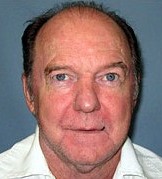
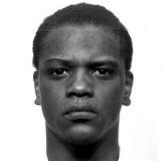
James Harvey Callahan
Murderer Ervil LeBaron
Murderer · USA · 1972
Ervil Morrell LeBaron (1925 to August 16, 1981) was the leader of a polygamous…
35 victims
Ervil LeBaron
Murderer · USA · 1972
Ervil Morrell LeBaron (1925 to August 16, 1981) was the leader of a polygamous…
35 victims
 Brian Kevin Rosenfeld
Murderer · USA · 1985
Brian Kevin Rosenfeld Brian Kevin Rosenfeld was sentenced to three concurrent l…
23 victims
Brian Kevin Rosenfeld
Murderer · USA · 1985
Brian Kevin Rosenfeld Brian Kevin Rosenfeld was sentenced to three concurrent l…
23 victims
 Marvin Gray
Murderer · USA · 1975
Marvin Gray was convicted killer who claimed responsibility for 23 slayings and…
23 victims
Marvin Gray
Murderer · USA · 1975
Marvin Gray was convicted killer who claimed responsibility for 23 slayings and…
23 victims
 Yahweh ben Yahweh
Murderer · USA · 1980
Yahweh ben Yahweh was born and legally named Hulon Mitchell Jr. (October 27, 19…
23 victims
Yahweh ben Yahweh
Murderer · USA · 1980
Yahweh ben Yahweh was born and legally named Hulon Mitchell Jr. (October 27, 19…
23 victims
 Russell Ellwood
Murderer · USA · 1991
Russell Ellwood was a former taxi driver. Authorities suspected him of killing…
20 victims
Russell Ellwood
Murderer · USA · 1991
Russell Ellwood was a former taxi driver. Authorities suspected him of killing…
20 victims
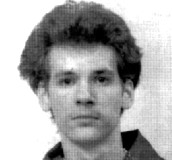 Christopher Stevens
Murderer · USA · 1993
Christopher Stevens was on probation, and his probation was transferred to Clov…
1 victim
Christopher Stevens
Murderer · USA · 1993
Christopher Stevens was on probation, and his probation was transferred to Clov…
1 victim
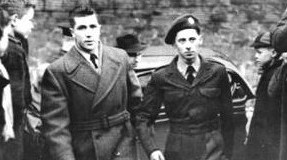 Iain Hay Gordon
Homicide ? · United Kingdom · 1952
Iain Hay Gordon was convicted of the killing of Patricia Curran and was found g…
1 victim
Iain Hay Gordon
Homicide ? · United Kingdom · 1952
Iain Hay Gordon was convicted of the killing of Patricia Curran and was found g…
1 victim
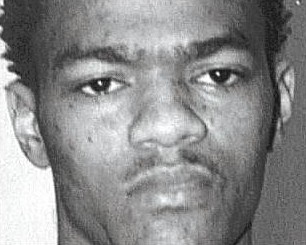 Lance Chandler
Murderer · USA · 1993
February 7, 1993 — Lance Chandler, Geral-dine Fernandez, Dwight Wyatt, and Geor…
1 victim
Lance Chandler
Murderer · USA · 1993
February 7, 1993 — Lance Chandler, Geral-dine Fernandez, Dwight Wyatt, and Geor…
1 victim
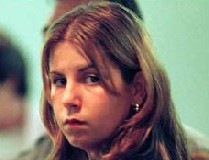 Melissa Drexler
Homicide · USA · 1997
Melissa Drexler was born in 1979 and was also known as “The Prom Mom.” She atte…
1 victim
Melissa Drexler
Homicide · USA · 1997
Melissa Drexler was born in 1979 and was also known as “The Prom Mom.” She atte…
1 victim
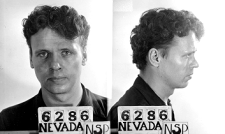 Ferdinand Bourdlais
Murderer · 1952
Name: Ferdinand Bourdlais · Also known as: Vernon Bourdlais · Age at death: 27…
1 victim
Ferdinand Bourdlais
Murderer · 1952
Name: Ferdinand Bourdlais · Also known as: Vernon Bourdlais · Age at death: 27…
1 victim
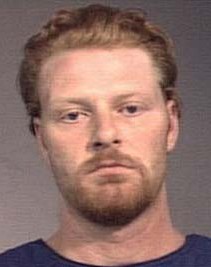 Richard Paul White
Serial killer · USA · 2001
Richard Paul White admitted strangling a woman three years ago and led police t…
6 victims
Richard Paul White
Serial killer · USA · 2001
Richard Paul White admitted strangling a woman three years ago and led police t…
6 victims
- Gender
- male
- Country
- USA
- Location
- Calhoun County, Alabama, USA
- Date of birth
- January 6, 1947
- Age at first offence
- 35
- Characteristics
- rape, kidnapping, domestic violence, alcohol, drug addict
- Victim profile
- Becky Howell, 26 (student at Jacksonville State University)
- Method of murder
- Asphyxiation
- Date(s) of murder
- February 3, 1982
- Years active
- 1982
- Date of arrest
- February 22, 1982
- Status
-
Executed
Executed by lethal injection in Alabama on January 15, 2009
Overview
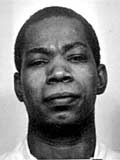
James Harvey Callahan was executed by lethal injection in Alabama on January 15, 2009.
Becky Howell was abducted from the Norge Village Washeteria in Calhoun County, Alabama, around the time window described as between 12:30 a.m. and 1:30 a.m. on the morning of February 4, 1982. She was a 26-year-old student at Jacksonville State University.
Callahan was convicted for capital kidnapping and subsequently murdering Rebecca Howell. Rebecca Howell’s body was found about two weeks later floating in Tallasseehatchee Creek near Broughton Bridge, where it had become entangled in some brush. An autopsy revealed that Howell had been killed by asphyxiation, consistent with smothering. Her hands had been bound with strips of white duct tape.
A vaginal swab revealed the presence of seminal fluid.
Timeline
- February 3, 1982 (around 11:00 p.m.) — Becky Howell met her fiancé, Murray Knight, at the club where he was performing with his band in Jacksonville, Alabama.
- February 3, 1982 (around 1:30 a.m.) — Knight’s band finished playing; Howell still had not returned to the club.
- February 3, 1982 — Howell went across the street to the Norge Washerteria to do laundry.
- February 17, 1982 — Becky Howell was found dead of asphyxiation in the Tallasseehatchee Creek in Calhoun County, Alabama; her hands were taped together and her belt was on upside down; she was not wearing pantyhose, socks, or shoes.
- February 20, 1982 — Jimmy Dunagan told Detective Max Kirby what he saw on February 3, including that the tag number of the green Ford pickup was either “NRF467” or “RNF467.”
- February 21, 1982 — police located the green Ford outside the residence of Harvey Callahan; Dunagan identified the truck as the one he saw on February 3 at the laundry.
- February 21, 1982 (starting at 9:30 p.m.) — police staked out the green Ford.
- February 22, 1982 (around 5:00 a.m.) — Deputy Johnny Alexander and Sergeant Thienes observed Callahan get into the truck and drive away.
- February 22, 1982 (around 9:00 a.m.) — Callahan was placed under arrest for violating probation by driving a vehicle with an incorrect tag.
- February 22, 1982 (around 9:30 a.m.) — Callahan gave his first statement orally to Detective Max Kirby, who transcribed it.
- February 22, 1982 (around 1:45 p.m. to 3:25 p.m.) — Callahan gave his second statement to Assistant District Attorney Joseph Hubbard; the statement was audio-taped and transcribed by a court reporter.
- February 23, 1982 (around 10:20 a.m.) — Callahan gave his third statement after officers retrieved a photograph from Callahan’s father’s house.
- February 23, 1982 (around 2:50 p.m.) — Callahan gave his fourth statement.
- February 24, 1982 (between 11:00 a.m. and 11:30 a.m.) — Callahan sent word to Kirby that he wanted to see him; the events thereafter were referred to as the “fifth statement.”
- April 5, 1982 — James Callahan was indicted for the intentional murder of Rebecca Suzanne Howell.
- June 26, 1982 — Callahan was convicted for intentionally murdering Rebecca Suzanne Howell during the course of a first-degree kidnapping, a capital offense under § 13A-5-40(a)(1), Ala.Code 1975.
- July 8, 1982 — after a jury recommended death by a 10-2 vote, the trial court sentenced Callahan to death by electrocution.
- November 7, 1987 — Callahan was convicted again of capital murder, and the jury returned an unanimous recommendation for the death penalty.
- November 25, 1987 — the trial court sentenced Callahan to death.
- November 17, 1989 — the Alabama Supreme Court affirmed the conviction and death sentence.
- October 1, 1990 — the United States Supreme Court denied Callahan’s petition for certiorari review.
- September 30, 1992 — Callahan, through counsel, filed a Rule 32, Ala.R.Crim.P., petition for post-conviction relief.
- March 14, 1996 — Callahan amended the Rule 32 petition.
- July 2, 1996 — Callahan again amended the Rule 32 petition.
- July 1-2, 1996 — the trial court conducted an evidentiary hearing on the claims for post-conviction relief.
- February 17, 1998 — the trial court entered an order denying Callahan’s Rule 32 petition.
- January 31, 2008 — the United States Supreme Court granted a stay of execution about an hour before Callahan’s scheduled execution.
- January 15, 2009 — Callahan was executed by lethal injection in Alabama.
- January 16, 2009 — reporting described Callahan’s execution as occurring Thursday night, with death at 6:24 p.m.
Background
Becky Howell was a 26-year-old student at Jacksonville State University.
On February 3, 1982 (around 11:00 p.m.), Becky met her fiancé, Murray Knight, at the club where he was performing with his band in Jacksonville, Alabama. After visiting, Becky went across the street to the Norge Washerteria to do laundry.
Knight became worried when Howell had not returned after the band finished playing at 1:30 a.m. Knight went to the laundry to look for Howell. He found her car, her school books, her laundry, and her jacket, but did not find her. Knight called the police.
Callahan was on probation for Assault with Intent to Murder at the time of the murder.
In 1979, Callahan was convicted of assault with intent to murder and sentenced to 10 years’ imprisonment. In May 1979, he pleaded guilty and was convicted of assault with intent to murder again, and he was sentenced to two years’ imprisonment to run concurrent with his prior sentence. In October 1979, Callahan was granted probation.
The offence
Rebecca Howell was abducted from the Norge Village Washeteria in Calhoun County, Alabama, some time between 12:30 a.m. and 1:30 a.m.
At the time of disappearance, evidence and testimony described that Howell was wearing blue jeans but without underpants, shoes, or socks. Her hands were bound with strips of white duct tape. Her belt was described as on upside down. She was not wearing pantyhose, socks, or shoes.
Her body was found about two weeks later floating in Tallasseehatchee Creek near Broughton Bridge, where it had become entangled in some brush. An autopsy revealed that Howell had been killed by asphyxiation due to an obstruction of her airway, consistent with smothering.
The autopsy and evidence indicated that she had been raped.
Investigation
A concerned citizen, Jimmy Dunagan, had been near a washerteria on the night of the incident and observed a green Ford pickup truck driven by a man. The citizen noted the license number after seeing a woman running from the truck.
The license number and vehicle description were traced to James Callahan. Callahan eventually gave several conflicting statements to police admitting everything except the murder.
Officer Joe Carter and Sergeant Kathy Thienes responded when Knight called the police.
During searches, officers discovered a roll of gray duct tape and a pair of men’s blue jeans near Howell’s car, but found no other evidence of her whereabouts.
After officers located the green Ford outside the residence of Harvey Callahan, police staked out the truck. Deputy Johnny Alexander and Sergeant Thienes observed Callahan get into the truck and drive away around 5:00 a.m. The officers stopped Callahan for driving with a switched tag.
Arrest and custodial statements
Callahan was stopped for driving with a switched tag. Deputy Alexander explained that the tag Callahan had on his vehicle did not belong to that vehicle and that he would be ticketed for a switched tag. The administrative policy described that deputies did not carry ticket books in their vehicles, and anyone stopped for a traffic violation was taken to jail for the citation.
After receiving his ticket, Callahan was told investigators would like to talk with him and he could wait for them in the lobby. Callahan agreed.
At approximately 9:00 a.m., Callahan was placed under arrest for violating his probation by driving a vehicle with an incorrect tag. Callahan was convicted twice in 1979 for assault with intent to murder and was still on probation on February 21, 1982.
A subsequent search of Callahan’s truck revealed a pistol, a pillow, and two pairs of men’s blue jeans.
Callahan gave four statements to police concerning his whereabouts and actions on the night of February 3. Before each statement, Callahan was read Miranda rights and signed a waiver of counsel.
Statement #1 (given orally to Kirby; transcribed)
Statement #1 was given on February 22 at 9:30 a.m. and was orally given to Kirby, who transcribed it.
In Statement #1, Callahan stated he went to a laundry between 7:30 p.m. and 7:45 p.m. and was driving a green 1982 Ford pickup truck. After going to get something to eat, he returned to the laundry and left again at approximately 10:00 p.m. He then went to the Jacksonville Hospital where he met his father visiting his mother. At 11:00 p.m., Callahan left the hospital and followed his father to his father’s house, where Callahan remained for the rest of the night.
He also claimed that he had an attorney but “he didn't need him right then” and would let Kirby know when he needed him.
Statement #2 (given to Hubbard; audio-taped and transcribed)
Statement #2 was given on February 22 from 1:45 p.m. to 3:25 p.m. During questioning by Assistant District Attorney Joseph Hubbard, the statement was audio-taped and transcribed by a court reporter.
In Statement #2, Callahan stated he arrived at a laundry around 10:00 p.m. and Becky Howell was not there. Callahan placed his clothes in a washing machine and left to get something to eat. When he returned around 30 minutes later, Becky was there by herself.
Callahan knew Becky because Billy Griffith’s wife introduced them at the Jacksonville Nursing Home. Callahan and Becky spoke in passing after being introduced.
That night, Callahan told Becky he was thinking of renting out his mobile home and asked if she was interested. He offered to take her there and told her to think about it while he visited his mother in the hospital.
Callahan left for the hospital around 11:00 p.m. and returned around 12:00 a.m. When he returned, Becky told him she would like to see the mobile home that night.
Gladys Callahan, Callahan’s estranged wife, then pulled up outside the laundry, accused Callahan of “running around,” and soon drove off. Callahan and Becky left the laundry at approximately 12:10 a.m. They left together in Callahan’s truck.
Callahan stated that after they arrived at the mobile home, Gladys also arrived, accused Callahan, pointed a pistol at Callahan, and directed them into the kitchen where Gladys forced Callahan to tape Becky’s hands together. Callahan stated that he escaped through the back door of the mobile home and drove away, leaving Becky alone with Gladys, and that he did not have sexual relations with Becky Howell.
In an addendum requested as part of Statement #2 (made on February 22 at 3:48 p.m.), Callahan stated that about a year and a half prior to February 3, he had dated Becky Howell, and they had sexual relations on one occasion. He stated that when he saw Becky at the laundry, she intimated that she wanted to have sex with him again. Callahan quoted Becky’s words: “I remember several of the good times we had at one time. Are the good times still out there?” Callahan quoted his response: “I don’t know. Why don’t you try it and we’ll find out.”
Callahan further stated that after he returned from the hospital, Becky said she wanted to look at Callahan’s mobile home and commented, “We’ll have a good time once we get there.” Callahan and Becky had sex and were still in bed when Gladys entered. Gladys pointed a pistol, ordered them to move to the kitchen, and Callahan taped Becky’s hands together, then escaped through the back door. In Statement #2 he claimed he left Becky with Gladys while he escaped.
Hubbard testified that, prior to questioning, Callahan was advised of Miranda rights by Deputy Amerson and executed a written waiver of counsel, and that prior to giving the statement Callahan said:
“I know of my rights. I wish to give a statement at this particular time in order to help clear my own personal self.”
Statement #3 (given after photograph retrieval)
Statement #3 was given on February 23 at 10:20 a.m. after officers retrieved a photograph from Callahan’s father’s house at Callahan’s request.
Callahan stated his wife may have thought Becky was a woman in the photograph named Malera, and that his wife was very jealous of Malera.
Callahan detailed his relationship with Becky Howell: he and Howell first met in 1977 at Federal Mogul introduced by Billy Griffith; Callahan asked her out and gave her his phone number; the following weekend they went out on a date; Callahan told Becky he was currently seeing someone but was not sure he wanted to stay with that person; two weeks later Callahan took her water skiing on his boat, where they had sex and Becky told him he needed to make up his mind who he wanted to be with or she would not see him anymore; they next spoke three months later when Becky told Callahan she had started seeing someone else but could call it off easily if Callahan would leave his girlfriend; after that, Callahan spoke briefly on two occasions before they met at the Norge Washerteria on February 3.
Statement #4 (most damaging; led to admission of holding Howell prisoner)
Statement #4 was given on February 23 at 2:50 p.m.
Callahan admitted that he forced Howell to leave the laundromat with him and that he took her to his mobile home where he held her prisoner for two days.
He stated that on the night of February 4, Howell agreed to have sexual intercourse with him in return for his releasing her, and that they had sexual intercourse.
He stated that on the night of February 5 he taped Howell’s hands together and began to drive her to an area near some houses where he planned to release her, and that near the creek where her body was later found she jumped out of the truck and ran toward the creek. He stated Howell’s boots, pantyhose, and socks were in the back of his truck and that he threw the boots out on his drive back.
After the statement, Circuit Judge Sam Monk entered the interrogation room after knocking. Judge Monk advised Callahan of Miranda rights again and informed him that his father had retained an attorney, Fred Lybrand, to talk with him about possible representation, and that Lybrand was outside. Callahan responded:
“If my father sent him down here, I might ought to talk with him briefly. But that would be about all.”
Everyone except Callahan left the room, and attorney Lybrand went into the room to consult with Callahan.
Callahan did not give any other formal statements after Statement #4.
Searches and fifth statement (February 24, 1982)
Between 11:00 a.m. and 11:30 a.m. on February 24, Callahan sent word to Deputy Kirby through a trusty that he wanted to talk to Kirby.
Kirby had Callahan brought to him roughly 30 minutes after the request. Kirby advised Callahan of his Miranda rights and Callahan signed a waiver of counsel.
Callahan told Kirby he could show him where he threw Howell’s boots out of his truck.
Kirby and Sheriff Snead, accompanied by Callahan, went to multiple locations including Callahan’s father-in-law’s house. Callahan directed officers to a woodpile where they found a purse behind it. Callahan then directed officers to his father’s house, where he removed a knife from a camper and told officers it was the knife he had in his truck on February 3. Police did not recover a pair of boots during this search expedition.
Howell’s boots were later discovered inside Callahan’s mobile home by Callahan’s sister and brother-in-law and were turned over to the police by Callahan’s brother-in-law, Paul Henninger.
Callahan stated that he could show where he threw Howell’s boots, socks, and other items of clothing, and Kirby read and explained waiver of counsel and consent forms before Callahan signed both forms to accompany officers on a trip to find these items.
Sheriff Snead testified that no reward or hope of reward was offered and that Callahan was not threatened to induce him to accompany the officers on this trip.
Trial
Charging and capital conviction
Callahan was convicted in the Circuit Court, Calhoun County, Samuel Monk, J., of kidnapping and of murder. He was tried and convicted for the capital felony of kidnapping and, subsequently, murdering Rebecca Howell in Calhoun County, Alabama.
He was convicted pursuant to § 13A-5-40(a)(1), Code of Alabama 1975, for the capital felony of kidnapping and, subsequently, murdering Rebecca Howell.
First conviction and sentence
On June 26, 1982, Callahan was convicted for intentionally murdering Rebecca Suzanne Howell during the course of a first-degree kidnapping, a capital offense under § 13A-5-40(a)(1), Ala.Code 1975.
On July 8, 1982, after the jury recommended that Callahan be sentenced to death by a vote of 10 to 2, the trial court sentenced Callahan to death by electrocution.
Appeal after first conviction
Callahan v. State, 471 So.2d 447 (Ala.Cr.App. 1983) affirmed.
Ex Parte Callahan, 471 So.2d 463 (Ala. 1985) reversed and remanded.
Second conviction and sentence
On remand, Callahan was convicted again in the Circuit Court, Calhoun County, Samuel H. Monk, II, J., of murder and again sentenced to death.
On November 7, 1987, Callahan was again convicted of capital murder, and the jury returned a unanimous recommendation for the death penalty.
On November 25, 1987, the trial court sentenced Callahan to death.
Second appeal
Callahan v. State, 557 So.2d 1292 (Ala.Cr.App. 1989) affirmed.
Ex parte Callahan, 557 So.2d 1311 (Ala. 1989) affirmed the conviction and death sentence on November 17, 1989.
The United States Supreme Court denied certiorari review in Callahan v. Alabama, 498 U.S. 881, 111 S.Ct. 216, 112 L.Ed.2d 176 (1990) on October 1, 1990.
Evidence and factual findings at trial (as described)
The trial record described testimony and physical evidence including:
- Murray Knight saw Howell around 11:15 p.m. on the night she was abducted.
- Howell had just gotten off work and was on her way to wash clothes; she planned to meet Knight afterward.
- Jimmy Dunagan saw a woman with “long, brown or reddish hair” make a telephone call across the street from another washeteria at 11:40 p.m., and saw a man in a truck watching and then following the young woman.
- Knight and others discovered Howell’s car, school books, laundry, and jacket.
- A police officer on routine patrol saw Howell in the Norge Village Washeteria between 12:30 and 12:45 a.m.
- A passerby saw a man fitting Callahan’s description inside the washeteria at 1:00 a.m. apparently trying to “pick-up” a young woman.
- Susan Bragg, a fellow employee, passed by and saw a green pickup truck outside; Bragg thought someone inside the truck waved.
- By 1:30 a.m., Knight and some of his friends went to search the washeteria because Howell had not returned as expected; Howell was gone, but the clothes she had been washing remained and one pair of wet blue jeans was on the floor; Howell’s car remained parked outside.
- The appellant was arrested after a “stakeout” of his father’s home on February 22, 1982, five days after Howell’s body had been discovered.
Physical evidence described included:
- Callahan’s fingerprints found on a roll of gray duct tape discovered outside the Norge Village Washeteria.
- During a search of Callahan’s home, authorities recovered a strip of white duct tape of the same identical type used to bind Howell’s wrists.
- Strands of hair consistent with Howell’s head hair found on a mop.
- Red carpet fibers identical to a red fiber found on one of Howell’s socks.
- Dog hairs inside Callahan’s truck consistent with hair from the victim’s dog.
- A vaginal swab analyzed for seminal fluid; it was found to contain seminal fluid from a “group O” secretor of H antigens.
- Tests indicated that Murray Knight is a non-secretor but Callahan is a “group O” secretor.
The medical examiner testified that Howell’s feet and ankles were not scratched or cut as they would have been had she run through thick underbrush near where Callahan claimed she exited his truck and ran.
Post-conviction and procedural history
After his conviction and death sentence were affirmed, Callahan filed post-conviction proceedings:
On September 30, 1992, Callahan, through counsel, filed a Rule 32 petition for post-conviction relief, amended on March 14, 1996, and again amended on July 2, 1996.
On July 1-2, 1996, the trial court held an evidentiary hearing. Judge Samuel H. Monk presided over the evidentiary hearing.
On February 17, 1998, the trial court denied Callahan’s Rule 32 petition, and Callahan appealed. The appellate court affirmed the denial.
The appellate court noted that on direct appeal all issues were scrutinized, including those reviewable under the “plain error” doctrine, but that there was no plain error review in an appeal from the denial of a Rule 32 petition, citing Rule 45A, Ala.R.App.P. and Thompson v. State.
Callahan presented numerous claims regarding the performance of his trial counsel and appellate counsel, asserting that errors deprived him of effective assistance of counsel.
After evaluating the evidence and the trial court’s order, the court affirmed and held the trial court correctly denied the petition.
Final moments, last meal, and last words
The reported time of death was 6:24 p.m. at Holman Prison.
Callahan’s final moments included waving his left hand toward his son, Kevin Callahan, who was seated in a witness room.
Callahan asked his son to take care of his grandchildren and great-grandchildren and said:
“I love you. That's all I have to say.”
Callahan told his son:
“I have a lot of remorse that I can't be here for you.”
Callahan did not look toward the victim’s family members who were seated in a separate viewing room.
The victim’s mother, Beth Coheley, and one of her sisters, Karen Greer, both said they were disappointed that Callahan did not express regret. Greer and Coheley made statements about Callahan’s demeanor and the absence of an apology.
Prison officials said Callahan met with family members, friends, and a spiritual advisor, prayed with adviser Donald Barker, and received communion at 4:30 p.m.
Callahan requested a last meal described as two corn dogs, french fries and a Coke.
Before the lethal injection, the reported basis for timing included that his earlier plea to the Supreme Court was rejected, clearing the way for the execution; an earlier stay had been granted about an hour before his scheduled execution in 2008, and then later motion(s) were rejected again.
Other details
Names and relationships mentioned included:
- Victim: Rebecca Suzanne Howell (also referred to as Becky Howell)
- Financé: Murray Knight
- Son (witness): Kevin Callahan (also referred to as Kevin James Callahan)
- Defendant’s father: Harvey Callahan
- Defendant’s estranged wife: Gladys Callahan
- Defendant’s sister and brother-in-law (names not fully provided beyond Paul Henninger)
- Brother-in-law who turned over boots: Paul Henninger
- Trial judge referenced at a point in the interrogation room: Circuit Judge Sam Monk
- Counsel requested for possible representation: Fred Lybrand
- Deputy and sheriff personnel referenced: Sheriff Roy Snead, Deputy Johnny Alexander, Sergeant Kathy Thienes, Detective Max Kirby, Assistant District Attorney Joseph Hubbard, Deputy Larry Amerson, Deputy Sheriff Johnny Alexander, Sergeant Lawton Hall
- Chaplain: Chris Summers
- Department of Corrections spokesman: Brian Corbett
- Spiritual adviser: Donald Barker
- Attorney for defendant at execution described as: Randall Susskind of Montgomery
Citation history included:
- Callahan v. State 471 So.2d 447 (Ala.Cr.App. 1983) (Direct Appeal)
- (Direct Appeal - Reversed)
- Callahan v. State 557 So.2d 1292 (Ala.Cr.App. 1989) (Direct Appeal after Retrial)
- Callahan v. State 767 So.2d 380 (Ala.Cr.App. 1999) (PCR)
A will prepared by Callahan was described, including a bequest to his son of $36.42 from his prison account, a black and white Radio Shack TV, two watches, a Walkman, some headphones, a leather belt, two pairs of boots, one pair of Nike tennis shoes, food items and legal papers.
The schedule note included that Alabama’s next execution was scheduled Feb. 12, with the inmate to be executed described as Danny Joe Bradley for the 1983 murder of Rhonda Hardin.
Spotted an error, or have more information about this case?