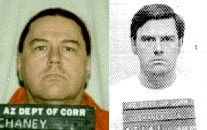
Anthony Lee Chaney
Murderer Ervil LeBaron
Murderer · USA · 1972
Ervil Morrell LeBaron (1925 to August 16, 1981) was the leader of a polygamous…
35 victims
Ervil LeBaron
Murderer · USA · 1972
Ervil Morrell LeBaron (1925 to August 16, 1981) was the leader of a polygamous…
35 victims
 Brian Kevin Rosenfeld
Murderer · USA · 1985
Brian Kevin Rosenfeld Brian Kevin Rosenfeld was sentenced to three concurrent l…
23 victims
Brian Kevin Rosenfeld
Murderer · USA · 1985
Brian Kevin Rosenfeld Brian Kevin Rosenfeld was sentenced to three concurrent l…
23 victims
 Marvin Gray
Murderer · USA · 1975
Marvin Gray was convicted killer who claimed responsibility for 23 slayings and…
23 victims
Marvin Gray
Murderer · USA · 1975
Marvin Gray was convicted killer who claimed responsibility for 23 slayings and…
23 victims
 Yahweh ben Yahweh
Murderer · USA · 1980
Yahweh ben Yahweh was born and legally named Hulon Mitchell Jr. (October 27, 19…
23 victims
Yahweh ben Yahweh
Murderer · USA · 1980
Yahweh ben Yahweh was born and legally named Hulon Mitchell Jr. (October 27, 19…
23 victims
 Russell Ellwood
Murderer · USA · 1991
Russell Ellwood was a former taxi driver. Authorities suspected him of killing…
20 victims
Russell Ellwood
Murderer · USA · 1991
Russell Ellwood was a former taxi driver. Authorities suspected him of killing…
20 victims
 Johannes Kana
Murderer · South Africa · 2013
Johannes Kana was convicted for the rape and murder of Anene Booysen. Anene Boo…
1 victim
Johannes Kana
Murderer · South Africa · 2013
Johannes Kana was convicted for the rape and murder of Anene Booysen. Anene Boo…
1 victim
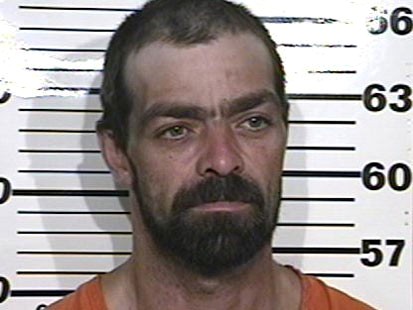 Paul Devoe
Spree killer · USA · 2007
Paul Devoe was sentenced to death on October 8, 2009. · Aug. 24, 2007 — Michael…
6 victims
Paul Devoe
Spree killer · USA · 2007
Paul Devoe was sentenced to death on October 8, 2009. · Aug. 24, 2007 — Michael…
6 victims
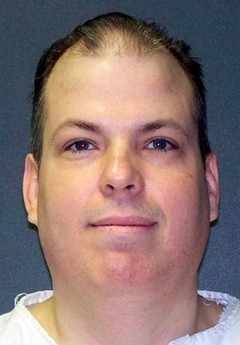 Karl Eugene Chamberlain
Murderer · USA · 1991
Karl Eugene Chamberlain was a white male from Oklahoma who was executed in Texa…
1 victim
Karl Eugene Chamberlain
Murderer · USA · 1991
Karl Eugene Chamberlain was a white male from Oklahoma who was executed in Texa…
1 victim
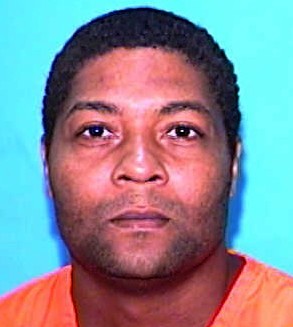 Kenneth Hartley
Murderer · USA · 1991
Name: Kenneth Hartley Date of birth: 01/27/67 Court: Fourth Judicial Circuit, D…
1 victim
Kenneth Hartley
Murderer · USA · 1991
Name: Kenneth Hartley Date of birth: 01/27/67 Court: Fourth Judicial Circuit, D…
1 victim
 Duane Roger Morrison
Murderer · USA · 2006
Duane Roger Morrison (c. 1952—September 27, 2006) was the lone gunman who storm…
1 victim
Duane Roger Morrison
Murderer · USA · 2006
Duane Roger Morrison (c. 1952—September 27, 2006) was the lone gunman who storm…
1 victim
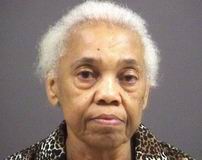 Estelle Jones
Murderer · USA · 2012
Estelle Jones was a 72-year-old woman when she was sentenced. She was described…
2 victims
Estelle Jones
Murderer · USA · 2012
Estelle Jones was a 72-year-old woman when she was sentenced. She was described…
2 victims
- Gender
- male
- Country
- USA
- Location
- Coconino County, Arizona, USA
- Date of birth
- April 4, 1954
- Age at first offence
- 28
- Characteristics
- robbery, to avoid arrest
- Victim profile
- John B. Jamison, 41 (Coconino County reserve Sheriff's Deputy)
- Method of murder
- Shooting ( AR-15 rifle)
- Date(s) of murder
- September 6, 1982
- Years active
- 1982
- Date of arrest
- Same day
- Status
-
Executed
Executed by lethal injection in Arizona on February 16, 2000
Case identification
Anthony Lee Chaney (DOB: April 4, 1954)
Timeline
- September 6, 1982 — Coconino County Sheriff’s Deputy Robert Cline checked the campsite where Chaney and Deanna Jo Saunders-Coleman were staying outside Flagstaff; Chaney pulled a gun, had Deanna disarm him, and handcuffed him to a tree; reserve deputy and medical doctor John Jamison arrived; Chaney fired an AR-15 rifle and shot Jamison multiple times; Chaney later took another pickup after encountering two boys.
- February 16, 1983 — Trial began.
- March 17, 1983 — Verdict was reached.
- April 20, 1983 — Chaney was sentenced.
- July 26, 1984 — Arizona Supreme Court affirmed convictions and sentences in State v. Chaney, 141 Ariz. 295, 686 P.2d 1265 (1984).
- March 11, 1985 — Chaney filed a petition for post-conviction relief; it was summarily denied in the Arizona trial court.
- August 20, 1985 — Arizona Supreme Court denied review.
- October 8, 1985 — Chaney filed a petition for writ of habeas corpus in the district court; the court summarily denied relief.
- 1986 — In Chaney v. Lewis, 801 F.2d 1191 (9th Cir. 1986), the Ninth Circuit affirmed summary dismissal of factual and legal issues but remanded for consideration of remaining eight mixed questions of law and fact; cert. denied, 481 U.S. 1023 (1987).
- September 1992 — Chaney filed an amended petition in the federal district court adding five new issues.
- November 3, 1992 — The State filed its response.
- March 31, 1994 — The federal district court stayed the federal habeas corpus action to allow Chaney to complete a second state post-conviction relief proceeding.
- June 29, 1995 — Arizona Supreme Court denied review of the second unsuccessful state post-conviction relief petition.
- December 28, 1995 — The federal district court rejected all 20 habeas claims.
- September 11, 1998 — Chaney appealed and lost in the Ninth Circuit; Chaney v. Stewart, 156 F.3d 921 (9th Cir. 1998).
- November 9, 1998 — The trial court denied relief on a second petition for post-conviction relief; the Arizona Supreme Court subsequently denied review.
- June 17, 1999 — The State requested that the Arizona Supreme Court issue a warrant of execution.
- October 25, 1999 — The trial court granted Chaney’s motion to withdraw his third post-conviction action.
- January 6, 2000 — The Arizona Supreme Court issued the warrant of execution for February 16, 2000.
- February 16, 2000 — Chaney was executed by lethal injection at 3:10pm at ASPC-Florence.
Background
Chaney and his “wife,” Deanna, were out of Arizona when their crime spree began. Chaney was married to another when he “married” Deanna, and Deanna was a co-defendant. They burgled several homes in other states before entering Arizona.
At one home, they found several guns and took them. After leaving and driving some distance, Chaney decided to re-burgle that home to make sure he did not miss any weapons. Chaney was described as a “gun nut,” who knew quite a bit about guns.
In New Mexico, they burgled a home and discovered a late-model black Ford pickup with plates bearing the letters WMD. They transferred their booty to the truck and left their own vehicle somewhere in New Mexico.
They entered Arizona as the 1982 Labor Day Holiday began. They heard that DPS [Department of Public Safety] was setting up roadblocks to check for drunk drivers, and they did not want to be stopped. They decided to find a rural area and camp until the holiday was over.
Chaney and Deanna Jo Saunders-Coleman were on the run from a string of burglaries in Texas and Colorado. They were driving a stolen pickup truck and were in possession of 11 stolen firearms.
The offence
Encounter with Deputy Robert Cline
Coconino County Sheriff’s Deputy Robert Cline was on routine patrol and checked the campsite where Chaney and Saunders-Coleman were staying outside of Flagstaff.
After requesting a check on the stolen truck, Cline got out of his car and began talking to Chaney. Chaney pulled a gun on Cline and had Deanna disarm him. Chaney handcuffed Cline to a tree.
As Chaney and Deanna started to leave, John Jamison arrived at the scene. John Jamison was a reserve deputy and a medical doctor. Chaney jumped out of the truck and began firing at Jamison with an AR-15 rifle.
Shooting of John Jamison and disabling actions
Chaney used a hail of fire to pin Jamison down inside his car. Chaney advanced to point blank range and fired three fatal shots into Jamison.
In addition to the fatal three wounds, Jamison was struck by over 200 fragments of metal and glass from the shots fired into the vehicle.
While the events with Cline were ongoing, a dispatcher determined that the pickup was stolen and tried to inform the deputy. When there was no answer, the dispatcher called a second officer, John Jamison, to investigate. Because the area is rural, there was some difficulty in locating the first deputy’s exact position.
Chaney said he needed “more control” of the situation. He handcuffed Cline to the tree, told Deanna to disable the two-way radio in Cline’s vehicle, and took its keys. Chaney and Deanna then drove off.
When Cline felt it was safe, he took out a spare key, unhandcuffed himself, and ran to the radio.
As Jamison was progressing slowly up the dirt road checking areas along the way, Jamison saw Chaney’s vehicle. Jamison called in and asked, “Black Ford pickup?” Chaney stopped the vehicle, jumped out with the AR-15 in hand, and fired it while advancing on Jamison’s vehicle.
Chaney later fired again when he was within nine feet of the car and to its rear, leaving powder burns on Jamison’s body.
Statements attributed to Chaney during the attack
Chaney returned to the truck and told Deanna: “Murder One” and “reload.”
Victim’s condition after attack
Jamison was conscious for about thirty minutes after the attack. When medics arrived he told them: “I’m dying, I’m dying” and “I can’t breathe.”
Taking of another pickup and threats to witnesses
Afterward, Chaney saw two boys in another pickup later in the same general area. He decided to take their pickup because the police had a description of his.
Deanna went to the passenger window of the boys’ pickup and began talking with them. Chaney came up to the driver’s side, pointed his gun at the driver, and told the boys to get out. The boys were told to kneel next to the truck.
After transferring their booty, Chaney told the boys to run. They ran but dodged behind trees when they could because both feared a bullet in the back.
Before telling the boys to run, Chaney told them that he had handcuffed one deputy to a tree and had shot another.
Chaney headed to Flagstaff to put gas in the pickup he had just stolen. Within minutes, the police were in contact with the boys and sent out a description of the new vehicle.
In Flagstaff, police spotted the vehicle but hoped to allow Chaney to leave Flagstaff before attempting an arrest. There were many police cars in the area. Chaney remarked that he was in their midst and they did not realize it. Soon the police realized that surprise was gone and they moved in.
After arrest, Chaney asked how the deputy was doing, and the arresting officer said “shut up.”
Investigation / arrest-related details
A dispatcher attempted to inform the deputy after determining the pickup was stolen; when there was no answer, the dispatcher called a second officer, John Jamison, to investigate.
Chaney disabled communication by ordering Deanna to disable the two-way radio in Cline’s vehicle and took its keys.
After Chaney was taken into custody following the Flagstaff incident, he asked about the deputy’s condition and received “shut up” from the arresting officer.
Trial
Indictment and charges
Chaney was indicted for:
- first-degree murder,
- kidnapping,
- aggravated assault,
- two counts of armed robbery,
- one count each of burglary and theft.
The State alleged two prior convictions.
Trial personnel
- Presiding Judge: William F. Garbarino
- Prosecutors: John Verkamp and Charles D. Adams
- Start of Trial: February 16, 1983
- Verdict: March 17, 1983
- Sentencing: April 20, 1983
Verdict
A jury found Chaney guilty as charged. Chaney admitted the prior convictions.
Aggravating and mitigating circumstances
The sentencing court’s special verdict found that the murder was especially heinous, cruel and depraved, and that no mitigation existed.
Sentencing
The trial court sentenced Chaney to the maximum terms:
- 28 years for the kidnapping,
- 21 years for the aggravated assault,
- 28 years for each armed robbery,
- 20 years for burglary,
- 11.5 years for the theft.
All sentences were ordered to run consecutively.
For the first-degree murder, the trial court imposed the death penalty.
Appeals
On July 26, 1984, the Arizona Supreme Court affirmed the convictions and sentences in State v. Chaney, 141 Ariz. 295, 686 P.2d 1265 (1984).
Chaney filed a petition for post-conviction relief in the Arizona trial court on March 11, 1985, which was summarily denied. The Arizona Supreme Court denied review on August 20, 1985.
On October 8, 1985, Chaney filed a petition for writ of habeas corpus in the district court. That court summarily denied relief.
In Chaney v. Lewis, 801 F.2d 1191 (9th Cir. 1986), cert. denied, 481 U.S. 1023 (1987), the Ninth Circuit affirmed the lower court’s summary dismissal of factual issues and legal issues, but remanded for consideration of the remaining eight mixed questions of law and fact.
After considerable delay that included a change of counsel, Chaney filed an amended petition in the federal district court on September 1992, adding five new issues. The State filed its response on November 3, 1992.
On August 6, 1992, Chaney sought a stay in the district court to return to state court and file another petition for post-conviction relief; the State unsuccessfully opposed this. The district court stayed the federal habeas corpus action on March 31, 1994 to allow Chaney to complete a second state post-conviction relief proceeding.
Chaney filed a second unsuccessful petition for post-conviction relief raising seven issues. The Arizona Supreme Court denied review on June 29, 1995.
On December 28, 1995, the federal district court rejected all 20 of Chaney’s habeas claims.
Chaney appealed and lost in the Ninth Circuit on September 11, 1998 (Chaney v. Stewart, 156 F.3d 921 (9th Cir. 1998)). Chaney did not timely file his subsequent petition for writ of certiorari, and the United States Supreme Court rejected it on that ground.
In April 1998, Chaney filed a second petition for post-conviction relief in the state trial court. That court denied relief on November 9, 1998, and the Arizona Supreme Court subsequently denied review.
On June 17, 1999, the State requested that the Arizona Supreme Court issue a warrant of execution. Chaney then filed a third post-conviction action in the trial court; it was withdrawn on October 25, 1999.
Chaney filed several unsuccessful requests in the Arizona Supreme Court to reopen the case or delay the execution on the ground that the United States Supreme Court was going to reconsider its decision in Walton v. Arizona, 497 U.S. 639 (1990). The Arizona Supreme Court issued the warrant of execution on January 6, 2000 for February 16, 2000.
Outcome
Chaney offered no last words.
He was executed by lethal injection in Arizona on February 16, 2000, at 3:10pm at ASPC-Florence.
Aftermath
Chaney’s last meal consisted of:
- 2 eggs over easy,
- 4 slices of bacon,
- coffee,
- 1 pint vanilla ice cream,
- 1 can of peaches,
- strawberry jam.
Deanna Jo Saunders-Coleman pled guilty to second-degree murder and received a 21-year prison sentence. She testified against Chaney. She served 14 years.
Additional proceedings involved Chaney’s personal property. Diane Chaney sought an injunction to stop her husband’s possessions from being given to Arizona State University sociology professor Ann Nichols, including nude photographs of her. Diane Chaney said she objected to Nichols’ prison visits, and she stated she had not had contact with her husband for about four years. Diane Chaney stated she would be outside the prison gates when Chaney died, and she said she would not witness the execution. Ann Nichols said she planned to cremate Chaney’s body and bury his remains after a private service in Green Valley.
The Arizona Board of Executive Clemency unanimously denied a reprieve or commutation for Anthony.
At the clemency hearing, Coconino County Sheriff Joseph Richards recounted how Chaney opened fire before Jamison could even get out of his cruiser. Richards said: “John is the prey and he is the hunter,” and later said: “This officer was pinned down, unable to unbuckle his seat belt, unable to disengage his weapon.”
Robert Cline told the clemency board that he suffered post-traumatic stress disorder and felt tremendous guilt knowing that his call for help ended in Jamison’s death. Cline said: “I cannot begin to describe the fear I felt at that moment,” and asked the board to deny clemency by saying, “I need closure.”
Clemency board members also received a joint letter from the bishops of Phoenix, Tucson and Gallup, N.M., objecting to the execution.
Attorneys for the condemned man argued that Chaney suffered from a mental dysfunction that caused him to turn violent when he encountered Jamison. Attorney Ken Murray said the state failed to pay for medical tests or expert witnesses for Chaney, which could have proved the contention. Murray said a second appeal was still pending with the high court. Murray also stated that an attorney for another death row inmate filed an appeal with the state to stop the execution on the grounds that Chaney was a witness in a pending assault case.
Others argued against execution. Carol Korich, with Sanctity of Life, People Against Execution, said: “Tony Chaney has had almost 18 years to contemplate the wrong he’s done, almost 18 years of conscience,” and “Life in prison along with his conscience should be all justice requires.”
Spotted an error, or have more information about this case?