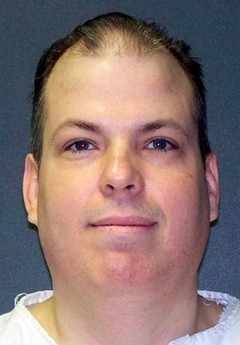
Karl Eugene Chamberlain
Murderer Brian Kevin Rosenfeld
Murderer · USA · 1985
Brian Kevin Rosenfeld Brian Kevin Rosenfeld was sentenced to three concurrent l…
23 victims
Brian Kevin Rosenfeld
Murderer · USA · 1985
Brian Kevin Rosenfeld Brian Kevin Rosenfeld was sentenced to three concurrent l…
23 victims
 Russell Ellwood
Murderer · USA · 1991
Russell Ellwood was a former taxi driver. Authorities suspected him of killing…
20 victims
Russell Ellwood
Murderer · USA · 1991
Russell Ellwood was a former taxi driver. Authorities suspected him of killing…
20 victims
 Robert Martines Perez
Murderer · USA · 1994
Name: Robert Martines Perez · Other name used in proceedings: Robert Martinez P…
15 victims
Robert Martines Perez
Murderer · USA · 1994
Name: Robert Martines Perez · Other name used in proceedings: Robert Martinez P…
15 victims
 Billy Frank Vickers
Murderer · USA · 1993
Billy Frank Vickers Vickers was executed by lethal injection in Texas on Januar…
14 victims
Billy Frank Vickers
Murderer · USA · 1993
Billy Frank Vickers Vickers was executed by lethal injection in Texas on Januar…
14 victims
 Vladmir Romanov
Serial killer · 1991
Vladimir Romanov was a resident of the Russian exclave in the Baltic Region and…
11 victims
Vladmir Romanov
Serial killer · 1991
Vladimir Romanov was a resident of the Russian exclave in the Baltic Region and…
11 victims
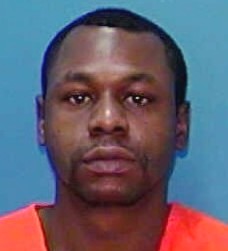 Jermaine Foster
Murderer · USA · 1992
Jermaine Foster was tried together with codefendants Booker, Henderson, and Cat…
2 victims
Jermaine Foster
Murderer · USA · 1992
Jermaine Foster was tried together with codefendants Booker, Henderson, and Cat…
2 victims
 Paul Joseph Dally
Murderer · New Zealand · 1989
Paul Joseph Dally kidnapped Karla Cardno, 13, in Lower Hutt on May 26, 1989. He…
1 victim
Paul Joseph Dally
Murderer · New Zealand · 1989
Paul Joseph Dally kidnapped Karla Cardno, 13, in Lower Hutt on May 26, 1989. He…
1 victim
 William Shrubsall
Homicide · Canada · 1988
William Shrubsall (also known as Ian Thor Greene and now Simon Templar (Ethan S…
1 victim
William Shrubsall
Homicide · Canada · 1988
William Shrubsall (also known as Ian Thor Greene and now Simon Templar (Ethan S…
1 victim
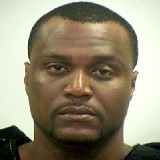 Tyrone Cade
Murderer · USA · 2011
Defendant: Tyrone Cade (Black male) · TDCJ number: 999575 · Prior prison record…
2 victims
Tyrone Cade
Murderer · USA · 2011
Defendant: Tyrone Cade (Black male) · TDCJ number: 999575 · Prior prison record…
2 victims
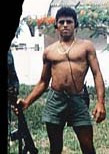 Genildo Ferreira do Franca
Spree killer · Brazil · 1997
Genildo Ferreira de Franca died in a shootout after he released two hostages un…
15 victims
Genildo Ferreira do Franca
Spree killer · Brazil · 1997
Genildo Ferreira de Franca died in a shootout after he released two hostages un…
15 victims
- Gender
- male
- Country
- USA
- Location
- Dallas County, Texas, USA
- Date of birth
- J une 20, 1970
- Age at first offence
- 21
- Characteristics
- rape
- Victim profile
- Felicia Prechtl ( 30-year old white female )
- Method of murder
- Shooting ( .30 caliber rifle)
- Date(s) of murder
- August 2, 1991
- Years active
- 1991
- Date of arrest
- J uly 17, 1996 (5 years after)
- Status
-
Executed
Executed by lethal injection in Texas on June 11, 2008
Case overview
Karl Eugene Chamberlain was a white male from Oklahoma who was executed in Texas by lethal injection. He was convicted of capital murder and sentenced to death for the rape and murder of Felicia Prechtl, a 30-year-old white female, in Dallas, Texas.
Timeline
- August 2, 1991 — Karl Eugene Chamberlain entered Felicia Prechtl’s apartment in Dallas, Texas under the pretense of borrowing sugar, forced her into a bedroom, taped her hands and feet, and sexually assaulted her; he then took her to the bathroom and shot her once in the head with a .30 caliber rifle, causing her death.
- June 5, 1997 — A judgment was entered after a jury found Chamberlain guilty of capital murder and following a separate punishment hearing, the court assessed a sentence of death.
- July 17, 1996 — Chamberlain was arrested after a fingerprint search returned his name as a possible match.
- June 11, 2008 — Chamberlain was executed by lethal injection in Texas.
Background
Chamberlain lived in the same apartment complex as Felicia Prechtl in Dallas, Texas. Chamberlain was described as having black hair, brown eyes, height 5' 11", and weight 261 lb. His education was listed as 12 years, and his occupation was listed as mechanic. His date of offense was listed as 08/02/1991. His county of offense was listed as Dallas, and his native county was listed as Oklahoma. He was listed as gender: Male and race: White.
The offence
On August 2, 1991, Chamberlain fatally shot Felicia Prechtl, a 30-year-old white female, in Dallas, Texas. Chamberlain went to Prechtl’s apartment under the pretense of borrowing sugar, left, and returned minutes later with duct tape and a rifle.
Chamberlain entered the apartment, displayed the weapon to the victim, and forced her into a bedroom. He taped the victim’s hands and feet and sexually assaulted her. Chamberlain took the victim into the bathroom and shot her once in the head with a .30 caliber rifle, causing her death.
Police found a roll of duct tape at the scene. Some fingerprints were taken from the duct tape. Police initially did not find matches in the police department’s database. Investigators also found sperm in the victim’s anal cavity. An autopsy determined that death resulted from a gunshot wound to the head, and the trajectory of the bullet was consistent with Prechtl sitting on the toilet or kneeling on the floor. A .30 caliber cartridge was recovered. A specimen was preserved as evidence.
The victim’s brother and girlfriend left the apartment with the victim’s five-year-old son while the victim got ready to go out with friends. When they returned, they noticed that the bathroom door was closed and that the victim’s clothes were still in the hallway. The victim’s brother entered the bathroom and saw the victim lying face down with her jeans and underwear pulled down to her knees, with her wrists and ankles bound by duct tape. She was otherwise wearing no clothing, and blood was pooled around her head. The victim’s brother and her son discovered the body upon their return.
Investigation and arrest
Police questioned Chamberlain the night of the murder, but he was not arrested until July 17, 1996. The arrest occurred after a fingerprint search returned his name as a possible match.
Detective Kenneth Penrod interviewed Chamberlain, and Chamberlain provided a written statement to police that he had killed Prechtl. Chamberlain directed investigators to a weapon of the same type used to kill Prechtl and provided DNA samples that matched the profile of samples taken from Prechtl’s body. In the written statement, Chamberlain said that on the day of the murder he went to Prechtl’s apartment to borrow sugar; he claimed she was scantily dressed when she answered the door and that she gave him the sugar and told him to leave. He said that after preparing to take his dogs for a walk, he decided to return to Prechtl’s apartment with duct tape and a rifle. He claimed he had consensual anal intercourse with her and that he shot her after she threatened to tell his wife. He also alerted police that the rifle could be found at his father’s house.
Fingerprints from the duct tape were resubmitted for comparison in 1996, and several potential matches were identified, including Chamberlain’s. It was stated that Chamberlain’s prints had been taken after an arrest for attempted robbery in Houston.
Trial
Charges and conviction
A Dallas County grand jury indicted Chamberlain for capital murder on Aug. 19, 1996.
A jury found Chamberlain guilty of capital murder in June 1997. The judgment of conviction and sentence was entered on June 5, 1997, after a separate punishment hearing.
Sentencing
After the punishment hearing, the court assessed a sentence of death. The jury’s verdicts required the trial court to sentence Chamberlain to death. The appeal of the sentence of death was automatic to the Texas Court of Criminal Appeals.
Evidence and disputed issues raised on appeal
Chamberlain’s conviction and sentence were supported by evidence including his confession and corroborating evidence including fingerprint matches, DNA evidence, and the presence of a roll of duct tape at the scene. Evidence included a rape examination finding sperm in the victim’s anal cavity and a .30 caliber cartridge recovered.
During trial, it was stated that some obscene phone calls were traced to Chamberlain’s telephone at work, including testimony about calls traced by Bell Atlantic to Chamberlain’s telephone at work and evidence regarding the geographical limitation of salesmen’s telephones and a computer system recording call details. The evidence was admitted over objections, and the appellate opinion addressed arguments about hearsay predicate and clear proof of identity as perpetrator of the offenses.
Chamberlain raised multiple points of error on direct appeal, including arguments involving future dangerousness, psychiatric testimony, due process arguments about types of appellate review, jury instructions at punishment, and admissibility of photographs. The appellate court affirmed the judgment.
The Texas Court of Criminal Appeals found that evidence supported the finding of future dangerousness. It also held that the trial court did not abuse its discretion regarding admission of certain photographs. The appellate court overruled multiple points of error and affirmed the trial court’s judgment.
A concurring opinion by Womack was referenced as joining the opinion except as to Point of Error Three.
Appellate history on direct appeal
On June 16, 1999, the Texas Court of Criminal Appeals affirmed Chamberlain’s conviction and sentence.
Appeals and collateral proceedings
State and federal habeas and certiorari
- Nov. 30, 1998 — Chamberlain filed a state writ application in the trial court.
- Sep. 3, 1999 — Chamberlain petitioned the U.S. Supreme Court for certiorari review.
- Jan. 10, 2000 — The Supreme Court refused to hear the case.
- Sep. 13, 2000 — The Texas Court of Criminal Appeals denied Chamberlain’s application for state habeas relief.
- Sep. 12, 2001 — Chamberlain filed a petition for writ of habeas corpus in the federal district court.
- Nov. 29, 2005 — The federal district court denied Chamberlain’s habeas petition.
- Nov. 3, 2006 — Chamberlain requested a certificate of appealability from the Fifth Circuit Court of Appeals.
- May 10, 2007 — The Fifth Circuit Court denied Chamberlain’s request for a certificate of appealability.
- Aug. 8, 2007 — Chamberlain petitioned the U.S. Supreme Court for certiorari review of federal habeas.
- Nov. 13, 2007 — The Supreme Court declined to hear the appeal.
Federal certificate of appealability denial (ineffective assistance of counsel claims)
Chamberlain sought a certificate of appealability on ineffective assistance of counsel claims. The Court of Appeals determined Chamberlain did not receive ineffective assistance of counsel at any phase of trial and denied Chamberlain’s request for a certificate of appealability.
Chamberlain argued that his Sixth Amendment right to counsel was violated during:
- the plea bargaining stage,
- the guilt-innocence phase,
- the punishment phase.
The plea bargaining stage claim alleged his trial counsel failed to adequately explain the plea bargain offered by the state. The plea bargain offered by the state was described as requiring Chamberlain to plead guilty to murder and burglary and receive two stacked life sentences. The state habeas court found that Chamberlain’s attorney told him that if he accepted the plea, he would not be eligible for parole for thirty years, and that the Board of Pardon and Paroles would decide when or if he would be paroled. The federal appellate court held that the state court’s conclusion that counsel’s performance was not deficient was a reasonable application of Strickland.
For the guilt-innocence phase claim, Chamberlain argued his trial counsel was ineffective for failing to call any fact witnesses and specifically failing to call himself as a witness. The state habeas court determined it was reasonable trial strategy not to present witnesses given Chamberlain’s confession and overwhelming corroborative evidence, and that Chamberlain did not show any witnesses who could have testified on his behalf. The federal appellate court concluded the state habeas court’s conclusion was a reasonable application of Strickland.
For the punishment phase claim, Chamberlain argued his attorneys were ineffective because they did not call him as a witness to testify as to his remorse. The state habeas court determined it was a reasonable strategy to advise Chamberlain against testifying. It noted that defense counsel called twenty-one witnesses during the punishment phase, including Chamberlain’s parents, a former therapist, and sixteen friends. It stated that witnesses testified about Chamberlain’s remorse and that the ultimate decision whether to testify was Chamberlain’s.
Execution and last statement
Chamberlain was executed by lethal injection in Texas on June 11, 2008.
He was scheduled to be executed after 6 p.m. Wednesday, June 11, 2008. It was stated that Chamberlain was convicted and sentenced to death in 1997 for the rape and murder of Felicia Prechtl in Dallas.
Last meal request
For his last meal, Chamberlain requested food including a variety of fresh fruit and vegetables, cheese, lunch meat, deviled eggs, six fried cheese-stuffed jalapenos, a chef salad with ranch dressing, onion rings, french fries, a cheeseburger, two fried chicken breasts, barbecue pork rolls, an omelet, milk, and orange juice.
Statements at execution
At the execution, it was stated that Chamberlain smiled broadly and looked at Prechtl’s relatives watching him through a window. In the seconds before he was injected with lethal drugs, he said:
"We are here to honor the life of Felecia Prechtl, a woman I didn't even know, and to celebrate my death," he said in the seconds before he was injected with lethal drugs. "I wish I could die more than once to tell you how sorry I am."
As the drugs took effect, he urged them:
"not hate anybody because...."
He slipped into unconsciousness before completing the thought and was pronounced dead nine minutes later.
Another account stated his half-sister and five friends witnessed his execution from behind another glass window, and his mother protested the death penalty in front of the Texas Department of Criminal Justice’s Walls Unit. Chamberlain was pronounced dead at 6:30 p.m. after he was given lethal injection at 6:21.
In that account, it was stated that as lethal injection was administered, he continued speaking, including:
"I want you all to know I love you with all my heart. I want to thank you for being here ... We are here to honor the life of Felecia Prechtl, a woman I didn't even know, and celebrate my death. My death began on August 2, 1991, and continued when I began to see the beautiful and innocent life that I had taken. I am so terribly sorry. I wish I could die more than once."
He then continued:
"I love you. God have mercy on us all," he said, still grinning. "Please do not hate anybody because ..."
He lost consciousness afterward. It was stated that he became the first Texas death row inmate executed since late September 2007 and that the execution was the sixth prisoner executed nationally that year.
Other details
Prior criminal history
Chamberlain had prior criminal history including robbery of a woman in Houston two months after he murdered Prechtl but before he was arrested for killing Prechtl. He also had a juvenile incident for misdemeanor theft.
Age
Chamberlain was described as 37 at the time of execution and as having been born in 1970 in Oklahoma City. It was also stated that he would have turned 38 next week.
Co-defendants
No co-defendants were listed.
Procedural history references
It was stated that in an interview from death row the week before his execution, Chamberlain admitted his guilt and expressed regret over his actions, including:
"My greatest regret is going down there and not killing myself," he said. "I had kind of like a slip into delusion. It makes absolutely no sense ... It was like I lost all control."
Witnesses and people present at execution
It was stated that Chamberlain’s execution was attended by Prechtl’s brother, son, and parents. Another account stated Chamberlain’s half-sister and five friends witnessed his execution.
Additional appeal-related material
The Texas Court of Criminal Appeals decision included discussion of whether evidence supported future dangerousness and issues involving psychiatric testimony, admission of obscene phone call evidence, Batson objections, and admissibility of photographs. The judgment of the trial court was affirmed, and Womack filed a concurring opinion as described in the appellate text.
Spotted an error, or have more information about this case?