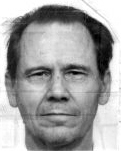
William Wesley Chappell
Murderer Brian Kevin Rosenfeld
Murderer · USA · 1985
Brian Kevin Rosenfeld Brian Kevin Rosenfeld was sentenced to three concurrent l…
23 victims
Brian Kevin Rosenfeld
Murderer · USA · 1985
Brian Kevin Rosenfeld Brian Kevin Rosenfeld was sentenced to three concurrent l…
23 victims
 Yahweh ben Yahweh
Murderer · USA · 1980
Yahweh ben Yahweh was born and legally named Hulon Mitchell Jr. (October 27, 19…
23 victims
Yahweh ben Yahweh
Murderer · USA · 1980
Yahweh ben Yahweh was born and legally named Hulon Mitchell Jr. (October 27, 19…
23 victims
 Russell Ellwood
Murderer · USA · 1991
Russell Ellwood was a former taxi driver. Authorities suspected him of killing…
20 victims
Russell Ellwood
Murderer · USA · 1991
Russell Ellwood was a former taxi driver. Authorities suspected him of killing…
20 victims
 Robert Martines Perez
Murderer · USA · 1994
Name: Robert Martines Perez · Other name used in proceedings: Robert Martinez P…
15 victims
Robert Martines Perez
Murderer · USA · 1994
Name: Robert Martines Perez · Other name used in proceedings: Robert Martinez P…
15 victims
 Valery Asratyan
Serial killer · Russia · 1988
Valery Asratyan was a Russian serial killer. He was identified as an ethnic Arm…
3 victims
Valery Asratyan
Serial killer · Russia · 1988
Valery Asratyan was a Russian serial killer. He was identified as an ethnic Arm…
3 victims
 Fiona Donnison
Murderer · United Kingdom · 2010
Fiona Donnison was 45 years old at the time she showed up in front of local aut…
2 victims
Fiona Donnison
Murderer · United Kingdom · 2010
Fiona Donnison was 45 years old at the time she showed up in front of local aut…
2 victims
 Archibald McCafferty
Serial killer · Australia · 1973
Archibald Beattie McCafferty was sentenced to three life sentences in 1974 and…
4 victims
Archibald McCafferty
Serial killer · Australia · 1973
Archibald Beattie McCafferty was sentenced to three life sentences in 1974 and…
4 victims
 Johan Kotze
Murderer · South Africa · 2012
Johan Kotze was sentenced to life in prison on July 16, 2013. · Johan Kotze — c…
1 victim
Johan Kotze
Murderer · South Africa · 2012
Johan Kotze was sentenced to life in prison on July 16, 2013. · Johan Kotze — c…
1 victim
 Mitsuhiro Kobayashi
Mass murderer · Japan · 2001
Mitsuhiro Kobayashi was a former taxi driver. During the trial, he admitted set…
5 victims
Mitsuhiro Kobayashi
Mass murderer · Japan · 2001
Mitsuhiro Kobayashi was a former taxi driver. During the trial, he admitted set…
5 victims
- Gender
- male
- Country
- USA
- Location
- Tarrant County, Texas, USA
- Date of birth
- September 26, 1936
- Age at first offence
- 52
- Characteristics
- revenge
- Victim profile
- Alexandra Heath, 27, Martha Lindsey, 50, and Elbert Sitton, 71
- Method of murder
- Shooting ( 9mm pistol)
- Date(s) of murder
- May 3, 1988
- Years active
- 1988
- Date of arrest
- May 1988
- Status
-
Executed
Executed by lethal injection in Texas on November 20, 2002
Case details
William Wesley Chappell was executed by lethal injection in Texas on November 20, 2002. Chappell was convicted and sentenced to death for the capital murder of Alexandra Heath, with the murders occurring in Fort Worth, Texas, on May 3, 1988.
Chappell killed Alexandra Heath, Alexandra Heath’s mother Martha Lindsey, and Martha Lindsey’s husband Elbert Sitton inside Martha Lindsey’s home.
Timeline
- May 1984 — Chappell was indicted for molesting Jane’s daughter.
- May 1987 — A jury found Chappell guilty of one count of indecency with a child; he received five years confinement; he was released on bond pending appeal.
- January 1988 — Sally Hayes drove Chappell to Martha Lindsey’s residence with gasoline intended to burn the house down; the attempt was unsuccessful.
- February 1988 — Chappell and Hayes went to a gun show; Hayes testified she purchased ammunition, an extra barrel, a spring, and a “small round thing with holes in it” that fit over the barrel of the gun; Chappell began working on a silencer for the gun.
- March 1988 — Chappell and Hayes purchased two walkie-talkies at Radio Shack.
- April 1988 — Chappell settled an unrelated personal-injury suit against a church and received a cashier’s check for $66,000.
- April 1988 — Chappell and Hayes went to Hornbeak, Tennessee, where Hayes owned a house; Chappell brought $60,000 of his settlement to put into certificates of deposit.
- May 3, 1988 — Chappell murdered Alexandra Heath, Martha Lindsey, and Elbert Sitton.
- Feb. 7, 1989 — Chappell was charged by indictment in Tarrant County for the capital murder of Alexandra Heath.
- Nov. 19, 1989 — A jury found Chappell guilty of capital murder.
- Nov. 22, 1989 — Following a separate punishment hearing, the trial court sentenced Chappell to death.
- Feb. 3, 1993 — On direct appeal, the Court of Criminal Appeals reversed the judgment and remanded for retrial due to an error in granting the State’s motion for a second shuffle of jury venire.
- April 7, 1993 — The Court of Criminal Appeals overruled the State’s petition for rehearing.
- Oct. 1993 — On remand, the trial court declared a mistrial after voir dire began.
- Oct. 9, 1996 — On retrial, a jury found Chappell guilty of capital murder.
- Oct. 9, 1996 — Following a separate punishment hearing, the trial court sentenced Chappell to death.
- Oct. 29, 1998 — Chappell filed his Brief on direct appeal raising seven points of error.
- May 21, 1999 — Chappell filed a state writ of habeas corpus petition raising six grounds for relief.
- Oct. 13, 1999 — The Court of Criminal Appeals rejected Chappell’s seven claims and affirmed his conviction and sentence.
- Nov. 24, 1999 — On state habeas, the Court of Criminal Appeals denied relief on all six claims.
- Dec. 26, 2000 — Chappell filed a federal writ of habeas corpus petition raising seven claims.
- Jan. 26, 2001 — The State filed an answer and moved for summary judgment.
- Feb. 7, 2001 — The United States District Court for the Northern District, Fort Worth Division, denied habeas relief and issued final judgment.
- Feb. 21, 2001 — Chappell filed notice of appeal and an application for certificate of appealability.
- March 1, 2001 — The district court denied a COA.
- May 14, 2001 — Chappell filed an application for COA in the United States Court of Appeals for the Fifth Circuit.
- June 13, 2001 — The State filed opposition to COA.
- April 9, 2002 — The Fifth Circuit denied a COA in an unpublished opinion.
- June 10, 2002 — Chappell petitioned for a rehearing; the Fifth Circuit denied the request.
- Sept. 5, 2002 — Chappell petitioned the United States Supreme Court for certiorari review of two claims.
- Oct. 10, 2002 — The State filed a brief in opposition.
- Nov. 4, 2002 — The trial court denied Chappell’s motion for DNA testing.
- Nov. 13, 2002 — Chappell filed a successive state habeas application and moved for a stay of execution in the trial court; he also appealed the denial of DNA testing.
- Nov. 20, 2002 — Chappell was executed by lethal injection in Texas.
The offence
On May 3, 1988, Chappell murdered Alexandra Heath, Martha Lindsey, and Elbert Sitton inside Lindsey’s home in Fort Worth, Texas.
Chappell was charged with murdering Alexandra Heath in the course of committing or attempting to commit burglary of a building owned by her mother, Martha Lindsey, with the intent to commit the felony offense of retaliation against Lindsey or her husband, Elbert Sitton, or commit theft of property belonging to Lindsay or Sitton.
Victims
- Alexandra Heath, 27, was shot while lying in bed and died at the scene.
- Martha Lindsey, 50, was shot after complying with the intruder’s demand for money; she died two days later.
- Elbert Sitton, 71, survived for two months in a hospital after being wounded; he later died.
Attack and witness statements
Chappell disguised himself and carried weapons and equipment. He was dressed in dark clothing, makeup and a wig, and had a black ski mask, brown gloves, and a nylon tote bag containing a walkie-talkie, the 9-mm gun, a pistol, the silencer, clips for the guns, a crowbar, and wire cutters.
Sometime after 9:00 p.m., Sally Hayes let Chappell out of the van near Lindsey’s home. Hayes drove around waiting for Chappell to contact her by walkie-talkie. Fifteen to 20 minutes later, Chappell contacted Hayes by walkie-talkie and she picked him up.
When Chappell got into the van, he told Hayes that he had “shot Jane, her mother, and her daddy.” He also said that he had taken some money to make it look like a robbery. Chappell later learned it was not Jane but Jane’s half sister, Alexandra Heath, whom he had killed.
Before his death, Sitton told a Fort Worth police officer that an intruder wearing a ski mask had confronted Sitton and Lindsey in their bedroom; after Lindsey complied with the intruder’s demand for money, the intruder shot the couple several times. Sitton also told an emergency room physician that he believed the intruder was the same man who raped his daughter or granddaughter, and the physician could not remember whether Sitton said “daughter” or “granddaughter.”
Background
Relationship and prior allegations
Chappell and Jane Sitton began dating in 1981 or 1982 and stopped seeing each other in 1983 or 1984. Chappell was then 43 or 44 years old, while Jane was then 14 or 15 years old.
In May 1984, Chappell was indicted for molesting Jane’s daughter. Martha Lindsey reported the offense to police.
Indecency conviction and release pending appeal
In May 1987, Chappell was found guilty of one count of indecency with a 3 year old child and sentenced to five years confinement. Chappell was released on bond pending appeal.
After the indecency trial, the Lindsey/Sitton family congregated outside the courtroom. When Chappell came out, he told Lindsey that “it wasn’t over yet” and that he “would get her for that.”
Chappell told his then-wife, Sally Hayes, that he did not molest Jane’s daughter and that Lindsey and the Sittons were after his money. Chappell stated that he wanted to “do away” with the Lindsey/Sitton family.
Investigation
Fire attempt and weapon preparation
In January 1988, Hayes drove Chappell to Martha Lindsey’s residence with gasoline intending to burn the house down; he was unsuccessful.
In February 1988, Hayes testified that she purchased items at a gun show including ammunition, an extra barrel, a spring, and a “small round thing with holes in it” that fit over the barrel of the gun. Chappell began working on a silencer for the gun.
In March 1988, Chappell and Hayes purchased two walkie-talkies at Radio Shack.
Money and travel
In April 1988, Chappell settled an unrelated personal-injury suit against a church and received a cashier’s check for $66,000. Chappell and Hayes went to Hornbeak, Tennessee, where Hayes owned a house. Chappell brought $60,000 of his settlement to put into certificates of deposit in hopes of preventing the Lindsey/Sitton family from getting it. Hayes testified that Chappell planned to return to Texas and the Lindsey home in order to kill anyone who happened to be in it.
Departure and staging
On May 3, 1988, Chappell and Hayes left Tennessee at 10:30 a.m. in a van and arrived in Fort Worth around 8:30 p.m. They stopped at a grocery store. While Hayes went into the store, Chappell changed into dark clothing, makeup, and a wig.
Chappell carried the black ski mask, brown gloves, and a nylon tote bag containing specified items, including the 9-mm gun, a pistol, a silencer, and wire cutters. After Hayes let Chappell out near Lindsey’s home sometime after 9:00 p.m., she drove around for 15 to 20 minutes waiting for contact by walkie-talkie.
Trial
Capital murder conviction and sentencing
Chappell was charged by indictment in Tarrant County for the capital murder of Alexandra Heath on Feb. 7, 1989.
On Nov. 19, 1989, a jury found Chappell guilty of capital murder. On Nov. 22, 1989, following a separate punishment hearing, the trial court sentenced Chappell to death.
Direct appeal and retrial
On direct appeal, the Court of Criminal Appeals reversed the judgment and remanded the cause for retrial because the trial court erred in granting the State’s motion for second shuffle of jury venire. The Court of Criminal Appeals overruled the State’s petition for rehearing on April 7, 1993.
On remand, the trial court declared a mistrial after voir dire began.
Second conviction and death sentence
On retrial, a jury found Chappell guilty of capital murder on Oct. 9, 1996. Following a separate punishment hearing, the trial court sentenced Chappell to death on Oct. 9, 1996.
Appeals and post-conviction litigation
Chappell filed his Brief on direct appeal raising seven points of error on Oct. 29, 1998.
Chappell filed a state writ of habeas corpus petition raising six grounds for relief on May 21, 1999.
On Oct. 13, 1999, the Court of Criminal Appeals rejected Chappell’s seven claims and affirmed his conviction and sentence.
On Nov. 24, 1999, the Court of Criminal Appeals denied relief on all six of Chappell’s claims on state habeas.
Chappell filed a federal writ of habeas corpus petition raising seven claims on Dec. 26, 2000.
On Feb. 7, 2001, the United States District Court issued a memorandum opinion and order denying habeas relief and issued final judgment.
Chappell filed notice of appeal and an application for certificate of appealability on Feb. 21, 2001. On March 1, 2001, the district court denied the COA.
Chappell filed an application for COA in the United States Court of Appeals for the Fifth Circuit on May 14, 2001. The State filed opposition on June 13, 2001.
On April 9, 2002, the Fifth Circuit denied a COA in an unpublished opinion. On June 10, 2002, Chappell petitioned for a rehearing, and the Fifth Circuit denied the request.
Chappell petitioned the United States Supreme Court for certiorari review of two claims on Sept. 5, 2002. The State filed a brief in opposition on Oct. 10, 2002.
The trial court denied Chappell’s motion for DNA testing on Nov. 4, 2002. On Nov. 13, 2002, Chappell filed a successive state habeas application and moved for a stay of execution in the trial court; he also appealed the denial of DNA testing.
Sentencing
On Nov. 22, 1989, after the separate punishment hearing, the trial court sentenced Chappell to death.
On Oct. 9, 1996, after the separate punishment hearing, the trial court again sentenced Chappell to death.
Outcome
Chappell did not petition for certiorari review from the United States Supreme Court in connection with his direct appeal, and subsequent state and federal appeals were denied.
Aftermath
Final meal
Chappell’s final meal was the same meal served to all other offenders in the main dining room.
Final statement and execution details
Chappell made a final statement that included the following words, quoted verbatim:
“My request is that y'all get yourselves in church, because y'all are killing me. Pray for your souls, because you need to. I didn't do it. It's not in my nature. Jane, you know damn well I didn't molest that damn daughter of yours. I know you think I did this and I'm sure you think this is wonderful in your eyes. But let me tell you something, there were two DNA tests done and none matched me. I wanted a third, but that never happened. You are murdering me, and I feel sorry for you. I don't know what else to say. Please go to church and say ...”
Chappell’s execution began with lethal injection at 6:10 p.m. and the lethal injection was started; the drugs took effect and he was pronounced dead at 6:17 p.m. in Texas.
Chappell was executed on November 20, 2002, in Huntsville, Texas, and was described as the oldest person executed in Texas since the state took over capital punishment duties from counties in 1924. The execution involved lethal injection.
Additional quotations from witnesses and others
During the capital murder proceedings, Greg Miller, a Tarrant County assistant district attorney, said:
“These people were doing nothing but sleeping in their beds,”
and he also said:
“This is a guy the death penalty was designed for, in my opinion.”
Jane Sitton said after the execution:
“It's over and done with,”
and she said:
“There's no more chance of appeals. There's no more chance of something getting thrown out on a technicality, which happened to us before.”
A person identified as “Michelle Lyons,” a spokeswoman for the Texas Department of Criminal Justice, said:
“Despite the obvious risk that inmates will fabricate testimony to curry favor with authorities, Texas imposes no restrictions on its use.”

Spotted an error, or have more information about this case?