
Kenneth Chad Charm
Murderer Brian Kevin Rosenfeld
Murderer · USA · 1985
Brian Kevin Rosenfeld Brian Kevin Rosenfeld was sentenced to three concurrent l…
23 victims
Brian Kevin Rosenfeld
Murderer · USA · 1985
Brian Kevin Rosenfeld Brian Kevin Rosenfeld was sentenced to three concurrent l…
23 victims
 Russell Ellwood
Murderer · USA · 1991
Russell Ellwood was a former taxi driver. Authorities suspected him of killing…
20 victims
Russell Ellwood
Murderer · USA · 1991
Russell Ellwood was a former taxi driver. Authorities suspected him of killing…
20 victims
 Robert Martines Perez
Murderer · USA · 1994
Name: Robert Martines Perez · Other name used in proceedings: Robert Martinez P…
15 victims
Robert Martines Perez
Murderer · USA · 1994
Name: Robert Martines Perez · Other name used in proceedings: Robert Martinez P…
15 victims
 Billy Frank Vickers
Murderer · USA · 1993
Billy Frank Vickers Vickers was executed by lethal injection in Texas on Januar…
14 victims
Billy Frank Vickers
Murderer · USA · 1993
Billy Frank Vickers Vickers was executed by lethal injection in Texas on Januar…
14 victims
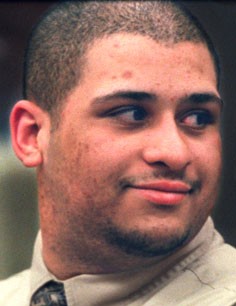 Raymond Oscar Butler
Murderer · of Los Angeles · 1994
Raymond Oscar Butler was sentenced to death on July 29, 1996. The killings invo…
3 victims
Raymond Oscar Butler
Murderer · of Los Angeles · 1994
Raymond Oscar Butler was sentenced to death on July 29, 1996. The killings invo…
3 victims
 Jorge Villanueva Torres
—
Jorge Villanueva Torres was known as el 'Negro Torpedo' and as el 'Monstruo de…
Jorge Villanueva Torres
—
Jorge Villanueva Torres was known as el 'Negro Torpedo' and as el 'Monstruo de…
 Thomas Paul West
Murderer · USA · 1987
Defendant: Thomas Paul West · Victim: Don Bortle (Donald Bortle / Donald Bortle…
1 victim
Thomas Paul West
Murderer · USA · 1987
Defendant: Thomas Paul West · Victim: Don Bortle (Donald Bortle / Donald Bortle…
1 victim
- Gender
- male
- Country
- USA
- Location
- Comanche County, Oklahoma, USA
- Date of birth
- —
- Characteristics
- rape, kidnapping, domestic violence
- Victim profile
- Brandy Hill (female, 14)
- Method of murder
- Beating with a sledgehammer
- Date(s) of murder
- July 20, 1993
- Years active
- 1993
- Date of arrest
- January 18, 1966
- Status
-
Executed
Executed by lethal injection in Oklahoma on June 5, 2003
Case overview
Kenneth Chad Charm was tried and convicted for the 1993 rape and murder of 14-year-old Brandy Crystian Hill, in connection with her kidnapping. He was sentenced to death and was executed by lethal injection in Oklahoma on June 5, 2003.
Timeline
- July 20, 1993 — Kenneth Chad Charm and his cousin Ronald Jessie kidnapped, raped, and murdered 14-year-old Brandy Crystian Hill.
- July 20, 1993 — Brandy Hill disappeared from her Lawton home.
- July 22, 1993 — Brandy Hill’s body was found two days later in a pasture one mile west of Lawton.
- April 10, 2003 — The Oklahoma Court of Criminal Appeals set June 5 as the execution date for death row inmate Kenneth Chad Charm.
- June 5, 2003 — Kenneth Chad Charm was executed by lethal injection at 6:05 p.m.
- May 23, 2003 — The Oklahoma Pardon and Parole Board voted unanimously to deny clemency for Charm.
Background
Brandy Crystian Hill was an honor student who wanted to become the first female black president. Hill lived with her mother in Michigan and was visiting her father during the summer in Lawton. Her parents divorced when she was 2. On the day of the murder, Charm and Jessie visited Brandy Hill’s father, Michael Hill.
Charm was 37 at the time of his execution.
The offence
On July 20, 1993, Charm and his sixteen-year-old cousin Ronald Jessie visited Michael Hill. Charm and Hill were described as “drinking buddies.” Charm and Jessie left the Hill house, spotted Brandy Hill walking on a street, and lured her into their car.
Jessie wrapped a piece of cloth around Brandy Hill’s neck. The men drove the victim to a field. In the field, both Charm and Jessie each raped the girl twice. Jessie attempted to choke Hill to death with the cloth, but he could not kill her. Charm also tried, unsuccessfully, to choke the victim. Jessie then retrieved a sledgehammer from the trunk and hit the girl twice in the head; Charm then struck her several more times with the sledgehammer. The men left Hill’s body in the field, where it was discovered several days later.
During an off-screen conversation captured in a videotaped confession, Charm said:
"If she wasn't dead from the impact of the blows, she was dead from being left there, so what difference does it make?"
Investigation and arrest-related statements
After his arrest, Charm told investigators he and his cousin Ron Jessie kidnapped Hill because Jessie believed Hill’s father “snitched” on him, sending Jessie to jail. Charm admitted sexually assaulting Hill and said both he and Jessie strangled her and hit her repeatedly with a sledge hammer.
Charm gave a videotaped confession that described how the events unfolded and how he was involved in their development.
Trial
Charges and jury findings
Jurors convicted Kenneth Chad Charm of:
- First-degree malice-aforethought murder
- Kidnapping
- First-degree rape
In the capital sentencing phase, the jury found three aggravating circumstances:
- The murder was committed to avoid lawful arrest or prosecution.
- The murder was especially heinous, atrocious or cruel.
- Charm would constitute a continuing threat to society.
Sentencing
In accordance with the jury recommendation:
- The trial court sentenced Charm to death on Count I.
- The trial court sentenced him to 125 years imprisonment on Count II.
- The trial court sentenced him to fifty-four years imprisonment on Count III.
In later habeas and appellate descriptions, Charm’s imprisonment terms were also described as:
- 120 years’ imprisonment on the first-degree rape conviction (Count II), and
- 54 years’ imprisonment on the kidnapping conviction (Count III or Count IV, depending on the appellate caption and count numbering used in the case materials).
Confinement and in-custody conduct
While imprisoned, Charm was cited for fighting with other inmates and possession of a homemade knife. During his confession, Charm threatened to kill his wife. He had previously threatened to kill a former work supervisor.
Prior record
Charm had nine prior non-violent felony convictions. He was sentenced to death after the jury found the aggravating circumstances, including reliance on the charged circumstances in light of his nine prior felony convictions.
Witnesses to execution-related events (trial/case participants)
Brandy Hill’s father and stepson witnessed the execution. An Oklahoma Department of Corrections spokesman stated that Charm’s lawyer, a spiritual advisor, and a case investigator also witnessed the execution.
Appeals and post-conviction proceedings
Direct appeal and rehearing
On appeal, the Court of Criminal Appeals affirmed Charm’s judgment and sentence and denied Charm’s petition for rehearing.
The United States Supreme Court denied Charm’s petition for certiorari.
Post-conviction relief
Charm sought postconviction relief from the Court of Criminal Appeals and filed:
- an Application for Post-Conviction Relief, Request for an Evidentiary Hearing and Request for Discovery.
- The filing included a direct description that the Oklahoma capital post-conviction procedure severely limits the issues Charm may raise.
The Court of Criminal Appeals held that:
- Charm was precluded by res judicata from challenging issues previously raised and decided in his direct appeal.
- Charm was precluded from challenging issues that could have been raised on direct appeal but were not.
- Charm was not entitled to relief for ineffective assistance of counsel.
The Application for Post-Conviction Relief, Request for an Evidentiary Hearing and Request for Discovery was denied.
Habeas relief (10th Circuit)
Charm appealed the district court’s decision denying him habeas relief from his Oklahoma first-degree murder conviction and death sentence. Among other issues, Charm challenged his trial attorney’s conceding Charm’s guilt during first-stage opening argument. The court affirmed the district court’s denial of habeas relief and rejected Charm’s other claims for habeas relief.
The habeas court’s factual discussion stated that:
- Fourteen-year-old Brandy Hill traveled to Lawton, Oklahoma, to spend several weeks with her father during her summer vacation.
- The men lured Brandy Hill into their car after seeing her walking on a street.
- Jessie wrapped a piece of cloth around Brandy Hill’s neck; both Charm and Jessie each twice raped the girl.
- Jessie tried to choke her to death with the cloth and could not kill her.
- Jessie retrieved a sledgehammer from the car’s trunk and hit the girl twice in the head; Charm hit her several more times.
- The two men left Brandy Hill’s body in the field where it was discovered several days later.
- Jurors convicted Charm of first-degree malice-aforethought murder, kidnapping, and first-degree rape.
- The jury sentenced Charm to 54 and 120 years’ imprisonment on kidnapping and rape convictions, respectively, with enhancements in light of Charm’s nine prior felony convictions.
- The jury sentenced Charm to death on the murder conviction after finding the three charged aggravating factors.
The habeas court reviewed and discussed the aggravating factors and concluded there was sufficient evidence to support them. The court concluded:
"AFFIRM the denial of habeas relief."
Mentally retarded claim and Supreme Court appeal
Death penalty opponents had rallied against Charm’s execution because Charm’s attorneys claimed he was retarded. The United States Supreme Court ruled against executing mentally retarded people, and the Oklahoma Court of Criminal Appeals ruled that people with an IQ of 70 or below should not face the death penalty.
Charm had an IQ of 75. Charm’s attorneys claimed IQ tests had a margin of error of plus or minus five points. Attorneys appealed the death sentence to the nation’s high court, asking justices to review the state’s standard.
The Supreme Court denied the appeals on Thursday afternoon.
The Oklahoma Pardon and Parole Board voted unanimously last month to deny Charm clemency.
The Oklahoma Court of Criminal Appeals set the June 5 date after the United States Supreme Court denied Charm’s final appeal. Oklahoma Attorney General Drew Edmondson requested the date after the final appeal was denied.
Clemency and parole
The Oklahoma Pardon and Parole Board unanimously voted to deny clemency for Charm. The board voted to deny clemency after hearing arguments from Charm’s attorneys and from others opposing clemency.
During the clemency hearing, Charm’s attorneys asked the pardon and parole board to recommend clemency because Charm was described as mentally retarded. Assistant Attorney General Seth Branham reminded the board of Oklahoma Court of Criminal Appeals standards for mental retardation and stated that the OCCA ruled that persons with an IQ of 70 or below should be considered mentally retarded.
Charm’s attorneys presented a report from Dr. Denis Keyes, a psychologist from South Carolina, which found Charm was retarded. Charm’s attorneys pointed out that IQ tests can often be read five points higher or lower than the scores achieved and argued for the possibility Charm’s actual IQ could be 70.
Gloyd McCoy said:
"All we're saying is this case is close enough we'd like you to send it to the governor and have him make the decision,"
and:
Also, McCoy added that mentally retarded people are often followers and get into trouble while doing things someone else wants them to do.
Fred Smith, first assistant district attorney for Comanche County, opposed clemency. He told the board that prosecutors had taken into account Jessie's age and other factors when offering a plea bargain to Jessie, and he said Charm was the one who planned Hill’s rape and murder.
Execution
Charm was executed by lethal injection in Oklahoma on June 5, 2003, at 6:05 p.m.
As the execution began, Charm grimaced his face, closed his eyes, and puffed out a few deep breaths. In a final statement while awaiting the lethal injection, Charm made a brief apology.
Charm said:
"I'd like to apologize to the victim's family. To my family, I ask your forgiveness,"
According to prison spokesman Jerry Massie, Charm made the statement.
For his final meal, Charm requested fried chicken, french fries, hot peppers, corn on the cob, ketchup and hot sauce.
Aftermath
Michael Davis, who watched a friend die when Hill’s killer was put to death, said:
"It's kind of sad," and: "There were two lives lost here." He also said: "It's still hard for me to dislike him, even though he took my little girl."
Hill’s father, Mike Davis, wiped his eyes with a tissue and took several deep breaths before addressing the board. He said:
"Kenneth Charm was sentenced to death but he hasn't died," and: "My baby's dead. " and: "This is hard."
He also said:
"Children sometimes make bad decisions," and: "No kid deserves to die for making a bad decision."
Other details
- Charm and Jessie were described as cousins.
- Jessie was 16 at the time of the crime.
- Jessie received a life sentence without parole for his part in the murder.
Spotted an error, or have more information about this case?