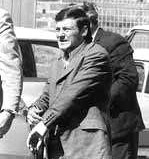
Archibald McCafferty
Serial killer Christopher Worrell
Serial killer · Australia · 1976
Christopher Worrell was described as a rapist and was later killed in a car acc…
7 victims
Christopher Worrell
Serial killer · Australia · 1976
Christopher Worrell was described as a rapist and was later killed in a car acc…
7 victims
 James William Miller
Serial killer · Australia · 1976
James William Miller was convicted of six counts of murder in the Truro murders…
7 victims
James William Miller
Serial killer · Australia · 1976
James William Miller was convicted of six counts of murder in the Truro murders…
7 victims
 Paul Steven Haigh
Serial killer · Australia · 1978
Paul Steven Haigh was an Australian serial killer. · 1978 — After being paroled…
7 victims
Paul Steven Haigh
Serial killer · Australia · 1978
Paul Steven Haigh was an Australian serial killer. · 1978 — After being paroled…
7 victims
 Gregory John Brazel
Serial killer · Australia · 1982
Gregory John “Bluey” Brazel was an Australian arsonist and armed robber who was…
3 victims
Gregory John Brazel
Serial killer · Australia · 1982
Gregory John “Bluey” Brazel was an Australian arsonist and armed robber who was…
3 victims
 John Justin Bunting
Serial killer · Australia · 1992
John Justin Bunting (born 4 September 1966 in Inala, Queensland) was an Austral…
11 victims
John Justin Bunting
Serial killer · Australia · 1992
John Justin Bunting (born 4 September 1966 in Inala, Queensland) was an Austral…
11 victims
 John Lynch
Serial killer · Australia · 1835
John Lynch murdered multiple people in the Berrima district in New South Wales,…
10 victims
John Lynch
Serial killer · Australia · 1835
John Lynch murdered multiple people in the Berrima district in New South Wales,…
10 victims
 Paul Bernardo
Serial killer · Canada · 1990
Paul Kenneth Bernardo (born August 27, 1964 in Toronto, Ontario) was a Canadian…
3 victims
Paul Bernardo
Serial killer · Canada · 1990
Paul Kenneth Bernardo (born August 27, 1964 in Toronto, Ontario) was a Canadian…
3 victims
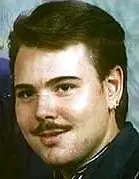 Brian Lee Cherrix
Murderer · USA · 1994
January 27, 1994 — Tessa Van Hart worked as a pizza delivery person on Chincote…
1 victim
Brian Lee Cherrix
Murderer · USA · 1994
January 27, 1994 — Tessa Van Hart worked as a pizza delivery person on Chincote…
1 victim
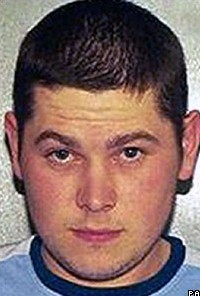 Trevor William Hamilton
Murderer · United Kingdom · 2003
Trevor William Hamilton was convicted of the murder of Bridgit Attracta Harron…
1 victim
Trevor William Hamilton
Murderer · United Kingdom · 2003
Trevor William Hamilton was convicted of the murder of Bridgit Attracta Harron…
1 victim
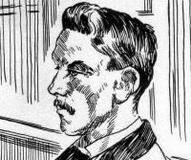 Herbert John Bennett
Murderer · United Kingdom · 1900
Herbert John Bennett was convicted of murdering his wife, Mrs Bennett. · 22 Jul…
1 victim
Herbert John Bennett
Murderer · United Kingdom · 1900
Herbert John Bennett was convicted of murdering his wife, Mrs Bennett. · 22 Jul…
1 victim
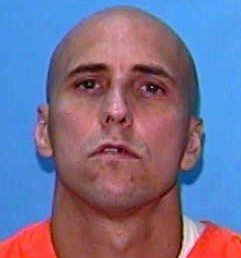 Paul Anthony Brown
Murderer · 1992
Paul Anthony Brown was convicted and sentenced to death for the murder of Roger…
1 victim
Paul Anthony Brown
Murderer · 1992
Paul Anthony Brown was convicted and sentenced to death for the murder of Roger…
1 victim
- Gender
- male
- Country
- Australia
- Location
- Australia
- Date of birth
- 1948
- Age at first offence
- 25
- Characteristics
- murder for hire, motive unknown, former mental patient, drug addict, escape attempt, fugitive
- Victim profile
- George Anson , 50 / Ronald Neil Cox , 42 / Evangelos Kollias , 24 / Edward James Lloyd (fellow prison inmate)
- Method of murder
- Shooting - St abbing with knife
- Date(s) of murder
- 1973 / 1982
- Years active
- 1973–1982
- Date of arrest
- —
- Status
-
Released
Sentenced to three life sentences in 1974; released and deported to Scotland on May 1, 1997
Case record: Archibald McCafferty
Status
Archibald Beattie McCafferty was sentenced to three life sentences in 1974 and was released and deported to Scotland on May 1, 1997.
The people
- Archibald “Mad Dog” Beattie McCafferty — multiple killer; convicted of murders and sentenced to life imprisonment terms; later deported to Scotland.
- Janice McCafferty — wife; was accused by McCafferty of murdering their son; appeared at the inquest into their son’s death; survived the killings and later faced threatening notes.
- Craig Archibald — McCafferty’s son; died at six weeks old.
- Carol Ellen Howes — 26-year-old woman McCafferty lived with; co-accused; found not guilty on all counts.
- Julie Ann Todd — 16-year-old at the time of the murders; co-accused; found guilty and sentenced to prison.
- Michael John (“Mick”) Meredith — 17-year-old co-accused; found guilty of murders of Ronald Cox and Evangelos Kollias; sentenced to 18 years in prison.
- Richard William (“Dick”) Whittington — 17-year-old co-accused; found guilty of murders of Ronald Cox and Evangelos Kollias; sentenced to 18 years in prison.
- Donald Richard (“Rick”) Webster — 17-year-old co-accused; found guilty of manslaughter of Ronald Cox; sentenced to four years in prison.
- George Anson — 50-year-old World War II veteran; newspaper seller outside the Canterbury Hotel; killed.
- Ronald Neil Cox — 42-year-old miner; forced at gunpoint to the cemetery; killed.
- Evangelos Kollias — 24-year-old driving instructor; killed.
- Bill Riean — Bill Riean was named as Janice McCafferty’s mother’s boyfriend in threatening notes.
- Philip Morrice — British Consul-General; said Britain had no choice but to accept the deportation decision.
- Lesley Cox — daughter of one of the victims; reacted outside court to the parole decision.
- Paul Barry — presenter of Australia’s current affairs program {Witness}; interviewed McCafferty shortly after his arrival back in Scotland.
- Mr John Dunn — coroner who held the inquest into Craig’s death.
- Mr Justice Wood — judge before whom McCafferty’s parole application was heard in October 1991.
- Detective Sergeant K. Aldridge — detective who approached a vehicle outside the Sydney Morning Herald building.
- Mr Bannon — barrister acting for one of McCafferty’s co-accused.
- Kevin Michael Gallagher — co-accused in the 1981 prison murder of Edward James Lloyd; eventually found guilty.
- Edward James Lloyd — murdered in his cell in September 1981.
- Mandy Queen — woman McCafferty married and later divorced while in jail in New South Wales; later remarried him in Scotland in October 1998.
- Leslie Cox — daughter of one of his victims.
- Michael Newton — author referenced in a listed work title: “Michael Newton - An Encyclopedia of Modern Serial Killers - Hunting Humans”.
Timeline
- April 20, 1997 — Parole was granted.
- April 19, 1997 — It was announced that McCafferty was to be released from prison on parole after serving 23 years.
- April 23, 1997 — His last appeal to the Administrative Appeals Tribunal against a deportation order by the Australian government was lost.
- May 1, 1997 — McCafferty was escorted onto a plane by two police officers and sent to Scotland.
- October 1991 — McCafferty’s parole application was heard before Mr Justice Wood.
- 29 August 1993 — He became eligible for release on parole.
- April 1980 — Prison officers foiled an escape attempt by Archie at Grafton gaol.
- September 1981 — McCafferty was charged with the murder of Edward James Lloyd.
- November 1981 — McCafferty was caught-red-handed in his cell with 10 foil-wrapped packages containing heroin.
- 1987 — He was moved to the Long Bay Witness Protection Unit.
- 1973 — Craig died at six weeks old; the rampage later began after his death.
- 24 August 1973 — The inquest into Craig’s death was held; the killing began during the inquest date.
- 27 August 1973 — McCafferty took his gang to the Leppington cemetery.
- February 1974 — At a committal hearing leading up to his trial, McCafferty pleaded not guilty on insanity grounds.
- May 20, 1974 — Julie Todd was found hanged in a bathroom at Silverwater Detention Centre; she had just turned 17.
- 1974 — He was sentenced to three terms of life imprisonment.
- October 1998 — McCafferty was put on two years probation after threatening to kill police officers; he also was involved in additional court matters, and he was remarried to Mandy Queen in a secret ceremony in Scotland.
- Saturday, 17 March 1973 — Janice McCafferty took the baby to bed at 3.30am; she later awoke at 9am and the inquest testimony was given by her.
Background
Archibald “Mad Dog” Beattie McCafferty was an incarcerated multiple killer who remained in Australia for 23 years and was then released and deported to Scotland on May 1, 1997.
Childhood and early record
When McCafferty was ten, his parents migrated to Australia from Scotland. The family moved first to Melbourne and then to Bass Hill in Sydney’s western suburbs. He was in trouble with the police from the outset. By the time he was 12, he was placed in an institution for stealing. By the time he was 18, he had been in institutions five times and had been classed as an incorrigible juvenile delinquent.
At 24, he had been in and out of jail many times and had a record of thirty-five convictions including break, enter and steal, stealing cars, larceny, assault, vagrancy and receiving stolen goods. His assault charges arose from fist fights with the police, but none of his other crimes involved violence. He loved movies that “overdosed on aggression and brutality,” including A Clockwork Orange and The Godfather, and he saw them many times.
Medical and psychiatric history
McCafferty had been in and out of psychiatric hospitals. He tried to get treatment repeatedly and discharged himself. In prison, prison psychiatrists regarded him as extremely dangerous and noted fits of mental disturbance during periods in which he was moved repeatedly.
Three psychiatrists gave opinions about McCafferty’s mental state around trial:
- Dr William Metcalf testified for the defence, saying that McCafferty was insane at the time of the killings because he did not know what he was doing was wrong, and that he was a paranoid schizophrenic at the time of the killings.
- Dr Oscar Schmalzbach testified for the prosecution, saying: “In my view McCafferty knew at the time that what he was doing was wrong. He may have had an isolated schizophrenic reaction at the time of the second killing but this did not make him a paranoid schizophrenic. Such an illness does not exist one day and disappear another day and come back the third day.”
- A third psychiatrist who examined McCafferty after the killings did not give evidence, but took a middle view that McCafferty was insane while also knowing what he was doing at the time of the killings.
Although the psychiatrists could not agree on sanity, they were united in the opinion that McCafferty could never again be set free and they agreed he was an extreme danger to the community.
Relationships and events before the offences
McCafferty fell in love with and married Janice Redington in April 1972. The couple met at a hotel where Janice worked part-time as a switchboard operator. The marriage was only six weeks old when Janice caught her husband in bed with another woman. McCafferty’s response was violent and it prompted his first visit to a psychiatric hospital. After discharging himself, he threw away his sedatives, started drinking heavily, and took out his aggression on Janice.
Janice was pregnant. McCafferty repeatedly bashed her when he was drunk. He pressed his thumbs against her windpipe and only let go when she was about to lapse into unconsciousness. One night when he nearly killed Janice, he booked himself back into the hospital and told psychiatrists that he wanted to kill his wife and her family. He said he wanted to get the evil thoughts out of his head, but discharged himself a few days later.
After discharge, he again went straight back on drink and his drug intake increased. Fits of uncontrollable violence continued. He got a job on a garbage truck, which pacified him for short time during the days, but at night he was getting worse.
Craig’s birth and death
McCafferty’s mother claimed that the birth of his son, Craig Archibald on 4 February 1973 turned McCafferty into a different person; Janice did not agree and said he was still drinking heavily and taking drugs. Janice was terrified to take the baby in the car, fearing Archie would have an accident and kill them all.
Little Craig lived only six weeks. At 3.30am on Saturday, 17 March 1973, Janice took the baby to bed with them to feed him. She dozed off and awoke at 9am. At the inquest into the baby’s death, Janice testified: “I felt something underneath me in the bed. I jumped straight out of bed and I saw the baby’s face and realised something was terribly wrong. There was blood on his face and on my nightie. My bra was still undone. I must have rolled over to my left and rolled onto my baby.”
At the inquest held on 24 August 1973, the coroner, Mr John Dunn, said that the child had died accidentally when his mother went to sleep on top of him while breast-feeding. He exonerated Janice, and said: “I must say in the interests of the welfare of the young mother, I cannot find anything to be critical of her for what happened.”
McCafferty did not agree. He left Janice a week after the tragedy and did not attend the inquest into his son’s death. He sent a scathing letter to the coroner, accusing Janice of murdering their son.
The offender’s obsession and preparation
McCafferty became obsessed with the number seven. He claimed that his dead son’s voice told him he would be born again if seven people were killed. He remained obsessed with the number seven in prison, writing an autobiography titled “Seven Shall Die.”
McCafferty had a passion for tattoos. Visits to a tattooist were like seeing his therapist. The tattooist knew his secrets, advised him, and McCafferty admired his opinions. He had more than 200 tattoos. Prison officers photographing his identifying marks used many rolls of film. He had stars tattooed on his ear lobes. He disliked the “nick” (prison) tattoos and covered them with “proper” ones when out of prison.
Two tattoos said:
- “The man who puts another man under lock and key is not born of woman’s womb”
- “kill and hate cops”
He had drawings of two bulldogs on his chest and two sharks on each shoulder. He had eyes tattooed on each of his buttocks. The bottom half of his body was covered with drawings depicting love and sex.
McCafferty had saved a space on his chest for a special tattoo. Until his son was killed, he did not know what that tattoo would be. After discharging himself from Parramatta Psychiatric Centre, he got a memorial etched onto that spot: a cross-shaped tombstone embedded in a blood-red rose inscribed: “In Memory of Craig”
Several weeks later he returned to the tattooist to get his favourite number 7 tattooed on the web between his thumb and forefinger. The number was tattooed next to the head of a snarling panther. He chose that number for two reasons: he decided that seven people must die to avenge his son’s death and it was his lucky number. He did everything in sevens.
Threats and notes before the rampage
On 23 August 1973, the night before the inquest into Craig’s death, two bricks with notes wrapped around them were tossed through the window of Janice McCafferty’s home in Blacktown. The first note read: “You and the rest of your family can go and get fucked because anyone who has anything to do with me is going to die of a bad death. You know who this letter is from so take warning because Bill is the next cab off the rank. Then you go one by one”. It was signed “you know who”.
“Bill” was Bill Riean, Janice McCafferty’s mother’s boyfriend.
The second note read: “The only thing in my mind is to kill you, your mother and Bill Riean. This is not a bluff because I’m that dirty on all of you for the death of my son, but I can’t let it go at that. I have a matter of a few guns so I’m going to use them on you all for satisfaction. Beware.”
The offence(s): murders and related events
Formation of a gang and co-accused
A week earlier, McCafferty formed a gang out of teenagers and others including Carol Ellen Howes (a 26-year-old woman he was living with) and Julie Ann Todd (16 years old). He met Howes and Todd while he was a patient at Parramatta Psychiatric Centre.
Carol Howes was the mother of three children aged from four to seven and was separated from her husband. In the previous two years, Carol had made three attempts on her own life by taking large doses of sleeping tablets. She told Archie that she intended to try to kill herself again; he talked her out of it. They moved into a flat in Earlwood in the inner western suburb.
Julie Todd met them both at the Centre while she was being treated for mental disorders. McCafferty took her in with them when she had nowhere else to go.
McCafferty was living with Howes and Todd at the time of the murders. The gang included:
- Michael John (“Mick”) Meredith and Richard William (“Dick”) Whittington, both 17-year-olds, whom McCafferty met at a Bankstown tattooist’s a few days earlier; they had a couple of rifles.
- 17-year-old Donald Richard (“Rick”) Webster, whom McCafferty met only days earlier through his brother.
Led by McCafferty, the gang chose their first victim.
Murder of George Anson (Canterbury Hotel area)
George Anson was a 50-year-old World War II veteran and newspaper seller outside the Canterbury Hotel. Each evening after work he drank at the hotel. Just after closing time on the evening of August 24, 1973, Anson was spotted by the gang as he staggered down the street toward his home. The gang had been cruising in a stolen Volkswagen looking for someone to beat up and rob. McCafferty was “flying high on angel dust.”
McCafferty grabbed Anson around the throat. Anson called out: ‘You young cunt’. Those were the last words he would ever say. McCafferty went berserk and kicked Anson repeatedly in the head and ribs. The narrative then states that Archie heard a voice for the first time: ‘Kill seven. Kill seven. Kill, kill, kill...’
Anson was kneeling in the gutter when McCafferty produced a knife and plunged it into his back and neck seven times. McCafferty gave the dying man one final kick in the face before running back to the car.
Rick Webster questioned the act: ‘Why the fuck did you do that?’ ‘I stabbed him because he called me a young cunt. Now drive, you fucking idiot,’ McCafferty screamed at the terrified teenager.
The narrative states that no further discussion of the killing took place until they returned to the flat. On the way, they went to Hartee’s drive-in fast-food bar, ordered hamburgers, and McCafferty cleaned up in the men’s room.
Murder of Ronald Neil Cox (Leppington cemetery)
Three nights later on 27 August 1973, McCafferty took his gang to the Leppington cemetery to show them the grave of his son. The narrative says Howes stated they would sit at the grave and Archie sobbed and said things including: ‘The poor little bloke. He never stood a chance. It’s not fair. It's not, bloody fair.’
On that night, McCafferty was off his face on angel dust again. The narrative states the voice came from the grave repeating “Kill seven,” and McCafferty instructed the gang to take him back to the cemetery. Along the way they dropped Julie Todd and Mick Meredith off to hitchhike, with the plan that a car stopping would be forced at gunpoint to drive to the cemetery and the gang would rob the driver.
Back at the cemetery, a figure stood just out of the light. McCafferty approached it and asked: ‘Dad. Is that you Dad?’ It replied: ‘Yes Dad, it’s me,’ McCafferty asked: ‘But son, it can’t be. You’re dead.’ The voice replied: ‘Do you want me to come back to you, Dad?’ McCafferty said: ‘Of course I do. But how can you do that, son?’ The voice said: ‘You’ve got to do something for me, Dad. Do this thing and I will come back to you. Do you want me to come back to you?’ McCafferty said: ‘Yes. Yes. More than anything in the world. I will do anything to have you back. Anything. Anything you ask.’ The voice said: ‘You must kill seven people. As soon as you do, you can have me back. But you must kill seven people. Kill seven. Kill seven. Kill seven.……’
A car pulled into the cemetery about 150 metres from the graveside, and Julie Todd and Mick Meredith were in it holding 42-year-old Ronald Neil Cox at gunpoint. The narrative identifies Cox as a miner who had finished his shift at the Oakdale colliery and was on his way home to Villawood in Sydney’s western suburbs. Cox had stopped to give the two hitchhikers a lift.
McCafferty ran over to them. Cox was forced to lie face down in the mud while McCafferty and Meredith held rifles at the back of Cox’s head. Cox begged for his life. The narrative again says that the voices urged: ‘Kill seven. Kill seven. Kill seven…….’
McCafferty turned to his gang and said: ‘I’ll have to knock him. He's seen all of our faces. Mick ... kill him.’ The narrative includes an additional exchange: ‘What are you saying Archie?’ ‘Fuck you. Kill him’ said the demented Archie.
Cox begged for his life and said he was the father of seven children. At mention of “seven,” Cox was shot by McCafferty and Meredith, described as shooting him through the back of the head. The narrative states that McCafferty later told detectives his only regret about murdering Cox was that Cox wasn’t closer to the grave so that some of Cox’s blood could have dripped onto the plaque.
Killing and plan involving Evangelos Kollias
After the killing of Cox, the gang returned to the McCafferty unit, drank beer and watched TV. McCafferty continued to hear voices telling him to “Kill seven.” He instructed two gang members to find another victim.
In the early hours of the following morning, 24-year-old driving instructor Evangelos Kollias picked up Julie Todd and Dick Whittington as they hitchhiked along Enmore Road. Whittington produced a .22 rifle from under his coat. The narrative states that Kollias was forced into the back seat and told to lie on the floor while Julie drove back to the flat.
The narrative states that McCafferty took over, drove, and the gang set off for Liverpool on the pretext of looking for a factory to rob, while Kollias was told to lie low so he would not see where they were going. McCafferty’s plan was to kill Kollias and then drive to Blacktown to kill Janice McCafferty, her mother and her mother’s boyfriend, making six victims. The narrative states the seventh victim was to be Rick Webster, with McCafferty believing Webster would betray him to the police.
McCafferty told Whittington to kill Kollias. Whittington wasn’t sure he could but as Kollias woke, Whittington held the sawn off .22 rifle to his head and pulled the trigger. The narrative says: ‘Shoot him again urged McCafferty.’ Whittington put another bullet into Kollias’ head. The narrative states they dumped the body in a deserted street nearby.
Plan changes after petrol shortage; further intended murders
When McCafferty realised Kollias’ car didn’t have enough petrol to get to his wife’s house, he abandoned the plan to murder Janice and her family for that night. He still intended to murder them the next three victims. The narrative states that if Rick Webster hadn’t lived up to McCafferty’s suspicions and gone to the police, McCafferty would have killed Webster and others.
Police involvement at Sydney Morning Herald
The narrative states Rick Webster was on Archie’s hit list, told another gang member that he would tell police, and decided to do so. McCafferty, Whittington and Meredith followed Webster to the Sydney Morning Herald newspaper building where he worked as an apprentice compositor.
They sat in a stolen van out the front of the Herald building with loaded rifles ready to kill Webster when he came out. Webster saw them waiting and had a reporter call police.
Detectives arrived and Webster told them he was too terrified to leave the building. The area was sealed off. Heavily armed detectives surrounded the vehicle while Detective Sergeant K. Aldridge approached it and pointed his revolver at Michael Meredith. Other detectives rushed the vehicle and apprehended McCafferty and Whittington and took possession of two loaded and cocked rifles.
On the way to the police station, McCafferty told police: ‘All right, I knocked the bloke at Canterbury. I knocked the bloke at Leppington. And I knocked the bloke at Merrylands. I knocked all three of them.’
The narrative states he also made no less a secret that he would kill again.
Investigation and arrest
The narrative describes police arriving at the Sydney Morning Herald building after a reporter call. It also states that detectives sealed off the area and apprehended McCafferty and Whittington after the stolen van was surrounded. Two loaded and cocked rifles were seized.
McCafferty’s statement on the way to the police station preserved three victims’ locations in his own wording: ‘I knocked the bloke at Canterbury. I knocked all three of them.’
Trial
Charges and pleas
At his sensational committal hearing leading up to his trial in February 1974, McCafferty pleaded not guilty to three counts of murder on the grounds of insanity. His five co-accused — Todd, Howe, Meredith, Whittington and Webster — pleaded not guilty to the same charges.
At the committal hearing on the fourth morning, McCafferty asked the judge if he could make a statement and the judge allowed it. McCafferty said: “Excuse me your worship, before the court starts, for the last four days I’ve sat here and listened to Mr Bannon criticising me on things that I’ve done. Now I've been wanting to say this for a long time, and I’m going to say it this morning. Mr Bannon, if you’re listening, Id like to cut your head off.”
During the committal hearing and subsequent trial at the Central Criminal Court, the narrative states McCafferty was given a heavy dose of tranquillisers each day to subdue his uncontrollable outbreaks of violence. It also states that during his time awaiting trial in Long Bay’s remand section he nearly killed another prisoner with his slops bucket and required sedatives; prison doctors increased dosage until it took effect. It says his daily dosage of 1500 milligrams of Largactil was almost four times the normal dose of 400 milligrams. It says prison psychiatrists agreed his incredible tolerance was evidence of insanity.
Defence and psychiatric evidence
The defence psychiatric opinion was attributed to Dr William Metcalf, who said McCafferty was insane because he did not know what he was doing was wrong and that he was a paranoid schizophrenic at the time of the killings.
The prosecution psychiatric opinion was attributed to Dr Oscar Schmalzbach, who said: “In my view McCafferty knew at the time that what he was doing was wrong.
A third psychiatrist who examined McCafferty after the killings did not give evidence, and the narrative states the middle view was that McCafferty was insane but knew what he was doing.
McCafferty’s statement from the dock
At trial, McCafferty read a statement. It was: “Your Honour and gentlemen of the jury. Firstly, I would like to say that at the time of these crimes I was completely insane. The reason why I done this is for the revenge of my son’s death. That is what made me do it. “Before this I had stated to a doctor that I felt like killing people, but up until my son’s death I had not killed anyone. “My son's death was the biggest thing that ever happened to me, because I loved him so much - and he meant the world to me and after his death I just seemed to go to the pack. “I feel no wrong for what I have done because at the time that I did it I didn't think it was wrong. But after my son was killed I tried to kill my wife and I was admitted into Parramatta Psychiatric Home because I knew I needed treatment. So I signed myself in and I was there for a number of weeks. “I think, if given the chance, I will kill again, for the simple reason that I have to kill seven people, and I have only killed three, which means I have four to go, and this is how I feel in my mind, and I just can't say that I am not going to kill anyone else, because in my mind I am. “Whether you think I am sane or insane is up to youse [sic] but I would say that I was definitely insane at the night of these murders. The day of my son’s inquest at the Coroner’s Court happened to be the day that I stabbed Mr Anson. The reason why I killed this man was because I heard my son’s voice tell me to do so. The same with the second and third person. “Each time I went to the graveyard to visit my son’s grave a violent streak would come over me and I wanted to be so violent I wanted to kill people. I kept hearing voices, not only my son’s voice, but other voices as well, which I don’t know whose they are. “On the Thursday that I was apprehended I had every intention of killing Rick Webster as I heard the voices to tell me to do so and anyone else that the voices tell me to kill I would kill until I reached the figure seven. “I still say I felt no wrong in what I have done and I am still willing to kill anyone else that I am told to kill. At the time of my son’s death I took it pretty hard and since then I have not been the same because I loved him so much and I believe in my own mind that my wife murdered him on purpose and that is why I killed these men, for the revenge of my son's death. “And this is the honest truth. So I hope that the jury and Your Honour will believe what I said. That’s it.”
Verdicts
The narrative states:
- Mick Meredith and Dick Whittington were found guilty of the murders of Ronald Cox and Evangelos Kollias and sentenced to 18 years in prison.
- Richard Webster was found guilty of the manslaughter of Cox and sentenced to four years in prison.
- Julie Todd was found guilty of murdering Cox and Kollias and sent to prison for ten years.
- Carol Howes was found not guilty on all counts.
- The jury chose to believe that Archie was not crazy and returned a verdict of guilty on all counts.
- McCafferty was sentenced to three life sentences.
Sentencing
After the verdict:
- McCafferty received three terms of life imprisonment.
- Mick Meredith and Dick Whittington received 18 years in prison each.
- Richard Webster received four years in prison for manslaughter of Cox.
- Julie Todd received a prison sentence of ten years.
Julie Todd’s death in custody
On May 20, 1974, Julie Todd was found hanged in a bathroom at Silverwater Detention Centre. She had just turned 17.
Carol Howes’s statements
The narrative describes a promise made from the dock to McCafferty after the verdict, but the promise is attributed to Howes: “I’ll wait for you Archie,” she sobbed. “No matter what, I’ll always be waiting for you with our child.”
The narrative states Howes immediately moved into the Blacktown house of Archie McCafferty’s parents to have their grandchild. It also states she was eight months pregnant with McCafferty’s child when the verdict was handed down.
Outcome and post-release events
Parole and deportation
McCafferty’s parole application was heard before Mr Justice Wood in October 1991. The judge granted a 20-year parole period dating from 30 August 1973. McCafferty became eligible for release on parole on 29 August 1993.
Over the years, parole was rejected each year when he applied to be released. The narrative then states that anger subsided and he was considered safe enough for placement at Berrima minimum security prison south of Sydney. For the last four years of incarceration, he was allowed to visit and stay with the family of his brother and his wife and children from Friday nights to Sunday nights without supervision.
He was also allowed to leave prison each day for six days a week on work release until the parole board agreed he was changed and no longer a danger to society. The only condition of parole was that he would be deported.
Parole was granted on April 20, 1997, amid protests from Scottish authorities. Philip Morrice, the British Consul-General, said: “Britain had no choice but to accept the decision to deport McCafferty.”
McCafferty appealed against the move. At the hearing he apologised to relatives of his victims and said he was “out of touch with reality” at the time of the killings. He also said: “I realise the chaos and trauma I have created,” “I killed three fathers and for that I am truly sorry. If I could give my life to bring your fathers back I would do that gladly.”
Outside the courtroom, Lesley Cox, the daughter of one of the victims, wept and said she was “frightened and terrified” by the parole decision.
On April 23, 1997, McCafferty lost his last appeal to the Administrative Appeals Tribunal against a deportation order by the Australian government.
On May 1, 1997, McCafferty was escorted onto a plane by two police officers and sent to Scotland, a place the narrative says he had no desire to live in. The narrative states Scottish authorities said they would have to house him if he returned to Glasgow and that there were fears of a lynch-mob if the public discovered his whereabouts. It also states victims’ families believed he was not a changed man and that there was every possibility he would kill again.
Return to Scotland and later legal matters
Off the plane back in Scotland, the narrative states McCafferty was reunited with Mandy Queen, whom he had married and then divorced while in jail in New South Wales. Shortly after arrival, McCafferty was interviewed by Australia’s current affairs program {Witness} and told presenter Paul Barry: “I’ve come out of the system a good person. A changed person. I believe that people change.”
He then toasted his freedom with a glass of champagne with Mandy Queen and said: “This is my first drink since 1973. But now there is no need for alcohol in my life. It is a thing of the past. I don’t need it.”
In October 1998, McCafferty was put on two years probation after threatening to kill police officers. The narrative states the threats occurred after a car chase near Edinburgh following a drinking session and an argument with his de-facto wife, Mandy, who complained he had left home with their four-month-old baby.
In Edinburgh Sheriff Court, he pleaded guilty to careless driving, driving with no license or insurance, failing to provide a breath specimen and breach of the peace. The court did not take into consideration his previous convictions because they were considered foreign offences which did not occur in Britain.
The narrative states McCafferty and Mandy Queen were remarried in a secret ceremony in Scotland in October 1998.
Other details
Killing of a fellow-prisoner
The narrative states that eight years after the trial he killed a fellow-prisoner, leaving three killings pending.
Escape attempt and heroin possession
The narrative states that in April 1980 warders foiled an escape attempt by McCafferty at Grafton gaol. It says he had loosened bricks in his cell before prison officers were tipped off and his escape route was discovered. At the time prison officers said McCafferty was probably the worst criminal in the state’s gaols.
In November 1981, the narrative states McCafferty was caught-red-handed in his cell with 10 foil-wrapped packages containing heroin. The judge sentenced him to another three years imprisonment.
Murder charge in prison and sentence outcome for manslaughter
The narrative states that in September 1981 McCafferty was charged with the murder of Edward James Lloyd, stabbed to death in his cell, and that his co-accused Kevin Michael Gallagher was eventually found guilty of the murder. It states it was proved McCafferty was present while the murder took place and that, though he denied charges, he was found guilty of manslaughter and given a further fourteen years.
Transferring and witness protection
The narrative states he was transferred between jails for his own protection and that he was eventually moved to the Long Bay Witness Protection Unit in 1987. It says he was classified as a “supergrass” and a price had been placed on his head. The narrative states that in the Witness Protection Unit he was revisited by delusions about his dead son, and prison psychiatrists put it down to sniffing solvents and petroleum and extreme depression at lack of prospects for release. It also says as no parole period had been given, it was clear to him he would spend the rest of his life behind bars.
Prior framing claim
The narrative states that after the manslaughter sentence in relation to Edward James Lloyd, McCafferty protested vehemently, claiming he had been framed, and named those he believed were responsible to authorities.
Allegations about prison murders
The narrative states police believe McCafferty was a member of the secret “murder squad” behind the walls of Parramatta Jail and that they believed the group was responsible for four murders within the prison.
Note on parole release and deportation argument
The narrative states that Britain had no choice but to accept the decision to deport McCafferty, though the prisoner appealed against the move.
Current status
McCafferty was deported to Scotland on May 1, 1997, and later faced legal proceedings in Edinburgh including guilty pleas to driving and other charges in October 1998, along with probation following threats against police officers.
Categorisation in the provided record
The provided record includes “DISPOSITION: three life terms, 1974; released and deported, 1997.” It also includes a line about motive and method: “Motive unclear” and “Killed four men, allegedly on orders from his dead son; killed fellow prison inmate.” It also includes “DISPOSITION” and a “SEX: M RACE: W TYPE: T MOTIVE: PC-nonspecific MO: Killed four men, allegedly on orders from his dead son; killed fellow prison inmate.”
Spotted an error, or have more information about this case?