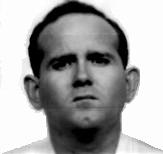
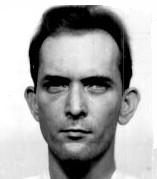
Alvin Wayne Crane
Murderer Brian Kevin Rosenfeld
Murderer · USA · 1985
Brian Kevin Rosenfeld Brian Kevin Rosenfeld was sentenced to three concurrent l…
23 victims
Brian Kevin Rosenfeld
Murderer · USA · 1985
Brian Kevin Rosenfeld Brian Kevin Rosenfeld was sentenced to three concurrent l…
23 victims
 Yahweh ben Yahweh
Murderer · USA · 1980
Yahweh ben Yahweh was born and legally named Hulon Mitchell Jr. (October 27, 19…
23 victims
Yahweh ben Yahweh
Murderer · USA · 1980
Yahweh ben Yahweh was born and legally named Hulon Mitchell Jr. (October 27, 19…
23 victims
 Russell Ellwood
Murderer · USA · 1991
Russell Ellwood was a former taxi driver. Authorities suspected him of killing…
20 victims
Russell Ellwood
Murderer · USA · 1991
Russell Ellwood was a former taxi driver. Authorities suspected him of killing…
20 victims
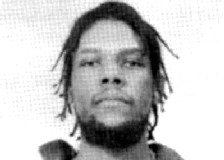 Michael William Daniels
Murderer · USA · 1978
January 16, 1978 — Michael Daniels and two other men committed a series hold-up…
1 victim
Michael William Daniels
Murderer · USA · 1978
January 16, 1978 — Michael Daniels and two other men committed a series hold-up…
1 victim
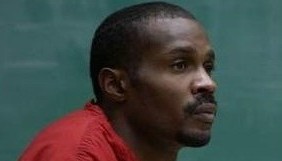 Matthew Macon
Serial killer · USA · 2004
Matthew Emmanuel Macon was 27 when police said he was suspected of killing five…
6 victims
Matthew Macon
Serial killer · USA · 2004
Matthew Emmanuel Macon was 27 when police said he was suspected of killing five…
6 victims
 John O'Shaughnessy
Murderer · United Kingdom · 1996
John O'Shaughnessy was born in 1965 in Chester, England. He was 31 at the time…
1 victim
John O'Shaughnessy
Murderer · United Kingdom · 1996
John O'Shaughnessy was born in 1965 in Chester, England. He was 31 at the time…
1 victim
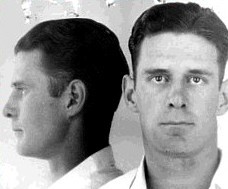 Roland Cochrane
Murderer · USA · 1935
Roland H. Cochrane was an inmate identified in the case as Inmate 009880. · Def…
1 victim
Roland Cochrane
Murderer · USA · 1935
Roland H. Cochrane was an inmate identified in the case as Inmate 009880. · Def…
1 victim
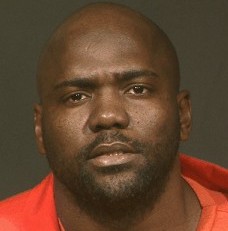 Fabio Evelio Gomez
Murderer · USA · 1999
Fabio Evelio Gomez was sentenced to death on June 5, 2003. He was convicted in…
1 victim
Fabio Evelio Gomez
Murderer · USA · 1999
Fabio Evelio Gomez was sentenced to death on June 5, 2003. He was convicted in…
1 victim
- Gender
- male
- Country
- USA
- Location
- Denton County, Texas, USA
- Date of birth
- May 6, 1958
- Age at first offence
- 29
- Characteristics
- abuse, to avoid arrest
- Victim profile
- Melvin Kenneth Drum, 57 (the Chief Deputy Sheriff of Ochiltree County)
- Method of murder
- Shooting
- Date(s) of murder
- March 28, 1987
- Years active
- 1987
- Date of arrest
- Same day
- Status
-
Executed
Executed by lethal injection in Texas on October 12, 1999
Case record: Alvin Wayne Crane
Status
Alvin Wayne Crane was executed by lethal injection in Texas on October 12, 1999.
Timeline
- March 28, 1987 — Alvin Wayne Crane fatally shot Melvin Drum, the Chief Deputy Sheriff of Ochiltree County, Texas, with a single shotgun blast to the face.
- 1981 — Crane experienced a motorcycle accident that he later contended left him mentally impaired.
- November 13, 1987 — Crane was tried and convicted of capital murder in Texas state court.
- November 28, 1990 — Crane filed his first petition for writ of habeas corpus in state court.
- March 11, 1992 — The Texas Court of Criminal Appeals denied habeas relief on Crane’s first state habeas petition.
- January 11, 1993 — The United States Supreme Court denied Crane’s petition for a writ of certiorari.
- April 19, 1994 — The Texas Court of Criminal Appeals denied relief on Crane’s second petition for writ of habeas corpus.
- October 31, 1994 — The United States Supreme Court again denied Crane’s petition for a writ of certiorari.
- February 1995 — Crane filed his present petition for writ of habeas corpus in federal district court.
- June 8, 1999 — The United States Court of Appeals for the Fifth Circuit decided Crane’s appeal; the court denied a certificate of probable cause and vacated the stay of execution.
- October 12, 1999 — Crane was executed by lethal injection in Texas.
Background
Alvin Wayne Crane was executed in Texas at age 41. His condemned-inmate number was “#888.” He had last statement made before execution in which he apologized to his family.
The case involved a domestic dispute. The Texas Court of Criminal Appeals and the United States Court of Appeals for the Fifth Circuit described Crane as convicted of murder and sentenced to death by a Texas state court.
Crane had prior criminal history involving assault and probation. Oklahoma authorities gave information about Crane after he was given probation for beating a school bus driver who had struck the Crane family dog while driving his bus. Oklahoma authorities also stated that Crane had been arrested for intent to deliver marijuana after police made an undercover drug buy at his home. Authorities also seized from his home an illegal machine gun and an illegal sawed-off shotgun.
Crane was already on probation for assaulting a school bus driver in Oklahoma before the killing of Deputy Melvin Drum.
The offence
On March 28, 1987, Crane was involved in a domestic dispute with his wife, Linda Crane, at his wife’s place of employment. Linda Crane worked as a practical nurse caring for a 91-year-old woman at the Spicer residence in Perryton, Texas.
Chief Deputy Melvin Drum was called to investigate the dispute. Drum drove to the Spicer residence in an unmarked vehicle and was out of uniform, but a red police light was flashing on the dashboard of the vehicle and his badge was dangling from his shirt pocket when he arrived in the early afternoon.
After Drum parked but before he was able to exit from the vehicle, Crane approached him and shot him with a shotgun.
The shooting made Melvin Drum the first Ochiltree County deputy to die in the line of duty.
Authorities described the confrontation as connected to family disturbances and a family feud, stating there were “super-hot feelings” and “hatred was vented toward the deputy” when Deputy Drum drove up.
Earlier that day, Crane used a shovel to break out the windows of his wife’s car after they argued.
In the appeals proceedings, Crane was described as having killed Drum in Texas with a shotgun blast to the face on the afternoon of March 28, 1987, in Perryton.
Investigation and arrest
Crane fled after shooting Deputy Melvin Drum. He was captured several hours later after a police chase in Beaver County, Oklahoma, near his home.
Oklahoma authorities knew Crane as an 8th-grade dropout. They stated they had previously given him probation for beating a school bus driver who struck the Crane family dog while driving his bus. They also stated he had been arrested for intent to deliver marijuana after an undercover drug buy at his home. They said they seized an illegal machine gun and an illegal sawed-off shotgun from his home.
Trial
Crane was tried and convicted of capital murder in Texas state court on November 13, 1987.
During the punishment phase, the State introduced evidence concerning Crane’s two convictions for delivery and possession of marijuana. The State also introduced evidence concerning Crane’s conviction on a misdemeanor assault charge. Crane introduced no evidence during the punishment phase.
The jury affirmatively answered required special issues under Tex. Code Crim. P. Ann. art. 37.071, including:
- whether the conduct of the defendant that caused the death of the deceased was committed deliberately and with the reasonable expectation that the death of the deceased or another would result;
- whether there was a probability that the defendant would commit criminal acts of violence that would constitute a continuing threat to society; and
- if raised by the evidence, whether the conduct of the defendant in killing the deceased was unreasonable in response to the provocation, if any, by the deceased.
Crane was sentenced to death after the jury affirmatively answered the special issues.
The Texas Court of Criminal Appeals affirmed the conviction and sentence. The decision cited was “Crane v. State, 786 S.W.2d 338 (Tex.Crim.App.1990).”
Sentencing
The jury sentenced Crane to death after affirmatively answering the special issues under Tex. Code Crim. P. Ann. art. 37.071.
Appeals
State habeas proceedings
Crane filed his first petition for writ of habeas corpus in state court on November 28, 1990. The trial court recommended that the petition be denied, and the Texas Court of Criminal Appeals denied habeas relief on March 11, 1992. The cited case was “Ex Parte Crane, No. 71,250 (Tex.Crim.App. March 11, 1992) (en banc) (per curiam).”
Crane filed a second petition for writ of habeas corpus in state court. The trial court entered findings of fact and conclusions of law recommending that relief be denied. The Court of Criminal Appeals adopted the trial court’s findings with three exceptions and denied relief on April 19, 1994. 21,704-04 (Tex.Crim.App. April 19, 1994) (en banc) (per curiam).”
United States Supreme Court certiorari denials
Crane’s petition for a writ of certiorari was denied by the United States Supreme Court on January 11, 1993, cited as “Crane v. Texas, 506 U.S. 1055, 113 S.Ct. 983, 122 L.Ed.2d 136 (1993).”
The United States Supreme Court again denied certiorari on October 31, 1994, cited as “Crane v. Texas, 513 U.S. 966, 115 S.Ct. 432, 130 L.Ed.2d 344 (1994).”
Federal habeas corpus and Fifth Circuit decision
Crane filed a federal petition for writ of habeas corpus in February 1995. The case was referred to a magistrate judge who conducted an evidentiary hearing and recommended denial. The district court adopted the recommendation and denied Crane’s claims. Crane filed a notice of appeal and applied for a certificate of probable cause (CPC). The district court denied the CPC.
The case reached the United States Court of Appeals for the Fifth Circuit, under the caption:
- “United States Court of Appeals for the Fifth Circuit 178 F.3d 304 Alvin Wayne CRANE, Petitioner-Appellant, v. Gary L. JOHNSON, Director, Texas Department of Criminal Justice, Institutional Division, Respondent-Appellee.”
On June 8, 1999, the Fifth Circuit decided that Crane failed to make a substantial showing of the denial of a federal right. The court:
- denied a certificate of probable cause (CPC);
- vacated the stay of execution.
Sixth Amendment effective counsel claim and analysis
Crane’s principal claim was that he was denied his Sixth Amendment right to effective counsel.
Crane argued that he received ineffective assistance because:
- trial counsel failed to investigate and present readily available evidence of Crane’s insanity at the time of the offense; and
- trial counsel failed to present mitigating evidence at the punishment phase.
The Fifth Circuit applied the Strickland standard for ineffective assistance of counsel, describing that a petitioner had to show deficient performance and prejudice such that the result would have been different.
Insanity defense investigation claim
Crane contended trial counsel failed to investigate and present evidence of insanity at the time of the offence. The claim was presented to state courts in Crane’s second state habeas application.
The state trial court entered detailed findings and recommended denial; the Texas Court of Criminal Appeals adopted findings with some exceptions. The Fifth Circuit described a finding adopted from the trial court:
[T]he Court finds that [Crane's] contention that his trial attorneys did not investigate a possible insanity defense for him is not true. The insanity defense was considered, investigated, and rejected by [Crane's] trial attorneys. It was rejected for a good reason--it was not a viable defense. The State has obtained numerous affidavits demonstrating that the insanity defense was investigated by defense counsel, and that any such insanity defense would have been spurious.
The Fifth Circuit described that trial counsel, Gene Storrs and Stephen Cross, investigated whether Crane’s injuries from a motorcycle accident in 1981 could have caused mental impairment interfering with Crane’s intentional and deliberate actions.
The court described specific examinations and decisions:
- trial counsel had the report of Dr. Michael Buben, who examined Crane while he was incarcerated in Ochiltree County, and which stated that Crane suffered from persistent, recurrent headaches over the right frontal region;
- trial counsel consulted Dr. Joseph Batson, a neurologist, who examined Crane in September 1987;
- Dr. Batson ordered a CT scan and an EEG, which failed to show abnormality;
- trial counsel decided they would introduce these medical records before the jury but would not further develop the insanity issue.
The Fifth Circuit described affidavits attached to the State’s answer to Crane’s second state habeas petition in which Gene Storrs and Stephen Cross stated they investigated the merits of raising an insanity defense but were not confident that the evidence was adequate.
The Fifth Circuit concluded that counsel’s decision not to present an insanity defense was a “conscious and informed” tactical decision due to lack of sufficient evidence and concern about opening the door to damaging testimony concerning Crane’s violent tendencies.
Punishment phase mitigating evidence claim
Crane also contended that trial counsel were ineffective for failing to present mitigating evidence at the punishment phase that was either known or should have been known, including family background and possible mental impairment.
The magistrate judge held an evidentiary hearing over two days and found trial counsel made a strategic decision not to introduce available mitigating evidence. The Fifth Circuit described that counsel believed their best chance was to obtain a favorable jury response on the “future dangerousness” issue and to preserve an objection on appeal that an affirmative answer to the future dangerousness issue was not supported by sufficient evidence. The court described counsel’s concern that the mitigating evidence would likely draw rebuttal evidence bolstering the State’s argument on future dangerousness.
The Fifth Circuit stated that failure to present mitigating evidence did not per se demonstrate ineffective assistance where based on well-informed strategic decisions.
The Fifth Circuit described trial counsel testimony:
- counsel was concerned about aggravating evidence of Crane’s alleged mental impairment because it would have revealed “rages” and “blackouts” accompanying the alleged impairment;
- counsel believed the State would call a psychiatrist to testify about Crane’s violent tendencies;
- Bruce Roberson, Ochiltree County Attorney, confirmed that the State would present psychiatric evidence, specifically testimony of Dr. James Grigson, to rebut evidence of Crane’s possible mental impairment presented by the defense.
The Fifth Circuit also described that the district court found Crane failed to show reliable evidence of mental impairment after hearing doctors at the evidentiary hearing.
As to family background, the Fifth Circuit described Gene Storrs’ testimony that the danger of family members testifying on cross-examination about Crane’s fits of rages and blackouts outweighed the benefits of family members saying they felt like Alvin Crane was a “nice man.”
The Fifth Circuit concluded that Crane failed to overcome the presumption that these informed tactical decisions were reasonable.
Expert appointment claim
Crane argued that trial counsel were ineffective for failing to have a confidential mental health expert appointed under Ake v. Oklahoma. The Fifth Circuit held the argument failed to take into account trial counsel’s primary reason for declining the line of defense and further held that Crane failed to demonstrate prejudice because he produced no persuasive psychiatric evidence in the district court that would have undermined confidence in the resulting verdict.
Additional habeas claims disposed of by agreement
The Fifth Circuit also addressed other claims that Crane argued, stating those claims were properly denied:
- denial of a mental health expert to determine competency at the time of the offense;
- the State failed to disclose or turn over exculpatory evidence;
- Texas special issues were unconstitutionally vague;
- the trial court erred in excusing for cause prospective juror Rita Solomon;
- the trial court erred in excluding certain evidence;
- the prosecutor made improper comments on Linda Crane’s failure to testify;
- Stephen Cross had a conflict of interest.
The Fifth Circuit agreed that the district court correctly denied habeas relief and stated that because Crane failed to make a substantial showing of a denial of a constitutional right, he was not entitled to a CPC.
Outcome
The Fifth Circuit denied a certificate of probable cause (CPC) and vacated the stay of execution on June 8, 1999. Crane was executed by lethal injection in Texas on October 12, 1999.
Execution details and last statement
Crane was pronounced dead at 6:23 p.m., 9 minutes after the flow of lethal drugs began. The last statement included an apology to the family and remarks to God.
The needle was inserted in Crane’s right arm. The tattoo on Crane’s right arm was described as a skull, located a few inches below where the needle was inserted.
As the drugs began taking effect, several of Crane’s family members sobbed as they watched through a window. The execution narrative described Crane smiling and nodding to them, then saying “Everything’s going to be just fine. I love you all.” After the drugs began taking effect, Crane was described as turning purple, letting out a long gasp, then two short gasps before slipping into unconsciousness.
Crane’s last statement was:
I would like to say a little something. I just want to say I'm sorry to the family. I know I caused you a lot of pain and suffering and I hope that you will find some peace and comfort in this. That if there is any anger you can let it go. Not let it come between you and God. Sorry for causing everybody such trouble tonight, Bruce, Joe, ya'll all treat me with respect I appreciate it. I really do. I just want to tell my family, everybody I love and I want you to know that I love you, and that God loves you too. Everything is going to be just fine, just fine. I love ya'll. That's it.
Other details
People identified in the case
- Alvin Wayne Crane — offender; convicted of capital murder; sentenced to death; executed by lethal injection in Texas.
- Melvin Drum — Chief Deputy Sheriff of Ochiltree County, Texas; victim.
- Linda Crane — Crane’s wife.
- Lisa Drum — deputy’s daughter-in-law.
- Sheriff Joe Hataway — sheriff; quoted about the murder.
- Bruce Roberson — County Attorney; prosecuted Crane.
- Gene Storrs — trial counsel.
- Stephen Cross — trial counsel.
- Dr. Michael Buben — examiner whose report trial counsel had.
- Dr. Joseph Batson — neurologist who examined Crane in September 1987.
- Dr. James Grigson — psychiatrist whom Roberson testified the State would use to rebut.
- Rita Solomon — prospective juror whose excusal for cause was claimed as error on appeal.
- Gary L. Johnson — respondent in the Fifth Circuit appeal.
Quotes included in the narrative
Lisa Drum said:
"I'm just relieved it's over," Lisa Drum, the deputy's daughter-in-law, said after watching the execution. "I don't think you totally recover. We'll still continue with our grieving."
Sheriff Joe Hataway said:
"We all know family disturbances are one of the most dangerous calls to make and that's what this was," said Sheriff Joe Hataway, who said Drum's murder cost him not only a deputy but a friend.
He also said:
"This was a family feud, there were super-hot feelings and when Deputy Drum drove up, the hatred was vented toward the deputy."
Bruce Roberson said:
"Melvin was more than a good friend," added County Attorney Bruce Roberson, who prosecuted Crane, the county's only condemned inmate.
He also said:
"He was one of those few people that really this entire community felt they could trust and rely on."
Roberson also said:
"I'm acquainted with Mr. Crane's family. I really don't take any joy or pleasure in his execution. His family has my sympathy but I think the nature of his crime, plus his persistent criminal behavior, I think the judgment of death imposed by the jury is fair and is just."
Hataway said:
"When Melvin drove up, he didn't even give him a chance," Hataway said.
Gene Storrs said the family background concern outweighed benefits, including that “nice man” view:
Gene Storrs testified that he thought that the danger of family members testifying on cross examination about Crane's fits of rages and blackouts far outweighed any benefit that Crane might have received from family members saying that they felt like Alvin Crane was a "nice man."
Victim and setting
Deputy Melvin Drum responded to a domestic dispute involving Crane and his wife, Linda Crane. The shooting occurred at the Spicer residence in Perryton, Texas.
Spotted an error, or have more information about this case?