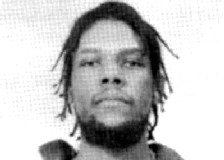
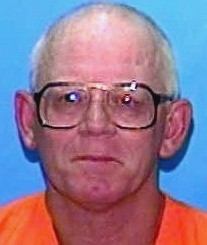
Michael William Daniels
Murderer Ervil LeBaron
Murderer · USA · 1972
Ervil Morrell LeBaron (1925 to August 16, 1981) was the leader of a polygamous…
35 victims
Ervil LeBaron
Murderer · USA · 1972
Ervil Morrell LeBaron (1925 to August 16, 1981) was the leader of a polygamous…
35 victims
 Brian Kevin Rosenfeld
Murderer · USA · 1985
Brian Kevin Rosenfeld Brian Kevin Rosenfeld was sentenced to three concurrent l…
23 victims
Brian Kevin Rosenfeld
Murderer · USA · 1985
Brian Kevin Rosenfeld Brian Kevin Rosenfeld was sentenced to three concurrent l…
23 victims
 Marvin Gray
Murderer · USA · 1975
Marvin Gray was convicted killer who claimed responsibility for 23 slayings and…
23 victims
Marvin Gray
Murderer · USA · 1975
Marvin Gray was convicted killer who claimed responsibility for 23 slayings and…
23 victims
 Yahweh ben Yahweh
Murderer · USA · 1980
Yahweh ben Yahweh was born and legally named Hulon Mitchell Jr. (October 27, 19…
23 victims
Yahweh ben Yahweh
Murderer · USA · 1980
Yahweh ben Yahweh was born and legally named Hulon Mitchell Jr. (October 27, 19…
23 victims
 Omer Ninham
Homicide · USA · 1998
Omer Ninham was sentenced to life in prison without the possibility of parole o…
1 victim
Omer Ninham
Homicide · USA · 1998
Omer Ninham was sentenced to life in prison without the possibility of parole o…
1 victim
 Carl Henry Blue
Murderer · USA · 1994
Carl Henry Blue was sentenced to death for capital murder involving Carmen Rich…
1 victim
Carl Henry Blue
Murderer · USA · 1994
Carl Henry Blue was sentenced to death for capital murder involving Carmen Rich…
1 victim
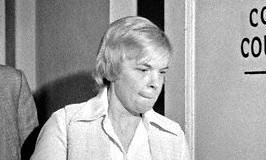 Marybeth Tinning
Murderer · USA · 1972
Marybeth Tinning (née Roe, born on September 11, 1942) was an American prisoner…
9 victims
Marybeth Tinning
Murderer · USA · 1972
Marybeth Tinning (née Roe, born on September 11, 1942) was an American prisoner…
9 victims
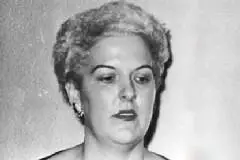 Anjette Lyles
Serial killer · USA · 1952
Name: Anjette Lyles Also known as: Anjette Donovan Lyles Status: Sentenced to d…
4 victims
Anjette Lyles
Serial killer · USA · 1952
Name: Anjette Lyles Also known as: Anjette Donovan Lyles Status: Sentenced to d…
4 victims
 Ronald Taylor
Murderer · USA · 2000
Ronald Taylor was a 39-year-old man from Wilkinsburg who went on a racially mot…
3 victims
Ronald Taylor
Murderer · USA · 2000
Ronald Taylor was a 39-year-old man from Wilkinsburg who went on a racially mot…
3 victims
 Charles William Bass
Murderer · USA · 1979
Name: Charles William Bass Case number: 662 Age: 29 · 1979 — Charles William Ba…
1 victim
Charles William Bass
Murderer · USA · 1979
Name: Charles William Bass Case number: 662 Age: 29 · 1979 — Charles William Ba…
1 victim
- Gender
- male
- Country
- USA
- Location
- Marion County, Indiana, USA
- Date of birth
- March 8, 1958
- Age at first offence
- 20
- Characteristics
- robbery
- Victim profile
- Allen Streett, 40
- Method of murder
- Shooting
- Date(s) of murder
- January 16, 1978
- Years active
- 1978
- Date of arrest
- —
- Status
-
Life imprisonment
Sentenced to death on September 14, 1979; Indiana Governor Joseph E. Kernan commuted the sentence of death to life imprisonment without the possibility of parole on January 7, 2005.
Case record: Michael William Daniels
Timeline
- January 16, 1978 — Michael Daniels and two other men committed a series hold-up robberies and shootings in an Indianapolis residential neighborhood; Daniels beat one victim and shot two others, one fatally.
- February 5, 2007 — The United States Court of Appeals decided Daniels’s appeal (Before BAUER, RIPPLE, and MANION, Circuit Judges; MANION, Circuit Judge).
- February 21, 1985 — The trial court denied Daniels’s first post-conviction appeal on February 21, 1985.
- 1983 — The Supreme Court of Indiana affirmed Daniels’s conviction and sentence on direct appeal in Daniels v. State (Daniels I), 453 N.E.2d 160 (1983).
- 1988 — The Supreme Court of Indiana denied collateral review in Daniels v. State (Daniels II), 528 N.E.2d 775 (1988).
- 1989 — The United States Supreme Court granted Daniels’s petition for a writ of certiorari, vacated the Supreme Court of Indiana’s judgment in Daniels II, and remanded the case in light of South Carolina v. Gathers; Daniels v. Indiana, 491 U.S. 902 (1989).
- 1990 — On remand, the Supreme Court of Indiana held that neither Gathers nor Booth v. Maryland were retroactive in Daniels v. State, 561 N.E.2d 487, 489-91 (Ind.1990).
- November 22, 1993 — Daniels filed a second petition for post-conviction relief, which the Supreme Court of Indiana ultimately denied (Daniels III, 741 N.E.2d 1177 (Ind.2001)).
- 2001 — The Supreme Court of Indiana denied Daniels III, 741 N.E.2d 1177 (Ind.2001).
- April 7, 2005 — The case citation for Daniels’s § 2254 petition in federal court appeared as Daniels v. McBride, No. IP 01-550-C-Y/K (S.D.Ind. Apr. 7, 2005).
- January 7, 2005 — While Daniels’s § 2254 petition was pending, Governor Joseph E. Kernan commuted Daniels’s sentence of death to life imprisonment without the possibility of parole.
- 2005 (three months later) — The district court denied Daniels’s § 2254 petition.
- 2004 — The United States Supreme Court recognized a two-exception framework in Dretke v. Haley, 541 U.S. 386, 388 (2004) (capital sentencing and actual innocence exceptions referenced in the appellate discussion).
Background
Michael Daniels was convicted of robbery and murder in Indiana state court following a 1978 crime spree in an Indianapolis residential neighborhood.
After exhausting his state court remedies, Daniels filed a petition for habeas relief in federal court under 28 U.S.C. § 2254, claiming he received ineffective assistance of trial counsel. The district court denied Daniels’s petition, and Daniels appealed. The United States Court of Appeals affirmed the district court’s denial.
The offence
On the evening of January 16, 1978, Michael Daniels and two other men committed a series hold-up robberies and shootings in an Indianapolis residential neighborhood.
Daniels and his associates approached people at four separate residences while residents were either shoveling snow or getting out of their cars.
During the course of the robberies, Daniels beat one of his victims and shot two others, one fatally.
Trial
At Daniels’s jury trial for murder in Indiana state court, the State of Indiana presented evidence that the events occurred on the evening of January 16, 1978, in an Indianapolis residential neighborhood, involving Daniels and two other men.
Each of Daniels’s six surviving victims and one of Daniels’s cohorts testified against him at the jury trial.
The jury convicted Daniels of:
- four counts of robbery,
- one count of attempted robbery, and
- one count of felony murder.
The sentencing court imposed:
- four consecutive twenty-year terms of imprisonment, and
- one fifty-year term.
Daniels was also sentenced to death for his felony murder conviction.
Investigation
Evidence presented at trial established the pattern of approaches at four residences and that Daniels beat one victim and shot two others, one fatally, during the robberies.
Sentencing
Daniels received four consecutive twenty-year terms of imprisonment and one fifty-year term for robbery-related convictions and was also sentenced to death for felony murder.
The case record reflected that the death sentence was commuted to life imprisonment without the possibility of parole by Governor Joseph E. Kernan.
Appeals
Direct appeal
The Supreme Court of Indiana affirmed Daniels’s conviction and sentence on direct appeal in Daniels v.
Post-conviction proceedings
Daniels sought collateral review via a petition for post-conviction relief. The Supreme Court of Indiana ultimately denied it in Daniels v.
The United States Supreme Court granted Daniels’s petition for a writ of certiorari, vacated the Supreme Court of Indiana’s judgment in Daniels II, and remanded the case to the Supreme Court of Indiana for further consideration in light of South Carolina v. Gathers, 490 U.S. 805 (1989). Daniels v. Indiana, 491 U.S. 902 (1989).
On remand, the Supreme Court of Indiana held that neither Gathers nor Booth v.
Daniels filed a second petition for post-conviction relief on November 22, 1993. The Supreme Court of Indiana denied it in Daniels v. State (Daniels III), 741 N.E.2d 1177, 1191 (Ind.2001).
In Daniels III, the Supreme Court of Indiana held that Daniels waived all ineffective assistance of counsel claims except the claim raised in his first post-conviction relief petition. The Supreme Court of Indiana identified the surviving ineffective assistance claim as Daniels’s argument that trial counsel was ineffective because he failed to confront government eyewitness Timothy Streett with evidence that Streett had been hypnotized during one of his identification sessions with police.
The Supreme Court of Indiana reviewed on their merits each of Daniels’s ineffective assistance claims prior to denying his second petition for post-conviction relief, and it described that its waiver holding barred all but the Streett-identification claim.
Federal habeas corpus
After the Supreme Court of Indiana’s denial of the second petition, Daniels filed a petition for habeas relief pursuant to 28 U.S.C. § 2254 in federal court.
The federal petition raised multiple claims, including ineffective assistance of trial counsel, the state withholding or destroying evidence, and ineffective assistance of appellate counsel.
On January 7, 2005, while the § 2254 petition was pending, Governor Joseph E.
Three months later, the district court denied Daniels’s § 2254 petition.
In denying Daniels’s petition, the district court did not address the Supreme Court of Indiana’s finding that Daniels had waived all but one of his ineffective assistance of counsel claims, and it instead denied each of Daniels’s claims on the merits.
The district court granted Daniels a certificate of appealability.
On appeal, Daniels argued only the district court’s denial of his claims based on alleged ineffective assistance of counsel during the guilt phase of his trial.
Daniels reiterated grounds for his ineffective assistance claims that were divided into two categories:
- counsel’s failure to introduce evidence that someone other than Daniels (specifically, Paul Rowley) committed the robberies; and
- counsel’s failure to confront Streett regarding his identification after being hypnotized.
The Supreme Court of Indiana had held that Daniels waived all ineffective assistance claims except the claim that counsel failed to confront Streett, because Daniels failed to raise those claims in his first post-conviction appeal.
Outcome
The appellate court held that Daniels procedurally defaulted all of his ineffective assistance of counsel claims except the claim related to Streett’s identification after being hypnotized.
The appellate court further held that Daniels could not satisfy the Strickland v. Washington ineffective assistance of counsel standard for the non-defaulted claim and affirmed the district court’s denial of Daniels’s § 2254 petition.
The appellate court stated: "We thus find that the Supreme Court of Indiana relied upon the doctrine of waiver to bar by procedural default all of Daniels ' ineffective assistance of counsel claims, except his claim related to Streett's identification."
The appellate court also stated: "We therefore hold that the Supreme Court of Indiana did not unreasonably apply the Strickland framework to bar Daniels ' petition for post-conviction relief claim related to Streett's identification, and we affirm the district court's denial of Daniels ' § 2254 petition."
The appellate court affirmed the district court’s denial of Daniels’s § 2254 petition.
Aftermath
After the district court denied Daniels’s § 2254 petition, the appellate court affirmed the denial.
The sentence of death was commuted to life imprisonment without the possibility of parole by Governor Joseph E. Kernan on January 7, 2005.
Other details
Ineffective assistance claim involving hypnosis and identification
Daniels’s sole non-procedurally defaulted claim argued that trial counsel’s failure to raise the issue of Timothy Streett’s identification after hypnosis was so inadequate and prejudicial that it required a new trial.
Timothy Streett was described as the then-fifteen-year-old son of Daniels’s murder victim, Allen Streett.
The appellate discussion stated that Timothy Streett witnessed Daniels shoot his father in the family’s driveway after his father informed Daniels that he could not give him his wallet because he was not carrying it.
Daniels alleged that trial counsel failed to challenge Streett’s identification testimony based on hypnosis during an identification session with police.
Daniels alleged that trial counsel’s error was compounded by trial counsel’s failure to inform the jury that Streett had been hypnotized, had only identified Daniels after hypnosis, and had made a "possible" identification of another man while hypnotized.
Courts’ reasoning on hypnosis and independent basis
The Supreme Court of Indiana’s Daniels II analysis cited Strickland as the basis for its analysis and quoted its framework. Daniels II found that Streett had an independent basis for his in-court identification that was untainted by hypnosis, rendering trial counsel’s failure to raise the hypnosis issue harmless.
The Daniels II analysis described trial counsel testimony that the case depended on testimony of Kevin Edmonds, one of the participants who identified Daniels as the triggerman, and that trial counsel did not believe Streett’s testimony was of great importance compared to Edmonds’s testimony.
The Daniels II analysis stated that trial counsel believed that while Streett was on the witness stand, he was on the verge of breaking down, and any further attempts to discredit his identification would appear to be an attack on the son of the murder victim.
The appellate court recited the Daniels II conclusion verbatim:
"Clearly a decision was made to concentrate on discrediting Edmonds rather than Timothy Streett in order to avoid alienating the jury with extensive cross-examination of the victim's fifteen-year old son.
The propriety of this decision will not be questioned based on hindsight, even if the strategy were poor, it does not rise to the level of ineffective assistance."
The Daniels III analysis reiterated that the denial of relief rested on Streett’s independent basis for in-court identification untainted by hypnosis and that Streett was only one of several eyewitnesses who testified to the various crimes charged.
Procedural default principles quoted and discussed
The appellate discussion quoted Dretke v. Haley regarding procedurally defaulted constitutional claims:
"Out of respect for finality, comity, and the orderly administration of justice, a federal court will not entertain a procedurally defaulted constitutional claim in a petition for habeas corpus absent a showing of cause and prejudice to excuse the default 1 ."
The appellate discussion also quoted the Supreme Court of Indiana’s reiteration from Engle v. Isaac:
"The States possess primary authority for defining and enforcing the criminal law. In criminal trials they also hold the initial responsibility of vindicating constitutional rights. Federal intrusions into state criminal trials frustrate both the States' sovereign power to punish offenders and their good-faith attempts to honor constitutional rights."
The appellate discussion quoted the Supreme Court of Indiana’s procedural fairness explanation:
"Hence as a matter of procedural fairness a finding of waiver by an Indiana court must be predicated on a meaningful opportunity to litigate the claim. Alternatively, if an ineffectiveness claim found to be waived in our courts is nonetheless addressed on the merits in federal court, this State will have foregone the opportunity to correct the possible error before federal review of our judicial process. One goal of our postconviction rules is to minimize the level of federal constitutional error before federal review of the conviction: "[O]ne of the functions of our post conviction remedy rules is to preserve what sanctity remains to this [S]tate's disposition of a criminal charge by allowing a convicted criminal defendant ample opportunity to present claims for relief in the courts of this state before resort must be had to the federal courts." Langley v. State, 256 Ind. 199, 267 N.E.2d 538, 541 (1971)."
The appellate discussion included an Emphasis statement about waiver and res judicata:
[W]e adhere to the view that claims of ineffective assistance of counsel, if litigated at the initial post-conviction proceeding, are barred by the doctrine of res judicata in successive petitions of post-conviction relief, and any acts or omissions of the trial counsel that were available in the first post-conviction proceeding but not raised are waived in a successive petition. This doctrine controls the disposition of this case.
The appellate discussion included this quoted rule about “firmly established and regularly followed” practices from Ford v. Georgia:
"Only a `firmly established and regularly followed state practice' may be interposed by a State to prevent subsequent review by this Court of a federal constitutional claim."
It also included the quoted description of what a waiver finding requires:
"a state court's invocation of res judicata `simply means that the state courts have already resolved the matter and want nothing more to do with it.'"
and:
"must be predicated on a meaningful opportunity to litigate the claim" and a finding that the litigant elected not to pursue the claim when presented with the opportunity to do so.
Strickland framework quoted and discussed
The appellate discussion quoted Strickland’s standard for when counsel’s conduct undermines the adversarial process:
"whether counsel's conduct so undermined the proper functioning of the adversarial process that the trial cannot be relied on as having produced a just result."
It quoted Strickland’s two elements:
(1) that his trial counsel's performance fell below "an objective standard of reasonableness," id. at 688, 104 S.Ct. 2052; and
(2) "that there is a reasonable probability that, but for counsel's unprofessional errors, the result of the proceeding would have been different," id. at 694, 104 S.Ct. 2052.
It quoted Strickland’s deference to counsel:
"highly deferential" and "reflects a strong presumption that counsel's conduct falls within the wide range of reasonable professional assistance; that is, the defendant must overcome the presumption that, under the circumstances, the challenged action might be considered sound trial strategy."
It quoted the prejudice/seriousness formulation:
"counsel's errors were so serious as to deprive the defendant of a fair trial, a trial whose result is reliable."
Exceptions to procedural default discussed
The appellate discussion described the exceptions recognized in Dretke v. Haley and quoted them:
"when habeas applicant can demonstrate that the alleged constitutional error has resulted in the conviction of one who is actually innocent of the underlying offense or, in the capital sentencing context, of the aggravating circumstances rendering the inmate eligible for the death penalty."
Spotted an error, or have more information about this case?