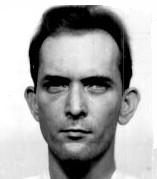
Denton Crank
Murderer Brian Kevin Rosenfeld
Murderer · USA · 1985
Brian Kevin Rosenfeld Brian Kevin Rosenfeld was sentenced to three concurrent l…
23 victims
Brian Kevin Rosenfeld
Murderer · USA · 1985
Brian Kevin Rosenfeld Brian Kevin Rosenfeld was sentenced to three concurrent l…
23 victims
 Marvin Gray
Murderer · USA · 1975
Marvin Gray was convicted killer who claimed responsibility for 23 slayings and…
23 victims
Marvin Gray
Murderer · USA · 1975
Marvin Gray was convicted killer who claimed responsibility for 23 slayings and…
23 victims
 Yahweh ben Yahweh
Murderer · USA · 1980
Yahweh ben Yahweh was born and legally named Hulon Mitchell Jr. (October 27, 19…
23 victims
Yahweh ben Yahweh
Murderer · USA · 1980
Yahweh ben Yahweh was born and legally named Hulon Mitchell Jr. (October 27, 19…
23 victims
 Russell Ellwood
Murderer · USA · 1991
Russell Ellwood was a former taxi driver. Authorities suspected him of killing…
20 victims
Russell Ellwood
Murderer · USA · 1991
Russell Ellwood was a former taxi driver. Authorities suspected him of killing…
20 victims
 Charles Stamper
Murderer · USA · 1978
Charles Stamper was convicted and sentenced to death for three capital murders…
3 victims
Charles Stamper
Murderer · USA · 1978
Charles Stamper was convicted and sentenced to death for three capital murders…
3 victims
 Diego Santoy
Murderer · Mexico · 2006
Diego Santoy Riveroll was a Mexican university student who was accused of stabb…
2 victims
Diego Santoy
Murderer · Mexico · 2006
Diego Santoy Riveroll was a Mexican university student who was accused of stabb…
2 victims
 Paul Dennis Reid
Spree killer · USA · 1997
Paul Dennis Reid, Jr. was an American serial killer. He was born November 12, 1…
7 victims
Paul Dennis Reid
Spree killer · USA · 1997
Paul Dennis Reid, Jr. was an American serial killer. He was born November 12, 1…
7 victims
 William Zeigler
Mass murderer · USA
William Thomas Zeigler Jr. was prosecuted in Florida for the murders of four pe…
1975 victims
William Zeigler
Mass murderer · USA
William Thomas Zeigler Jr. was prosecuted in Florida for the murders of four pe…
1975 victims
 Cesar Rodriguez
Murderer · USA · 2006
Nixzmary Brown was a seven-year-old abused child and murder victim from the Bed…
1 victim
Cesar Rodriguez
Murderer · USA · 2006
Nixzmary Brown was a seven-year-old abused child and murder victim from the Bed…
1 victim
 Maurice Boucher
Murderer · Canada · 1997
Maurice "Mom" Boucher (born June 21, 1953) was a convicted murderer, a reputed…
2 victims
Maurice Boucher
Murderer · Canada · 1997
Maurice "Mom" Boucher (born June 21, 1953) was a convicted murderer, a reputed…
2 victims
- Gender
- male
- Country
- USA
- Location
- Harris County, Texas, USA
- Date of birth
- October 10, 1955
- Age at first offence
- 29
- Characteristics
- kidnapping, robbery
- Victim profile
- Terry Oringderff (male, 32, supermarket manager)
- Method of murder
- Shooting
- Date(s) of murder
- January 16, 1984
- Years active
- 1984
- Date of arrest
- —
- Status
-
Executed
Executed by lethal injection in Texas on June 14, 1994
Case record: Denton Crank
Timeline
- June 14, 1994 — Denton Crank was executed by lethal injection in Texas.
- April 5, 1994 — The United States Court of Appeals, Fifth Circuit denied Denton Crank’s application for a Certificate of Probable Cause.
- June 14, 1993 — Crank filed a petition for habeas relief in federal district court presenting eighteen separate claims, along with a motion for a stay of execution and a request for a CPC.
- April 1992 — The Court of Criminal Appeals denied Crank’s habeas claim under Penry v. Lynaugh.
- October 2, 1989 — The United States Supreme Court denied certiorari, and Crank’s conviction became final.
- June 1993 — The Court of Criminal Appeals accepted the state trial court’s recommendation that habeas relief be denied on Crank’s second state habeas petition alleging a conflict of interest.
- On January 16, 1984 — Crank and another masked gunman abducted Terry Oringderff from his apartment and took him to the Rice Cash Saver’s Store.
Background
Denton Alan CRANK was the petitioner-appellant in Denton Alan Crank, Petitioner-Appellant, v. James A. Collins, Director, Texas Department of Criminal Justice, Institutional Division, Respondent-Appellee (No. 93-2455) in the United States Court of Appeals for the Fifth Circuit. The panel was KING, DAVIS, and WIENER, Circuit Judges. W. Eugene DAVIS, Circuit Judge, delivered the opinion.
The opinion stated that Crank was convicted of capital murder and sentenced to death, and that the district court denied his application for a Certificate of Probable Cause (“CPC”). The Fifth Circuit also denied Crank’s application for a CPC to appeal the district court’s order.
Crank was executed in Texas on June 14, 1994. His last statement was: “To my family who has kept me strong, I give my love.”
Crank was 39 years old (28) as stated in the case summary.
The offence
On January 16, 1984, Crank and another masked gunman abducted Terry Oringderff from his apartment. Terry Oringderff was taken to the Rice Cash Saver’s Store, where Oringderff was one of the managers.
After robbing a number of the store employees, the gunmen forced Oringderff and the courtesy booth operator to open the store’s safes. The gunmen left with the money and Oringderff was found later that day on a remote road in Houston, shot to death near his car.
The case summary stated that Crank was convicted of abducting Terry Oringderff from his north Houston apartment the night of Jan 15, 1984, and killing him after taking him the next morning to the supermarket he managed and robbing the store of $32,000. The summary also stated that Oringderff, 32, was shot multiple times.
Investigation
The opinion did not provide additional investigative details beyond the crime narrative and the identification context described in the footnote regarding Crank’s trial counsel’s representation.
Arrest
No arrest information was provided in the material.
Trial
Crank was convicted of capital murder and sentenced to death.
The Texas Court of Criminal Appeals affirmed his conviction and sentence.
The jury was asked to determine: “(1) whether the conduct of the defendant that caused the death of the deceased was committed deliberately and with the reasonable expectation that death would result; and (2) whether there was a probability that the defendant would commit criminal acts of violence that would constitute a continuing threat to society.” The jury had to answer both questions in the affirmative for Crank to be sentenced to death. The opinion referenced Vernon's Ann. Texas C.C.P. art. 37.071(b)(1).
Crank’s trial counsel was named in the opinion as Bob Tarrant.
The footnote stated that Tarrant represented Bobby Bartoo on an unrelated robbery charge. Bartoo also was a suspect in the January 16, 1984 robbery, and a witness had identified Bartoo as the masked gunman.
Crank’s stepbrother was sentenced to life in prison for aggravated robbery.
Sentencing
Crank was sentenced to death.
The opinion addressed Crank’s arguments under Penry v. Lynaugh regarding the capital sentencing scheme and the jury’s ability to consider mitigating evidence.
At the punishment hearing, Crank’s counsel argued:
“What I brought you by way of evidence at this hearing is the testimony of ... a number of good people who have known Denton Crank in many instances all of his life, all of whom have known him for years.... And those people are telling the truth when they say that he's not a violent man, that he's good to his family, that he's good to his wife, that he loves them and that they love him back. And that's not the kind of man who probably would continue to commit criminal acts of violence that would constitute a threat to society.”
Crank’s arguments regarding mitigating evidence included positive character traits supported by testimony from a former employer, a long-time friend, and family members, including “his trustworthiness, well-disciplined nature, caring and loving character, calm and non-violent personality, and family values.”
The opinion also addressed Crank’s claims that evidence pertaining to his background, including child abuse and neurological damage stemming from a brain aneurysm, would have been irrelevant to the special issues or considered only as aggravating evidence.
Appeals
On October 2, 1989, the United States Supreme Court denied certiorari, and Crank’s conviction became final.
Crank applied for state habeas relief. The state trial court recommended that it be denied. The Court of Criminal Appeals initially accepted the trial court’s recommendation, but later granted rehearing to reconsider Crank’s claim under Penry v. Lynaugh, 492 U.S. 302, and then denied him habeas relief on this claim in April 1992.
Crank then filed a second state habeas petition alleging that his trial counsel had labored under a conflict of interest. In June 1993, the Court of Criminal Appeals accepted the state trial court’s recommendation that habeas relief be denied on that ground as well.
On June 14, 1993, less than fifteen hours before his scheduled execution, Crank filed a petition for habeas relief in federal district court. His petition presented eighteen separate claims, along with a motion for a stay of execution and a request for a CPC. Later that day, the district court issued a memorandum opinion and order denying Crank’s habeas petition, his motion for a stay of execution, and his request for a CPC.
The Fifth Circuit granted a stay of execution to allow time to consider Crank’s appeal. Crank’s application to the court for a CPC was carried with the case.
The opinion stated that the court had no jurisdiction to hear an appeal unless it first granted a CPC. It set out the standard for obtaining a CPC, quoting Barefoot v. Estelle regarding the requirement to show that the issues are debatable among jurists of reason, that a court could resolve the issues differently, or that the questions deserved encouragement to proceed further. The opinion cited Fed. R. App. P. 22(b) and Black v. Collins.
Crank’s CPC was denied, and the stay of execution previously entered was vacated.
Outcome
The Fifth Circuit concluded that Crank was not entitled to a CPC to appeal the district court’s order. The application for a CPC was DENIED, and the stay of execution previously entered was VACATED.
Crank was executed by lethal injection in Texas on June 14, 1994.
Aftermath
No aftermath details were provided in the material.
Other details
The opinion discussed Crank’s claim regarding the Texas capital sentencing scheme at the time of his sentencing, referencing Art. 37.071 of the Texas Code of Criminal Procedure and Penry v. Lynaugh. It stated that relief would require announcing a “new rule” under Teague v. Lane because the outcome requested by Crank was not dictated by precedent that existed at the time his conviction became final on October 2, 1989.
The opinion also stated that the Eighth Amendment was satisfied so long as the mitigating evidence was within the “effective reach of the sentencer,” and that supplemental mitigation instructions were not constitutionally required under the authorities it cited.
On the counsel-conflict claim, the opinion cited United States v. Garcia, 517 F.2d 272, and quoted the waiver requirements as:
- that the defendant be aware that a possible conflict of interest exists;
- that the defendant realize the consequences to his defense that continuing with conflicted counsel would have; and
- that the defendant be aware of his right to obtain other counsel.
The opinion described the undisputed facts underlying the conflict-of-interest waiver:
- Crank’s original trial counsel, Bob Tarrant, concurrently represented another suspect in the murder for which Crank was ultimately convicted.
- After Crank appeared in state court with Tarrant and pled not guilty, the court identified the conflict of interest and explained to Crank that he could waive the conflict.
- When Crank indicated he was not sure that he understood the situation, he conferred with Tarrant.
- The court recessed to allow Crank to confer with his family and his family’s civil attorney before making any decision.
- More than a week later, at a pretrial hearing, Crank appeared with Don Ervin, his newly-retained counsel, and the court resumed its discussion about counsel’s potential conflict of interest.
- The court asked Crank whether he wanted Ervin to replace Tarrant and whether he understood that Ervin and Tarrant were law partners.
- Crank responded affirmatively.
- The court asked whether Crank understood that a possible conflict of interest existed because of Ervin and Tarrant’s relationship, and after conferring with Ervin off the record, Crank responded affirmatively again.
- The court explained what it meant to waive the right to conflict-free counsel, and Crank agreed to the waiver.
- The state court reviewing Crank’s habeas petition found that Crank understood his rights and the potential conflict, and that he made a knowing and intelligent decision to be represented by Mr. Ervin.
- The opinion stated that the record supported these findings and that the district court properly accorded them a presumption of correctness under 28 U.S.C. Sec. 2254(d).
The opinion described Crank’s Penry claims as lacking arguable merit, and it concluded that his right-to-conflict-free-counsel claim lacked arguable merit as well.

Spotted an error, or have more information about this case?