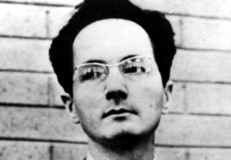
Geza De Kaplany
Murderer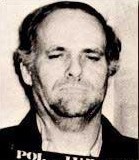 Ervil LeBaron
Murderer · USA · 1972
Ervil Morrell LeBaron (1925 to August 16, 1981) was the leader of a polygamous…
35 victims
Ervil LeBaron
Murderer · USA · 1972
Ervil Morrell LeBaron (1925 to August 16, 1981) was the leader of a polygamous…
35 victims
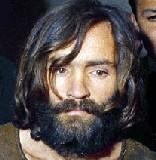 Charles Manson
Murderer · USA · 1969
Charles Milles Manson (born November 12, 1934) was an American criminal and mus…
9 victims
Charles Manson
Murderer · USA · 1969
Charles Milles Manson (born November 12, 1934) was an American criminal and mus…
9 victims
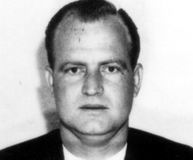 Gary Gene Tison
Murderer · USA · 1967
Gary Gene Tison was serving life sentences at the Arizona state prison. He had…
7 victims
Gary Gene Tison
Murderer · USA · 1967
Gary Gene Tison was serving life sentences at the Arizona state prison. He had…
7 victims
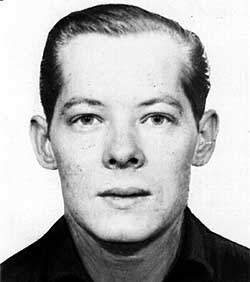 Richard Lee Tingle
Murderer · USA · 1968
Richard Lee Tingle was born out of wedlock in December 1940. He was raised by a…
6 victims
Richard Lee Tingle
Murderer · USA · 1968
Richard Lee Tingle was born out of wedlock in December 1940. He was raised by a…
6 victims
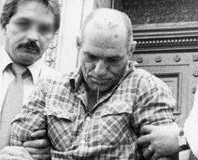 Andre Rand
Murderer · USA · 1972
Andre Rand was born Andre Rashan in 1943. He later used the name “Rand” and emp…
4 victims
Andre Rand
Murderer · USA · 1972
Andre Rand was born Andre Rashan in 1943. He later used the name “Rand” and emp…
4 victims
 Marvin Lee Irvin
Murderer · USA · 1979
Marvin Lee Irvin was a former police officer. West was last seen as leaving St.…
3 victims
Marvin Lee Irvin
Murderer · USA · 1979
Marvin Lee Irvin was a former police officer. West was last seen as leaving St.…
3 victims
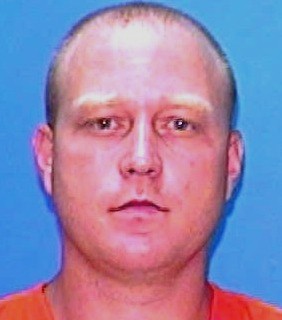 Eric Simmons
Murderer · USA · 2001
Name: Eric Simmons · Date of birth: 11/23/74 · Supreme Court of Florida opinion…
1 victim
Eric Simmons
Murderer · USA · 2001
Name: Eric Simmons · Date of birth: 11/23/74 · Supreme Court of Florida opinion…
1 victim
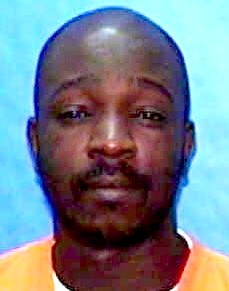 Micah Louis Nelson
Murderer · USA · 1997
Micah Louis Nelson was prosecuted in the Tenth Judicial Circuit, Polk County, f…
1 victim
Micah Louis Nelson
Murderer · USA · 1997
Micah Louis Nelson was prosecuted in the Tenth Judicial Circuit, Polk County, f…
1 victim
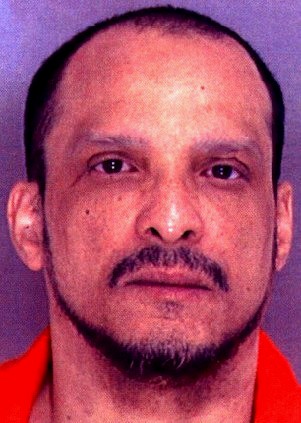 Orlando Baez
Murderer · USA · 1987
Orlando Baez was convicted of stabbing Janice "Sissy" Williams to death. Baez r…
1 victim
Orlando Baez
Murderer · USA · 1987
Orlando Baez was convicted of stabbing Janice "Sissy" Williams to death. Baez r…
1 victim
- Gender
- male
- Country
- USA
- Location
- San Jose, California, USA
- Date of birth
- 1926
- Age at first offence
- 36
- Characteristics
- parricide, torture, sexual mutilation
- Victim profile
- His wife, Hajna De Kaplany, 25
- Method of murder
- Dowsed her body with sulfuric and nitric acids
- Date(s) of murder
- August 28, 1962
- Years active
- 1962
- Date of arrest
- Same day
- Status
-
Released
Sentenced to life in prison in 1963; released on parole in 1976
Case details
Geza De Kaplany was a Hungarian-born physician who worked at a hospital in San Jose, California, in 1962. He married Hajna De Kaplany, described as his 25-year-old wife, for one month.
Timeline
- 28 August 1962 — Police were called to the de Kaplany apartment by neighbours disturbed by both loud music and a wailing sound.
- 28 August 1962 — Police found Hajna De Kaplany suffering from third degree corrosive burns; the bedroom was described as resembling a torture chamber with bottles of Hydrochloric, Sulphuric and Nitric Acids.
- August 28, 1962 — De Kaplany bound and gagged Hajna, cut her with a knife, and poured nitric acid over her body; loud classical music and screams were heard from the de Kaplany apartment.
- September 30, 1962 — Hajna De Kaplany died from the acid burns (the victim did not die until September 30, 1962).
- 1 March 1963 — The jury returned a verdict of life imprisonment.
- 15 March 1963 — Judgment and sentence were imposed.
- 1975 — Parole was granted in 1975 (the text also states a parole release in 1976).
- 1976 — Released on parole (as stated in the case status); additionally, an appellate decision was issued on July 9, 1976.
Background
Geza de Kaplany was described as a refugee from communism. He was described as being 36 years old and as having been born in 1926. Hajna De Kaplany was described as a former fashion model and showgirl.
The narrative included that De Kaplany had heard that his bride of five weeks had been unfaithful to him shortly after which the offence occurred.
The offence
On the evening of August 28, 1962, loud classical music and screams were heard from the de Kaplany apartment.
When police arrived, they found Hajna De Kaplany “horribly tortured.” De Kaplany had allegedly tied Hajna to a bed, dowsed her body with sulfuric and nitric acids, and mutilated her body with a knife. Another account in the text stated that he bound and gagged her, cut her with a knife, and poured nitric acid over her nude body.
Hajna De Kaplany suffered third degree corrosive burns over 60% of her body, and her genitals were almost completely obliterated.
De Kaplany told police at the scene that Hajna had been unfaithful and that he wanted to destroy her beauty. The account also stated that one ambulance worker was treated for burns sustained from touching her body.
Investigation and discovery
The morning of 28 August 1962, police were called to the apartment by neighbours disturbed by both loud music and a wailing sound. When police searched the apartment, they found Hajna De Kaplany suffering from third degree corrosive burns.
The ambulance men burnt their hands on her acid soaked body. The bedroom was described as resembling a torture chamber with bottles of Hydrochloric, Sulphuric and Nitric Acids. The bedclothes were described as a disintegrating mess of acid soaked material.
Arrest and custody
The alleged crime occurred on the evening of August 28, 1962. De Kaplany was arrested and placed in custody the same day.
Trial
Pleas and courtroom events
De Kaplany pleaded not guilty by reason of insanity, claiming he suffered from multiple-personality disorder and that the sadistic crime was committed by his alter ego, “Pierre de la Roche.”
During the guilt phase, when the prosecution exhibited in the courtroom a gruesome morgue photograph of his slain wife’s body, De Kaplany jumped to his feet shouting “No, no, what did you do to her?” He was forcibly restrained and reseated.
The next day, De Kaplany changed his plea to guilty. The text included that De Kaplany’s attorney stated that the guilty plea was a vital part of his strategy to preclude a long trial on guilt during which the jury would repeatedly be confronted with the gruesome nature of the crime.
The state trial court asked De Kaplany’s attorney at the time of the guilty plea whether he had explained to De Kaplany the nature and consequences of his plea. The attorney said he had.
The trial court addressed De Kaplany directly, asking whether he knew that he had been indicted for murdering his wife, whether he had discussed the matter with his counsel, and whether he fully understood the consequences of the change of his plea. De Kaplany answered: “Yes, your Honor”, “Yes I did”, and “I do”.
The trial court did not ask whether he understood that the change of plea might subject him to the death penalty, and the appellate text stated there seemed little doubt he understood this because his first attorney had informed him of the possibility of being sentenced to die.
Psychiatrists and sanity phase
Prior to the commencement of jury selection on January 7, 1963, three psychiatrists appointed by the trial court had examined De Kaplany, and two filed written reports with the trial court.
Dr. Johnsen’s report stated: “sane at the time of the commission of the alleged crime and that he is presently sane.”
Dr. Rappaport’s report stated: “presently suffering from no mental illness and is able to cooperate with counsel and to assist counsel in the preparation and presentation of a rational defense.”
The third report, that of Dr. Shoor, was filed on February 8, 1963 and stated that while De Kaplany displayed “some suicidal thinking of the obsessional variety,” he was “sane now and at the time of the commission of the alleged offense.”
The defence requested examinations by Drs. Zaslow, Lee, and Beaton.
Dr. Zaslow testified that, on the basis of certain standard psychological tests, the petitioner was “severely disturbed” and displayed an “impairment of the conceptual thinking and use of proper judgment.”
Dr. Beaton stated that De Kaplany was “very seriously ill, psychiatrically, psychologically,” but that he “knew the difference between right and wrong in the ordinary sense of intellectually knowing.”
Dr. Beaton stated his opinion that De Kaplany was suffering from paranoid schizophrenia and that De Kaplany was “not able rationally, logically and consciously to govern his actions.”
During Dr. Beaton’s testimony, he expressed a view about De Kaplany’s relationship with his mother, stating that his mother was “a feminine ideal for him and a ‘somewhat rejecting woman.’” At this point, De Kaplany interrupted and said, “Don’t talk like this about my mother.”
Dr. Lee gave the opinion that the offence was committed during an acute schizophrenic reaction and that De Kaplany suffered from a multiple personality syndrome. The text also stated it appeared during Dr. Lee’s testimony that De Kaplany, in 1946, had been hospitalized in a neuropsychiatric institution for several weeks while he was a citizen and resident of Hungary.
The prosecution’s witnesses (Drs. Johnsen, Rappaport, and Shoor) testified consistently with their earlier reports, including Dr. Johnsen’s opinion that he was “sane at the time of the commission of the alleged crime and that he is presently sane,” Dr. Rappaport’s view that he was presently suffering from no mental illness and could cooperate with counsel, and Dr. Shoor’s statement that he had “some suicidal thinking of the obsessional variety” but was “sane now and at the time of the commission of the alleged offense.”
The sanity phase ended after 28 days when the jury returned a verdict finding De Kaplany sane at the time of the commission of the crime.
Verdict
The jury returned a verdict of life imprisonment on March 1, 1963.
Sentencing
De Kaplany was convicted of murder. He was sentenced to life imprisonment. Judgment and sentence were imposed on March 15, 1963. The text stated that the jury sentenced him to life imprisonment rather than the death penalty.
The text also stated that life without parole was not available as a sentencing option in 1963 California.
Appeals and post-conviction proceedings
De Kaplany appealed a denial of his habeas corpus petition seeking relief from his 1963 state conviction.
The United States Court of Appeals for the Ninth Circuit issued a decision on July 9, 1976 in “Geza De Kaplany, Petitioner-appellant, v. J. J. Enomoto, Director of California Department of Corrections, Respondent-appellee.”
The appellate decision stated that the district court denied the petition in all respects and that the Ninth Circuit affirmed the district court.
De Kaplany asserted constitutional rights were violated in four respects:
- Failure of the trial court to conduct a hearing on De Kaplany’s competence to stand trial.
- Mental illness substantially impaired his ability to make a reasoned choice regarding whether to plead guilty.
- Ineffective counsel deprived him of a fair trial.
- Massive, pervasive, and prejudicial publicity deprived him of a fair trial.
The appellate decision included its holdings:
- It held the failure to conduct a competency hearing did not deny due process.
- It held the challenge regarding competence to plead guilty was addressed in the district court hearing and that due process did not require another hearing under the circumstances.
- It held De Kaplany was not deprived of effective assistance of counsel.
- It held the circumstances did not show the “chaos and subordination of the judicial process to the demands of media representatives” found in Sheppard v. Maxwell, and that De Kaplany received a fair trial.
The decision concluded: “AFFIRMED.”
Concurring and dissenting opinions
Wallace, Circuit Judge, concurred and stated there was no disagreement with most of the opinion but expressed an exception to “the unnecessary en banc approval of our panel decision in Sieling v. Eyman.”
Hufstedler, Circuit Judge, dissented, with Ely, Circuit Judge, concurring. The dissent argued that a competency hearing should have been constitutionally compelled and described its view that the evidence indicating doubt about De Kaplany’s competence was at least as strong, and that it could not be resolved without a Pate hearing.
The dissent included the conclusion: “I would reverse for Pate error and remand with directions to grant the writ unless the State afforded de Kaplany a new trial within a reasonable time.”
Outcome and parole
De Kaplany was granted parole after serving less than 12 years. The text included a parole decision described as controversial, with accusations that “gruesome post-mortem photographs of Hajna De Kaplany were removed from his file prior to review by the California State Parole Board.” It also stated that the parole board allowed De Kaplany to travel to Taiwan as a medical missionary.
The text included that upon arrival in Asia, De Kaplany publicly claimed that California authorities had no jurisdiction over him there, then dropped out of sight.
The text also stated De Kaplany re-surfaced in Munich, Germany in 1980, where a hospital fired him after his crime became public there. It stated that his whereabouts were a mystery to California authorities for over 20 years.
In 2002, reporters for the San Jose Mercury News located De Kaplany, described as 75 years old, now married for a second time, and interviewed him at his home in Germany.
The text stated that De Kaplany had become a naturalized German citizen, making it impossible to extradite him for a parole violation.
Other details
The text included a reference to “The Trial of Dr. De Kaplany,” and described 1963 trial as a sensation, with San Francisco Chronicle reporter Carolyn Anspacher recounting it in a 1965 book.
The text also included additional dates related to psychiatric examinations and indictments:
- On August 29, 1962, Dr. Peschau, a psychiatrist, examined De Kaplany in the county jail at the request of the District Attorney of Santa Clara County.
- On October 3, 1962, De Kaplany was indicted by the Grand Jury of Santa Clara County and charged with the crime of murder by torture, “in violation of California Penal Code § 187.”
- On October 11, 1962, De Kaplany entered two pleas: “not guilty” and “not guilty by reason of insanity.”
- On October 11, 1962, the trial court appointed three psychiatrists: Drs. Johnsen, Rappaport, and Shoor.
- De Kaplany was examined by Drs. Johnsen and Rappaport on October 14, October 31, and November 11, 1962, and by Dr. Shoor on October 18, October 25, and October 26, 1962.
- On November 11, 1962, Drs. Johnsen and Rappaport filed written reports with the trial court.
- The text stated Dr. Shoor filed his report with the court on February 8, 1962 (with “(sic)” included in the provided text).
- On December 13, December 14, and December 15, 1962, De Kaplany was psychiatrically examined by a Dr. Zaslow at the request of De Kaplany’s defence counsel.
- On December 20, 1962, at the request of defence counsel, he was examined by Dr. Beaton.
- On December 27, and December 30, 1962, he was examined by Dr. Lee.
- Jury selection began on January 7, 1963, and the guilt phase began on January 14, 1963.
- Two days later, on January 16, 1963, De Kaplany was allowed after a colloquy between De Kaplany and the court to change the first plea from not guilty to guilty.
- The 28-day sanity phase began on January 21, 1963 and lasted until February 21, 1963 when the jury returned a verdict finding De Kaplany sane at the time of the commission of the offence.
- The penalty phase began four days later, on February 25, 1963, and the jury returned a verdict of life imprisonment on March 1, 1963.
The text additionally included biographical and professional details mentioned in the dissent:
- De Kaplany graduated from medical school in Hungary in 1951.
- He earned a Ph.D. in 1954.
- He completed his residency at Harvard University.
- He taught anesthesiology at Yale.
- He was licensed to practice medicine in four states including California.
The parole-related account also included that De Kaplany was accused of asserting California state authorities had no jurisdiction over him in Taiwan and then disappeared.

Spotted an error, or have more information about this case?