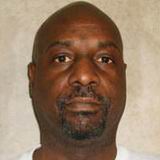
Leslie Lowenfield
Mass murderer Julio Gonzalez
Mass murderer · USA · 1990
Julio Gonzalez was sentenced to 174 twenty-five-year sentences (a total of 4,35…
87 victims
Julio Gonzalez
Mass murderer · USA · 1990
Julio Gonzalez was sentenced to 174 twenty-five-year sentences (a total of 4,35…
87 victims
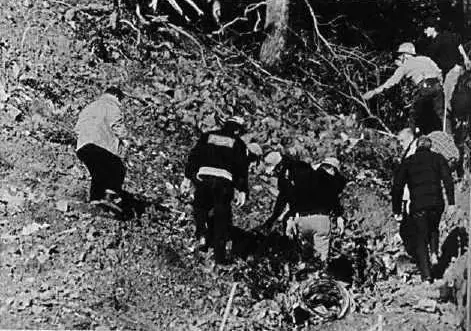 David Burke
Mass murderer · USA · 1987
David Augustus Burke (May 18, 1952–December 7, 1987) was an employee of USAir,…
43 victims
David Burke
Mass murderer · USA · 1987
David Augustus Burke (May 18, 1952–December 7, 1987) was an employee of USAir,…
43 victims
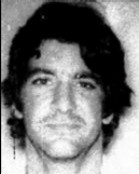 George Jo Hennard
Mass murderer · USA · 1991
George Jo Hennard carried out a mass killing at a Luby’s Cafeteria in Killeen,…
23 victims
George Jo Hennard
Mass murderer · USA · 1991
George Jo Hennard carried out a mass killing at a Luby’s Cafeteria in Killeen,…
23 victims
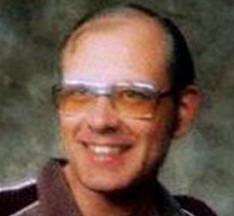 James Huberty
Mass murderer · USA · 1984
James Oliver Huberty was a 41-year-old unemployed security guard. He was born i…
21 victims
James Huberty
Mass murderer · USA · 1984
James Oliver Huberty was a 41-year-old unemployed security guard. He was born i…
21 victims
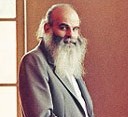 Ronald Gene Simmons
Mass murderer · USA · 1987
Ronald Gene Simmons was a retired United States Air Force sergeant. Over the Ch…
16 victims
Ronald Gene Simmons
Mass murderer · USA · 1987
Ronald Gene Simmons was a retired United States Air Force sergeant. Over the Ch…
16 victims
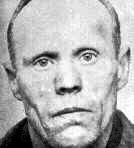 Albert Edward Matheson
Murderer · United Kingdom · 1957
Albert Edward Matheson was employed as a handyman at a hall in Newcastle, where…
1 victim
Albert Edward Matheson
Murderer · United Kingdom · 1957
Albert Edward Matheson was employed as a handyman at a hall in Newcastle, where…
1 victim
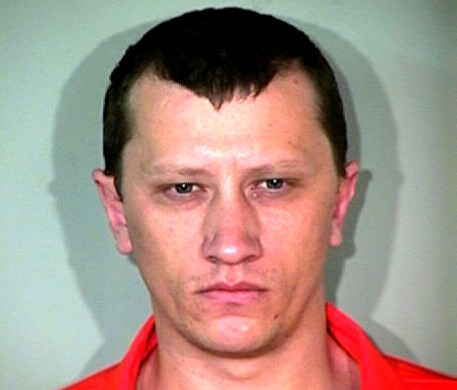 Beau John Greene
Murderer · USA · 1995
Beau John Greene was sentenced to death on August 26, 1996. Greene wrote a lett…
1 victim
Beau John Greene
Murderer · USA · 1995
Beau John Greene was sentenced to death on August 26, 1996. Greene wrote a lett…
1 victim
 Suleiman Khater
Mass murderer · Egypt · 1985
Suleiman Mohammed Abdul-Hamid Khater (Arabic سليمان خاطر, also transcribed Sole…
7 victims
Suleiman Khater
Mass murderer · Egypt · 1985
Suleiman Mohammed Abdul-Hamid Khater (Arabic سليمان خاطر, also transcribed Sole…
7 victims
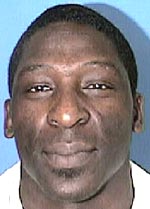 Gary Lynn Sterling
Murderer · USA · 1988
Gary Lynn Sterling was convicted of capital murder and sentenced to death for t…
4 victims
Gary Lynn Sterling
Murderer · USA · 1988
Gary Lynn Sterling was convicted of capital murder and sentenced to death for t…
4 victims
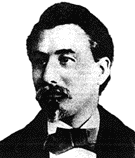 Louis Wagner
Murderer · USA · 1873
Louis Wagner had lived on Smuttynose Island with six Norwegian immigrants: Mare…
2 victims
Louis Wagner
Murderer · USA · 1873
Louis Wagner had lived on Smuttynose Island with six Norwegian immigrants: Mare…
2 victims
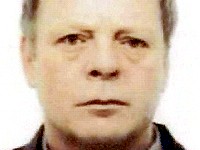 William Horncy
Mass murderer · United Kingdom · 2003
William Horncy (born 1954) was a British murderer. He was convicted of murderin…
5 victims
William Horncy
Mass murderer · United Kingdom · 2003
William Horncy (born 1954) was a British murderer. He was convicted of murderin…
5 victims
- Gender
- male
- Country
- USA
- Location
- Jefferson Parish, Louisiana, USA
- Date of birth
- 1955
- Age at first offence
- 27
- Characteristics
- jealous rage
- Victim profile
- His estranged girlfriend, Sheila Thomas, 27 , who was a Jefferson Parish sheriff's deputy; her daughter, Shantel Osborne, 4 ; Ms. Thomas's stepfather, Owen Griffin, 45 ; her mother, Myrtle Griffin, 44 , and Shantel's father, Carl Osborne
- Method of murder
- Shooting
- Date(s) of murder
- August 30, 1982
- Years active
- 1982
- Date of arrest
- —
- Status
-
Executed
Executed by electrocution in Louisiana on April 13, 1988
Case record: Leslie Lowenfield
Timeline
- June 1981 — Leslie Lowenfield came to Louisiana from Canada and met Sheila Thomas.
- Later in the summer of 1981 — Sheila Thomas and her young daughter, Shantell Osborne, moved in with Lowenfield.
- Earlier in the summer of 1982 — Lowenfield set the house on fire and Sheila Thomas moved out.
- August 30, 1982 — In Marrero, Louisiana, Owen Griffin heard shots ring out from his home and ran inside; police later found five bodies in the living area of the house.
- June 1984 — Lowenfield was found competent to stand trial.
- May 11, 1987 — The United States Court of Appeals for the Fifth Circuit issued its opinion in Leslie Lowenfield, Petitioner-Appellant, v. C. Paul Phelps, Secretary of the Department of Corrections, State of Louisiana, Et Al., Respondents-Appellees (No. 87-3305).
- April 13, 1988 — Leslie Lowenfield was executed by electrocution in Louisiana.
- April 14, 1988 — A report described the execution and the final appeal to the United States Supreme Court failing.
Background
Leslie Lowenfield was a native of Guyana. He came to the United States from Canada in 1975 on a work permit. He came to Louisiana from Canada in June 1981. He met the primary victim, Sheila Thomas, a deputy sheriff in Jefferson Parish, Louisiana, shortly after arriving in Louisiana.
Lowenfield and Sheila Thomas lived together off and on for approximately one year. During that year, Thomas left Lowenfield on three separate occasions and returned to live with her mother, and Lowenfield became increasingly bitter following each separation.
According to prosecutors, Lowenfield and Thomas lived together until earlier in the summer of 1982 when he set the house on fire and she moved out.
A report described Lowenfield as a 34-year-old welder from Guyana. It also described his final hours: he spent most of his final hours with Dale Brown, the head basketball coach at Louisiana State University, and two spiritual advisers. Mr. Brown, described as a Roman Catholic priest and a nun, arrived about 9 P.M. to spend Lowenfield’s final hours. The warden was Hilton Butler. Mr. Brown had been corresponding with Lowenfield since taking the Louisiana State University basketball team on a tour of death row in 1984.
Lowenfield claimed to be in Florida at the time of the killings.
The offence
On August 30, 1982, prosecutors said Lowenfield barged into his former girlfriend’s house in Marrero, a suburb of New Orleans, and shot everyone there as most of them were eating boiled crabs at a kitchen table.
The victims were:
- Sheila Thomas, a Jefferson Parish sheriff’s deputy, age 27
- Shantel Osborne, Thomas’s daughter, age 4
- Owen Griffin, Thomas’s stepfather, age 45
- Myrtle Griffin, Thomas’s mother, age 44
- Carl Osborne, Shantel’s father, age 33
When the police arrived after shots were heard, they found five bodies sprawled about the living area of the house. All of the victims had sustained multiple gunshot wounds, and each had been shot in the head at close range.
Investigation
Owen Griffin was playing cards with friends in a vacant lot near his home in Marrero when he heard shots ring out from his home. He ran to the house and rushed inside whereupon more shots rang out.
A detective who knew that Lowenfield frequently used cabs showed Lowenfield’s picture to various cab drivers, including Diane Faucheux, at the Westbank Cab Company. At that time, Diane Faucheux failed to identify Lowenfield as one of her passengers. Having failed to obtain an identification, the detective reviewed the taxi logs and discovered that Faucheux had picked up a fare at the petitioner's apartment on the day of the murders. The detective again asked Faucheux if she recognized Lowenfield’s photograph. After being shown the log and Lowenfield’s photographs, she positively identified Lowenfield as the fare she delivered one block from the murder scene and recalled that Lowenfield spoke with an accent. The officer then left and gave Faucheux a picture of Lowenfield with instructions to contact the police if she saw him again. Faucheux testified she identified Lowenfield because she looked at his face when she helped him load and unload packages from the cab, conversed with him during the hour-long ride, frequently looked back in the mirror, and got a good look at his face when he paid the fare.
Arrest
The provided material did not record arrest details.
Trial
Lowenfield refused to allow his lawyers to use insanity as a defense and insisted instead that he was in Jacksonville, Florida, when the family was killed. He refused to allow insanity as a defense and resisted psychiatric testimony during the sentencing phase as part of his trial strategy.
The jury gave him three consecutive death sentences and two manslaughter sentences.
A report described the trial outcome as: he was convicted of three counts of first-degree murder and two of manslaughter and received three death sentences.
Lowenfield was found competent to stand trial in 1984.
Jury deliberations and verdict
The jury was charged following the guilt phase of the trial on May 14, 1984 at 11:45 a.m. They deliberated until 7:45 p.m. when the trial court recessed for the night at the jury’s request. The jury resumed its deliberations the next day at 10:05 a.m. and returned with its guilty verdicts at 3:05 p.m. The sentencing hearing commenced three hours later, at 6:05 p.m., and concluded at 8:17 p.m. Following the sentencing hearing, the jury deliberated until 11:55 p.m., when the trial court recessed for the night at the jury’s request. The jury reconvened the next day, May 16, 1984, at 9:40 a.m. Two hours later defense counsel moved for a mistrial arguing that the elapsed deliberation time, five hours, and the last instruction by Judge Cannella at the guilt phase justified a mistrial. Approximately three hours later, counsel reurged their motion.
While counsel were arguing their motion for mistrial, the trial judge received a note from the jury indicating that it was deadlocked. The trial court polled the jury and asked them: "do you feel that any further deliberations will enable you to arrive at a verdict?" One juror responded negatively; the balance answered affirmatively.
The court instructed the jury to continue its deliberations and repeated parts of its earlier charge, including the statement that if they were unable to reach a verdict, the court would sentence the petitioner to life imprisonment. Thirty minutes later the jury returned its verdict.
The dissenting opinion described that, after the jury’s representation of deadlock in a note to the judge, the trial judge declined to invoke article 905.8 on the first indication of deadlock, instead instructed the jury again on the article 905.8 procedure, asked whether further deliberations would be helpful in obtaining a verdict, polled jurors on that question, asked the question again, and then gave an Allen charge. The dissenting opinion included the sequence and reasoning it attributed to the jurors’ responses.
Verbatim instruction and charge excerpts (trial)
The supplemental instruction provided was:
Let me say that I know how much effort you've put into the case already. I know you put a lot of effort into deliberation and I appreciate the effort you put in. In this note you request certain items. I cannot give the evidence that you requested. There are legal reasons why I cannot give you these items. You must rely on your memories on what the evidence, on what evidence you saw and you heard when you were in court. The fact that certain items cannot by law be given to you you [sic] should not hold against either the state or the defendant in this case. Since I've told you now that I cannot give you these items I order you to go back to the jury room and to deliberate and arrive at a verdict. Trial transcript at 2299.
The court instructed the jury:
Ladies and Gentlemen, as I instructed you earlier if the jury is unable to unanimously agree on a recommendation the Court shall impose the sentence of Life Imprisonment without benefit of Probation, Parole, or Suspension of Sentence. When you enter the jury room it is your duty to consult with one another to consider each other's views and to discuss the evidence with the objective of reaching a just verdict if you can do so without violence to that individual judgment. Each of you must decide the case for yourself but only after discussion and impartial consideration of the case with your fellow jurors. You are not advocates for one side or the other. Do not hesitate to reexamine your own views and to change your opinion if you are convinced you are wrong but do not surrender your honest belief as to the weight and effect of evidence solely because of the opinion of your fellow jurors or for the mere purpose of returning a verdict. Ladies and Gentlemen please retire to the jury room. Trial transcript at 2350-51.
Sentencing
Lowenfield opposed psychiatric testimony during the sentencing phase. Immediately before the sentencing hearing began, Lowenfield told the court outside the presence of the jury that he opposed the presentation of psychiatric testimony in this phase of the trial. He had told his counsel that psychiatric testimony was not desired, and counsel accepted that decision for strategic reasons.
The jury deliberated on life or death and returned verdicts leading to three death sentences and two manslaughter sentences.
A dissenting opinion in the Fifth Circuit decision discussed the sentencing phase as including a supplemental Allen charge and a jury inquiry into numerical division, describing its potential coercive effect.
Appeals
The United States Court of Appeals for the Fifth Circuit case was identified as: Leslie Lowenfield, Petitioner-Appellant, v. C. 87-3305).
The opinion stated that the petitioner was convicted of the first degree murder of three persons and that the court sentenced him to death on each count on the jury’s recommendation. It further stated that the conviction and sentence was affirmed by the Louisiana Supreme Court, State v. Lowenfield, 495 So.2d 1245 (La.1985), and that certiorari was denied. It stated that post conviction relief was denied by the state court, Lowenfield v. Phelps, 497 So.2d 301 (La.1986). It stated that on Lowenfield’s application for federal habeas relief, the district court stayed the execution set for November 19, 1986 to carefully consider the petition, then following a full evidentiary hearing denied habeas relief, vacated its earlier stay of execution, and denied a certificate of probable cause. The Fifth Circuit opinion said Lowenfield filed a notice of appeal from the district court’s denial of habeas relief and sought a certificate of probable cause from the court.
The Fifth Circuit opinion listed issues raised by Lowenfield in the habeas proceedings, including:
- duplication of aggravating circumstances arguments
- failure to permit defense counsel to withdraw and appointment of substitute counsel
- ineffective assistance of counsel at guilt and penalty phases
- coercion of a deadlocked jury into a verdict
- improper burden shifting on competence to stand trial
- admission of a bill of information filed after the death of Ms. Thomas charging harassing phone calls as an arbitrary factor
- admission of evidence of attempted rape in Canada at sentencing
- change of venue based on pretrial publicity and judges’ relationship with the victim
- suppression of identification testimony by cab driver Diane Faucheux based on unduly suggestive tactics
- challenges to jury instructions, refusal to recall Anita Jackson, insufficiency of the evidence, and constitutional challenges to electrocution and capital punishment, and cumulative effect
The Fifth Circuit concluded: "In conclusion, because Lowenfield has not made a substantial showing of the denial of a federal right, we DENY a certificate of probable cause and also DENY a stay of execution. See Barefoot v. Estelle, 463 U.S. 880, 883, 103 S.Ct. 3383, 3389, 77 L.Ed.2d 1090 (1983). The mandate shall issue forthwith."
A dissenting opinion in the Fifth Circuit addressed the supplemental Allen charge and Brasfield inquiry in the sentencing phase and stated:
The supplemental Allen charge urging the jury to reach a verdict and the Brasfield inquiry into the jury's numerical division have no place in the sentencing phase of a death penalty case. A jury considering whether to impose a life or death sentence is likely to interpret these actions of the judge as a suggestion or command to choose death. With great deference to the opinion of the majority, I therefore respectfully dissent.
Lowenfield’s final appeal to the United States Supreme Court failed, and the execution proceeded shortly thereafter.
Outcome
Leslie Lowenfield was executed by electrocution in Louisiana on April 13, 1988.
Aftermath
A report described that Lowenfield was pronounced dead at 12:25 A.M. It also stated that it was the nation’s fourth execution that year and Louisiana’s second, and that the state had put to death 17 prisoners since it resumed executions in 1983. It also stated that it was the 97th person executed in the United States since the Supreme Court restored the legality of the death penalty in 1976.
Final statement and last words
Lowenfield’s final statement included remarks directed at two attorneys, Wayne Walker and John Craft, who had worked on his trial and appeal. His last words were:
"I hope you all feel satisfied. Don't give up on me although my life will be over tonight, because the one responsible is out there. "There is no reason to hold anything against me and the rest who would lie. When I'm gone, the body will be gone, but the spirit will live on. "Mr. Walker and John Craft, your job was more important than my life. I hope you feel satisfied. Thank all of you all. Peace!"
Other details
Mental health and insanity defense
He refused to allow his lawyers to use insanity as a defense. At the federal habeas hearing, the lawyers explained that psychiatric testimony would be strategically more detrimental than helpful given differences in how jurors might resolve doubts about guilt.
The Fifth Circuit opinion described that three sanity commissions found Lowenfield sane with only a single dissenting psychiatrist, Dr. Richaux. At the third sanity hearing Dr. Richaux admitted that he did not have "a definitive opinion concerning Mr. Lowenfield's sanity at the time of the offense," but expressed a tentative opinion that "there is a good possibility that Mr. Lowenfield could have been psychotic" at that time. The opinion also stated that Dr. Richaux was the only psychiatrist able to give favorable testimony on insanity, and his testimony would have likely been rebutted by the remaining psychiatrists who believed Lowenfield was sane at the time of the offense.
Lowenfield refused to be interviewed by additional psychiatrists and refused psychiatric tests his attorneys had set up for him.
Weapons discovery and evidentiary issues at habeas
Both murder weapons were discovered by relatives of Sheila Thomas after the murders. The Fifth Circuit opinion stated that one brother discovered the rifle the next day under bed coverings on Ms. Thomas’s bed while preparing to clean the house, and another relative discovered the pistol a week later in a heater vent. The opinion stated that counsel recognized that police failure to discover the guns and imperfect documentation of chain of custody could create problems, and counsel testified that strategically it was advantageous to acquiesce in the introduction of the weapons to argue that others were implicated and to reflect negatively on the state’s case.
Juror and testimony issues
In the appended district court excerpts described in the Fifth Circuit dissenting portion, juror Catherine Roberts expressed an inability to not consider Lowenfield’s not taking the stand. The excerpt included verbatim dialogue:
MS. ROBERTS: ... I know right now the idea of his not being up there, I know if I'm thinking now I'm sure it might happen. MR. CAPITELLI: ... I need to know the answer now. I'm not going to get a chance to do it later. If it is causing you concern now, I need to ask you to articulate it in terms of would that effect in your mind concern you to the point you could not be totally fair? MS. ROBERTS: Yes. Transcript, 9 May 1984, at 168.
The Fifth Circuit opinion also stated that Lowenfield’s claim that the trial court erred in denying counsel’s request to recall Anita Jackson to the stand lacked merit. It stated that counsel knew Anita Jackson would testify and had been given copies of statements used to cross-examine her.
Lowenfield’s trial testimony (verbatim excerpt)
The opinion included a verbatim excerpt of Lowenfield’s testimony:
... I plead not guilty and my reason for pleading not guilty is that I wasn't in the State of Louisiana in August ... August 30, 1982, the day I was accused of a crime.... I wished not to plead not guilty by reason of insanity because reason of insanity is telling the court that this person did something he wasn't responsible for something. And to the best of my knowledge I never had no mental illness in my whole entire life and up to this moment I do not have any mental problems. And I advised him to withdraw the plea because its telling, you're telling the court plainly to plead reasonable insanity. You're looking for a way out.... Trial transcript at 851-52.
Attempted rape in Canada
The Fifth Circuit opinion stated that during sentencing evidence of Lowenfield’s conviction of attempted rape in Canada was introduced, and that Lowenfield argued constitutional protections were not shown to have been afforded in the Canadian case. The opinion concluded this complaint lacked merit in the context of a capital sentencing hearing and cited standards for a habeas petitioner’s burden to prove convictions used to illustrate character propensities were constitutionally defective.
Venue
Lowenfield argued for a change of venue based on pretrial publicity and close working relationship between Sheila Thomas and judges of the court where he was tried. The Fifth Circuit opinion described evidence from an evidentiary hearing supporting that Judge Canella was not personally acquainted with Sheila Thomas or her family and became aware she escorted prisoners to his courtroom only after proceedings began. It stated that the relationship between Judge Canella and Judge Collins would not prevent Judge Canella from impartially trying Lowenfield’s case and described limited contact between the judges about procedure before hearings on the venue motion. It also described voir dire results, with only four jurors recalling having heard about the case, and that those selected verified they could be fair and impartial. The opinion stated that pretrial publicity did not meet the level required to presume prejudice under Rideau v. Louisiana.
Spotted an error, or have more information about this case?