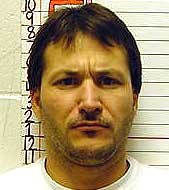
Carman Deck
Murderer Russell Ellwood
Murderer · USA · 1991
Russell Ellwood was a former taxi driver. Authorities suspected him of killing…
20 victims
Russell Ellwood
Murderer · USA · 1991
Russell Ellwood was a former taxi driver. Authorities suspected him of killing…
20 victims
 Robert Martines Perez
Murderer · USA · 1994
Name: Robert Martines Perez · Other name used in proceedings: Robert Martinez P…
15 victims
Robert Martines Perez
Murderer · USA · 1994
Name: Robert Martines Perez · Other name used in proceedings: Robert Martinez P…
15 victims
 Billy Frank Vickers
Murderer · USA · 1993
Billy Frank Vickers Vickers was executed by lethal injection in Texas on Januar…
14 victims
Billy Frank Vickers
Murderer · USA · 1993
Billy Frank Vickers Vickers was executed by lethal injection in Texas on Januar…
14 victims
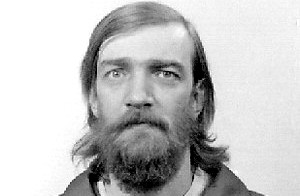 Frank R. Davis
Murderer · USA · 1983
Frank R. Davis was convicted in connection with the assault and killings of mul…
2 victims
Frank R. Davis
Murderer · USA · 1983
Frank R. Davis was convicted in connection with the assault and killings of mul…
2 victims
 Wayne Cordell Mitchell
Murderer · USA · 1997
Wayne Cordell Mitchell Wayne Cordell Mitchell and Robin Little met and began da…
1 victim
Wayne Cordell Mitchell
Murderer · USA · 1997
Wayne Cordell Mitchell Wayne Cordell Mitchell and Robin Little met and began da…
1 victim
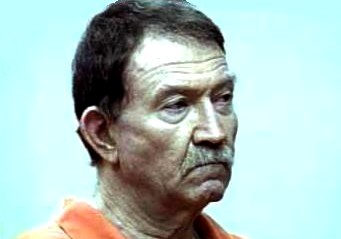 Mel Ignatow
Murderer · USA · 1988
Mel Ignatow was a resident of Louisville, Kentucky. Brenda Sue Schaeffer (Brend…
1 victim
Mel Ignatow
Murderer · USA · 1988
Mel Ignatow was a resident of Louisville, Kentucky. Brenda Sue Schaeffer (Brend…
1 victim
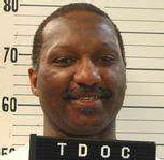 Byron Lewis Black
Murderer · USA · 1988
Byron Lewis Black was convicted in 1989 of three counts of first degree murder…
3 victims
Byron Lewis Black
Murderer · USA · 1988
Byron Lewis Black was convicted in 1989 of three counts of first degree murder…
3 victims
 Silvo Plut
Serial killer · Slovenia / Serbia · 1990
Silvo Plut was a Slovenian serial killer. He was born 29 May 1968 in Novo mesto…
3 victims
Silvo Plut
Serial killer · Slovenia / Serbia · 1990
Silvo Plut was a Slovenian serial killer. He was born 29 May 1968 in Novo mesto…
3 victims
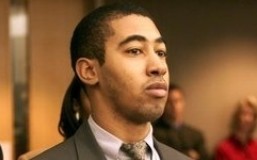 Robert Wayne Harris
Mass murderer · USA · 1999
March 15, 2000 — Robert Wayne Harris masturbated in front of a female customer…
6 victims
Robert Wayne Harris
Mass murderer · USA · 1999
March 15, 2000 — Robert Wayne Harris masturbated in front of a female customer…
6 victims
- Gender
- male
- Country
- USA
- Location
- Jefferson County, Missouri, USA
- Date of birth
- August 9, 1965
- Age at first offence
- 31
- Characteristics
- robbery, armed robbery
- Victim profile
- James and Zelma Long
- Method of murder
- Shooting (.22 caliber pistol)
- Date(s) of murder
- July 8, 1996
- Years active
- 1996
- Date of arrest
- Same day
- Status
-
Sentenced to death
Sentenced to death on April 27, 1998; sentenced for a third time to death on November 7, 2008
Case record: Carman Deck
Background
Carman L. Deck was convicted of two counts of first degree murder, two counts of armed criminal action, one count of first degree robbery, and one count of first degree burglary.
At sentencing, the jury recommended the death penalty. On November 7, 2008, Carman L. Deck was sentenced for a third time to death for the 1996 fatal shootings of an elderly couple from De Soto. Two previous death sentences for Deck, now 43, had been overturned on appeal.
At the time of the November 7, 2008 sentencing, the death sentence was imposed at Hillsboro by Jefferson County Circuit Judge Gary Kramer. The sentencing decision accepted the recommendation of a jury that heard arguments for the death penalty in September.
The appeal in the Supreme Court of Missouri resulted in an affirmed judgment. The case was also considered by the Supreme Court of the United States in DECK V. MISSOURI, 544 U.S. 622 (2005), which reversed and remanded.
The offence
In June 1996, Deck planned a burglary with his mother’s boyfriend, Jim Boliek, to help Boliek obtain money for a trip to Oklahoma. Deck targeted James and Zelma Long because he had known the Longs’ grandson and had accompanied him to the Longs’ home in DeSoto, Missouri, where the grandson had stolen money from a safe. The original plan was to break into the Longs’ home on a Sunday while the Longs were at church.
In preparation for the burglary, Deck and Boliek drove to DeSoto several times to canvass the area. On Monday, July 8, 1996, Boliek told Deck that he and Deck’s mother wanted to leave for Oklahoma on Friday, and he gave Deck his .22 caliber High Standard automatic loading pistol.
That Monday evening, Deck and his sister, Tonia Cummings, drove in her car to rural Jefferson County near DeSoto and parked on a back road while waiting for nightfall. Around nine o’clock, Deck and Cummings pulled into the Longs’ driveway. Deck and Cummings knocked on the door, and Zelma Long answered. Deck asked for directions to Laguana Palma; Mrs. Long invited them into the house.
As Mrs. Long explained the directions and Mr. Long wrote them down, Deck walked toward the front door and pulled the pistol from his waistband. Deck then ordered the Longs to go lie face down on their bed, and they complied without a struggle. Deck next told Mr. Long to open the safe. Because Mr. Long did not know the combination, Mrs. Long opened it instead. She gave Deck the papers and jewelry inside and then told Deck she had two hundred dollars in her purse in the kitchen. Deck sent her into the kitchen, and she brought the money back to him. Mr. Long then told Deck that a canister on top of the television contained money, and Deck took the canister.
Deck again ordered the Longs to lie on their stomachs on the bed with their faces to the side. For ten minutes or so, while the Longs begged for their lives, Deck stood at the foot of the bed trying to decide what to do. Cummings, who had been a lookout at the front door, decided time was running short and ran out the door to the car.
Deck put the gun to Mr. Long’s head and fired twice into his temple, just above his ear and just behind his forehead. Then Deck put the gun to Mrs. Long’s head and shot her twice, once in the back of the head and once above the ear. Both of the Longs died from the gunshots.
After the shooting, Deck grabbed the money and left the house. While fleeing in the car, Cummings complained of stomach pains, so Deck took her to Jefferson Memorial Hospital, where she was admitted. Deck gave her about two hundred fifty dollars of the Long’s money and then drove back to St. Louis County.
Investigation
Based on a tip from an informant earlier that same day, St. Louis County Police Officer Vince Wood was dispatched to the apartment complex where Deck and Cummings lived. Officer Wood confronted Deck late that night after he observed him driving the car into the apartment parking lot with the headlights turned off.
During a search for weapons, Officer Wood found a pistol concealed under the front seat of the car and then placed Deck under arrest. Deck later gave a full account of the murders in oral, written, and audio taped statements.
At the hearing on the motion to suppress, an individual identified as Charles Hill told the Jefferson County Sheriff’s Office that he believed Deck and his sister were involved in a robbery and/or homicide in Jefferson County, that they would be driving a gold two-door car, and that they probably were armed. Hill’s information was relayed to the St. Louis County Police, and Officer Wood was dispatched.
Footnote FN1 recorded that Charles Hill testified at the preliminary hearing that he was a retired Marine sergeant and a former boyfriend of Tonia Cummings, who overheard Deck and Cummings plan for the robbery/murder about a week before it was carried out, but Hill did not testify at the suppression hearing or at trial.
Arrest
Officer Wood confronted Deck late that night after observing Deck drive into the apartment parking lot with the headlights turned off. Officer Wood saw Deck drive by alone in a two-door gold car and pull into a parking space sometime after 11 o’clock at night. The lights to Deck’s car were not illuminated even though it was dark.
Officer Wood walked toward Deck’s car, identified himself as a police officer, and shined his flashlight into the car. Deck turned away from him and leaned down toward the passenger side of the vehicle. Officer Wood ordered Deck to sit up and show his hands. When Deck complied, Officer Wood asked him to get out of the car. Once outside the car, Officer Wood patted Deck down for weapons, found none, and then searched the passenger side of the vehicle while a back-up officer detained Deck.
The search revealed a pistol concealed underneath the front seat. Officer Wood placed Deck under arrest for unlawful use of a weapon. The police impounded the vehicle, and during an inventory search, Officer Wood found the victims’ decorative tin filled with coins on the vehicle’s floorboard. Deck later made oral, written, and taped statements.
Trial
Convictions
A Jefferson County jury convicted Carmen L. Deck, Jr., of:
- two counts of first degree murder,
- two counts of armed criminal action,
- one count of first degree robbery,
- and one count of first degree burglary.
Deck was sentenced to death for each of the two murder counts. The judgment also included concurrent life sentences for the two counts of armed criminal action. The court imposed consecutive sentences of thirty years imprisonment for the robbery count and fifteen years imprisonment for the burglary count.
The Supreme Court of Missouri affirmed the judgment.
Motion for change of venue
Deck contended that the trial court erred in overruling his motion for change of venue filed under Rule 32.04. He stated that the case had received extensive publicity by way of newspaper and television coverage and that residents of Jefferson County were biased and prejudiced against defendant such that he could not receive a fair trial.
The trial court overruled the motion after an evidentiary hearing and found that there was not “such overwhelming pre-trial publicity as is likely to render impossible the selection of an impartial jury.”
Deck introduced nine newspaper articles and several videotapes of television news broadcasts, all of which appeared within a few weeks of the July 8 murders. He also offered the testimony of Dr. Kenneth Warren, a professor of political science at Saint Louis University, who conducted an opinion poll. Warren’s poll was taken between November 13, 1996 and December 9, 1996 and surveyed five hundred eighteen residents of Jefferson County. The results showed that sixty-nine percent were aware of the case and twenty-seven percent held an opinion regarding Deck’s guilt.
Deck argued that these circumstances showed the Jefferson County community was saturated with prejudicial publicity, so the trial court abused its discretion in overruling the motion. During jury selection, fifty prospective jurors indicated they had heard about or read about the case. Thirteen of the fifty stated they had formed opinions regarding Deck’s guilt based on the publicity and that it would be difficult or impossible for them to render a fair and impartial verdict. Deck renewed his motion for change of venue at that point, and the trial court again overruled the motion.
The Supreme Court of Missouri held there was no denial of a fair and impartial jury and that the trial court did not abuse its discretion in denying the change of venue motion.
Motion to suppress
Deck claimed the trial court erred in overruling his motion to suppress and in admitting at trial statements he made to police and the pistol and other items seized from his car.
Deck argued that Officer Wood did not have reasonable suspicion to stop him on the parking lot, so the stop was unlawful, and that evidence should have been excluded as fruit of the poisonous tree. Deck also claimed the evidence and statements violated his rights under the Fourth, Fifth, Sixth, Eighth, and Fourteenth Amendments to the United States Constitution and Missouri Constitution provisions.
The Supreme Court of Missouri held no Fourth Amendment violation occurred. It determined that no stop or seizure took place when Officer Wood first approached Deck’s car, and that the seizure occurred when Deck submitted by complying with Officer Wood’s orders. It also found reasonable suspicion to justify a Terry stop, and it held that Officer Wood was justified in conducting a detention, ordering Deck to exit the car, conducting a pat-down search, searching the passenger area as a protective sweep, and seizing the pistol. After finding the pistol, it held Officer Wood had probable cause to arrest Deck for unlawful use of weapons.
The Supreme Court of Missouri also held that police could consider an informant’s tip when it was supported by other independent corroborative evidence suggestive of criminal activity.
Voir dire
Gender Batson challenges
Deck claimed the trial court erred in overruling objections to the state’s peremptory strikes of two female venirepersons in violation of Batson v. Kentucky and J.E.B. v. Alabama ex rel. T.B.
The Supreme Court of Missouri described the prosecutors’ explanations:
For prospective juror number sixteen:
- MR. JERRELL: “Your Honor, the first time I laid eyes on . . . and heard her speak, I thought she was a very weak juror. In fact, that's what I wrote in my notes during the middle of voir dire. Also her son's been prosecuted . . . and I can't even read my own writing, but I don't want any juror on there, at least her, where her son's been prosecuted.”
- MR. WILKINS: “Actually it's not her son. Her ex-brother-in-law is in the Department of Corrections for burglary and his son has a current charge pending in our county.”
- MR. JERRELL: “I stand corrected. Exactly what my notes say. That's my reasons for [her].”
- MR. WILKINS: “Likewise, Your Honor, I had independent of Mr. Jerrell also written the word weak on [her] and independent of him, also based upon.”
For prospective juror number fifty:
- MR. JERRELL: “As for [her], I didn't think much of her either. She does have what we believe to be a prior DWI in Kirkwood, which she never mentioned, from our research on her. I also felt that she was not a strong juror. So that's why we decided to strike her.”
- MR. WILKINS: “Quite frankly, she has a prior DWI in the City of Kirkwood. That's what the criminal history record shows. She was very red-cheeked, sixtiesh, sixty-eight, single. My concern, my interest was that that might signal an alcohol habit, problem, whatever. Had nothing to do with the fact that she was female.”
The Supreme Court of Missouri held Deck did not show that the strikes were pretextual and that they were motivated by gender.
Challenge for cause
Deck contended that the trial court erred in overruling his motion to strike prospective juror Scott Arnold, who gave some indication during voir dire that he might automatically impose the death penalty. Deck’s peremptory strike removed Mr. Arnold from the panel and Mr. Arnold did not serve on the jury. The Supreme Court of Missouri held the claim was precluded by section 494.480.4 and denied the point.
Penalty phase
Victim impact testimony
During the penalty phase, William Long, the son of the victims, read a statement that the family had prepared. The Supreme Court of Missouri described that after his testimony, three jurors and Long family members cried.
Deck alleged that the testimony exceeded guidelines for victim impact evidence under Payne v. Tennessee and that the emotional reaction led the court to err in overruling a motion for a mistrial. The Supreme Court of Missouri held the trial court did not abuse its discretion and overruled the complaint.
Mitigating instructions
Deck contended that Instructions No. 8 and No. 13 were defective because the final two paragraphs of MAI-CR3d 313.44A were inadvertently omitted.
Instruction No. 8, as submitted to the jury, stated:
INSTRUCTION NO. 8
As to Count I, if you unanimously find that the facts and circumstances in aggravation of punishment, taken as a whole, warrant the imposition of a sentence of death upon the defendant, you must then determine whether there are facts or circumstances in mitigation of punishment which are sufficient to outweigh the facts and circumstances in aggravation of punishment.
In deciding this question, you may consider all of the evidence presented in both the guilt and the punishment stages of the trial.
Instruction No. 13 was identical except that it referred to Count III.
The omitted final two paragraphs of MAI-CR 3d 313.44A were:
You shall also consider any (other) facts or circumstances which you find from the evidence in mitigation of punishment. It is not necessary that all jurors agree upon particular facts and circumstances in mitigation of punishment. If each juror determines that there are facts or circumstances in mitigation of punishment sufficient to outweigh the evidence in aggravation of punishment, then you must return a verdict fixing defendant's punishment at imprisonment for life by the Department of Corrections without eligibility for probation or parole.
The Supreme Court of Missouri reviewed the instructional claim for plain error and concluded there was no reasonable likelihood that the jurors were prevented from considering mitigating circumstances.
Dictionary and definition request during deliberations
The jury sent notes asking for the legal definition of mitigating. The case record included the notes and responses:
Jury asked: “What is the legal definition of mitigating (as in mitigation circumstances)? Instruction 8.”
The trial court replied:
“Any legal terms in the instructions that have a 'legal' meaning would have been defined for you. Therefore, any terms that you have not had defined for you should be given their ordinary meaning.”
The jury followed up with: “Can we have a dictionary?”
The trial court responded:
“No, I'm not permitted to give you one.”
Deck contended that the trial court should have provided a definition of the term “mitigating” or that failure compounded the error. The Supreme Court of Missouri held there was no error in refusing to define “mitigating” or provide a dictionary.
Closing argument in penalty phase
Deck asserted the prosecutor made improper comments during closing argument. The Supreme Court of Missouri described two claims: a mercy argument and personalization.
For the mercy argument, the prosecutor stated the jury should impose the death penalty because that was:
- “the only sentence [the jury could] impose to show justice and to show mercy to those people, to the people in the courtroom.”
Defense counsel objected and requested a mistrial. The trial court sustained the objection but overruled the motion for a mistrial. The trial court granted permission to rephrase the comment but did not advise the jury that the objection had been sustained.
For personalization, the prosecutor stated:
- “count out ten minutes and you think about how long that is and then think about somebody pointing a gun at your head at the same time.”
No objection was made to that comment.
The Supreme Court of Missouri held the mercy argument claim had no merit as framed, and it held the personalization claim did not result in manifest injustice.
Reasonable doubt instruction
Deck contended the court erroneously defined proof beyond a reasonable doubt with the words “firmly convinced.” Deck cited Cage v. Louisiana. The Supreme Court of Missouri held this claim had been consistently denied and denied the point.
Sentencing
The Supreme Court of Missouri’s opinion summarized that a Jefferson County jury convicted Deck and sentenced him to death for each of the two murder counts, with concurrent life sentences for the two counts of armed criminal action and consecutive imprisonment for robbery and burglary.
In the independent review required by section 565.035.3, the Supreme Court of Missouri addressed three questions.
It stated it was satisfied there was no evidence the punishment was imposed under the influence of passion, prejudice, or any other arbitrary factor. It also listed the statutory aggravating circumstances found by the jury:
- each murder was committed while the defendant was engaged in the commission of another unlawful homicide, section 565.032.2(2);
- the murders were committed for the purpose of receiving money or any other thing of monetary value, section 565.032.2(4);
- the murders were outrageously and wantonly vile, horrible, and inhuman in that they involved depravity of mind, section 565.032.2(7);
- the murders were committed for the purpose of avoiding a lawful arrest, section 565.032.2(10);
- the murders were committed while defendant was engaged in the perpetration of burglary, section 565.032.2(11);
- the murders were committed while defendant was engaged in the perpetration of robbery, section 565.032.2(11).
It concluded the evidence supported the statutory aggravators found by the jury, and it concluded the death penalty was not excessive or disproportionate.
Appeals
The Supreme Court of Missouri described the appeal as:
- Case Style: State of Missouri, Respondent, v. Carman L. Deck, Appellant.
- Case Number: 80821.
- Handdown Date: 06/01/99.
- Appeal From: Circuit Court of Jefferson County, Hon. Gary P. Kramer.
The Supreme Court of Missouri held:
- “AFFIRMED.” It also stated Opinion Vote: AFFIRMED and that all concur.
- It addressed the issues raised on appeal including change of venue, motion to suppress, gender Batson challenges, challenge for cause preclusion, victim impact evidence, mitigating instruction issues, the jury’s requests during deliberations, closing argument, reasonable doubt instruction, and independent review under section 565.035.3.
The Supreme Court of the United States considered the case as DECK V. MISSOURI (04-5293) 544 U.S. 622 (2005) and reversed and remanded.
Outcome
The Supreme Court of Missouri affirmed the judgment and death sentences it reviewed. Later, two previous death sentences had been overturned on appeal, and Deck was sentenced for a third time to death on November 7, 2008.
Other details
Prior death sentences and age
The case record stated that Deck was now 43 at the time of the November 7, 2008 sentencing and that two previous death sentences had been overturned on appeal.
Names appearing in the offence and related events
- Victims: James Long; Zelma Long.
- Relative in the event: Tonia Cummings (Deck’s sister).
- Planning associate: Jim Boliek (Deck’s mother’s boyfriend).
- Informant referenced in the suppression narrative: Charles Hill.
- Police officer: Vince Wood.
- Doctor involved in the opinion poll: Dr. Kenneth Warren.
- Psychologist testifying about misunderstanding: Dr. Richard Weiner.
- Victim impact witness: William Long.
- Judge at sentencing in 2008: Jefferson County Circuit Judge Gary Kramer.
- Judge on appeal in Jefferson County circuit: Hon. Gary P. Kramer.
- Prosecutor names appearing in quoted voir dire exchanges: MR. JERRELL; MR. WILKINS.

Spotted an error, or have more information about this case?