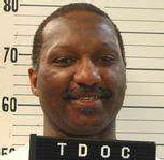
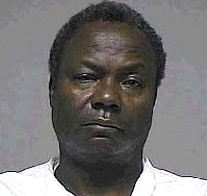
Byron Lewis Black
Murderer Brian Kevin Rosenfeld
Murderer · USA · 1985
Brian Kevin Rosenfeld Brian Kevin Rosenfeld was sentenced to three concurrent l…
23 victims
Brian Kevin Rosenfeld
Murderer · USA · 1985
Brian Kevin Rosenfeld Brian Kevin Rosenfeld was sentenced to three concurrent l…
23 victims
 Yahweh ben Yahweh
Murderer · USA · 1980
Yahweh ben Yahweh was born and legally named Hulon Mitchell Jr. (October 27, 19…
23 victims
Yahweh ben Yahweh
Murderer · USA · 1980
Yahweh ben Yahweh was born and legally named Hulon Mitchell Jr. (October 27, 19…
23 victims
 Russell Ellwood
Murderer · USA · 1991
Russell Ellwood was a former taxi driver. Authorities suspected him of killing…
20 victims
Russell Ellwood
Murderer · USA · 1991
Russell Ellwood was a former taxi driver. Authorities suspected him of killing…
20 victims
 Robert Martines Perez
Murderer · USA · 1994
Name: Robert Martines Perez · Other name used in proceedings: Robert Martinez P…
15 victims
Robert Martines Perez
Murderer · USA · 1994
Name: Robert Martines Perez · Other name used in proceedings: Robert Martinez P…
15 victims
 Mary Ellen Samuels
Murderer · USA · 1988
Mary Ellen Samuels was convicted of arranging the murders of her husband, Rober…
2 victims
Mary Ellen Samuels
Murderer · USA · 1988
Mary Ellen Samuels was convicted of arranging the murders of her husband, Rober…
2 victims
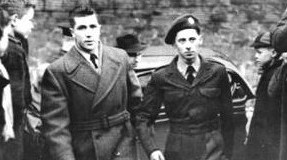 Iain Hay Gordon
Homicide ? · United Kingdom · 1952
Iain Hay Gordon was convicted of the killing of Patricia Curran and was found g…
1 victim
Iain Hay Gordon
Homicide ? · United Kingdom · 1952
Iain Hay Gordon was convicted of the killing of Patricia Curran and was found g…
1 victim
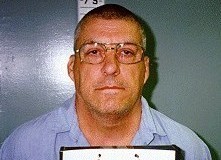 Douglas Franklin Wright
Serial killer · USA · 1969
Douglas Franklin Wright (born 1940-03-25) was executed by lethal injection in O…
7 victims
Douglas Franklin Wright
Serial killer · USA · 1969
Douglas Franklin Wright (born 1940-03-25) was executed by lethal injection in O…
7 victims
 John Louis Evans
Murderer · USA · 1977
John Louis Evans III was born on January 4, 1950, in Beaumont, Texas. He was ex…
1 victim
John Louis Evans
Murderer · USA · 1977
John Louis Evans III was born on January 4, 1950, in Beaumont, Texas. He was ex…
1 victim
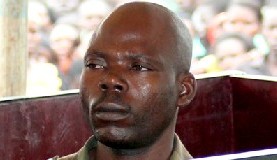 Patrick Okot
Mass murderer · Uganda · 2013
March 5, 2013 — Gunmen attacked Mbuya barracks to steal arms. · February 4, 201…
10 victims
Patrick Okot
Mass murderer · Uganda · 2013
March 5, 2013 — Gunmen attacked Mbuya barracks to steal arms. · February 4, 201…
10 victims
- Gender
- male
- Country
- USA
- Location
- Davidson County, Tennessee, USA
- Date of birth
- March 23, 1956
- Age at first offence
- 32
- Characteristics
- parricide
- Victim profile
- H is girlfriend, Angela Clay, and her two daughters, Latoya, 9, and Lakeisha Clay, 6
- Method of murder
- Shooting
- Date(s) of murder
- March 28, 1988
- Years active
- 1988
- Date of arrest
- —
- Status
-
Sentenced to death
Sentenced to death on March 10, 1989
Case summary
Byron Lewis Black was convicted in 1989 of three counts of first degree murder for the shooting deaths of his girlfriend, Angela Clay, and her two daughters, Latoya and Lakeisha Clay.
A jury sentenced Black to death for the murder of Lakeisha Clay and imposed two life sentences for the murders of Angela and Latoya Clay. A fiften-year sentence was also imposed for burglary. His convictions and sentence were affirmed on direct appeal.
Timeline
- March 28, 1988 — Police arrived at approximately 9:30 p.m. and found no signs of forced entry; the door was locked.
- March 10, 1989 — Black was sentenced to death.
- 1992 — Black filed a petition for post conviction relief in Davidson County Criminal Court.
- September 13, 1999 — Black’s application for permission to appeal to the Tennessee Supreme Court was denied.
- August 14, 2000 — Black filed a petition for federal habeas relief under 28 U.S.C. § 2254 (governed by AEDPA).
- December 11, 2001 — The United States District Court for the Middle District of Tennessee, Nashville Division granted summary judgment to the respondent.
Background
In 1989, Black was convicted in Davidson County Criminal Court of three counts of first degree murder and one count of burglary in connection with the killing of his girlfriend, Angela Clay, and her two minor daughters, Lakeisha and Latoya.
The burglary sentence was fifteen years. The death sentence was imposed for the murder of Lakeisha Clay, and consecutive life sentences were imposed for the murders of Angela and Latoya Clay.
The offence
Arrival and discovery
The police arrived at approximately 9:30 p.m. on Monday evening, March 28, 1988, and found no signs of forced entry into the apartment; the door was locked. Officer James opened a window after prying off a bedroom window screen. All the lights were off. Officers shined a flashlight into a child’s room and saw a pool of blood on the bed and the body of a small child on the floor.
Officers secured the scene. Investigation revealed the bodies of Angela and her nine year old daughter, Latoya, in the master bedroom. Angela was lying in the bed and was apparently shot once in the top of the head as she slept, rendered unconscious immediately, and died within minutes.
Dr. Charles Harlan, Chief Medical Examiner for Davidson County, testified that Angela was probably shot from a distance of six to twelve inches and that the gunshot wound was the type usually caused by a large caliber bullet.
Latoya’s body was found partially on the bed and partially off the bed, wedged between the bed and a chest of drawers. Latoya had been shot once through the neck and chest. Blood on her pillow and a bullet hole in the bedding indicated she had been lying on the bed when shot. Dr. Harlan testified that Latoya was shot from a distance of greater than twenty-four inches from the skin surface. The bullet path and type of shot indicated that death was not instantaneous but likely occurred within three to ten minutes after she was shot. Bullet fragments were recovered from her left lung. Both victims were under the bedcovers when they were shot.
Lakeisha Clay’s body and wound details
The body of Lakeisha, age six, was found in the second bedroom lying facedown on the floor next to her bed. She had been shot twice, once in the chest and once in the pelvic area. Dr. Harlan testified that she died from bleeding as a result of a gunshot wound to the chest. She was shot from a distance of six to twelve inches and died within five to thirty minutes after being shot.
Abrasions on her arm indicated a bullet had grazed her as she sought to protect herself from the attacker. Bullet holes and blood stains on the bed indicated she was lying in bed when shot and had moved from the bed to the floor after being shot. There were bloody finger marks down the rail running from the head of the bed to the foot of the bed.
The size of the wounds and the absence of bullet casings indicated that a large caliber revolver had been used to kill the victims.
One projectile was collected from the pillow where Latoya was apparently lying at the time she was shot. Fragments of projectiles were collected from the wall above Angela’s head; others were collected from the mattress where Lakeisha was found.
Telephone evidence and fingerprints
The receiver from the kitchen telephone was found in the master bedroom. The telephone from the master bedroom was lying in the hallway between the two bedrooms.
Black’s fingerprints were the only prints recovered from the telephones. Two of his fingerprints were found on the phone in the hallway, and one was on the kitchen telephone receiver found in the master bedroom.
Investigation
Investigation revealed physical and forensic evidence including fingerprints on telephones in the victims’ apartment and multiple recovered projectiles and fragments from the victims’ rooms.
Trial
Competence to stand trial
A competency hearing was conducted ten days before trial upon motion of defense counsel. The trial court stated it had considered the standard set out in Dusky v. United States, Mackey v. State, and State v. Benton.
The trial court found Black competent to stand trial after considering testimony from mental health professionals and experts. The Tennessee Supreme Court concluded that Black understood the nature and object of the proceedings against him and was able to consult with and assist counsel in preparing his defense, and that the evidence did not preponderate against the trial court’s finding of competence.
At the competency hearing, Black presented the testimony of Dr. Kenneth Anchor, a licensed psychologist who had tested and interviewed Black, and Ross Alderman, one of Black’s attorneys. Their testimony stated that Black did not comprehend the judicial process, did not understand counsel’s role, and was unable to fathom the possible consequences of the trial, and that Black was unable to assist his attorney.
The State presented the testimony of a clinical psychologist, a psychiatrist, and a social worker from the Dede Wallace Mental Health Center. They concluded Black was competent. The consensus included that Black’s IQ was in the lower end of the normal range (76, according to Dr. Anchor) and that he was not psychotic or delusional, though he probably suffered from a personality disorder.
The trial court appointed Dr. William Kenner to do an independent evaluation. Dr. Kenner testified that Black was “clearly competent.” The court stated it found Black competent to stand trial and, after voir dire issues were raised again, Dr. Kenner testified that after interviewing Black a second time he found him “still competent,” stating Black met and went beyond the minimum threshold for competency.
Cross examination of Bennie Clay
Black argued that the trial court denied his right to cross examine Bennie Clay about pending drug-related charges. The attempted impeachment related to a pending felony indictment charging Bennie Clay with possession of cocaine for resale and possession of a firearm during the commission of a felony.
Clay had been arrested on these charges in August 1988, after Angela and her daughters were killed and after the bullet had been removed from Clay’s shoulder.
The trial court held the indictment evidence was only “marginally relevant” and would have confused the case, and further held there was “no argument that the pending charge could have affected his testimony” given the unique fact situation that his prior statements were consistent and made long prior to his arrest.
The appellate discussion included the standard from Delaware v. Van Arsdall regarding when a reasonable jury might receive a significantly different impression of a witness’s credibility and that denial of cross examination is subject to harmless error analysis.
Evidence sufficiency for first degree murder
On direct appeal, Black challenged the sufficiency of the evidence supporting his convictions. The Tennessee Supreme Court reviewed the evidence, including that Black was with the victims the evening they were murdered and that there had been fighting with Angela Clay a few days before the killings and that Black had previously threatened to kill Angela.
The court also cited fingerprint evidence: Black’s fingerprints were on two telephones that were thrown on the floor of the victims’ apartment, and no other fingerprints were found on the telephones.
The opinion described ballistics connections: the .44 caliber bullet recovered from Latoya’s pillow, the .44 caliber bullet taken from Lakeisha’s body, a bullet fragment from the automobile driven by Bennie Clay the day Black shot him, and the .44 caliber bullet removed from Bennie Clay’s body had all been fired from the same weapon used to shoot Bennie Clay.
The Tennessee Supreme Court also described inconsistent statements Black gave about the location of the weapon, including that he told one person he had sold the gun and told police he had thrown the gun into the Cumberland River.
The court described inconsistent statements about where Black was during the evening of the murders. The court summarized that Black first gave an alibi without mentioning entering the victims’ apartment, and then in a second statement admitted entering the apartment and seeing the bodies of the victims, describing the victims asleep and under bedcovers in a way consistent with how the murderer would have seen them.
The court described Black’s statements as damaging: that after finding the bodies of his girlfriend and her children, he left the apartment, locked the door, and returned to his mother’s home without reporting the shootings.
The Tennessee Supreme Court held that the circumstantial evidence was sufficient to support the three first degree murder convictions beyond a reasonable doubt.
Sentencing
Black received a death sentence for the murder of Lakeisha Clay and consecutive life sentences for the murders of Angela and Latoya Clay. He also received a fifteen-year sentence for burglary.
Jury instructions and related issues
Black argued ineffective assistance relating to mitigation-related voir dire instructions. The court discussion stated that the trial judge mentioned “serious mental disorder' and “things favorable to the defendant.'” but that these were not instructions to the jury, and that the jury was properly instructed according to the law before deliberation.
Black also challenged jury instructions during the penalty phase, including an issue about parole eligibility, and challenges to reasonable doubt instructions and instructions on premeditation and deliberation. The federal court concluded that some issues were procedurally defaulted and that, in other respects, the claims were not entitled to relief.
Appeals
Direct appeal and post-conviction proceedings in Tennessee
Black’s convictions and sentence were affirmed on direct appeal.
After holding an evidentiary hearing, the trial court denied post conviction relief. That judgment was affirmed on appeal by the Tennessee Court of Criminal Appeals. Black’s application for permission to appeal to the Tennessee Supreme Court was denied on September 13, 1999.
Federal habeas proceedings (summary judgment)
Black filed a petition for federal habeas relief under 28 U.S.C. § 2254, and later an amended petition. The respondent sought dismissal, and the federal court granted summary judgment to the respondent for the pending claims.
The federal court discussed multiple paragraphs of the amended petition, addressing competence, cross examination, actual innocence, withheld exculpatory evidence, sufficiency of the convicting evidence, ineffective assistance of counsel, claims about mental retardation and several constitutional challenges to aggravating circumstances and sentencing procedures, and other trial and appellate issues.
Some claims were found to be procedurally defaulted, and others were addressed on the merits.
The federal court concluded that respondent was entitled to summary judgment on all claims presented.
Other details
Requested expert funds
Black argued he was denied funds for forensic and juristic experts. The federal court addressed the Tennessee Supreme Court’s rulings on denial of funds for a juristic psychologist and denial of a forensic pathologist, including procedural default analysis for the forensic pathologist issue.
Execution-related claims
Black alleged his execution would be cruel and unusual due to the length of time between imposition of the death sentence and execution, and sought to preserve that claim for further review; the federal court granted summary judgment on that issue.
Black also alleged he was not competent to be executed under Ford v. Wainwright. The federal court dismissed the Ford claim without prejudice to litigating it if it became ripe.
Open trial issue
Black alleged violation of his rights to due process and an open trial when a relative, Melba Corley, was excluded from the courtroom if juror Ihrie were selected. The federal court granted summary judgment on the claim based on procedural default.
Cumulative error and proportionality
Black alleged cumulative error violated due process. The federal court concluded that errors by the state courts did not deprive him of due process of law.
Black also argued that proportionality and arbitrariness review was constitutionally deficient and that his death sentence was disproportionate due to mental retardation. The federal court granted summary judgment on those claims.
Parole eligibility-related instruction claims
Black argued the trial judge failed to instruct the jury that he would not be subject to parole if given a life sentence and relied on a post-conviction appeal brief quote asserting ineffective assistance related to parole eligibility instructions. The federal court discussed the Tennessee Supreme Court’s holding under State v. Bush and concluded respondent was entitled to summary judgment on that claim.
Outcome
The United States District Court for the Middle District of Tennessee, Nashville Division granted summary judgment to respondent and ordered that it was so ordered.
Spotted an error, or have more information about this case?