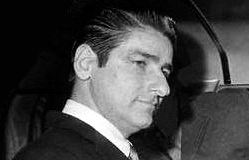
Albert DeSalvo
Serial killer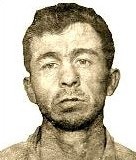 Donald Henry Gaskins
Serial killer · USA · 1969
Donald Henry Gaskins, also known as Donald “Pee Wee” Gaskins, was a serial kill…
200 victims
Donald Henry Gaskins
Serial killer · USA · 1969
Donald Henry Gaskins, also known as Donald “Pee Wee” Gaskins, was a serial kill…
200 victims
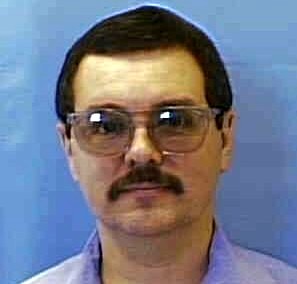 Donald Harvey
Serial killer · USA · 1970
Donald Harvey was known as an American serial killer and a self-professed “Ange…
87 victims
Donald Harvey
Serial killer · USA · 1970
Donald Harvey was known as an American serial killer and a self-professed “Ange…
87 victims
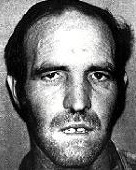 Ottis Toole
Serial killer · USA · 1961
Ottis Elwood Toole (sometimes misspelled as “Otis”) was an American serial kill…
65 victims
Ottis Toole
Serial killer · USA · 1961
Ottis Elwood Toole (sometimes misspelled as “Otis”) was an American serial kill…
65 victims
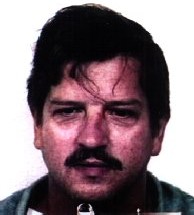 William George Bonin
Serial killer · USA · 1972
William George Bonin was executed by lethal injection in California on February…
44 victims
William George Bonin
Serial killer · USA · 1972
William George Bonin was executed by lethal injection in California on February…
44 victims
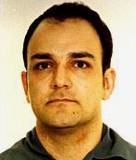 Gerald Stano
Serial killer · USA · 1969
Gerald Eugene Stano (September 12, 1951 – March 23, 1998) was executed by elect…
41 victims
Gerald Stano
Serial killer · USA · 1969
Gerald Eugene Stano (September 12, 1951 – March 23, 1998) was executed by elect…
41 victims
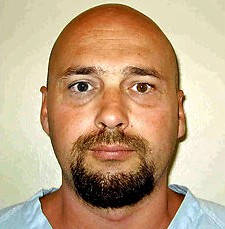 Christopher Scott Emmett
Murderer · USA · 2001
Name: Christopher Scott Emmett · Sex: Male · Race: White · Home: Not stated · A…
1 victim
Christopher Scott Emmett
Murderer · USA · 2001
Name: Christopher Scott Emmett · Sex: Male · Race: White · Home: Not stated · A…
1 victim
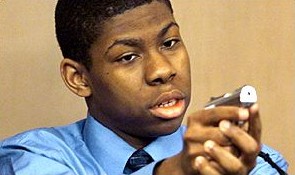 Nathaniel Brazill
Homicide · USA · 2000
Nathaniel Brazill Nathaniel Brazill was an American. He was born September 22,…
1 victim
Nathaniel Brazill
Homicide · USA · 2000
Nathaniel Brazill Nathaniel Brazill was an American. He was born September 22,…
1 victim
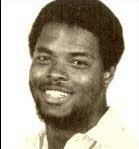 Robert Rozier
Murderer · USA · 1981
1982 — Rozier found Yahweh ben Yahweh's "Temple of Love". · 1985 — Rozier decid…
7 victims
Robert Rozier
Murderer · USA · 1981
1982 — Rozier found Yahweh ben Yahweh's "Temple of Love". · 1985 — Rozier decid…
7 victims
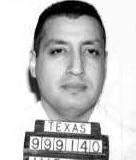 Jose Santellan
Murderer · USA · 1993
Jose Santellan, Sr. confronted his former girlfriend, Yolanda Garza, in 1993 an…
1 victim
Jose Santellan
Murderer · USA · 1993
Jose Santellan, Sr. confronted his former girlfriend, Yolanda Garza, in 1993 an…
1 victim
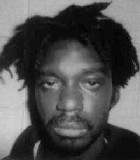 Richard Reynolds
Murderer · USA · 1992
Richard Reynolds Reynolds was sentenced to death on April 13, 1995. Richard Rey…
1 victim
Richard Reynolds
Murderer · USA · 1992
Richard Reynolds Reynolds was sentenced to death on April 13, 1995. Richard Rey…
1 victim
- Gender
- male
- Country
- USA
- Location
- Boston, Massachusetts, USA
- Date of birth
- September 3, 1931
- Age at first offence
- 31
- Characteristics
- rape
- Victim profile
- Anna Slesers, 55 / Mary Mullen, 85 / Nina Nichols, 68 / Helen Blake, 65 / Ida Irga, 75 / Jane Sullivan, 67 / Sophie Clark, 20 / Patricia Bissette, 23 / Mary Brown, 69 / Beverly Samans, 23 / Evelyn Corbin, 58 / Joann Graff, 23 / Mary Sullivan, 19
- Method of murder
- Strangulation
- Date(s) of murder
- June 1962 - January 1964
- Years active
- 1962–1964
- Date of arrest
- November 1964
- Status
-
Died in custody
Sentenced to life in prison on January 9, 1967; killed in prison by another inmate on November 25, 1973
Case identity
Albert DeSalvo (November 3, 1931 - November 25, 1973) was a serial killer active in Boston, Massachusetts, United States, in the early 1960s. He was dubbed the Boston Strangler.
He was also known as The Boston Strangler and was a subject of an FBI unlawful flight investigation when he escaped from a Massachusetts state mental hospital on February 24, 1967. DeSalvo was being held at the hospital pending appeal of a life sentence for numerous rapes.
Timeline
- June 14, 1962 — Anna Slesers (55) was found dead in the bathroom with the cord from her bathrobe tied around her neck.
- June 28, 1962 — Mary Mullen (85) was murdered.
- June 30, 1962 — Nina Nichols (68) was murdered in her apartment at 1940 Commonwealth Avenue in the Brighton area of Boston.
- June 30, 1962 — Helen Blake (65) met a similar death in Lynn, Massachusetts sometime between 8 and 10 A.M.
- August 21, 1962 — Ida Irga (75) was found two days later in her apartment at 7 Grove Avenue in the Boston West End.
- August 24, 1962 — Jane Sullivan (67) was killed in her apartment at 435 Columbia Road in Dorchester.
- December 5, 1962 — Sophie Clark (21) was found by her two roommates at 315 Huntington Avenue in the Back Bay.
- December 31, 1962 — Patricia Bissette (23) was discovered in her apartment at 515 Park Drive in the Back Bay.
- Early March 1963 — Mary Brown (69) was found beaten to death in her apartment in Lawrence.
- May 8, 1963 — Beverly Samans (23) was found dead in her apartment in Back Bay at the Second Unitarian Church.
- September 8, 1963 — Evelyn Corbin (58) was found murdered in Salem.
- November 25, 1963 — Joann Graff (23) was raped and murdered in her ransacked Lawrence apartment.
- January 4, 1964 — Mary Sullivan (19) was found murdered in her apartment at 44A Charles Street.
- March 1965 — Albert DeSalvo confessed to being the Strangler, and his lawyer F. Lee Bailey visited him with a Dictaphone on March 6.
- September 29, 1965 — The interrogation was completed.
- January 10, 1967 — Albert DeSalvo was tried on the Green Man charges.
- January 9, 1967 — Sentenced to life in prison.
- February 24, 1967 — DeSalvo escaped from a Massachusetts state mental hospital.
- February 25, 1967 — Local authorities apprehended DeSalvo in Lynn, Massachusetts.
- November 25, 1973 — DeSalvo was killed in prison by another inmate in the infirmary.
Background
Albert DeSalvo was born in Chelsea, Massachusetts, on September 3, 1931. His parents were Frank and Charlotte. He had five other children in the family. His father was described as a violently abusive man who regularly beat his wife and children. As a boy, DeSalvo was delinquent and arrested more than once on assault and battery charges. His mother Charlotte remarried and did her best to keep him out of trouble.
He served in the Army from 1948 through 1956 and was stationed for a time in Germany. In Germany he met his wife, Irmgard Beck, an attractive woman from a respectable family. At one time he was promoted to Specialist E-5 but later was demoted to private for failing to obey an order. He received an honorable discharge.
In 1955, he was arrested for fondling a young girl, but the charge was dropped. That year, his first child was born. Judy was described as having a physical handicap in the form of congenital pelvic disease, which impacted his homelife. DeSalvo’s wife was terrified that she would have another child with a physical handicap and did everything she could to avoid sex. DeSalvo was described as having an abnormally voracious sexual appetite, requiring sex many times a day. In 1960, his son Michael was born without any physical handicaps.
Most people who knew Albert DeSalvo liked him. His boss characterized him as a good, decent, family man and a good worker. He was described as a devoted family man who treated his wife with love and tenderness. He was also described as a thief and as a confirmed braggart. Police Commissioner Edmund McNamara summarized the problem: "DeSalvo's a blowhard."
The offence
Between June 14, 1962 and January 4, 1964, thirteen single women in the Boston area were victims of either a single serial killer or possibly several killers. At least eleven of these murders were popularly known as the victims of the Boston Strangler.
The women were murdered in their apartments. They had been sexually molested and were strangled with articles of clothing. With no signs of forced entry, the women apparently knew their assailant(s) or, at least, voluntarily let him (them) into their homes.
Victims and key case scenes
Anna Slesers (55)
On the evening of June 14, 1962, Anna Slesers, a 55-year-old Latvian-born seamstress, had finished dinner. She decided to take a quick bath before her son Juris arrived to pick her up for a Latvian memorial service being held in her church. A knock came at the door. When her son arrived about an hour later, he could not get an answer and forced the door open. He found her lying dead in the bathroom with the cord from her bathrobe tied around her neck.
A detailed description attributed to Gerold Frank stated that Homicide Detectives James Mellon and John Driscoll found her: Mellon was always to remember his first sight of Anna Slesers' body, its sheer, startling nudity, and the shockingly exposed position in which it had been left. She lay outstretched on a gray runner, wearing a blue taffeta housecoat with a red lining spread apart in front so that from shoulders down she was nude. Her head was a few feet from the open bathroom door; her left leg was stretched straight and the other was flung wide almost at right angles and bent at the knee with gross exposure. The blue cloth cord of her housecoat had been knotted tightly about her neck, its ends turned up to look like a bow tied little-girl fashion under her chin.
The apartment was described as made to look as though it had been ransacked, with her purse open and contents partially strewn on the floor, a kitchen wastebasket rummaged through, drawers left open, and a case of color slides carefully placed on the bedroom floor. The record player was on, but the amplifier had been turned off. Despite an attempt to make the scene look like a robbery, a gold watch and other pieces of jewelry were left untouched.
She was described as strangled with the cord of her robe tied around her neck tightly into a bow. Her vagina showed evidence of sexual assault with some unknown object. Police assumed that the crime had started out as a burglary, and that when the burglar saw the woman in her robe, he was overcome by an uncontrollable urge to molest her, killing her afterwards to avoid being recognized.
A later family member statement included a reference to the apartment address “77 Gainsborough Street” in the Back Bay area, where Anna Slesers lived on the third floor. Anna Slesers was described as making $60 a week, living in a small apartment in a neighborhood in the Back Bay area, and as being completely involved in her church, her children, her work, and her love of classical music. She kept to herself and had very few friends. There were no men in her life aside from her son.
Mary Mullen (85)
Mary Mullen (85) was identified among the victims, with a date of June 28, 1962.
Nina Nichols (68)
Nina Nichols (68) was murdered on June 30, 1962 in her apartment at 1940 Commonwealth Avenue in the Brighton area of Boston. The apartment looked like it had been burglarized with every drawer pulled open and possessions scattered wildly. One open drawer revealed a set of sterling silver that had been untouched, as were the few dollars in her purse, her expensive camera, and the watch on her wrist. The killer had gone through her address book and her mail, and later it was determined that nothing had been taken.
She was found with her legs spread, her housecoat and slip pulled up to her waist, and tied tightly around her neck were two of her own nylon stockings with the ends tied ludicrously in a bow. She was sexually assaulted, and blood had been found in the vagina. The time of death was estimated to be around 5 o'clock in the afternoon. She was described as a retired physiotherapist who led a quiet and modest life. She was widowed for two decades and had no male friends except for her brother-in-law.
Helen Blake (65)
Helen Blake (65) died sometime between 8 and 10 A.M. in Lynn, Massachusetts on June 30, 1962. She was strangled with one of her nylons. Her brassiere had been looped around her neck over the stockings and tied in a bow. Both her vagina and anus had been lacerated, but there was no trace of spermatozoa. She was found lying face down nude on her bed with her legs spread apart. Her apartment had been ransacked, and the two diamond rings she wore had been pulled from her fingers and taken. The killer tried unsuccessfully to open a metal strongbox and a footlocker.
Ida Irga (75)
On August 21, 1962, Ida Irga (75) fell victim to the Strangler and was found two days later in her apartment at 7 Grove Avenue in the Boston West End. There was no sign of forced entry and she was described as likely having let in her killer voluntarily.
A quote attributed to Police Sergeant James McDonald described how he found her: "Upon entering the apartment the officers observed the body of Ida Irga lying on her back on the living room floor wearing a light brown nightdress which was torn, completely exposing her body. There was a white pillowcase knotted tightly around her neck. Her legs were spread approximately four to five feet from heel to heel and her feet were propped up on individual chairs and a standard bed pillow, less the cover, was placed under her buttocks."
She was described as having died from manual strangulation. Dried blood covered her head, mouth, and ears. She was also sexually tampered with though no spermatozoa were present. Most details were described as withheld from the press.
Jane Sullivan (67)
Jane Sullivan (67) was killed within twenty-four hours of Ida Irga’s murder, in her apartment at 435 Columbia Road in Dorchester. She had been dead for some ten days before she was found. Police found her on her knees in her bathtub with her feet up over the back of the tub and her head underneath the faucet.
She was strangled by her own nylons, probably in the kitchen, bedroom, or hall where blood was found on the floors. Her corpse was so badly decomposed that it could not be determined whether she had been sexually assaulted. Bloodstains were found on the handle of a broom. There was no sign of forcible entry, and Jane’s purse was found open. Her death was across town from where Ida lived.
Sophie Clark (21)
On December 5, 1962, Sophie Clark (21) was found by her two roommates at 315 Huntington Avenue in the Back Bay area. She lay nude in the living room with her legs spread wide apart, strangled by three of her own nylon stockings knotted and tied very tightly around her neck, with her half-slip tied around her neck as well.
There was evidence of sexual assault and semen was found on the rug near her body. There was no sign of forcible entry, and Sophie was described as security conscious and insistent on a second lock on her apartment door. She questioned friends that came to the door before letting them in, but her killer convinced her to let him in. Police described she had struggled with her murderer. The killer rummaged through drawers, examined her collection of classical records, and interrupted her while she was writing a letter to her boyfriend.
Neighbors were questioned, including Mrs. Marcella Lulka, who lived in the same building. Lulka described a man around 2:20 that afternoon who knocked and said that the super had sent him to see her about painting her apartment. The man said he would have to fix her bathroom ceiling and complimented her on her figure and asked: "Have you ever thought of modeling?" Lulka put her finger to her lips and the man became angry. Lulka told him: "My husband is sleeping in the next room," and he said he had the wrong apartment and left hurriedly. Lulka described him as between 25 and 30 years old, of average height, with honey-colored hair, wearing a dark jacket and dark green trousers. The time of Sophie’s murder was approximately 2:30 in the afternoon.
A question about whether the man was the Strangler was implied in the narrative by Police being described as “Very likely” due to the building superintendent not dispatching anyone to check on tenants.
Patricia Bissette (23)
On Monday, December 31, 1962, Patricia Bissette (23) was discovered in her apartment at 515 Park Drive in the Back Bay area. Her boss became worried when she did not answer the door to pick her up for work. With help of the custodian, he climbed through a window because the apartment was locked. The boss found her face up in bed with covers drawn up to her chin, looking like she was taking a nap.
Underneath the covers, she was described as having several stockings knotted and interwoven with a blouse tied tightly around her neck. There was evidence of recent sexual intercourse and she was in an early stage of pregnancy. There had been some damage to her rectum. The killer searched her apartment.
Mary Brown (69)
In early March of 1963, Mary Brown (68 is stated in the narrative as sixty-eight-year-old) was found beaten to death in her apartment in Lawrence. She was described as strangled and raped.
Beverly Samans (23)
On Wednesday, May 8, 1963, Beverly Samans (23) was missed choir practice and was found in her apartment in Back Bay. Her friend opened the apartment with the key she had been given. The moment the door was opened, Beverly lay directly in front of him on a sofa bed with her legs spread apart. Her hands were tied behind her with one of her scarves.
A nylon stocking and two handkerchiefs tied together were tied and knotted around her neck. Over her mouth a cloth had been placed and under it a second cloth had been stuffed into her mouth. She appeared to have been strangled but had been killed by four stab wounds to her throat. She had sustained twenty-two stab wounds in all, with eighteen in a bull’s eye design on her left breast.
The narrative described the ligature around her neck as “decorative” and not tied tightly enough to strangle her. The bloody knife was found in her kitchen sink. Police stated she had not been raped by man or object, and no spermatozoa were present in her body. She was studying to be an opera singer and had planned to try out for the Met in New York that year. Police speculated that her singing had developed very strong throat muscles that may have made strangulation more difficult and resulted in her stabbing.
Evelyn Corbin (58)
On September 8, 1963, Evelyn Corbin (58), described as passing herself off as more than a decade younger, was found murdered in Salem. She was strangled with two of her nylon stockings and lay across the bed face up and nude. Her underpants had been stuffed into her mouth as a gag.
Around the bed were lipstick-marked tissues with traces of semen. Spermatozoa were found in her mouth but not in her vagina. Her locked apartment had been searched with apparently nothing stolen. A tray of jewelry had been put on the floor and her purse emptied onto the sofa. A fresh doughnut was found outside her window on the fire escape.
Joann Graff (23)
On November 25, 1963, Joann Graff was raped and murdered in her ransacked Lawrence apartment. She was described as a very conservative and religious twenty-three-year-old industrial designer and had died shortly before President John F. Kennedy’s assassination three days earlier. She had been killed with two nylon stockings tied in an elaborate bow around her neck.
There were teeth marks on her breast and the outside of her vagina was bloody and lacerated. A student living above her heard footsteps at 3:25 P.M. and went to listen at his door. He opened his door to find a man of about twenty-seven with pomaded hair dressed in dark green slacks and a dark shirt and jacket. The man asked: "Does Joan Graff live here?" He mispronounced Joann’s name. The student told him Joann lived on the floor below where he was knocking. Moments later the student heard the door open and shut beneath him and assumed Joann had let the man in. Ten minutes later a friend telephoned Joann and there was no answer.
The narrative also described that the morning before Joann’s death, a woman heard someone outside her door and then saw a piece of paper slid under her door, moved from side to side soundlessly, then vanished, followed by footsteps.
Mary Sullivan (19)
On January 4, 1964, two young women returned to their apartment at 44A Charles Street and found their new roommate, nineteen-year-old Mary Sullivan, murdered. The narrative described her as strangled with a dark stocking. Over the stocking was a pink silk scarf tied with a huge bow under her chin, and over that another pink and white flowered scarf.
A bright “Happy New Year’s” card had been placed against her feet. Mary Sullivan was described as sitting on the bed with her back against the headboard. Thick liquid that looked like semen dripped from her mouth onto her exposed breasts. A broomstick handle had been rammed three and a half inches into her vagina.
Investigation
After multiple murders, Boston police issued warnings to women in the Boston area to lock their doors and be wary of strangers. Police Commissioner Edmund McNamara cancelled all police vacations and transferred all detectives to work for Homicide. A thorough investigation began of all known sex offenders and violent former mental patients, described as seeking a madman who probably attacked older women because of hatred of his mother.
McNamara called on the FBI to hold a seminar on sex crimes for his fifty best detectives.
A task force was created after Massachusetts Attorney General Edward Brooke took over. After the narrative described Brooke’s coordination across five police jurisdictions, he selected his close friend, Assistant Attorney General John S. Bottomly, to head a special division called the Special Division of Crime Research and Detection.
Bottomly’s top team included Boston Police Department’s Detective Phillip DiNatale and Special Officer James Mellon, Metropolitan Police Office Stephen Delaney, and State Police Detective Lieutenant Andrew Tuney. Dr. Donald Kenefick headed a medical-psychiatric advisory committee with several forensic medicine experts.
Governor Peabody offered a $10,000 reward to any person furnishing information leading to the arrest and conviction of the person who committed the murders of the eleven official victims.
Forensic profiling statement attributed to Dr. Kenefick
Dr. Kenefick reported what the police should be looking for: "He was at least 30 years old, a probably a good deal older. He is neat, orderly, and punctual. He either works with his hands, or has a hobby involving handiwork. He most probably is single, separated or divorced. He would not impress the average observer as crazy He has no close friends of either sex."
Psychic involvement
At Bottomly’s suggestion, Brooke consented to involve Peter Hurkos, described as a well-known Dutch psychic. Two private groups paid for Hurkos’s services and expenses. The narrative stated Hurkos ultimately got into difficulty for allegedly impersonating an FBI agent.
Hurkos identified a suspect who had been investigated by the Strangler Bureau: a shoe salesman with a history of mental illness. The narrative stated there was no evidence linking the shoe salesman to the murders and that he later committed himself to an institution. The narrative said the Strangler Bureau’s credibility suffered due to Hurkos.
Arrest and detention
DeSalvo was already in custody, described as being held at a Massachusetts state mental hospital pending appeal of a life sentence for numerous rapes. He escaped on February 24, 1967. Local authorities apprehended him in Lynn, Massachusetts the following day.
Confession and related figures
DeSalvo was described as dropping into the Strangler Bureau laps in March 1965. The narrative stated he had already been arrested and charged in November 1964 with the Green Man offences in Connecticut because the attacker wore green overalls. He was not considered a suspect by the Strangler Bureau until five months later when he confessed to F Lee Bailey, his lawyer.
The narrative described DeSalvo’s family situation and that his confession involved a plan around reward money and possible book and film deals. It stated that in early March of 1965, Irmgard DeSalvo received a call from F. Lee Bailey at her sister’s house in Denver, and Bailey told her to assume a different name, leave the area with her children, and go into hiding at once to avoid publicity. The narrative quoted the caller: "Something big is going to blow up about Albert it will be on the front pages of every newspaper in 24 hours. I'm flying out to see you tomorrow so I can help you myself."
The narrative later described Bailey’s visit with a Dictaphone on March 6 and included a quote attributed to Bailey about DeSalvo: "...I became certain that the man sitting in that dimly lit room with me was the Boston Strangler...Anyone experienced in interrogation learns to recognize the difference between a man speaking from life and a man telling a story that he either has made up or has gotten from another person. DeSalvo gave me every indication that he was speaking from life. He wasn't trying to recall words; he was recalling scenes he had actually experienced. He could bring back the most inconsequential details...the color of a rug, the content of a photograph, the condition of a piece of furniture...Then, as if he were watching a videotape replay, he would describe what had happened, usually as unemotionally as if he were describing a trip to the supermarket."
The narrative described DeSalvo’s confession about Ida Irga and included a lengthy verbatim statement attributed to DeSalvo: "I said I wanted to do some work in the apartment and she didn't trust me because of the things that were going on and she had a suspicion of letting, allowing anybody into the apartment without knowing definitely who they were. And I talked to her very briefly and told her not to worry, I'd just as soon come back tomorrow rather than in other words, if you don't trust me, I'll come back tomorrow, then. And I started to walk downstairs and she said, 'Well, come on in.' and we went into the bedroom where I was supposed to look at a leak there at the window and when she turned, and I put my arms around her back... [Bailey asks him where the bedroom was relative to the front door and how he got to the bedroom] I think it went through a...a parlor as you walked in, and a dining room and a bedroom. Oh, before the bedroom was a kitchen, and the bedroom was way back. The bed was white. It wasn't made, either...She was in the midst, probably, of making the bed up. And there was an old dresser there and I opened the drawers up and there was nothing in them, nothing at all. They were empty. And, uh, when I did get her by the neck and strangler her [Bailey asks if he grabbed her from behind] Yes. Manually. I noted blood coming out of her ear very dark...the right ear. I remember that, and then I think there was the dining room set in there, a very dark one, and there was brown chairs around it, and I recall putting her legs up on her two chairs in a wide position one leg in each chair..."
When Bailey asked why he would choose such an old woman to attack, DeSalvo told him that "attractiveness had nothing to do with it." She was a woman. That was enough.
The narrative described DeSalvo’s confession about Sophie Clark, including a verbatim statement: "She was wearing a very light, flimsy housecoat, and she was very tall, well built, about 36-22-37. Very beautiful... [Her apartment]...had a yellowish door, a faded yellow door...And she didn't want to let me in, period. Because her roommates weren't in there at the time...and I told her I would set her up in modeling and photography work, and I would give her anywhere from twenty dollars to thirty-five dollars an hour for this type of modeling. ...there was a place where there would be ...what do you call a flat bed, where you put a - something over it, but you take it off, you can use it to sit on, like a couch? It had fancy little pillows on it, colorful ones, purple ones. It looked like a purple or black cover."
Trial and sentencing
DeSalvo’s confession was described as inadmissible as evidence in the trial narrative, and legal wrangling focused on preventing execution while still allowing conviction.
DeSalvo was found competent to stand trial. On January 10, 1967, Albert DeSalvo was tried on the Green Man charges in Judge Cornelius Moynihan’s court. Donald L. Conn led the prosecution team and F. Lee Bailey served as the defense.
Conn called four Green Man victims with very similar stories. The narrative described that DeSalvo would either jimmy the door or con his way in verbally to the apartments, tie the woman, strip her and fondle her breasts, demand fellatio or cunnilingus, but stopped short of rape. He used a knife or toy gun to ensure cooperation. Afterward, he took money and jewelry from the victims.
Bailey did not cross-examine the witnesses. Bailey said in his opening statement that he had no doubts that DeSalvo committed the crimes as charged and that the only issue was whether the Commonwealth could prove that he was not insane at the time. Bailey presented expert witnesses who testified to paranoid schizophrenia and described that while DeSalvo knew what he was doing was wrong, "his Green Man crimes were the result of an irresistible impulse." Conn pointed out that the non-sexual aspects of the crimes were not a result of irresistible impulse, and the psychiatrist agreed that only the sexual assaults were.
The jury deliberated for four hours, found DeSalvo guilty on all counts, and sentenced him to life in prison. The psychiatric help he wanted was denied.
Aftermath
Albert DeSalvo served out his life sentence at Walpole State Prison, now called MCI-Cedar Junction. He was stabbed to death in the infirmary in November of 1973.
The night before he was murdered, he telephoned Dr. Ames Robey and asked him to meet urgently. Robey promised to meet with him the next morning, but DeSalvo was murdered that night.
Albert asked one other person to meet with him and Robey and a reporter. Robey explained: "He was going to tell us who the Boston Strangler really was, and what the whole thing was about. He had asked to be placed in the infirmary under special lockup about a week before. Something was going on within the prison, and I think he felt he had to talk quickly. There were people in the prison, including guards, that were not happy with him...Somebody had to leave an awful lot of doors open, which meant, because there were several guards one would have to go by, there had to be a fair number of people paid or asked to turn their backs or something. But somebody put a knife into Albert DeSalvo's heart sometime between evening check and the morning."
Officials believed DeSalvo’s death was related to his involvement in a prison drug operation.
A narrative section also described that 3 men were tried, but twice the trials ended in hung juries.
DeSalvo wrote a poem a few years before his death: "Here is the story of the Strangler, yet untold, The man who claims he murdered thirteen women, young and old. The elusive Strangler, there he goes, Where his wanderlust sends him, no one knows He struck within the light of day, Leaving not one clue astray. Young and old, their lips are sealed, Their secret of death never revealed. Even though he is sick in mind, He's much too clever for the police to find. To reveal his secret will bring him fame, But burden his family with unwanted shame. Today he sits in a prison cell, Deep inside only a secret he can tell. People everywhere are still in doubt, Is the Strangler in prison or roaming about?"
Later developments involving the Sullivan case and DNA
The narrative stated that DeSalvo was never actually convicted of the murders and was officially committed to a psychiatric hospital for a series of rapes known as the Green Man offences, and that Boston police had always considered him to be The Strangler. It further stated that his name was never tried in the killings due to lack of evidence.
In December 2001, new DNA tests were described as casting doubt on whether Albert DeSalvo was the real killer after all. It was stated that DNA evidence taken from the body of Mary Sullivan did not match DeSalvo’s, and that Sullivan’s body had been exhumed in 2000, with DeSalvo’s corpse being dug up a year later.
A quote attributed to James Starrs, Professor of Forensic Evidence at George Washington University, stated: "We have found evidence and the evidence does not and cannot be associated with Albert DeSalvo."
Starrs was described as making clear that the evidence only cleared DeSalvo of sexual assault and that if he was a juror he would acquit him with no questions asked: "If I was a juror, I would acquit him with no questions asked."
Case material included a quote from Mary Sullivan’s nephew Casey Sherman: "If he didn't kill Mary Sullivan, yet he confessed to it in glaring detail, he didn't kill any of these women."
It also included a quote attributed to Casey Sherman about investigators dropping a prime suspect:
Other details
DeSalvo was described as having been arrested and charged in November 1964 with a series of rapes in Connecticut known as the Green Man offences. The narrative described that the attacker wore green overalls. It also stated that DeSalvo admitted to breaking into four hundred apartments and a couple of rapes, and that he assaulted some 300 women in a four-state area.
The narrative described a prior offence known as the Measuring Man offences. On March 17, 1961, Cambridge police caught a man trying to break into a house and the man confessed to being the "Measuring Man." His name was Albert DeSalvo, a 29-year-old man with numerous arrests for breaking into apartments and stealing money he found. He lived in Malden with his German wife and two small children and worked during the day as a press operator in a rubber factory. When asked why he perpetrated the charade, DeSalvo responded: "I'm not good-looking, I'm not educated, but I was able to put something over on high-class people. They were all college kids and I never had anything in my life and I outsmarted them."
The judge reduced the sentence to 18 months; with good behavior DeSalvo was released in April 1962, described as two months before Anna Slesers was found.
The narrative described the Green Man offence scene on October 27 in which a newly married woman described a man put a knife to her throat and threatened her, stuffed her underwear in her mouth, tied her to the bedposts with her clothes, kissed and fondled her, and then asked how to get out of the apartment. The police sketch reminded detectives of the Measuring Man, and DeSalvo was described as being released on bail. Calls came in from Connecticut seeking a sexual assailant called the Green Man because he wore green work pants.
The narrative described DeSalvo being placed under observation at Bridgewater State Hospital. It stated that George Nassar also became an inmate there and became DeSalvo’s confidant. Nassar was described as having been charged with a vicious execution-style murder of a gas station attendant, with an IQ approaching genius level, and as having studied Russian and other subjects in prison.
Names of additional officials and commentators in the narrative included Police Commissioner Edmund McNamara, Attorney General Edward Brooke, Assistant Attorney General John S. Bottomly, Dr. Donald Kenefick, Detective Phillip DiNatale, Special Officer James Mellon, Metropolitan Police Office Stephen Delaney, State Police Detective Lieutenant Andrew Tuney, Dr. Ames Robey, Dr. Robey, Dr. Ames Robey’s role as psychiatrist at Bridgewater, Dr. Allen, Dr. Donald Kenefick, Commissioner McNamara, Governor Peabody, and journalist references including Jean Cole and Loretta McLaughlin for the Record-American. Novelist George V. Higgins and a quote attributed to Edmund McNamara were also present: "Holy Jesus, what a nutcake." George V. Higgins was described as saying Bottomly without the word asshole attached.
The narrative included a bibliography and film reference including a major feature film The Boston Strangler premiered in 1968 starring Tony Curtis and Henry Fonda.
Spotted an error, or have more information about this case?