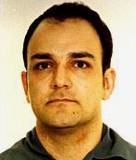
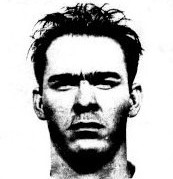
Gerald Stano
Serial killer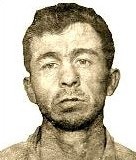 Donald Henry Gaskins
Serial killer · USA · 1969
Donald Henry Gaskins, also known as Donald “Pee Wee” Gaskins, was a serial kill…
200 victims
Donald Henry Gaskins
Serial killer · USA · 1969
Donald Henry Gaskins, also known as Donald “Pee Wee” Gaskins, was a serial kill…
200 victims
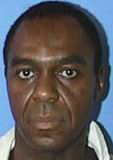 Carl Eugene Watts
Serial killer · USA · 1974
Carl Eugene Watts (born November 7, 1953; died September 21, 2007), also known…
100 victims
Carl Eugene Watts
Serial killer · USA · 1974
Carl Eugene Watts (born November 7, 1953; died September 21, 2007), also known…
100 victims
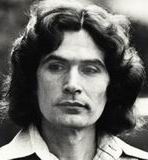 Rodney Alcala
Serial killer · USA · 1977
Rodney James Alcala (born August 23, 1943) was also known as Rodrigo Jacques Al…
100 victims
Rodney Alcala
Serial killer · USA · 1977
Rodney James Alcala (born August 23, 1943) was also known as Rodrigo Jacques Al…
100 victims
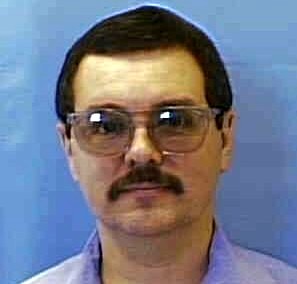 Donald Harvey
Serial killer · USA · 1970
Donald Harvey was known as an American serial killer and a self-professed “Ange…
87 victims
Donald Harvey
Serial killer · USA · 1970
Donald Harvey was known as an American serial killer and a self-professed “Ange…
87 victims
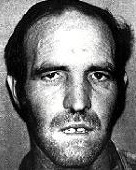 Ottis Toole
Serial killer · USA · 1961
Ottis Elwood Toole (sometimes misspelled as “Otis”) was an American serial kill…
65 victims
Ottis Toole
Serial killer · USA · 1961
Ottis Elwood Toole (sometimes misspelled as “Otis”) was an American serial kill…
65 victims
 Donald Leroy Evans
Serial killer · USA · 1975
Donald Leroy Evans (born July 5, 1957) was an American serial killer who murder…
60 victims
Donald Leroy Evans
Serial killer · USA · 1975
Donald Leroy Evans (born July 5, 1957) was an American serial killer who murder…
60 victims
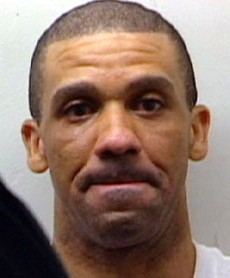 Napoleon Beazley
Homicide · USA · 1994
Napoleon Beazley was a 17-year-old offender who was convicted of capital murder…
1 victim
Napoleon Beazley
Homicide · USA · 1994
Napoleon Beazley was a 17-year-old offender who was convicted of capital murder…
1 victim
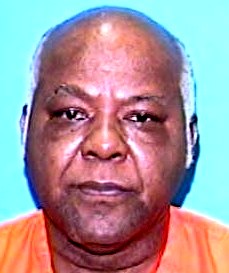 Jack Dempsey Ferrell
Murderer · USA · 1981
Defendant: Jack Dempsey Ferrell Date of birth: 08/05/40 District/County/Case nu…
2 victims
Jack Dempsey Ferrell
Murderer · USA · 1981
Defendant: Jack Dempsey Ferrell Date of birth: 08/05/40 District/County/Case nu…
2 victims
 Martsay Bolder
Murderer · USA · 1973
Martsay Bolder was executed by lethal injection in Missouri on January 27, 1993…
2 victims
Martsay Bolder
Murderer · USA · 1973
Martsay Bolder was executed by lethal injection in Missouri on January 27, 1993…
2 victims
 Donna Roberts
Murderer · USA · 2001
Donna Roberts was convicted as an accomplice to murder and was sentenced to dea…
1 victim
Donna Roberts
Murderer · USA · 2001
Donna Roberts was convicted as an accomplice to murder and was sentenced to dea…
1 victim
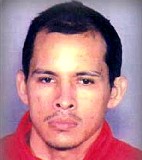 Cesar Rodriguez
Murderer · USA · 2006
Nixzmary Brown was a seven-year-old abused child and murder victim from the Bed…
1 victim
Cesar Rodriguez
Murderer · USA · 2006
Nixzmary Brown was a seven-year-old abused child and murder victim from the Bed…
1 victim
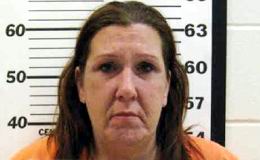 Shelley Casterline
Murderer · USA · 2013
Shelley Casterline was 41 when she pleaded guilty to second-degree murder. Baro…
1 victim
Shelley Casterline
Murderer · USA · 2013
Shelley Casterline was 41 when she pleaded guilty to second-degree murder. Baro…
1 victim
- Gender
- male
- Country
- USA
- Location
- Florida/Pennsylvania/New Jersey, USA
- Date of birth
- September 12, 1951
- Age at first offence
- 18
- Characteristics
- rape, serial rapist
- Victim profile
- Women (prostitutes, hitch-hikers, runaways)
- Method of murder
- St abbing with knife - Choking
- Date(s) of murder
- 1969 - 1980
- Years active
- 1969–1980
- Date of arrest
- April 1, 1980
- Status
-
Executed
Executed by electrocution in Florida on March 23, 1998
Case details
Gerald Eugene Stano (September 12, 1951 – March 23, 1998) was executed by electrocution in Florida on March 23, 1998.
Background
Stano was born in Schenectady, New York. His given name at birth was Paul Zeininger. His natural mother neglected him to such an extent that when she finally gave him up for adoption when he was six months old, county doctors declared him unadoptable because he was functioning at what they described as “an animalistic level,” even ingesting his own feces to survive. He was eventually adopted by Norma Stano, a nurse, who renamed him Gerald Eugene Stano.
By all accounts, Stanos were loving parents, but discipline problems plagued their adopted son all his life. He earned C’s and D’s in all subjects in school (except music, which he excelled at). He lied compulsively and was once caught stealing money from his father’s wallet to pay fellow members of the track & field team to finish behind him so he would not be viewed as a complete failure. He graduated high school at the age of 21 and did not attend college.
Stano admitted that he began killing in the early 1970s, when he was in his 20s, and also claimed he had begun killing in the late 1960s, at the age of 18. Several girls had gone missing in Stano’s area of residence at that time, but since insufficient physical evidence was found when those claims were investigated almost 20 years later, he was never charged.
He was most active in Florida and New Jersey. By his 29th birthday, he was in prison for murdering 41 women.
Stano’s final statement claimed innocence and cast blame on the homicide detective who elicited most of his murder confessions, former Detective Sergeant Paul B. Crow, who later became Police Chief of Daytona Beach.
In 1995, Crow was removed from office by a Grand Jury appointed by Governor Lawton Chiles citing corruption.
In 1993, the true crime book Blind Fury was published about Stano’s life and crimes, ghostwritten by the mother of an Assistant State Attorney who prosecuted Stano.
A separate controversy accompanied Gerald Stano’s criminal history, with some believing that Stano was actually a “serial confessor.” Stano’s arresting officer, Detective James Gadberry, challenged the decision to accept Stano’s first confessions as valid. In 1986, Gadberry signed a legal affidavit stating unequivocably that Sergeant Paul Crow was responsible for “spoon feeding” Stano the intimate details of unsolved homicides. According to Gadberry’s affidavit, Stano merely parroted the information back to Crow while other veteran homicide officers later made statements to the effect that they too had witnessed Paul Crow “helping” Stano to confess to crimes he had not committed.
Crow’s colleagues recalled how he actively gathered information on unsolved or “cold case” murders from foreign jurisdictions. During sworn testimony in Orlando Federal Appeals Court in 1993, Crow recalled enlisting the help of a local reporter, Kathy Kelly, who used her newspaper’s archives to locate details about murders to which Stano later confessed, including the murder for which Stano was later executed.
Other details included that Stano described killing 41 women in Florida, Pennsylvania and New Jersey, though police said the number may have been closer to 80.
The offence
Stano confessed to killing 41 women in New Jersey, Pennsylvania, and Florida. Most of his victims were prostitutes, runaways and teen-agers. His confessions described he “choked the girl repeatedly and dumped her body in a drainage ditch before cleaning up and going roller skating.”
His confessions included:
- the murder of Mary Carol Maher
- the murder of Toni Vann Haddocks
- the murder of Cathy Lee Scharf
- and additional murders that were later referenced through lists of victims and convictions.
Most police officials considered the cases closed, even though many of Stano’s confessions never made it to court and several of the victims have yet to be identified.
Murder of Cathy Lee Scharf
Stano received the death penalty for killing Cathy Lee Scharf, a 17-year-old hitchhiker from Port Orange. Her body was found in an isolated area of Brevard Co. She was fatally stabbed between December 1973 and January 1974.
Stano confessed to choking the girl repeatedly and dumping her body in a drainage ditch before cleaning up and going roller skating.
Murder of Mary Carol Maher
Stano confessed to murdering Mary Carol Maher. When Stano described Maher, he stood up to give her height and weight by gesture and described her as being tall and athletic; his description was accurate. He gave a correct description of the clothes Mary was wearing, identifying a white shirt with animal designs and jeans when told she was wearing slacks and a shirt. Stano described how he murdered Maher, including stabbing her in the chest, thigh and back. The description of the wounds matched the autopsy report except that stab wounds in the back had not been included in the medical report on Ms. Maher. Stano stated that he had stabbed the victim in the chest “as hard as he could.” The autopsy reflected that her sternum had been broken.
Stano further described the road he traveled with her body, how he wrapped her in foam padding or ticking, and how he left the body near the airport, placing palm branches over it.
Murder of Toni Vann Haddocks
Stano confessed to the murder of Toni Vann Haddocks. Haddocks had been listed as a missing person from Daytona Beach, Florida. Around April 6, 1980, her body was found in Volusia County in an area where Stano used to live and which was near the residence of Stano’s brother. Detectives found similarities between the murders of Haddocks and Maher, including that branches of small trees had been used to cover the bodies of both victims. It was determined that a possible weapon was used, and Stano knew details concerning the victim that police did not know. For instance, when Crow asked Stano if he knew something about the victim the police would not know, Stano stated that Vann Haddocks had a cast on her arm. When Crow asked if it was a sling cast, Stano stated that it was an arm cast not a sling cast.
Other identified victims named in the record
Other victims named included:
- Nancy Heard, whose body was found by the power lines in Tomoka State Park three miles north of the Holiday Inn boardwalk
- Linda Hamilton, reported missing from the boardwalk area and found on the beach in New Smyrna
- Ramona Neal, whose body was found in Tomoka State Park; she was described as a girl in a blue and white bikini
- Susan Hamilton, found on the beach at New Smyrna Beach
- Jane Doe, a girl whose body Stano said he had left on an Interstate highway
- Susan Bacile
- Mary Kathleen Muldoon
- Sandra Dubose
- Barbara Bauer
- Susan Bickrest
Stano was also described as saying: “I hate a bitchy chick.”
Investigation
On the morning of February 17, 1980, Detective Sergeant Paul Crow was called to a desolate area behind the Daytona Beach Airport after two drunken college students stumbled upon decomposed remains of a young woman. Crow supervised the crime scene and ensured proper collection of evidence. Crow noted the body was covered with branches, posed on her back with arms at her side and her head turned upward. The body was completely clothed and there was no visual indication of sexual molestation. Crow surmised the victim had been dead for at least two weeks. Upon turning the young woman over, Crow discovered puncture wounds to the back suggesting repeated stabbing.
The young woman was later identified as 20-year-old Mary Carol Maher. An autopsy revealed she suffered multiple stab wounds to the back, chest and legs.
On the morning of March 25, 1980, a local prostitute walked into the Daytona Beach police station and asked to speak with an officer. Detective Jim Gadberry escorted the young woman into his office and took her statement. She said a man in a red Gremlin with tinted windows pulled up, they agreed on a price, and she directed him to her motel room. The man refused to pay upfront and the two argued. The man produced a knife and sliced her right thigh open. Afterwards, he berated her for prostituting herself and fled. The wound was deep; she visited an emergency room and received 27 stitches. She wanted the man arrested for assault and was adamant she would recognize him. She described him as average height, slightly overweight, wearing glasses and a moustache. She believed she had seen the man’s car parked at a local apartment building.
After taking the statement, Gadberry drove to the apartment complex the woman mentioned, could not spot the man’s car, but less than a mile away spotted a red 1977 Gremlin matching the description. Gadberry wrote down the car’s license plate number and returned to the department.
Gadberry ran the Gremlin’s license plate number through the computer and discovered the vehicle was registered to Gerald Eugene Stano, a 28-year-old man from Ormond Beach. Gadberry printed out a copy of Stano’s mug shot and showed it to the victim, who positively identified the suspect as the man who assaulted her and signed an affidavit charging him with aggravated assault and battery.
Arrest
On April 1, 1980, Gadberry and Crow brought Stano in for questioning. Crow had Gadberry take certain actions before the interrogation began, including feeding Gadberry certain questions Crow already knew the answers to.
After an hour of questioning, Stano confessed to the assault on the prostitute. Crow took over the interrogation and produced a photo of Mary Carol Maher, placing it on the table. Stano studied the photo and said: “Yeah, I’ve seen her before.” He described seeing her at a local hotel the previous month.
When asked whether he approached the girl, Stano leaned back and said he gave her a ride to Atlantic Avenue and had not seen her since then.
Crow changed the subject after noting Stano was lying, asking: “Gerald, what are you upset about?” Stano responded: “Today’s ‘the day you got me day,’” and then: “Today’s the day my parents adopted me.” Crow, who knew Stano was lying, continued questioning.
When Crow asked about the circumstances of Maher’s disappearance, Stano changed his earlier statement. Crow asked: “Are you sure you didn’t try to get in her pants, Gerald?” Stano said: “Yeah.” Crow asked: “You wanted to get a little bit and she didn’t? Is that right?” Stano said: “Yeah, goddamn it!” Crow asked: “She didn’t want to give it to you?” Stano said: “No, she didn’t!” Crow asked: “She could hit pretty hard couldn’t she, Gerald?” Stano replied: “You’re goddamn right she could!” Crow asked what he did. Stano said: “Goddamn right I did. I got so goddamn mad, I stabbed her as hard as I could!” Crow asked: “Tell me how you stabbed her.” Stano said he carried a knife under the seat and pulled it out, and then hit her “as hard as I could.” Crow asked what he did next. Stano said he stabbed her several times in the chest, she opened the door and tried to get out, he cut her on the leg and pulled her back in, he shut the door, she fell forward and hit her head against the dashboard and started gurgling, he stabbed her a couple more times in the back because she was messing up his car, and “She just went limp.” Stano said: “So I took her” and Crow interrupted: “Don’t tell me anymore,” Crow interrupted. Crow then said: “Let’s go in the car. You’ll direct, I’ll drive.”
At the dump area, Stano showed Crow and Gadberry where he left the body and described how he posed it. When they returned to the police station, Stano signed a confession to Mary Carol Maher’s murder.
During the process, Detective Larry Lewis asked Crow whether Stano confessed to any other crimes and suggested he might know something about a missing person case. Lewis brought a photo into the interrogation room. Stano said he had never met the girl.
Trial
Plea and sentencing related to Maher, Haddocks, and Heard
Stano was charged with first-degree murder of Mary Carol Maher and placed in the county jail.
The record then described that Stano was later transported and received three consecutive life terms after a plea bargain. On September 2, 1981, Circuit Judge S. James Foxman accepted a plea bargain and imposed three consecutive life terms.
The plea bargain covered:
- the murders of Mary Carol Maher
- Toni Van Haddocks
- and Nancy Heard
Stano also admitted in court but was not charged with murdering Hamilton, Neal and the I-95 Jane Doe.
In court, Judge Foxman said: “Mr. Stano,” the information before me, these three cases, lead me to believe that the death sentence may very well have been appropriate in any of those three cases. Perhaps all of them. I reluctantly agreed not to sentence you to death, to eliminate the possibility of the death penalty.”
Murder conviction and death sentence for Cathy Lee Scharf
Stano faced a trial on charges that he murdered Cathy Lee Scharf. The trial began on September 26, 1983, and ended in a jury deadlock on September 30, 1983.
A second jury convicted Stano of Scharf’s murder on December 2, 1983. A prison inmate named Clarence Zacke bolstered the state’s case with testimony. Stano also admitted killing Scharf as part of the process described.
On December 9, 1983, Brevard County Circuit Judge Gilbert Goshorn sentenced Stano to death for Scharf’s murder. The record described this as Stano’s third and final death sentence.
Sentencing
After the plea bargain on September 2, 1981, Stano was sentenced to three consecutive life terms.
The record described:
- additional life terms, including sentencing associated with pleading guilty in deaths of additional women
- and the imposition of death sentences for Muldoon and Bickrest and for Scharf.
The record also described a later sequence of appeals and stays related to electric chair issues.
Stano received eight life sentences and his ninth conviction resulted in death as described in the narrative. The record also stated he received death for killing Cathy Lee Scharf.
Appeals
The record included repeated Florida and federal appellate actions and denials and stays, including reference to constitutional issues and electric chair disputes, including the Florida Supreme Court upholding the electric chair as the state’s method of execution.
Docket and opinion references listed
The record listed the following:
- United States District Court, Middle District of Florida, Orlando Division, order; Florida Supreme Court briefs and opinions; Docket #92614 — Gerald Eugene Stano, Appellant, vs. State of Florida, Appellee; 708 So. 2d 271; March 20, 1998.
- Docket #72403 — Gerald Eugene Stano, Petitioner, vs. Richard L. Dugger, etc., Respondent; 524 So. 2d 1018; May 16, 1988.
- Docket #70700 — Gerald Eugene Stano, Appellant, vs. State of Florida, Appellee; 520 So. 2d 278; February 25, 1988.
- Docket #68982 — Gerald Eugene Stano, Appellant, vs. State of Florida, Appellee; 497 So. 2d 1185; October 16, 1986.
Outcome
Stano was executed by electrocution in Florida on March 23, 1998.
The record described Stano as making no final statement and staring straight ahead as he was strapped in, mustering only a small smile toward his attorney. It also stated there was no visible smoke or flame.
On March 23, 1998, a crowd gathered outside Florida State Prison. Stano was described as the first execution since the electric chair nicknamed “Old Sparky” malfunctioned during the execution of Pedro Media. The record described that a large flame leaped from Medina’s head and that Medina’s execution set off a series of appeals, extensive mechanical testing, and a slim 4-3 vote by the Florida Supreme Court upholding the electric chair as the state’s method of execution.
Stano ordered his last meal: a Delmonico steak, bacon bits, baked potato with sour cream, some French bread with butter and a tossed salad topped with blue cheese dressing. For dessert, he requested a half-gallon of mint chocolate chip ice cream and two liters of Dr. Pepper.
Raymond Neal, the 41-year-old brother of one of Stano’s victims, watched from behind the witness viewing window and said: “I said, 'Die you monster. Yes!'” and “The power slammed into him and he jerked as much as he could and that was it. I saw the life going out of his hands. I felt like a ton of bricks had been lifted off my back. Afterward, me and my brothers smoked cigars to celebrate. "I can't express the feeling," he said. "I felt so much better. I'm so glad Florida has the guts to keep the electric chair. At least there was a split second of pain. With lethal injection, you just go to sleep."”
Aftermath
The record referenced that stano’s confessions included claims of multiple murders across Florida, Pennsylvania and New Jersey, and that authorities considered most police cases closed.
It also noted that the pubic hairs issue was identified through an FBI Lab Report in late 2007, which concluded that Stano could not have been the source of unidentified caucasian pubic hairs recovered from the body of 17-year-old schoolgirl Cathy Lee Scharf. The report was not presented as evidence by the Public Defender representing Stano. The report’s record described the hairs were destroyed shortly after Stano’s execution in 1998.
The record also stated that Clarence Zacke’s testimony was later discredited and that, in a secretly recorded conversation with a freelance reporter Arthur Nash in 1997, Clarence Zacke admitted he had lied regarding Stano and other defendants including Wilton Dedge. The record stated that his testimony had been fabricated with the assistance of two county prosecutors, who offered incentives in exchange for testimony.
An upcoming book titled “No Trap So Deadly” was referenced as being in development by PMA Literary & Film in New York City.
Timeline
- February 17, 1980 — Detective Sergeant Paul Crow was called to a crime scene behind the Daytona Beach Airport and identified the victim as Mary Carol Maher.
- March 25, 1980 — A local prostitute reported an assault at the Daytona Beach police station; Detective Jim Gadberry interviewed her and described her identification of Stano.
- April 1, 1980 — Gadberry and Crow brought Stano in for questioning; Stano confessed to the assault and then provided details leading to a confession for Mary Carol Maher.
- April 15, 1980 — A resident of Holly Hill discovered a human skull in a garden; an autopsy identified Toni Van Haddocks as the victim.
- September 2, 1981 — Judge S. James Foxman accepted the plea bargain and sentenced Stano to three consecutive life terms.
- December 9, 1983 — Judge Gilbert Goshorn sentenced Stano to death for Scharf’s murder.
- March 23, 1998 — Gerald Eugene Stano was executed by electrocution in Florida.
Spotted an error, or have more information about this case?