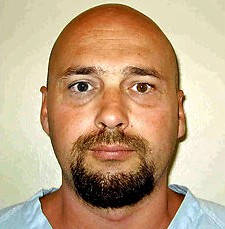
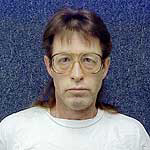
Christopher Scott Emmett
Murderer Russell Ellwood
Murderer · USA · 1991
Russell Ellwood was a former taxi driver. Authorities suspected him of killing…
20 victims
Russell Ellwood
Murderer · USA · 1991
Russell Ellwood was a former taxi driver. Authorities suspected him of killing…
20 victims
 Robert Martines Perez
Murderer · USA · 1994
Name: Robert Martines Perez · Other name used in proceedings: Robert Martinez P…
15 victims
Robert Martines Perez
Murderer · USA · 1994
Name: Robert Martines Perez · Other name used in proceedings: Robert Martinez P…
15 victims
 Billy Frank Vickers
Murderer · USA · 1993
Billy Frank Vickers Vickers was executed by lethal injection in Texas on Januar…
14 victims
Billy Frank Vickers
Murderer · USA · 1993
Billy Frank Vickers Vickers was executed by lethal injection in Texas on Januar…
14 victims
 Albert Foulcher
Murderer · France · 1993
Albert Foulcher was described as a former insurance agent and a gun enthusiast.…
5 victims
Albert Foulcher
Murderer · France · 1993
Albert Foulcher was described as a former insurance agent and a gun enthusiast.…
5 victims
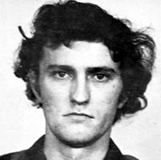 Joachim Knychala
Serial killer · Poland · 1975
Joachim Knychała (September 8, 1952 - October 28, 1985) was a Polish serial kil…
5 victims
Joachim Knychala
Serial killer · Poland · 1975
Joachim Knychała (September 8, 1952 - October 28, 1985) was a Polish serial kil…
5 victims
 Bennie Lawson
Murderer · USA · 1994
Bennie Lawson was a “street thug” who was described as having been concerned ab…
3 victims
Bennie Lawson
Murderer · USA · 1994
Bennie Lawson was a “street thug” who was described as having been concerned ab…
3 victims
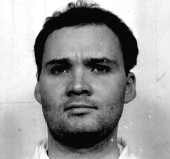 James Lee Beathard
Murderer · USA · 1984
Name: James Lee Beathard Case role: Capital murder defendant; accomplice to Gen…
3 victims
James Lee Beathard
Murderer · USA · 1984
Name: James Lee Beathard Case role: Capital murder defendant; accomplice to Gen…
3 victims
- Gender
- male
- Country
- USA
- Location
- Danville, Virginia, USA
- Date of birth
- August 18, 1971
- Age at first offence
- 30
- Characteristics
- robbery, drugs
- Victim profile
- John Fenton Langley (co-worker)
- Method of murder
- Striking in the head with a lamp
- Date(s) of murder
- April 27, 2001
- Years active
- 2001
- Date of arrest
- Same day
- Status
-
Executed
Executed by lethal injection in Virginia on July 24, 2008
Case information
- Name: Christopher Scott Emmett
- Sex: Male
- Race: White
- Home: Not stated
Timeline
- April 26, 2001 — Christopher Scott Emmett and his co-worker, John Langley, were laborers for Weldon Roofing Company and shared a room at a local motel where the roofing crew was staying; Emmett and Langley cooked dinner on a grill, played cards, and drank beer. During the evening, Langley loaned money to Emmett and Michael Darryl Pittman, who used the money to buy crack cocaine.
- April 27, 2001 — Police arrived at the motel at 12:46 a.m. and discovered Langley’s dead body lying face down on Langley’s bed beneath a comforter; blood spatters and a damaged brass lamp stained with Langley’s blood were found as described.
- October 9, 2001 — A bifurcated jury trial began in the Circuit Court, City of Danville, Joseph W. Milam, Jr., J.
- October 2001 — Emmett was convicted of the April 26, 2001, capital murder and robbery of his co-worker, John Langley.
- November 2, 2001 — Emmett was sentenced to death.
- February 8, 2002 — Emmett filed a motion to withdraw his appeal of his convictions.
- February 22, 2002 — The Supreme Court returned the case to the trial court with instructions to determine whether Emmett’s decision to waive his appeal was voluntarily and intelligently made.
- March 4, 2002 — At a hearing, the trial court accepted Emmett’s voluntary waiver of his right to appeal, finding that he fully understood the consequences.
- March 8, 2002 — The trial court entered an order to that effect and returned the record for mandated review of Emmett’s death sentence.
- 2002 — Emmett v. Commonwealth, 264 Va. 364, 569 S.E.2d 39 (Va. 2002) (Direct Appeal).
- 2005 — Emmett v. Warden of Sussex I State Prison, 269 Va. 164, 609 S.E.2d 602 (Va. 2005) (State Habeas).
- March 3, 2005 — A second order dated March 3, 2005 reaffirmed as described that trial counsel’s representation fell below an objective standard of reasonableness.
- Early 2007 — The United States Court of Appeals for the Fourth Circuit rejected Emmett’s appeal in a 2-1 decision.
- 2007 — Emmett v. Kelly, 474 F.3d 154 (4th Cir. 2007) (Habeas).
- September 25, 2007 — The Court agreed to consider the constitutionality of lethal injections in the case of two Kentucky death row inmates.
- October 1, 2007 — The U.S. Supreme Court declined review.
- June 13, 2007 — An execution date had been set by the Danville Circuit Court and was stayed just hours before by Gov. Kaine to allow for possible review by the US Supreme Court.
- October 17, 2007 — Execution was set for 9:00 PM on Wednesday, October 17, 2007 barring a further stay due to the lethal injection challenge.
- 2008 — Emmett v. Johnson, 2008 WL 2736034 (4th Cir. 2008) (Sec. 1983).
- July 24, 2008 — Christopher Scott Emmett was executed by lethal injection in Virginia.
Background
Weldon Roofing Company employed Emmett and John Langley as laborers for roofing crews. In late April 2001, both men were assigned to a project in the City of Danville and shared a room at a local motel where the roofing crew was staying.
Emmett was described as coming from an extremely chaotic, abusive, and neglectful childhood home. Social service records and witnesses described the home environment as abusive and neglectful. Three of Emmett’s older siblings were kidnapped from school by their biological father, who was appalled by the conditions in the home. Emmett was too young to be attending school and was left behind.
Emmett’s juvenile probation officer, Butch Parker, stated that Emmett’s “impoverished home situation, with emotional abuse and neglect, is very typical of what we see with children who become involved with the juvenile system.”[iii] A state social worker, Faye White, stated: “[t]he situation in the Emmett home was one of the worst I have seen. It was the classic, text-book case of what you hear discussed as being the environments in which adults who have serious problems have been raised.”[iv]
The penalty-phase narrative described that Emmett’s court-appointed defense lawyer failed to investigate and present mitigating evidence that would have detailed Emmett’s life as a child. Defense counsel did not request Emmett’s mental health records from court-ordered therapy he received as a child, did not request social service records documenting efforts to remove Emmett from his childhood home, and did not interview six of Emmett’s seven siblings, any paternal relatives, or Emmett’s daughter or her mother. As a result, virtually no mitigating evidence about Emmett’s childhood was presented to the jury to avoid a death sentence.
During proceedings, Emmett’s waiver of his right to appeal convictions was addressed and treated as a voluntarily and intelligently made waiver by the trial court.
The offence
A co-worker robbery and killing occurred involving John Langley.
During the evening of April 26, 2001, Emmett, Langley, Michael Darryl Pittman, and other members of the roofing crew cooked dinner on a grill at the motel, played cards, and drank beer. During the course of the evening, Langley loaned money to Emmett and Pittman, who used the money to buy crack cocaine.
At approximately 11:00 p.m. that evening, Rainey Bell, another member of the roofing crew, heard a noise he described as “bang, bang” coming from the room Emmett and Langley shared.
Shortly after midnight, Emmett went to the motel office and asked the clerk to call the police, saying that he had returned to his room, “seen blood and stuff ... and didn't know what had took place.”
Police arrived at the motel at 12:46 a.m. on April 27, 2001 and accompanied Emmett back to his room. They discovered Langley’s dead body lying face down on Langley’s bed beneath a comforter. Blood spatters were found on the sheets and headboard of Langley’s bed, on the wall behind it, and on the wall between the bathroom and Emmett’s bed. A damaged brass lamp stained with Langley’s blood was discovered beneath Langley’s bed.
During the period described as involving different versions of events given to the police over several hours the morning of April 27, 2001, Emmett initially denied killing Langley and later implicated Pittman before finally telling police that he alone had beaten Langley to death with the brass lamp.
Emmett admitted to police that he had been drinking and using cocaine on the previous evening. Emmett was given Miranda warnings and gave a full, taped confession. Emmett stated that he and Pittman decided to rob Langley after Langley refused to loan them more money to buy additional cocaine. Emmett stated that he struck Langley five or six times with the brass lamp, took Langley’s wallet, and left the motel to buy cocaine.
The medical examiner evidence included that, based upon the amount of blood and bruising of the victim’s brain tissue at the point of impact, Langley was not killed immediately by the first blow from the lamp. The medical examiner conceded that Langley might have been unconscious after the first blow was struck and may have suffered “brain death” prior to actual death.
Investigation and evidence
In his initial statement to police, Emmett denied killing Langley, stating he returned to the room and went to bed, and later discovered the blood and Langley’s body when he got up to use the bathroom.
Police took possession of Emmett’s boots and clothing with his permission after observing what appeared to be bloodstains on Emmett’s personal effects. Emmett suggested that the blood might be his own because he had injured himself earlier in the week. Subsequent testing revealed Emmett’s boots and clothing were stained with Langley’s blood.
Later in the morning of April 27, 2001, Emmett voluntarily accompanied police to the Danville police station, where he agreed to be fingerprinted and gave a sample of his blood.
Emmett’s prior inconsistent statements to police denying responsibility for the murder and attempting to shift the blame to Pittman were treated as showing consciousness of guilt during later review.
Arrest
Emmett voluntarily accompanied police to the Danville police station in the morning of April 27, 2001, where he agreed to be fingerprinted and gave a sample of his blood. The record described the police arriving at the motel at 12:46 a.m. on April 27, 2001 and accompanying Emmett back to his room.
Trial
A bifurcated jury trial was conducted pursuant to Code § 19.2-264.3 in the Circuit Court, City of Danville, Joseph W. Milam, Jr., J.
Guilt-determination phase
In a guilt-determination phase beginning on October 9, 2001, the Commonwealth presented evidence including the circumstances described above. The Commonwealth presented medical examiner testimony regarding the first blow not causing immediate death, and the possibility of consciousness after the first blow and “brain death” prior to actual death.
The jury convicted Emmett of:
- Capital murder in the commission of a robbery, with citation described as Code § 18.2-31(4)
- Robbery (Emmett was also convicted of robbery and sentenced to life imprisonment for that crime)
Penalty-determination phase
During the penalty-determination phase, the Commonwealth presented evidence of Emmett’s prior criminal history. The evidence included an account of an instance in which, while incarcerated in a maximum-security juvenile detention facility, Emmett participated in an escape involving a guard being “rushed” and locked in a closet.
The criminal history evidence also showed that while driving a vehicle under the influence of alcohol, Emmett was involved in an accident in which the driver of a motorcycle was killed in 1996. After the accident, Emmett said “that there was no need to worry about the man on the motorcycle. He was already dead, and that [Emmett] could do nothing to help him.” Emmett was convicted of involuntary manslaughter.
The Commonwealth also presented extensive victim-impact testimony from members of Langley’s family. Emmett objected to various statements by victim-impact witnesses that urged the imposition of the death penalty; the trial court sustained these objections and directed the jury to disregard the statements.
Emmett presented evidence in mitigation from his mother, sister, and a family friend. Emmett’s mother testified that Emmett’s father had been abusive and “he just never took care of his family.” Both Emmett’s mother and sister testified that Emmett had become withdrawn in the months prior to Langley’s murder. The friend described Emmett as “a caring person” who helped her disabled husband with yard work and assisted her in caring for her son when he was injured and unable to walk.
The jury returned its verdict imposing the death sentence based upon statutory aggravating factors of future dangerousness and vileness. Following consideration of a presentence report, the trial court imposed the jury’s sentence of death.
Sentencing
The jury fixed Emmett’s punishment at death after the penalty-determination phase. The trial court imposed the death sentence in accordance with the jury’s verdict.
Emmett was sentenced to death on November 2, 2001. Emmett was also sentenced to life imprisonment for robbery.
Appeals
Direct appeal (mandatory review)
Emmett v. Commonwealth, 264 Va. 364, 569 S.E.2d 39 (Va. 2002) (Direct Appeal) addressed issues including Emmett’s voluntary waiver of the right to appeal and mandatory review under Code § 17.1-313(C).
The appellate holdings described included:
- Having waived the right to appeal, Emmett could not assert that the death sentence was improper merely on the ground that there may have been reversible errors committed at trial.
- Testimony by victim-impact witnesses and minor misstatatements by the prosecutor during closing argument at the penalty phase did not unduly influence or prejudice the jury.
- Crime scene and autopsy photographs did not unduly prejudice the jury or improperly inflame jurors’ passions.
- Emmett’s prior inconsistent statements were relevant to show consciousness of guilt and did not unduly influence the jury.
- Evidence supported aggravating factors of future dangerousness and vileness.
- The death sentence was not disproportionate.
The outcome described was that the judgment was affirmed.
The opinion included statements regarding the review process under Code § 17.1-313(C) and referenced contemporaneous objection requirements including Rule 5:25 and Rule 5:27.
The opinion also addressed the Atkins issue:
- It referenced the United States Supreme Court’s decision in Atkins v. Virginia and its holding regarding execution of mentally retarded persons.
- It stated that at trial, Emmett did not assert he was mentally retarded.
- It stated that the review of the record did not suggest Emmett was mentally retarded.
- It stated that Emmett received a high school equivalency diploma, attended a community college, and was regularly employed during his adult life prior to committing the murder.
- It concluded that Emmett did not suffer from mental retardation that would constitutionally restrict imposition of the death sentence.
State habeas
Emmett v. 164, 609 S.E.2d 602 (Va. 2005)** (State Habeas) described proceedings following affirmance of convictions and sought habeas relief.
The described result of the Supreme Court’s rehearing-related actions included:
- Defense counsel’s failure to object to incomplete penalty phase verdict form constituted deficient performance.
- The deficient performance did not constitute structural error.
- The deficient performance did not prejudice petitioner.
- Petition dismissed.
Federal habeas (4th Circuit)
Emmett v. Kelly, 474 F.3d 154 (4th Cir. 2007) (Habeas) described that following affirmance and exhaustion of state postconviction remedies, the inmate sought federal habeas relief. The described result was affirmed.
The holdings described included:
- Defense attorney’s performance in penalty phase was not rendered deficient by failure to interview all of defendant’s siblings or to request record from court-ordered juvenile counseling.
- Even assuming deficient performance, defendant was not prejudiced.
- Defense attorney also did not perform deficiently during penalty phase by failing to present expert testimony concerning defendant’s cocaine/alcohol intoxication.
U.S. Supreme Court and lethal injection litigation
The record described an execution date set by the Danville Circuit Court for June 13, 2007, and that the execution was stayed just hours before by Gov. It described that on October 1, 2007 the U.S. Supreme Court declined review and that Justices Ruth Bader Ginsburg and John Paul Stevens issued a statement noting that except for Gov. Kaine’s intervention the Commonwealth of Virginia had attempted to cut short the ability of the court to review Emmett’s appeal.
The record also described that on September 25, 2007 the Court agreed to consider the constitutionality of lethal injections in the case of two Kentucky death row inmates, and that Baze v. Rees was to be argued in 2008 with a ruling expected by next summer.
The record described that Emmett had a Clemency Petition before Gov. Kaine and that Emmett’s attorneys appealed to the US Supreme Court the 2-1 ruling of the 4th Circuit Court of Appeals denying a challenge to Virginia’s method of execution by lethal injection.
Section 1983 appeal
Emmett v. 2008)** (Sec. 1983) described a § 1983 action against state correctional officials seeking equitable and injunctive relief for alleged violations, threatened violations, or anticipated violations of the inmate’s right to be free from cruel and unusual punishment.
The holding described included that the state’s lethal injection protocol did not constitute cruel and unusual punishment.
Outcome
- The jury convicted Christopher Scott Emmett of capital murder in the commission of a robbery and fixed punishment at death.
- The trial court imposed the death sentence.
- On mandatory review, the Virginia Supreme Court affirmed the sentence of death.
- State habeas relief was denied as described through the petition dismissal after rehearing-related holdings.
- Federal habeas relief was addressed, and the result described was affirmed.
- The U.S. Supreme Court declined review on October 1, 2007.
- Emmett was executed by lethal injection in Virginia on July 24, 2008.
Other details
Involved people
- John Langley — co-worker victim; robbery-related murder victim.
- Michael Darryl Pittman — named as another roofing crew member and implicated by Emmett earlier; also discussed in confession narrative.
- Rainey Bell — roofing crew member; heard “bang, bang”.
- Joseph W. Milam, Jr., J. — judge in Circuit Court, City of Danville.
- Butch Parker — Emmett’s juvenile probation officer.
- Faye White — state social worker who visited Emmett’s childhood home.
- Gov. Kaine — governor who stayed an execution and intervened as described.
- Lawrence L. Koontz, Jr., J. — Supreme Court justice referenced in the appellate case.
- Circuit Judge Roger Gregory — dissenting circuit judge referenced in the described 2-1 appellate decision.
- Ruth Bader Ginsburg and John Paul Stevens — issued a statement described in relation to denial of review.
Quotations included
- Rainey Bell described hearing: “bang, bang”
- Emmett to the motel clerk: “seen blood and stuff ...
- Emmett on confession/medical context included references: “brain death”
- Emmett concerning prior accident: “that there was no need to worry about the man on the motorcycle. He was already dead, and that [Emmett] could do nothing to help him.”
- Emmett’s mother: “he just never took care of his family.”
- Emmett’s friend described him: “a caring person”
- Butch Parker: “impoverished home situation, with emotional abuse and neglect, is very typical of what we see with children who become involved with the juvenile system.”[iii]
- Faye White: “[t]he situation in the Emmett home was one of the worst I have seen.
- In the escape account described during prior criminal history evidence, the guard was “rushed” and locked in a closet.
- A quoted comment in the penalty-phase-related closing argument dispute included: “nobody is safe from this guy” and “He has nothing to lose.”
Legal authorities and case citations referenced
- Williams v. Taylor — referenced as a U.S. Supreme Court ruling related to a Virginia lawyer’s lack of diligence in unearthing evidence of childhood neglect and limited intellect.
- Wiggins v. Smith — referenced as a U.S. Supreme Court decision rebuking defense attorneys for not conducting a thorough investigation for mitigating evidence.
- Atkins v. Virginia — referenced regarding execution of mentally retarded persons.
- Baze v. Rees — referenced as lethal injection constitutionality litigation to be argued in 2008.
- Emmett v. Commonwealth, 264 Va. 364, 569 S.E.2d 39 (Va. 2002) — direct appeal.
- Emmett v. 164, 609 S.E.2d 602 (Va. 2005) — state habeas.
- Emmett v. Kelly, 474 F.3d 154 (4th Cir. 2007) — habeas.
- Emmett v. 2008) — § 1983.
Spotted an error, or have more information about this case?