Thomas Dewald
Murderer James Roszko
Murderer · Canada · 2005
James Roszko was a Canadian man operating a hydroponic marijuana grow-op in Roc…
4 victims
James Roszko
Murderer · Canada · 2005
James Roszko was a Canadian man operating a hydroponic marijuana grow-op in Roc…
4 victims
 Angelo Colalillo
Murderer · Canada · 1993
Angelo Colalillo was suspected of committing serial sexual assaults and murders…
3 victims
Angelo Colalillo
Murderer · Canada · 1993
Angelo Colalillo was suspected of committing serial sexual assaults and murders…
3 victims
 Douglas Donald Moore
Murderer · Canada · 2003
Douglas Donald Moore died of an apparent suicide in a cell at the Maplehurst De…
3 victims
Douglas Donald Moore
Murderer · Canada · 2003
Douglas Donald Moore died of an apparent suicide in a cell at the Maplehurst De…
3 victims
 Jeremy Steinke
Murderer · Canada · 2006
Jeremy Allan Steinke was sentenced to three life sentences on December 15, 2008…
3 victims
Jeremy Steinke
Murderer · Canada · 2006
Jeremy Allan Steinke was sentenced to three life sentences on December 15, 2008…
3 victims
 Nicholas Vernage
Murderer · Canada · 1991
Nicholas Vernage (26) murdered Sgt Alan King and also killed Lorna Bogle and Ja…
3 victims
Nicholas Vernage
Murderer · Canada · 1991
Nicholas Vernage (26) murdered Sgt Alan King and also killed Lorna Bogle and Ja…
3 victims
 John Michael Bane
Murderer · USA · 1988
John Michael Bane was convicted of felony murder in the perpetration of a robbe…
1 victim
John Michael Bane
Murderer · USA · 1988
John Michael Bane was convicted of felony murder in the perpetration of a robbe…
1 victim
 John Mapp
Murderer · United Kingdom · 1867
Name: John Mapp Catherine Lewis was the eldest of the five children of farm lab…
1 victim
John Mapp
Murderer · United Kingdom · 1867
Name: John Mapp Catherine Lewis was the eldest of the five children of farm lab…
1 victim
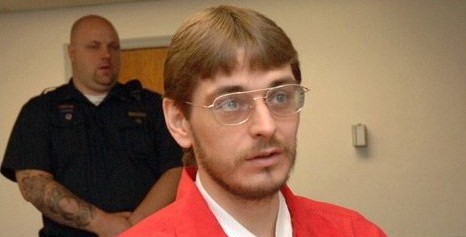 Michael Lambert
Murderer · USA · 1990
Michael Lambert was executed by lethal injection on June 15, 2007 in Delaware.…
1 victim
Michael Lambert
Murderer · USA · 1990
Michael Lambert was executed by lethal injection on June 15, 2007 in Delaware.…
1 victim
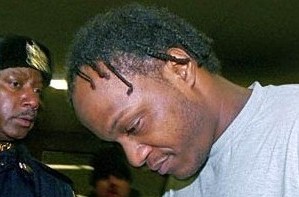 Raymont Hopewell
Serial killer · USA · 1999
Raymont Hopewell was a 35-year-old defendant who was accused of killing five pe…
5 victims
Raymont Hopewell
Serial killer · USA · 1999
Raymont Hopewell was a 35-year-old defendant who was accused of killing five pe…
5 victims
 Nathan Gale
Mass murderer · USA · 2004
Nathan Gale (September 11, 1979 – December 8, 2004) was a native of Marysville,…
4 victims
Nathan Gale
Mass murderer · USA · 2004
Nathan Gale (September 11, 1979 – December 8, 2004) was a native of Marysville,…
4 victims
 Michael Angelo Morales
Murderer · USA · 1981
Michael Angelo Morales (born October 17, 1959) was a convicted murderer schedul…
1 victim
Michael Angelo Morales
Murderer · USA · 1981
Michael Angelo Morales (born October 17, 1959) was a convicted murderer schedul…
1 victim
- Gender
- male
- Country
- Canada
- Location
- Wheatley, Ontario, Canada
- Date of birth
- 1962
- Age at first offence
- 36
- Characteristics
- parricide, child abuse, domestic violence
- Victim profile
- His son Christopher, 12, and his daughter Jennifer, 10
- Method of murder
- Drowning
- Date(s) of murder
- August 13, 1998
- Years active
- 1998
- Date of arrest
- —
- Status
-
Life imprisonment
Sentenced to life in prison, with no parole for 23 years, on June 21, 1999
Case record: Thomas Dewald
Timeline
- Aug. 13, 1998 — Thomas Dewald drowned his 12-year-old son, Christopher, and his 10-year-old daughter, Jennifer, in Lake Erie off a beach in Wheatley, by their grandfather’s lakefront home near Wheatley.
- March 12, 1998 — Christopher told a social worker, Andrea Lukos, that something might happen to his father if he did not get help.
- June 30, 1998 — A children’s aid worker made the last visit.
- Aug. 12, 1998 — Thomas Dewald visited Tina Marlatt and complained about single parenthood; he said, “I don't enjoy being around my kids. I can't handle them right now.”
- Aug. 13, 1998 — The drowning deaths occurred.
- Late August 1998 — Dewald confessed to police the next day after the staged meetings with Marlatt (the day following Aug. 28, 1998, in the narrative).
- Late 1998 (day after Aug. 28 described) — Dewald confessed to police; he implied circumstances such as his wife’s death, pressures of being a single parent, and his bankruptcy drove him to kill the children.
- Early 1999 (March) — Dewald pleaded guilty to two counts of second-degree murder.
- May 4 — A sentencing hearing for Dewald was scheduled to take place on May 4.
- June 21, 1999 — Dewald was sentenced to life in prison, with no parole for 23 years.
- June 22, 1999 — Reporting described the sentence as life with no parole for 23 years.
Background
Thomas Dewald was an Ontario widower. His wife, Nida, died of cancer in 1992.
Dewald first met Tina Marlatt in early 1996. Marlatt described him as distraught at the thought of breaking up, responding with up to 10 telephone calls a day. She said Dewald tracked her down after she moved in 1998 and renewed his pleas to resume the relationship. She told him she did not like his daughter.
Dewald had children with Nida: Christopher and Jennifer. Christopher was 12 and Jennifer was 10 at the time of the drownings. Dewald described himself as physically and mentally abused as a child. He later had a history of depression and suicide attempts following the death of his wife.
Marlatt described Dewald’s relationship with her as involving repeated calls and frequent visits, and she also described Dewald as neglecting and abusing his children. She said she decided to end the relationship, but they dated periodically until November. Marlatt later moved and did not tell him her new address; Dewald drove by every house in town until he found her car.
Marlatt testified to behavior by Dewald including him overdosing on antidepressant pills and aspirins after she caught him peering in her window while she and her children ate dinner. Dewald spent 72 hours in hospital. Marlatt said she worried and cared for him but wanted him to go away.
Dewald was described by Crown and defence lawyers as “pathetic” rather than evil.
The offence
Thomas Dewald drowned his two children, Christopher (12) and Jennifer (10), at a cottage by Lake Erie by their grandfather’s lakefront home near Wheatley, Ontario.
Dewald pleaded guilty to two charges of second-degree murder. He admitted holding the children’s heads underwater until they died while they were swimming. He initially told police he was sleeping on the beach and that the children drowned while he dozed off in a lounge chair, and later recanted that story.
Marlatt described Dewald’s motive as an effort to win back his girlfriend. Prosecutors said Dewald killed his children as part of a bid to renew a relationship with a woman who had broken off their romance in late 1997.
Investigation
Det.-Const. Joe Devolder of the Ontario Provincial Police led the investigation and described the case as depending on Dewald’s confession(s). Police conceded that their only evidence was his confession to them and a confession recorded in Marlatt’s home. Devolder said: “Without her we had nothing. She was willing to do anything we wanted.”
A children’s aid worker, Andrea Lukos, visited the home and concluded the children were at “medium” risk, which could change when Dewald returned home. Christopher told Lukos on March 12 that something might happen to his father if he did not get help. The last visit by a children’s aid worker was June 30, 1998; Dewald said he was feeling “better” and had stopped taking medication.
Devolder said Dewald’s story did not fit with the circumstances: the day of the drownings was sunny, the water calm, the children were good swimmers, and there were no marks indicating drowning while one was saving the other. Devolder also said that a week after the deaths, the children’s belongings, including mittens, lunch pails, clothing and condolence cards from the funeral, had been thrown in the garbage.
After Dewald’s confession to Marlatt was caught on tape, OPP detectives confronted Dewald with it; he eventually broke down and admitted his guilt to police. Crown attorney Paul Bailey stated: “We would not have had a reasonable prospect of conviction had not the criminal investigation division of the OPP recruited her (Ms. Marlatt) and carefully trained her,” and said that the confession “made it absolutely telling beyond any scintilla of doubt that he had, in fact, drowned them.”
Detectives also confronted Dewald with taped conversations between Marlatt and Dewald. Marlatt allowed police to wire her home and met Dewald several times over the next two weeks to try to extract a confession. Police staged meetings at her house knowing that Dewald would drive by and see them.
Marlatt said Dewald gave her a photograph with a message: “To Tina - In loving memory of Christopher and Jennifer Dewald. They will be missed. Love Tom.”
Verbatim exchange in staged questioning described:
- Marlatt asked: “Did you do it ?”
- Dewald nodded, mouthing inaudibly: “Yes, I did.”
- Marlatt asked: “Did you kill them together or separately?”
- Dewald crossed two fingers.
- Dewald said: “Because I love you more than anything else in the world.”
In another conversation, Marlatt asked Dewald: “Can you help me understand one thing,” and Dewald responded: “Why?” and also said he loved her “more than anything in the world.” Marlatt also recalled Dewald saying: “I didn't plan it.” and later: “I'll get through all this you know. I'm gonna have a good life. I'll forget this.”
Devolder also said the case involved police trouble with admissibility of recorded confessions gathered by the Ontario Provincial Police using Marlatt.
Arrest / custody
Dewald was remanded in custody and was to appear for sentencing on May 4.
Trial
Dewald pleaded guilty to two counts of second-degree murder in Chatham, Ontario, after two weeks of legal arguments over the admissibility of audio and videotaped evidence gathered by the Ontario Provincial Police using Marlatt. Crown and defence lawyers agreed to describe Dewald as “pathetic” rather than evil.
The automatic sentence for second-degree murder was described as life imprisonment, with no parole for at least 10 years.
Defence counsel Bruce Thomas said Dewald was “emotionally distraught,” and stated outside the courtroom:
- “Obviously this is an incredible tragedy for the community and his family but ... he wanted the matter to move forward so it wouldn't necessitate a lengthy trial because he saw that as not being to anybody's benefit,” and
- “I think the guilty plea is an indication he's come to grips with what he's done to his family and what he's lost, and shows what remorse he has. I think it's a major step for him.”
Crown attorney Paul Bailey refused to discuss sentencing recommendations and said:
- “You have already heard that there's a significant psychiatric background involved and I expect that psychiatric reports will be filed, which will be essential to the sentencing of the accused because the judge needs to know how profoundly emotionally disabled the accused was,” and
- “I want to see that report.”
Bailey said that if Dewald received a life sentence with no chance of parole for more than 15 years, he would be ineligible to use the “faint hope clause” for early release.
Bailey said:
- “I think it's absolutely tragic; it's depressing, but I have prosecuted multiple murderers before and child murderers before and it's very easy to think of those people in terms of pure evilness,” and
- “My tendency would be to describe this man as primarily pathetic, a pathetic child murderer.”
Thomas said:
- “I think he's a pathetic person; I don't believe he's an evil person at all,” and
- “It's a terrible, tragic thing that happened but to impute evil to him -- despite what the public may think of what happened -- I don't think is accurate.”
Sentencing
Dewald was sentenced to life in prison, with no parole for 23 years, on June 21, 1999.
The Crown and defence agreed on a minimum sentence of 12 years, but the judge increased it to 23 years. The judge called the crime “the worst kind of offence.”
Appeals
No appeal information appeared in the provided material.
Outcome
Dewald received a life sentence with no parole for 23 years.
The graves of Jennifer and Christopher lay side by side at the foot of their mother’s resting place in Erie Cemetery.
Other details
Dewald was 36 at the time of his guilty plea. He was described as an autoworker and as a sewing technician before the murders. He was also described as forced to declare personal bankruptcy and lost his home.
Dewald was shown leaving the funeral for his children in 1998.
Marlatt described Dewald as “sincere and genuine,” and said she was flattered by his devotion. She said:
- “He was a totally different breed of man than I was used to,” and
- “He was sincere and genuine.”
Marlatt also described a concern about neglect and poor money handling, saying she told Dewald:
- “How can you hate Jennifer?” and that Dewald would say: “She's just a little kid.”
Caroline Hall, a former neighbour, said she saw Dewald throw Christopher across a room and alerted Children’s Aid. Hall also said Dewald left Christopher and Jennifer alone late into the night.
Linda Morgan said: “Every time the children came to the door they were smiling and happy.” Marlatt said: “Chris didn't ask for much, just a hug,” and she also recalled saying: “I was worried. I cared about him,” and that she later believed Dewald was “an animal.”
Marlatt recalled a song heard during an interview: Ordinary Love by the singer Sade, and quoted its lyric: “I keep crying, I keep trying for you.”
Dewald and Marlatt had not spoken since the confession, and Marlatt said he would do anything to ensure that they were linked together and that she no longer saw that as selfless devotion.
When Dewald was handcuffed in court, his parents Gerhard and Evelyn Dewald left the courtroom without exchanging a word or a glance. Gerhard Dewald told reporters: “I have nothing to say, it just hurts too much, I can't talk.”
Robert Pauline, Dewald’s children’s uncle, said: “My wife wanted to come home right away. She was shaking. I told him never to touch my wife again.” Pauline also said: “No matter what we had to do, we would have wanted them with us.”
Det.-Const. Devolder described Marlatt’s involvement: “Police concede their only evidence was his confession to them last August, and one the previous day that had been recorded in Marlatt's home.”
Marlatt said of Dewald: “I know it seemed wrong, but sometimes I talked to him. We were friends. I liked his company. I felt sorry for him.” She also said: “I didn't enjoy being around Jennifer. She was needy and clingy. But I only told him this to get him away from me.”

Spotted an error, or have more information about this case?