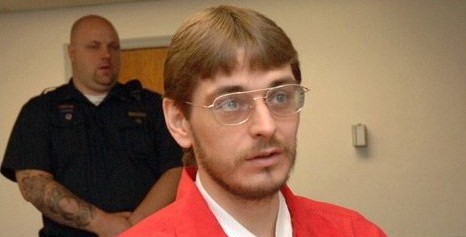
Michael Lambert
Murderer Brian Kevin Rosenfeld
Murderer · USA · 1985
Brian Kevin Rosenfeld Brian Kevin Rosenfeld was sentenced to three concurrent l…
23 victims
Brian Kevin Rosenfeld
Murderer · USA · 1985
Brian Kevin Rosenfeld Brian Kevin Rosenfeld was sentenced to three concurrent l…
23 victims
 Yahweh ben Yahweh
Murderer · USA · 1980
Yahweh ben Yahweh was born and legally named Hulon Mitchell Jr. (October 27, 19…
23 victims
Yahweh ben Yahweh
Murderer · USA · 1980
Yahweh ben Yahweh was born and legally named Hulon Mitchell Jr. (October 27, 19…
23 victims
 Russell Ellwood
Murderer · USA · 1991
Russell Ellwood was a former taxi driver. Authorities suspected him of killing…
20 victims
Russell Ellwood
Murderer · USA · 1991
Russell Ellwood was a former taxi driver. Authorities suspected him of killing…
20 victims
 Robert Martines Perez
Murderer · USA · 1994
Name: Robert Martines Perez · Other name used in proceedings: Robert Martinez P…
15 victims
Robert Martines Perez
Murderer · USA · 1994
Name: Robert Martines Perez · Other name used in proceedings: Robert Martinez P…
15 victims
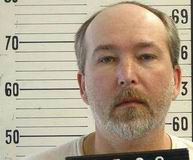 Gary Wayne Sutton
Murderer · USA · 1992
Gary Wayne Sutton was one of the defendants convicted of killing Tommy Griffin…
2 victims
Gary Wayne Sutton
Murderer · USA · 1992
Gary Wayne Sutton was one of the defendants convicted of killing Tommy Griffin…
2 victims
 Dean Phillip Carter
Spree killer · USA · 1984
Dean Phillip Carter was sentenced to death in 1985. He was an inmate at San Que…
5 victims
Dean Phillip Carter
Spree killer · USA · 1984
Dean Phillip Carter was sentenced to death in 1985. He was an inmate at San Que…
5 victims
 Laisha Landrum
Homicide · USA · 2004
Laisha Landrum, 18, was convicted in January 2006 and sentenced on February 20,…
1 victim
Laisha Landrum
Homicide · USA · 2004
Laisha Landrum, 18, was convicted in January 2006 and sentenced on February 20,…
1 victim
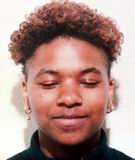 Sharon Carr
Homicide · United Kingdom · 1992
Sharon Louis Carr was born 21 December 1979. She was twelve years old when she…
1 victim
Sharon Carr
Homicide · United Kingdom · 1992
Sharon Louis Carr was born 21 December 1979. She was twelve years old when she…
1 victim
- Gender
- male
- Country
- USA
- Location
- Delaware County, Indiana, USA
- Date of birth
- October 21, 1970
- Age at first offence
- 20
- Characteristics
- alcohol
- Victim profile
- Gregg Winters, 31 (Muncie Police Officer)
- Method of murder
- Shooting (.25 handgun)
- Date(s) of murder
- December 28, 1990
- Years active
- 1990
- Date of arrest
- Same day
- Status
-
Executed
Executed by lethal injection on June 15, 2007 in Delaware
Case details
Michael Lambert was executed by lethal injection on June 15, 2007 in Delaware.
Timeline
- June 15, 2007 — Michael Lambert was pronounced dead at 12:29 a.m. CDT following lethal injection procedure.
- June 14, 2007 — The U.S. Supreme Court denied, without commenting, to grant Lambert's request that the execution be blocked; the denial came a day after Governor Mitch Daniels denied clemency.
- Thursday, before June 14, 2007 — The U.S. Supreme Court denied, without commenting, to grant Lambert's request that the execution be blocked.
- Wednesday, before June 14, 2007 — Gov. Mitch Daniels denied clemency for Lambert.
- June 3, 1993 — Oral argument was held in Lambert v. State, 643 N.E.2d 349 (Ind. 1994).
- December 28, 1990 — Muncie Police Officers were dispatched to a property-damage accident and found Officer Gregg Winters with gunshot wounds to the back of the head and neck; Lambert was in the back of Officer Winters’ police car and a .25 caliber pistol was lying on the floor of the patrol car.
- December 27, 1990 — During the afternoon, Lambert began consuming alcohol.
- 8:00 p.m., December 27, 1990 — Lambert went to the 300 Club Bar on the south side of Muncie, Indiana and consumed additional alcoholic beverages.
- Little after 1:00 a.m., December 28, 1990 — Muncie police officers were called to an accident scene; Lambert attempted to crawl under a car and was arrested for public intoxication.
- A few minutes later, December 28, 1990 — Deputy Sheriff Mike Scroggins and Deputy Greg Ellison observed Officer Winters’ vehicle slide off the road into a ditch; Officer Winters was immobile behind the steering wheel and Lambert was in the back seat.
- January 1996 (last month, per text) — The Indiana Supreme Court denied Lambert’s appeal and set the new execution date.
- 2005 — A federal appeals court temporarily blocked Lambert’s 2005 execution; the order was later lifted; the U.S. Supreme Court for a fourth time declined to review his case.
- 1976 — The death penalty was restored in the United States in 1976.
- June 14, 2007 (3:13 p.m.) — Lambert stated he did not like a change in Indiana law about who could watch executions.
Background
Lambert was convicted of killing Gregg Winters, a city policeman in Muncie, Indiana, in December 1990. He was sentenced to death for the murder of a police officer. He was executed more than 16 years after the killing.
Lambert was executed early Friday, with lethal injection in Indiana State Prison.
The offence
During the afternoon of December 27, 1990, Lambert consumed several alcoholic drinks. At approximately 8:00 p.m., he went to the 300 Club Bar on the south side of Muncie, Indiana and consumed additional alcoholic beverages.
A little after 1:00 a.m. on December 28, 1990, officers were dispatched to a property-damage accident. When officers arrived, they observed a utility truck with the name “Jim Allen's Service Maintenance” painted on the side, and shirts inside the truck bore the name “Mike.” The driver could not be found and the truck was towed.
Officer Kirk Mace observed Lambert trying to crawl under a car. Lambert told him he was going to sleep under the car. Lambert was lightly dressed, it was snowing, and the temperature was in the teens. Officer Mace concluded Lambert was intoxicated, placed him under arrest for public intoxication, subjected him to a “quick pat-down search,” handcuffed him, and placed him in the back of the police car.
Officer Gregg Winters started driving Lambert to the jail, which was approximately fifteen minutes away. A few minutes later, Deputy Sheriff Mike Scroggins and Deputy Greg Ellison were driving their patrol cars east on Riggins Road when they observed a westbound car approach. It slid off the road and came to rest against a fence in a ditch. Officers observed that the vehicle was a police car. They saw Officer Winters immobile behind the steering wheel and Lambert in the back seat.
It was discovered that Officer Winters had suffered gunshot wounds to the back of the head and neck. Although Lambert was handcuffed, a .25 caliber pistol was lying on the floor of Winters’ police car. Ballistics tests later established that the weapon was used to inflict the wounds on Officer Winters.
It was learned later that Lambert had stolen the pistol from his employer. Six empty cartridge casings were located in the car and five slugs were recovered: one from the body of Winters during the autopsy, two from the front seat of the car, one from Winters’ clothing at the hospital, and one lodged between the dash panel and the left pillar of the car.
An autopsy revealed that Officer Winters had been struck by five separate bullets. Police conducted a demonstration to determine whether such an act was possible despite Lambert being handcuffed. The demonstration was videotaped and showed that a person of Lambert’s height and weight could accomplish the feat, requiring physical dexterity.
Investigation
Deputy Sheriff Mike Scroggins and Deputy Greg Ellison found Officer Winters immobile behind the steering wheel and Lambert in the back seat after Officer Winters’ vehicle slid off the road and entered a ditch.
Ballistics tests established that the .25 caliber pistol was used to inflict the wounds on Officer Winters.
A videotaped demonstration was conducted to determine if a handcuffed person could recover a weapon and fire shots into the back of an officer’s head.
Arrest
Lambert was arrested for public intoxication after Officer Kirk Mace concluded Lambert was intoxicated. Lambert was handcuffed and placed in the back seat of a police car, and Officer Gregg Winters drove Lambert toward the jail.
Trial
Charges and conviction
Lambert was convicted in the Delaware Superior Court, Division 1, Robert L. Barnet, Jr., J., of murder of police officer. He was sentenced to death.
Appeal and appellate findings (direct appeal)
Lambert v. State, 643 N.E.2d 349 (Ind. 1994) (Direct Appeal).
Oral argument was held in this cause on June 3, 1993.
The Supreme Court affirmed. The court held: (1) jury panel was properly drawn; (2) prosecution could qualify jury to consider death penalty; (3) Lambert’s statement to police was intelligent and voluntary; (4) trial court did not abuse its discretion in admitting videotaped demonstration of how handcuffed Lambert could have shot police officer; (5) no aggravating situation existed which could have justified instruction on voluntary manslaughter; (6) instruction on jury recommendation for sentencing correctly advised jury of their advisory role; (7) Lambert waived issue of whether trial court properly admitted victim-impact evidence; and (8) trial court properly weighed aggravating and mitigating factors in determining death sentence.
Affirmed.
DeBruler, J., concurred in result in part and dissented in part and filed opinion in which Sullivan, J., joined.
Facts relevant to intoxication and the statement to police
The State conceded that the trial court applied the wrong standard in determining intoxication is not a mitigator; therefore, the case was remanded to reconsider evidence of intoxication and its effect on the penalty in view of Ind.Code § 35-50-2-9(c)(6). After reconsideration, the trial court returned findings and judgment and the parties filed briefs.
The facts included that:
- Lambert consumed several alcoholic drinks during the afternoon of December 27, 1990.
- At approximately 8:00 p.m., he went to the 300 Club Bar and consumed additional alcoholic beverages.
- A little after 1:00 a.m. on December 28, 1990, Muncie police officers were dispatched to a property-damage accident.
- Lambert attempted to crawl under a car and explained that he was going to sleep under the car.
- Officer Mace placed Lambert under arrest for public intoxication and then placed him in the back of the police car.
- Deputy Sheriff Mike Scroggins and Deputy Greg Ellison discovered the police car in the ditch and found Officer Winters immobile behind the steering wheel and Lambert in the back seat.
- A breathalyzer test given to Lambert at 5:15 a.m. showed a blood alcohol level of .18 percent.
- Officer Stanley testified that when he started taking Lambert’s statement at 4:05 a.m. on December 28, Lambert appeared oriented as to time and place and did not slur his words.
- Lambert stated to Officer Stanley that he had “a buzz on” but was not drunk and knew what he was saying.
Videotaped “reenactment” demonstration
Because of the difficulty of a person handcuffed obtaining a weapon and firing five shots into the back of an officer’s head, the State chose a person of Lambert’s height and weight to demonstrate the possibility. The demonstration was described as having the demonstrator producing a gun from several locations in his clothing and being able to fire it toward a person seated behind the wheel of the automobile.
Appellant cited Peterson v. State (1987), Ind., 514 N.E.2d 265, and argued the court should consider five factors including the ability to make a faithful record for appeal purposes, degree of accuracy, complexity and duration, other available means, and risk to fairness.
The Supreme Court concluded there was no abuse of discretion in permitting the videotape of the demonstration to be shown to the jury.
Victim-impact evidence (waiver on direct appeal)
Appellant claimed the trial court erred in allowing victim-impact evidence during the penalty phase. The Supreme Court held Lambert waived the issue of whether the trial court properly admitted victim-impact evidence.
Intoxication mitigator and sentencing analysis (direct appeal)
The Supreme Court described remand for consideration of intoxication as a mitigator and stated that the trial court found Lambert was intoxicated to the extent that it impaired his ability to reason. The trial court found: “[Appellant's] capacity to conform his conduct to the requirements of the law was not substantially impaired as a result of intoxication, mental disease, or defect. The Defendant was able to conform his conduct to those requirements. A closer question is whether or not [his] capacity to appreciate the criminality of his conduct was substantially impaired as a result of mental disease or defect or of intoxication.”
The trial court evaluated appellant’s age-which was 20 years, his level of intoxication, his family history, prior exposure to alcohol, and the impact alcohol had on his judgment. The Supreme Court stated that it considered the absence of any aggravating circumstance and the total wantonness of deliberately firing five shots into the back of the head and neck of an officer who had in no way abused him.
The Supreme Court affirmed the trial court.
Sentencing
Lambert received the death penalty for the murder of a police officer.
Appeals
Lambert v. State (Direct Appeal, 643 N.E.2d 349)
The Supreme Court affirmed.
DeBruler, J. concurring in result and dissenting
DeBruler, J., stated that over objection at trial the judge admitted a videotape in which appeared a male officer whose hands were handcuffed behind his back, and DeBruler described the portrayal as error under Peterson v. State. DeBruler concluded the error was harmless at the guilt/innocence stage and concurred in result only in that part of the majority affirming the conviction.
DeBruler also dissented with respect to sentencing and described testimony by Chief Scroggins about alleged effects of Officer Winters’ death, including seeking medical help and prescription medication and testimony that some officers began acting in a violent and illegal way. DeBruler stated that Payne v. Tennessee did not write the Eighth Amendment out of the issue and argued only three Justices in Payne regarded large entities and the community as survivors for admissibility purposes. DeBruler stated that the trial court added weight to the death aggravator based on the “terrible effect” on other officers and argued this was federal constitutional error and contrary to law.
DeBruler also objected to the trial court’s final reason for choosing death based on: “... imposition of the death penalty is supportable and the Court now accepts the recommendation of the jury.”
Sullivan, J., concurred.
Lambert v. State (Rehearing, 675 N.E.2d 1060)
Lambert sought post-conviction relief. The Supreme Court granted rehearing solely on the issue of the admissibility of certain victim impact testimony at the sentencing phase.
The Supreme Court held: (1) defendant preserved relevancy objections to victim impact testimony on appeal; (2) victim impact testimony was inadmissible; (3) erroneous admission of victim impact testimony was not harmless; but (4) death sentence was warranted nonetheless.
The Supreme Court held that because it could not say with assurance that the erroneously admitted victim impact evidence did not affect the jury’s decision to recommend a death sentence, the admission was not harmless error, but affirmed the death sentence on independent reweighing of the statutory aggravators and mitigators.
Boehm, Justice, dissented.
Lambert v. State, 743 N.E.2d 719 (PCR)
Lambert filed a petition for post-conviction relief after final appellate affirmance, and the Superior Court denied the petition. The Indiana Supreme Court affirmed. The Indiana Supreme Court held: (1) its reweighing of aggravating and mitigating factors on rehearing was proper; (2) trial and post-conviction judge’s statements during sentencing did not demonstrate disqualifying bias; (3) presence of uniformed, armed police officers in courtroom during trial did not render trial judge incapable of making impartial findings in post-conviction proceedings; (4) defendant’s trial counsel was not ineffective for failure to keep out evidence, object to prosecutor’s statements, proffer or object to jury instructions, or investigate defendant's claims of mental disorder; (5) defendant’s appellate counsel was not ineffective for failing to present particular issues and claims on appeal; (6) state’s failure to disclose evidence with purported impeachment value was harmless; (7) any error resulting from sentencing court's reliance on misleading or unreliable testimony was rectified by Supreme Court's reweighing of aggravators and mitigators on rehearing; and (8) petitioner’s numerous freestanding claims of trial court error were unavailable on post-conviction review.
Affirmed.
Lambert v. McBride, 365 F.3d 557 (7th Circuit)
After state court exhaustion, Lambert sought writ of habeas corpus. The district court denied relief and Lambert appealed.
The Court of Appeals held: (1) Ring rule that death sentence must be based on jury determination did not apply retroactively; (2) extension of Clemons rule allowing appellate court to rebalance aggravating and mitigating evidence to case involving advisory jury recommendation was not contrary to or unreasonable application of Supreme Court precedent; (3) counsel was not deficient in failing to object to presence of officers in courtroom; (4) determination that prosecutor did not commit misconduct in closing was not contrary to or unreasonable application of Supreme Court precedent; and (5) state court determination that no Brady violation occurred was not contrary to or unreasonable application of Supreme Court precedent.
Affirmed.
Other details
Execution and custody-related remarks
Lambert did not offer a final statement.
The U.S. Supreme Court denied Lambert’s request to block the execution without commenting. Governor Mitch Daniels denied clemency for Lambert without elaborating in a brief statement from his office.
Protesters stood outside Indiana State Prison in Michigan City with white lights; supporters of police and other slain lawmen held blue lights. Molly Winters and supporters left the prison.
Greg Winters was shot to death in his patrol car by Michael Lambert. Winters’ brother, a Muncie police deputy chief, witnessed the execution.
Terry Winters described the execution as “a lot smoother” than what his brother had been through and said: “His death was a lot smoother than what my brother's was and his punishment for that crime was death and it's been carried out and that's the end of it,”
Lambert stated: “I don’t think anyone should be given that choice,” “It’s not natural just to come in and watch someone die — not just die, but watch someone be killed. It’s not natural.”
Molly Winters said: “Relief,” “Justice has been served and look at all the blue lights behind you - it tells us that Greg has not been forgotten and everything he stood for.”
Kyle Winters said: “This part's over even though it's still not gonna bring Dad back,” “Just a relief.”
Molly Winters described her journey and stated: “There is a feeling of being set free because when Lambert put those five shots in the back of Greg's head, I said as long as I live, I will be at every court hearing and I will do everything I can do every step of the way to make sure that one day Greg will rest peacefully and that there will be justice, and it's done,”
She continued: “Now Molly Winters continues her journey, embraced and surrounded by friends.”
Execution-watching law change
Lambert was set to be executed two years ago and agreed to let the brother of the police officer he fatally shot watch him die; that execution was stayed. A change in Indiana law meant Lambert had no say over who in Officer Gregg Winters’ family could watch his execution.
Under the new law, up to eight spots could go to immediate family members of murder victims. The Reuters account stated Lambert was the second person executed under the new law. Terry Winters was the only relative who asked to witness the execution by lethal injection. Gregg Winters’ widow, Molly, did not want to watch but planned to be at the prison.
Prison and final day details
Lambert was offered a meal of his choosing on Wednesday night but declined the offer.
Lambert had been given a kitten while on death row, which he left to his son; the kitten was three months old.
Lambert met with a spiritual advisor on Thursday but had no final statement.
Direct-appeal procedural chronology referenced in the text
A federal appeals court temporarily blocked Lambert’s 2005 execution; it later lifted that order. The U.S.
Lambert filed another appeal with the Indiana Supreme Court, which denied last month and set the new execution date.
Jury proceedings and evidence
The Supreme Court described the jury as death-qualified and held that death qualification was not unconstitutional in the line of cases cited including Lockhart v. McCree.
The Supreme Court addressed Lambert’s motion for change of venue or venire, concluding the case received a high degree of publicity but jurors could state they would determine based solely on evidence heard in the case and follow instructions.
Witnesses for victim-impact testimony (rehearing record)
At the penalty phase, the State presented victim impact testimony from three witnesses: Muncie Chief of Police Donald Scroggins; Officer Terry Winters, a Muncie police officer and the victim's brother; and Molly Winters, the victim's wife.
The court permitted Chief Scroggins to testify about the effect of Officer Winters’ death on Chief Scroggins and members of the Muncie Police Department, including that over twenty different police agencies were represented at Officer Winters’ funeral and that the Department had received cards and letters from police departments all over the country. Chief Scroggins testified that he and other members of the department sought psychological counseling, and that after the shooting, because he was unable to function as he felt a Chief of Police should, he contacted his physician for prescription medication.
Officer Terry Winters testified about his brother’s job, how the death affected Officer Terry Winters’ job performance and attitude, and also testified about other brothers’ employment and the place of employment of his father and mother.
Molly Winters testified that she and Officer Gregg Winters had been married for six-and-a-half years and had two sons, Kyle and Brock, ages four-and-a-half years and twenty months old. She testified that they liked sports, roughhousing, and bike riding, and that she was permitted to lay a foundation for admission into evidence of a photo taken the previous Christmas.
Molly Winters stated: “I told him ... I want you to get a vest and to wear it for added protection because I'm worried about you. I want to make sure that every night that you go to work, you come home safe, and I've got two little babies, and I don't want to raise them by myself.”
Molly Winters testified to events between the shooting and Officer Winters’ death eleven days later, including testimony with exchanges: State: He survived 11 days, is that correct? Mrs. Winters: That's correct. State: Did your boys get to see him in the hospital before he died? Mrs. Winters: Yeah. I had a couple of doctors that told me don't subject them to that. But I told them they were wrong because it was very important to me that my children know that Daddy went to work. He did his job, and, as we put it, a bad guy got him. And we don't know the outcome, but Daddy is hurt very badly, and we could go and see him and talk to him, but he just can't talk to us. State: Did the boys go and see him? Mrs. Winters: I took them back, and I stayed out in the hallway, and I explained to my oldest son, Kyle, what was going on because the baby was nine and a half months and he didn't know. And I said, if you want to touch Daddy, you can, but you don't have to. So we went on in. When we went in, he asked me numerous questions, you know about the machines and different things, and then he said, Mommy, can you do me a favor? And I said yeah. He said, can you tell Daddy I love him? And I said, yeah, I can do that. And I said, do you want to hug Daddy or kiss him? And he said, no, I better not right now, but I will later. And he said, Daddy, you have good dreams. So we went out, and then I had Kyle with me the entire time I was in the hospital with Gregg. And every time he asked about his daddy or wanted to see his daddy or tell his daddy something, I took him in. And the night that we lost Gregg, they moved him to the hospice floor. And when he died, it was more of a homey atmosphere, and I took Kyle in ‘cause we had open visitation, and most of the machines were gone, and the sterile atmosphere was gone, and he climbed up on the bed next to Gregg, and he talked to him for the first time without telling me to tell him things. And he said, I love you, Daddy. And then there was a big window in his room, and Gregg and Kyle, they always went places together. They would dress alike a lot of times. They would go to the bypass and look for semis that they could pass. State: Did they have identical jogging suits? Mrs. Winters: Yeah, yeah. They had a couple of identical outfits. State: Kind of a tradition about McDonald's restaurants? Mrs. Winters: Yes, yes. They would put their outfits on on payday, and Gregg would take him with him to get his check, and they'd go to the bank, and then it was a boy's day out. They would go to McDonald's on Madison Street, and they would sit at the bar, and they would have lunch together. And when I had Brock, there were several times that Gregg took Brock, but before they would leave when they didn't take Brock, they would tell him, Brockie, now when you get to be a big boy like Kyle, you get to go too. When you can start eating, then you can have some of my french fries, Brockie, you can go with us. (R. at 5867-70.)
Molly Winters concluded her testimony by advising the jury that Officer Winters’ nickname was “Goose” and that she considered him to be a hero.
Other referenced case citations and legal issues
Lambert argued the jury panel was improperly drawn based on voter registration lists and tax schedules under Ind.Code § 33-4-5-2(a), discussing Rogers v. State and legislative amendments to Ind.Code § 33-4-5-7.
Lambert argued about denial of a motion for change of venue or venire, and the Supreme Court addressed voir dire questioning and peremptory challenges.
The Supreme Court addressed the admissibility of Lambert’s statement to police, including standards for intoxication affecting voluntariness.
The Supreme Court addressed refusal to give voluntary manslaughter instructions as a lesser-included offense.
The Supreme Court addressed modifying a proposed final instruction about the effect of jury recommendation during the penalty phase.
Federal habeas overview
In the Seventh Circuit decision, Lambert did not dispute that his Indiana conviction for the murder of police officer Gregg Winters was valid, but contended his death sentence was unconstitutionally imposed.
The Seventh Circuit decision described the Ring and Clemons issues, discussed that counsel was not deficient for failing to object to the presence of uniformed police officers as spectators, and discussed prosecutorial misconduct in closing.
The Seventh Circuit also addressed a Brady claim relating to alleged agreement for sentence modification in exchange for testimony from Richard Garske.
Spotted an error, or have more information about this case?