
Michael Angelo Morales
Murderer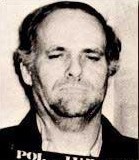 Ervil LeBaron
Murderer · USA · 1972
Ervil Morrell LeBaron (1925 to August 16, 1981) was the leader of a polygamous…
35 victims
Ervil LeBaron
Murderer · USA · 1972
Ervil Morrell LeBaron (1925 to August 16, 1981) was the leader of a polygamous…
35 victims
 Brian Kevin Rosenfeld
Murderer · USA · 1985
Brian Kevin Rosenfeld Brian Kevin Rosenfeld was sentenced to three concurrent l…
23 victims
Brian Kevin Rosenfeld
Murderer · USA · 1985
Brian Kevin Rosenfeld Brian Kevin Rosenfeld was sentenced to three concurrent l…
23 victims
 Marvin Gray
Murderer · USA · 1975
Marvin Gray was convicted killer who claimed responsibility for 23 slayings and…
23 victims
Marvin Gray
Murderer · USA · 1975
Marvin Gray was convicted killer who claimed responsibility for 23 slayings and…
23 victims
 Yahweh ben Yahweh
Murderer · USA · 1980
Yahweh ben Yahweh was born and legally named Hulon Mitchell Jr. (October 27, 19…
23 victims
Yahweh ben Yahweh
Murderer · USA · 1980
Yahweh ben Yahweh was born and legally named Hulon Mitchell Jr. (October 27, 19…
23 victims
 Russell Ellwood
Murderer · USA · 1991
Russell Ellwood was a former taxi driver. Authorities suspected him of killing…
20 victims
Russell Ellwood
Murderer · USA · 1991
Russell Ellwood was a former taxi driver. Authorities suspected him of killing…
20 victims
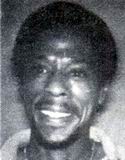 John Parish
Mass murderer · USA · 1982
John Parish (July 4, 1933 – August 9, 1982) was an American mass murderer. He s…
6 victims
John Parish
Mass murderer · USA · 1982
John Parish (July 4, 1933 – August 9, 1982) was an American mass murderer. He s…
6 victims
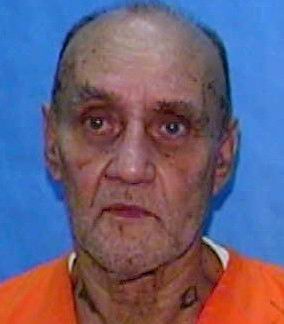 Johnny Williamson
Murderer · USA · 1985
Johnny Williamson (born 10/25/42) was convicted in the Third Judicial Circuit,…
1 victim
Johnny Williamson
Murderer · USA · 1985
Johnny Williamson (born 10/25/42) was convicted in the Third Judicial Circuit,…
1 victim
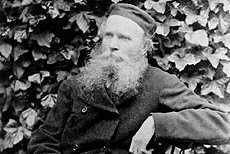 William Chester Minor
Homicide · United Kingdom · 1872
William Chester Minor was found not guilty on grounds of insanity on April 6, 1…
1 victim
William Chester Minor
Homicide · United Kingdom · 1872
William Chester Minor was found not guilty on grounds of insanity on April 6, 1…
1 victim
 Dominique Cottrez
Infanticide · France · 1989
Dominique Cottrez was a French woman aged 45. She was described as a nursing as…
8 victims
Dominique Cottrez
Infanticide · France · 1989
Dominique Cottrez was a French woman aged 45. She was described as a nursing as…
8 victims
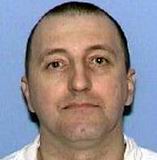 Cary Kerr
Murderer · USA · 2001
Cary D. Kerr was a white male born October 6, 1964 in Dallas, Texas. He was 46…
1 victim
Cary Kerr
Murderer · USA · 2001
Cary D. Kerr was a white male born October 6, 1964 in Dallas, Texas. He was 46…
1 victim
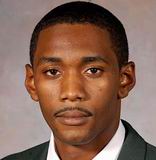 Carlton Dotson
Murderer · USA · 2003
Summer of 2003 — Carlton Dotson and Patrick Dennehy indicated they were concern…
1 victim
Carlton Dotson
Murderer · USA · 2003
Summer of 2003 — Carlton Dotson and Patrick Dennehy indicated they were concern…
1 victim
- Gender
- male
- Country
- USA
- Location
- Ventura County, California, USA
- Date of birth
- October 17, 1959
- Age at first offence
- 22
- Characteristics
- rape, murder-for-hire
- Victim profile
- Terri Lynn Winchell, 17
- Method of murder
- Hitting with a hammer / St abbing with knife
- Date(s) of murder
- January 8, 1981
- Years active
- 1981
- Date of arrest
- 2 days after
- Status
-
Sentenced to death
Sentenced to death on April 25, 1983; scheduled execution by the State of California on February 21, 2006 at 7:30 p.m. was indefinitely suspended; execution was further postponed after two court-appointed anesthesiologists withdrew from the procedure
Background
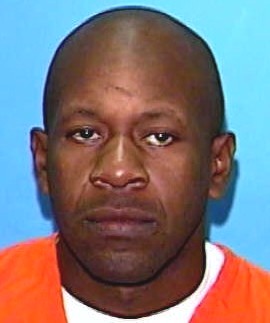
Michael Angelo Morales (born October 17, 1959) was a convicted murderer scheduled to be executed by the State of California at 7:30 p.m. on February 21, 2006.
A clemency letter was mentioned.
Former Whitewater special prosecutor Kenneth Starr was one of Morales’ attorneys on the appeals.
The offence
Terri Winchell was murdered on January 8, 1981. She was 17 years old. Morales murdered and raped Terri Lynn Winchell, and the account stated that his cousin, Rick Ortega, was 19 years old.
The account stated that in early 1980 Ortega and a 17-year-old male named Randy had a homosexual relationship. During that time, Randy also had a dating relationship with Terri Winchell. The account stated that Terri did not know about the homosexual relationship of Randy and Ortega, while Ortega knew about Randy’s and Terri’s relationship. It also stated that Ortega was extremely jealous of this relationship and that Ortega and Morales conspired to murder Terri as “pay back” for Terri’s involvement with Randy.
In the weeks before the murder, Ortega set up a ruse to trick Terri into believing that Ortega wanted to make amends and become her friend.
On the day of the murder, Ortega tricked Terri into accompanying him and Morales in Ortega’s car to a remote area near Lodi, California. Morales attacked Terri from behind and attempted to strangle her with his belt. The belt broke. Morales then struck her multiple times in the head with a hammer, beating her into unconsciousness and crushing her skull. The account stated that Morales left Terri’s body in the vineyard naked from the waist down, with her sweater and bra pulled up over her breasts.
According to the account, Morales dragged Terri face-down across the road and into a vineyard. Morales raped her while she lay unconscious and stabbed her four times in the chest to make sure she died. Terri died from both the head and chest wounds.
The account stated that Morales confessed to killing Terri to a jailhouse informant, as well as to his girlfriend and his housemate. It also stated that Morales threatened both women prior to his trial so they would not testify about what he told them.
The account set out Morales’ admissions as follows:
- Morales admitted that he sat behind Terri after she had been lured into Ortega’s car.
- Morales admitted that he put his belt around Terri’s neck and strangled her until the belt broke.
- Morales admitted that he repeatedly hit her over the head with a hammer until she was unconscious.
- Morales admitted that he took her out of the car and dragged her into a vineyard.
- Morales admitted that he raped her.
- Morales admitted that he left her but then returned to be “sure” she was dead.
Investigation
Within two days of the murder, Morales was arrested at his residence.
The police found Morales’ broken belt, containing Terri Winchell’s blood, hidden under a bedroom mattress.
The police also found three knives, and the hammer bearing traces of blood hidden in the refrigerator vegetable crisper. Blood-stained floor mats from Ortega’s car were found in the trash.
Terri’s purse and credit card were also found in the house. Ortega’s blood-spattered car was impounded.
The account stated that Morales used $11 from Terri’s purse to buy beer, wine, and cigarettes on the night of the murder.
Arrest
Morales was arrested at his residence within two days of the murder.
Trial
Morales was convicted of raping and murdering 17-year-old Terri Winchell in January 1981.
The account stated that Morales had not denied that he committed the crime, but his defense argued that because he was high on PCP at the time, the murder did not qualify for the “special circumstances” required against California state law for the death penalty. The defense also argued that the crime was not premeditated.
The prosecution countered with evidence showing that Morales gathered tools before the encounter, practiced strangulation on Morales’ girlfriend and another female acquaintance, and confessed to an informant while in jail.
Morales had earlier “practiced” how he was going to strangle Terri, and told his girlfriend on the day of the murder how he was going to strangle and “hurt” someone.
The account stated that Ortega, tried separately, was sentenced to life in prison.
The account stated that Morales was previously convicted of felony burglary on October 4, 1979 and sentenced to prison.
Shortly after killing Terri Lynn Winchell, Morales was convicted of two counts of robbery for which he was eventually sentenced to state prison. The account described the robbery case: Morales entered a market to purchase beer; when a store clerk would not allow him to purchase beer, he left and later returned with two companions. Morales and the two others held the clerk, put a knife to his face, hit him with a milk crate and kicked him. One of his companions knocked down a pregnant female clerk who suffered numerous head and facial cuts. The total loss of money, merchandise and equipment damage was $2,529.
Sentencing
Charles McGrath, the judge who originally sentenced Morales to execution, was mentioned.
Morales was sentenced to death on April 25, 1983.
Appeals
It was stated that Morales has denied the crime, while also stating that Morales had not denied that he committed the crime; the account included both assertions.
Clemency and post-conviction events were described:
- Charles McGrath announced that he had had a change of heart in the case and said he doubted the testimony of an informant against Morales.
- The account stated that the informant claimed Morales confessed to him in Spanish, a language Morales does not speak.
- McGrath asked Gov. Arnold Schwarzenegger to grant Morales clemency under state law.
- Morales claimed that he found God in prison and regretted the crime that he committed.
In February 2006, the defense team filed papers claiming that five out of the 12 jurors had doubts about sentencing Morales to death. Prosecutors alleged that all of the documents were forgeries, and one juror expressed shock on radio’s John and Ken Show when told that she had allegedly been one of the jurors with the doubts.
Calls were made to Pepperdine University, where Starr works, urging them to investigate Starr’s involvement in the forgeries. After standing by the documents for one week, Starr and his team withdrew the documents.
Ultimately, clemency was denied, but the phony documents were not used in the rationale.
Outcome
Two hours before the scheduled execution on February 21, 2006 at 7:30 p.m., the State of California notified the 9th Circuit Court of Appeals that it could not comply with a lower federal judge’s ruling that the execution must be carried out by a medical professional due to the chemical used in the execution. Consequently, California indefinitely suspended Morales’ execution.
The case led to a moratorium on capital punishment in California entirely, as the only legal method of execution must be carried out with the participation of a licensed physician, who are ethically prohibited from participating in executions.
Postponed execution
Morales’ original execution date of February 21, 2006 was postponed as a result of two court-appointed anesthesiologists withdrawing from the procedure.
The account stated that this was the first death row inmate since a judge ruled that the current combination of drugs may cause severe pain, corroborated by an April 2005 study published in The Lancet. The doctors cited ethical reasons for the decision to withdraw, and they had been ordered by the court to intervene if Morales woke up or appeared to be in pain.
Since both doctors withdrew, California planned to overdose Morales on intravenous barbiturates, the only other option allowed by the court. The judge further ruled that the barbiturates could only be administered by a “licensed medical professional,” meaning a doctor, nurse or other medical technician legally authorized to administer IV medications. The account stated that this qualification virtually assured that the execution could not take place.
Having failed to find a medical professional willing to carry out the execution, California decided it could not comply with the judge’s decision and would allow the death warrant to lapse. The death warrant would have to be re-issued by the original trial judge, Charles McGrath, who indicated that he no longer believed testimony from the 1982 trial and asked for clemency for Morales.
Other details
Terri Winchell’s family and friends gathered at her grave to celebrate her life and say a final goodbye. Some carried flowers and others carried balloons.
Trish Costa, a classmate of Winchell, said:
“When we graduated high school, a lot of us put a white rose in our bouquet in honor or Terri. We’re still carrying our white rose for Terri,” said Trish Costa, a classmate of Winchell’s. “We’re gonna go to our high school reunion. We’re gonna look for our fellow classmates, the first thing on your mind is, Terri is not here.”
Barbara Christian, Terri Winchell’s mother, said:
“I’m so glad this is coming to a close. All the news and notoriety is just making it like the crime happened yesterday.”
Mack Winchell, Terri’s father, said:
“lovely, vivacious young lady,” who always found time to spend with both her parents, who divorced when she was young.
Bradley Winchell, Terri’s brother, said:
“In all of these years, no one has contacted our family and said sorry,”
Brian Pratt said:
“I think they ought to bring back hanging or electrocution for this type of crime,” said Pratt. “He’ll get what he deserves.”
Jacqueline Miles, a family friend, said:
“He’s the monster that killed the beauty, and he needs to pay for a crime that was senseless. We need to actually show the world that people can’t get away with murdering people just because they get mad.”
People
- Michael Angelo Morales — defendant
- Terri Winchell — victim (17 years old)
- Rick Ortega — cousin of Morales; described as 19 years old; tried separately and sentenced to life in prison
- Randy — 17-year-old male named in the account; involved in the relationship history described
- Charles McGrath — judge who originally sentenced Morales to execution; later said he doubted the testimony of an informant and asked Gov. Arnold Schwarzenegger to grant clemency
- Arnold Schwarzenegger — governor asked for clemency
- Kenneth Starr — former Whitewater special prosecutor; Morales’ attorney on the appeals
- Trish Costa — classmate of Winchell
- Barbara Christian — Terri Winchell’s mother
- Mack Winchell — Terri’s father
- Bradley Winchell — Terri’s brother
- Brian Pratt — relative of the victim
- Jacqueline Miles — family friend
- John and Ken Show — radio program referenced in connection with a juror’s statement
Spotted an error, or have more information about this case?