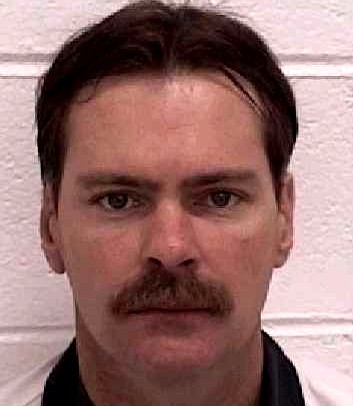
Leonard Drane
Murderer Brian Kevin Rosenfeld
Murderer · USA · 1985
Brian Kevin Rosenfeld Brian Kevin Rosenfeld was sentenced to three concurrent l…
23 victims
Brian Kevin Rosenfeld
Murderer · USA · 1985
Brian Kevin Rosenfeld Brian Kevin Rosenfeld was sentenced to three concurrent l…
23 victims
 Yahweh ben Yahweh
Murderer · USA · 1980
Yahweh ben Yahweh was born and legally named Hulon Mitchell Jr. (October 27, 19…
23 victims
Yahweh ben Yahweh
Murderer · USA · 1980
Yahweh ben Yahweh was born and legally named Hulon Mitchell Jr. (October 27, 19…
23 victims
 Russell Ellwood
Murderer · USA · 1991
Russell Ellwood was a former taxi driver. Authorities suspected him of killing…
20 victims
Russell Ellwood
Murderer · USA · 1991
Russell Ellwood was a former taxi driver. Authorities suspected him of killing…
20 victims
 Robert Martines Perez
Murderer · USA · 1994
Name: Robert Martines Perez · Other name used in proceedings: Robert Martinez P…
15 victims
Robert Martines Perez
Murderer · USA · 1994
Name: Robert Martines Perez · Other name used in proceedings: Robert Martinez P…
15 victims
 David Hollis
Murderer · USA · 1982
David Hollis repeatedly stabbed Debbie and Kim and strangled all three. Hollis…
3 victims
David Hollis
Murderer · USA · 1982
David Hollis repeatedly stabbed Debbie and Kim and strangled all three. Hollis…
3 victims
 Joe Fedelfido Gonzales
Murderer · USA · 1992
September 18, 1996 — Joe Fedelfido Gonzales was executed by lethal injection in…
1 victim
Joe Fedelfido Gonzales
Murderer · USA · 1992
September 18, 1996 — Joe Fedelfido Gonzales was executed by lethal injection in…
1 victim
 Lee Roy Martin
Serial killer · USA · 1967
Name: Lee Roy Martin Lee Roy Martin was sentenced to four life sentences in 196…
4 victims
Lee Roy Martin
Serial killer · USA · 1967
Name: Lee Roy Martin Lee Roy Martin was sentenced to four life sentences in 196…
4 victims
 Joshua Daniel Bishop
Murderer · USA · 1994
Joshua Daniel Bishop was 22 years old when he was sentenced to death in Baldwin…
1 victim
Joshua Daniel Bishop
Murderer · USA · 1994
Joshua Daniel Bishop was 22 years old when he was sentenced to death in Baldwin…
1 victim
 Frank Basil McFarland
Murderer · USA · 1988
Frank Basil McFarland was executed by lethal injection in Texas on April 29, 19…
1 victim
Frank Basil McFarland
Murderer · USA · 1988
Frank Basil McFarland was executed by lethal injection in Texas on April 29, 19…
1 victim
 Susan Newell
Murderer · USA · 1923
Susan Newell (1893–1923) was convicted in Glasgow of the murder of newspaper bo…
1 victim
Susan Newell
Murderer · USA · 1923
Susan Newell (1893–1923) was convicted in Glasgow of the murder of newspaper bo…
1 victim
- Gender
- male
- Country
- USA
- Location
- Elbert County, Georgia, USA
- Date of birth
- 1959
- Age at first offence
- 31
- Characteristics
- rape
- Victim profile
- Linda Renee Blackmon, 27
- Method of murder
- Shooting
- Date(s) of murder
- June 13, 1990
- Years active
- 1990
- Date of arrest
- 3 weeks after
- Status
-
Sentenced to death
Sentenced to death in September 1992
Overview
Leonard Maurice Drane was convicted in a capital case involving the killing of Renee Blackmon. Drane was sentenced to death in September 1992 in Elbert County. The case involved an initial trial moved from Spalding County to Elbert County, a co-indictee who received life imprisonment, and multiple appellate proceedings that remanded issues for further hearings and reconsideration.
Timeline
- June 13, 1990 — Drane and co-indictee David Robert Willis picked up Renee Blackmon and drove her to a secluded road.
- July 1, 1990 — Renee Blackmon’s body was found in a lake.
- November 19, 1990 — Drane was indicted.
- July 9, 1991 — The state filed its notice of intent to seek the death penalty.
- September 14, 1992 — Drane’s trial began.
- September 25, 1992 — The jury returned its verdict finding Drane guilty of the crimes charged.
- September 1992 — Drane was sentenced to death in Elbert County.
- October 1993 — Willis was tried and convicted in his own trial.
- March 17, 1995 — The Supreme Court decided DRANE v. THE STATE, S94P1594, 265 Ga. 255 (455 SE2d 27) (1995).
- March 30, 1995 — Reconsideration was denied in DRANE v. THE STATE, S94P1594, 265 Ga. 255 (455 SE2d 27) (1995).
- November 1, 1999 — The Supreme Court decided DRANE v. THE STATE, S99P1003, 271 Ga. 849 (523 SE2d 301) (1999).
- December 20, 1999 — Reconsideration was denied in DRANE v. THE STATE, S99P1003, 271 Ga. 849 (523 SE2d 301) (1999).
Background
Leonard Maurice Drane was 37 years old at the time of sentencing. Renee Blackmon was 27 years old. Drane was on probation for other crimes at the time of the murder.
Drane and his co-indictee David Robert Willis were roommates. They had gone together to a liquor store in Willis’s truck and later met Blackmon outside the store.
The offence
On the evening of the murder, Drane and Willis went to a liquor store in Willis’s truck. Outside the store, they met Renee Blackmon, who asked them for crack cocaine and then agreed to ride in the truck and drink with the two men.
Willis drove the truck to a spot near a lake, where he had sex with the victim in the truck while Drane stood in front of the truck. Willis and the victim then walked together to the back of the truck, where Willis shot the victim in the head. The bullet blew off part of the victim’s skull and detached her brain.
After the shooting, the victim’s throat was slashed at least six times. There was contradictory evidence about whether Drane or Willis slashed her throat and whether she was still breathing at the time.
The victim’s body was later found in a lake.
Investigation and evidence
After the murder, Drane assisted Willis in concealing the evidence and disposing of the body. The events included hiding and destroying evidence.
At trial, a witness testified that Drane told her prior to his arrest that he and Willis “picked this [black] girl up at the Huddle House in Elberton, Georgia, and that it would be the last ride she’d ever take.” The witness further testified that Drane said he “[had sex with] her so bad that she’d never have any more babies” and that he and Willis threw her in the lake. The witness also testified that Drane said the only mistake he made was to put one block on her instead of two.
Another witness testified that Drane told him he cut the victim’s throat because she was still alive after Willis shot her.
Two witnesses in the case provided details about post-murder behavior and remarks. After Willis and Drane had disposed of the victim’s body, they went to a bar and met some women. They went with the women to a trailer, where they drank beer and made comments about hating blacks. One of the women noticed the men had scratches on their chests and that they were not wearing shirts.
In the penalty phase, one of the women testified that Drane forced her to orally sodomize him at knife point that same night as the murder.
Trial
Court and proceedings
The trial was moved from Spalding County to Elbert County. The murder case was tried before Judge Bryant from the Northern Circuit (in the 265 Ga. 255 decision) and before Judge Bryant in Elbert Superior Court (in the later 271 Ga. 849 decision).
A jury convicted Leonard M. Drane of malice murder, felony murder, and aggravated battery and imposed a death sentence for the malice murder. Co-indictee David Robert Willis was sentenced to life in prison.
Charges and statutory findings
Drane was convicted of malice murder, felony murder and aggravated battery in connection with the death of Renee Blackmon.
The jury recommended the death penalty for malice murder. The jury found that the murder had been committed during the course of an aggravated battery under OCGA 17-10-30 (b) (2). The jury also found the murder was wantonly vile, horrible or inhuman in that it involved depravity of mind and an aggravated battery to the victim under OCGA 17-10-30 (b) (7).
Jury selection (Batson/J.E.B.)
The state used all of its peremptory challenges to strike female jurors. Of 39 prospective jurors on the panel, 22 were women, and the state used its peremptory strikes to remove female prospective jurors. Prior to the jury being sworn, Drane raised a challenge under Batson v. Kentucky, contending that the prosecutor’s strikes were gender-biased. The trial court denied Drane’s challenge.
The Supreme Court later held in J.E.B. v. Alabama that the equal protection clause prohibits discrimination in jury selection based on gender, and because J.E.B. had not been decided at the time of Drane’s trial in September 1992, the case was remanded for a hearing to determine whether the prosecutor’s peremptory strikes were gender-neutral.
On remand, the trial court found the state had not discriminated on the basis of gender in its peremptory challenges. Five prospective jurors were struck because they expressed reservations about imposing a death sentence. Two prospective jurors had relatives who had been convicted of crimes and incarcerated. Another prospective juror stated she believed reasonable doubt meant no doubt and vulgar language from witnesses would bother her. The state also struck a final prospective juror based on reasons described in the appellate opinion: the juror was not clear as to what reasonable doubt really was and was timid and quiet during jury selection. The Supreme Court affirmed that there was no error in the trial court’s J.E.B. ruling.
Evidence issues: alleged confession by Willis to cellmate Guthrie
During the guilt-innocence phase, Drane attempted to introduce evidence that his co-indictee Willis confessed his role in the murder to cellmate Marcus Guthrie. The state objected on hearsay grounds.
Guthrie testified, in a proffer outside the presence of the jury, that Willis told him he shot Ms. Blackmon and cut her throat. Willis was unavailable to testify because his murder trial was pending.
The trial court ruled the testimony inadmissible in the guilt-innocence phase because it was hearsay and unreliable, but Guthrie was permitted to testify about the alleged confession in the penalty phase.
On initial appeal, the Supreme Court remanded for a hearing and further consideration of whether, in excluding the alleged confession during the guilt-innocence phase, the trial court adequately considered reliability and necessity under Chambers v. Mississippi and related principles.
On remand, the trial court ruled that Guthrie’s testimony, while necessary to the defense, was properly excluded in the guilt-innocence phase because Willis’s statement to Guthrie “does not show persuasive assurances of trustworthiness nor was the statement made under circumstances providing considerable assurance of its reliability.”
The Supreme Court agreed that the ruling was not error. The court described the Chambers/Green analysis and found that the proposed testimony did not meet the exceptional circumstances requiring a considerable guaranty of trustworthiness.
Conspiracy charge and parties-to-crime
Drane argued the trial court erred in charging the law of conspiracy, claiming there was no evidence to support it. The Supreme Court discussed conspiracy under OCGA 16-4-8, including that an agreement may be a tacit understanding.
The Supreme Court concluded there was evidence sufficient to support an inference of a tacit understanding to murder the victim, including evidence that Drane and Willis lived together and picked up the victim together, that both men concealed evidence and disposed of the body, that Drane was living with Willis three weeks after the crime when Drane was arrested, and evidence that Drane bragged about sexual intercourse with the victim and said he had cut the victim’s throat.
The Supreme Court noted that even though it found no error in the trial court’s charge on conspiracy, it observed that the state did not seek to prove Drane’s guilt as a conspirator but proceeded against Drane as a party to the crime with Willis, and it further described harmlessness if any conspiracy instruction error existed.
Polygraph-admission issue and Miranda waiver
The Supreme Court found no error regarding the admission of testimony about statements Drane made to an examiner before commencement of an unstipulated polygraph examination. Before making the statements, Drane had been read his Miranda warning and had signed a waiver of rights form. The trial court ordered that there could be no comment referring to the polygraph examination, and Drane did not complain about any such reference.
The Supreme Court held that admissions which are otherwise competent and admissible are not to be excluded simply because the admissions were made after the taking of a lie detector test, and that the same rule applied to admissions made before commencement of the test.
Directed verdict on death penalty aggravating circumstances
Drane argued the trial court erred in failing to grant his motion for directed verdict on the issue of the death penalty because there was no evidence supporting any aggravating circumstance under OCGA 17-10-30.
The jury found as aggravating circumstances that the offense of murder was committed during commission of an aggravated battery under OCGA 17-10-30 (b) (2) and that the murder was outrageously or wantonly vile, horrible, or inhuman because it involved depravity of mind and an aggravated battery under OCGA 17-10-30 (b) (7).
Drane argued there was no evidence supporting that the cutting of the victim’s throat, the aggravating battery, occurred during life. The Supreme Court discussed that post-mortem mutilation of a body may show depravity of mind, and it considered the medical examiner’s testimony as inconclusive on whether the victim was alive when her throat was cut. The Supreme Court stated that Drane’s own statements indicated the victim was gasping when her throat was cut, and that this constituted some evidence of an aggravated battery sufficient to support the aggravating circumstances.
The Supreme Court held the evidence supported the statutory aggravating circumstances found by the jury. It stated that if a retrial became necessary, the state could again seek a death sentence.
Jury instructions and merging convictions
The Supreme Court found no merit in arguments that the sentencing phase instructions required the jury to find statutory aggravating circumstances beyond a reasonable doubt, removing the state’s burden of proof.
The Supreme Court also found no error in the trial court’s failing to merge the aggravated battery conviction with the malice murder conviction. The Supreme Court stated that the victim’s throat was slashed at least six times and that a rational trier of fact could have found Drane guilty of aggravated battery independent of the act causing the victim’s death.
Photographs admitted at trial
The Supreme Court held that the trial court did not err in admitting photographs depicting the victim’s decomposed body. Photographs were relevant to the location of the body and the nature and location of wounds, and the Supreme Court noted alterations were due to the combined forces of the murderer and elements.
The Supreme Court also held the trial court did not err in admitting post-autopsy photographs in which the victim’s skull had been reconstructed. The Supreme Court stated reconstruction was necessary to show where the bullet had entered and exited.
The Supreme Court held the photographs were not unduly duplicative. It also held there was no error in admitting a photograph of the victim while in life for purposes of identifying the victim as the person who got into the truck with Drane and Willis the night of the murder.
The Supreme Court additionally held the trial court did not err in admitting photographs of the appellant taken in police custody, noting Drane’s appearance had changed from the time of the crime to the time of trial and that it made it difficult for witnesses to identify him in the courtroom.
Voir dire issue
The Supreme Court found no merit to Drane’s contention that the trial court erred in refusing to allow the defense to question a potential juror during voir dire about her understanding of the meaning of a life sentence.
In-chambers conference and transcript omissions
After an audiotape of one of Drane’s statements was played for the jury, Drane requested an in-chambers conference with the judge and prosecutor regarding a redaction made to the audiotape at Drane’s request.
Drane and his counsel attended, but the conference was not recorded by the court reporter. When the judge and other attendees returned to the courtroom, Drane’s counsel placed an objection regarding the redaction on the record, and the trial court overruled it.
After the case was remanded, Drane claimed the trial transcript omitted several other objections made at the conference that were not ruled on by the trial court. Drane’s counsel testified at a hearing that he remembered no additional objections and ensured each objection he made was preserved on the record. The Supreme Court found no error.
The Supreme Court also found that even if the alleged objections were made, they were without merit, because the trial court redacted the portion of Drane’s statement referring to a fight he had with African-American inmates while previously incarcerated, while other comments about African-Americans were relevant to show possible motive.
Spectator outburst and curative instructions
The Supreme Court held that the trial court’s curative instructions adequately prevented error from arising due to a spectator’s emotional outburst during the state’s guilt-innocence phase closing argument.
Jury scheduling comment and preservation
The Supreme Court addressed a claim about the trial court’s comments while asking whether the jury wished to hear the court’s guilt-innocence phase charge before recessing for the day. The trial court said:
[I]t is now twenty-five minutes 'til five. I have the law to charge you which is quite lengthy that you'll be governed by in your deliberations. At that time, you will proceed to the jury room to reach a decision if you can based on what you've heard and the law charged and then we'd go into the second phase of this case. . . .
Drane objected that the trial court’s comments implied there would be a conviction. The trial court issued curative instructions to the jury when they returned, telling them the court did not intend to imply any verdict and if the defendant was acquitted there would be no second phase of the trial. Drane did not object to these instructions, request further instructions, or move for a mistrial, so the issue was not preserved for appellate review.
Sentencing
The jury recommended the death penalty and the trial court imposed a death sentence for the malice murder.
The Supreme Court later considered whether the death sentence was imposed under the influence of passion, prejudice, or any other arbitrary factor and held it was not. The court also found the death sentence was not disproportionate to the life sentence Willis received for the same murder and discussed other proportionality principles.
The Supreme Court noted the state presented evidence that Drane cut the victim’s throat while she was still breathing, helped dump her body and destroy evidence, and made disparaging remarks after the murder. The court also noted penalty phase evidence that Drane sexually assaulted another woman on the same night as the murder.
Appeals
DRANE v. THE STATE (S94P1594, 265 Ga. 255)
The Supreme Court held the evidence was sufficient to support Drane’s convictions beyond a reasonable doubt.
The Supreme Court remanded for a hearing to determine:
- whether the prosecutor’s peremptory strikes were gender-neutral, and
- whether the exclusion of the alleged confession of Willis to a cellmate deprived Drane of due process.
The Supreme Court affirmed the trial court regarding Drane’s remaining enumerations of error.
Remand determinations on gender-neutral strikes
On remand, the trial court found the state’s peremptory strikes were gender-neutral. The Supreme Court found no error with the trial court’s J.E.B. ruling.
Remand determinations on excluded confession in guilt-innocence
On remand, the trial court ruled the testimony was properly excluded in the guilt-innocence phase under the Chambers/Green reliability and necessity analysis.
DRANE v. THE STATE (S99P1003, 271 Ga. 849)
The later Supreme Court decision addressed issues and other remaining enumerations of error after the remand proceedings. The court reviewed the peremptory-strike gender-neutral findings and the exclusion of Guthrie’s testimony regarding Willis’s alleged confession.
The Supreme Court concluded that the trial court did not err in the guilt-innocence phase rulings, including the exclusion of Willis’s alleged confession to Guthrie. The Supreme Court found no preservation error or substantive error in other enumerations addressed.
Other details
Co-indictee
David Robert Willis was a co-indictee who received a life sentence. Willis was described as having been tried and convicted in his own case in October 1993.
Guthrie testified in the proffer and was also permitted to testify about the alleged confession in the penalty phase.
Witness testimony about racial motive and victim’s status
In the notes, it was stated that the victim was African-American and Willis and Drane are white, and that there was evidence of a racial motive for the murder.
During penalty phase evidence, one of the women testified about being forced at knife point to orally sodomize Drane.
Defense explanations described in appellate narrative
After his arrest, Drane claimed that Willis had sex with the victim and shot her with a shotgun, then cut her throat because she was still breathing. Drane claimed he did not know Willis was going to kill the victim and that he did not participate in her killing, but he admitted helping Willis dispose of the body, hide the gun, wash Willis’s truck, and burn their clothes. Drane claimed he continued to live with Willis for three weeks because he was afraid of Willis.
Notes on prior probation
Parties’ roles and conspiracy discussion
In the appellate opinion’s analysis, the Supreme Court discussed the distinction between conspiracy and the parties-to-a-crime concept under OCGA and described that even if conspiracy charge error existed, it would be harmless in context.
Additional appellate judge statements and opinions
The Supreme Court opinion included dissent and concurring/dissenting views by other justices:
- A dissenting justice disagreed with the majority’s conclusion that a remand was required for the trial court to further analyze the exclusion of Willis’s alleged confession to Guthrie.
- Another opinion described concurrence in the majority’s affirmance of Drane’s guilt while expressing a view about staying ruling on the constitutionality of death by electrocution until guidance from the United States Supreme Court.
Justice Carley and Justice Thompson were described as joining in the dissent.
Legal references mentioned in the case
The appellate decisions discussed, among other authorities, Jackson v. Virginia, Batson v. Kentucky, J.E.B. v. Alabama, Chambers v. Mississippi, Green v. Georgia, Miranda waiver principles, and OCGA provisions including OCGA 16-4-8, OCGA 17-10-30 (b) (2) and (b) (7), and OCGA 17-10-35 (c) (1) and (c) (3).

Spotted an error, or have more information about this case?