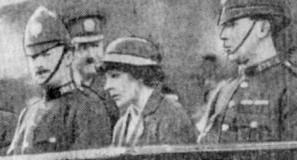
Susan Newell
Murderer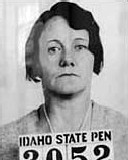 Lydia Trueblood
Murderer · USA · 1915
Lydia Trueblood was born in 1915. She was convicted in Idaho in 1921 and died o…
6 victims
Lydia Trueblood
Murderer · USA · 1915
Lydia Trueblood was born in 1915. She was convicted in Idaho in 1921 and died o…
6 victims
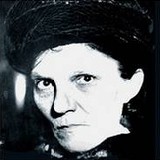 Martha Wise
Murderer · USA · 1924
Martha Wise (born 1885; died June 28, 1971), also known as “the Borgia of Ameri…
3 victims
Martha Wise
Murderer · USA · 1924
Martha Wise (born 1885; died June 28, 1971), also known as “the Borgia of Ameri…
3 victims
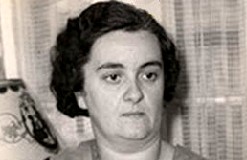 Mary Frances Creighton
Murderer · USA · 1923
Mary Frances Creighton (c. 1898 - July 16, 1936) was a housewife and was execut…
3 victims
Mary Frances Creighton
Murderer · USA · 1923
Mary Frances Creighton (c. 1898 - July 16, 1936) was a housewife and was execut…
3 victims
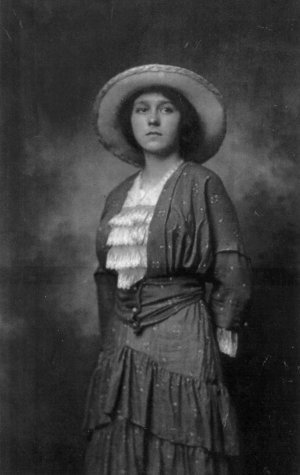 Inez Palmer
Murderer · USA · 1926
Inez Palmer — defendant; lived at the Stout farmhouse and pleaded guilty to a f…
2 victims
Inez Palmer
Murderer · USA · 1926
Inez Palmer — defendant; lived at the Stout farmhouse and pleaded guilty to a f…
2 victims
 Winnie Ruth Judd
Murderer · USA · 1931
Winnie Ruth Judd (January 29, 1905 – October 23, 1998) was a Phoenix, Arizona m…
2 victims
Winnie Ruth Judd
Murderer · USA · 1931
Winnie Ruth Judd (January 29, 1905 – October 23, 1998) was a Phoenix, Arizona m…
2 victims
 Robert Bierenbaum
Murderer · USA · 1985
Robert Bierenbaum was a plastic surgeon who was convicted in October 2000 of mu…
1 victim
Robert Bierenbaum
Murderer · USA · 1985
Robert Bierenbaum was a plastic surgeon who was convicted in October 2000 of mu…
1 victim
 Phillip Heggarty
Murderer · United Kingdom · 2003
Phillip Heggarty (born 1956) was a British murderer. In 2003, Phillip Heggarty…
1 victim
Phillip Heggarty
Murderer · United Kingdom · 2003
Phillip Heggarty (born 1956) was a British murderer. In 2003, Phillip Heggarty…
1 victim
 Daryl Keith Holton
Mass murderer · USA · 1997
Defendant: Daryl Keith Holton (described as a Gulf War veteran). · Victims (fou…
4 victims
Daryl Keith Holton
Mass murderer · USA · 1997
Defendant: Daryl Keith Holton (described as a Gulf War veteran). · Victims (fou…
4 victims
 Ricky Eugene Kerr
Murderer · USA · 1994
Name: Ricky Eugene Kerr Court: Court of Criminal Appeals of Texas Docket / Case…
2 victims
Ricky Eugene Kerr
Murderer · USA · 1994
Name: Ricky Eugene Kerr Court: Court of Criminal Appeals of Texas Docket / Case…
2 victims
 Karthik Rajaram
Mass murderer · USA · 2008
Karthik Rajaram was found dead in his Porter Ranch home along with his wife, mo…
5 victims
Karthik Rajaram
Mass murderer · USA · 2008
Karthik Rajaram was found dead in his Porter Ranch home along with his wife, mo…
5 victims
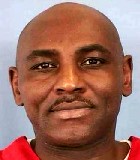 Ricky Chase
Murderer · USA · 1989
Ricky Chase was convicted in February 1990 of capital murder for the robbery an…
1 victim
Ricky Chase
Murderer · USA · 1989
Ricky Chase was convicted in February 1990 of capital murder for the robbery an…
1 victim
- Gender
- female
- Country
- USA
- Location
- Glasgow, Scotland, United Kingdom, USA
- Date of birth
- 1 893
- Characteristics
- —
- Victim profile
- John Johnston, 13 (newspaper boy)
- Method of murder
- Strangulation
- Date(s) of murder
- May 20, 1923
- Years active
- 1923
- Date of arrest
- Same day
- Status
-
Executed
Executed by hanging at Duke Street Prison in Glasgow on October 10, 1923; Susan Newell was the last woman to be hanged in Scotland.
Case details
Susan Newell (1893–1923) was convicted in Glasgow of the murder of newspaper boy John Johnston and was executed by hanging at Duke Street Prison in Glasgow on October 10, 1923.
Timeline
- 20 June 1923 — Susan Newell strangled the newspaper boy John Johnston after taking a newspaper from him; she and her daughter later carried his body down stairs and put it in an old pram for disposal.
- 20 June 1923 (evening, around 6:45 p.m.) — John Johnston knocked on Susan’s door to see if she wanted the evening newspaper; Susan told him to come in and took the paper from him; John insisted he had to have the money for it; Susan lost control and strangled him.
- October 10, 1923 — Susan Newell was executed by hanging at Duke Street Prison in Glasgow.
Background
Susan Newell was born in 1893 and lived a hard life in constant poverty.
In June 1923, she lived in a rented flat in Newlands Street, Coatbridge, a suburb of Glasgow, with her husband John and their 8-year-old daughter Janet McLeod, from her previous marriage. John was apparently a drunkard and a womaniser.
After three weeks, their landlady, Mrs. Young, became fed up with their rows and gave them notice to quit.
Susan was noted for having a bad temper and also had some history of violence.
On 19 June 1923, Susan assaulted her husband John, beating him round the head, which he reported to the police.
The following day, they had another violent argument and John left home going to his sister’s house that night.
The offence
On the evening of Wednesday 20 June 1923 around 6:45 p.m., the 13-year-old newspaper boy John Johnston knocked on Susan’s door to see if she wanted the evening newspaper. Susan told him to come in and took the paper from him. John insisted he had to have the money for it. Susan lost control and strangled the boy.
Susan’s daughter, Janet, later saw the boy’s body when she came in from playing lying on the settee. Janet had to help Susan wrap it in an old rug. Susan slept on the problem of what to do with John’s body and, by the morning, decided how she would dispose of it.
Susan and Janet carried John’s body down stairs and put it in an old pram, found covered by the rug. Janet perched on top of the bundle as they set off together on foot towards Glasgow.
Investigation and discovery
Several people noticed Susan and Janet as they walked along the roads towards Glasgow. A passing lorry driver offered them a lift, which Susan accepted, and the driver dropped them off in Glasgow’s Duke Street.
As the pram was being got down from the truck, the bundle containing John’s body came undone, and a foot was seen sticking out of one end and the top of his head at the other end. A lady looking out of her house nearby saw this before Susan could cover up the body again.
The lady decided to follow Susan and Janet and enlisted help from her sister. They met a man and asked him to fetch the police while they continued to follow Susan. The man kept up with her and saw Susan leave the bundle containing John’s body at the entrance to a tenement.
Susan attempted to escape over a wall and was immediately arrested by a policeman waiting on the other side. Susan had worked out her story if she was caught and had primed Janet as well.
Susan told the police that her husband had killed the boy and that she had tried to stop him, and that he forced her and Janet to dispose of the body for him. John was arrested as well and both were charged with the murder.
At the time of arrest, forensic evidence later included that the boy’s body had been burned while he was still alive and then violently throttled.
Arrest and charge
Susan was arrested after she attempted to escape over a wall. John was also arrested. Both Susan and John were charged with the murder.
Trial
The husband and wife came to trial in Glasgow on 18 September 1923 before Lord Alness.
The case against John collapsed because he could prove he was not in the house when the murder took place. He produced witnesses to prove his whereabouts. The judge freed him immediately, saying he should never have been brought to trial. John left the dock without even a glance at Susan.
The main and compelling evidence against Susan was given by her daughter Janet. Janet told the court how she came back to the flat from playing outside to see the body of John lying on the sofa and how she helped her mother wrap it up. Janet also described helping her mother try to dispose of the body and what her mother told her to say if questioned by the police.
Susan’s defence argued that Susan was insane, but the prosecution’s expert witness Professor John Glaister had examined her while she was on remand and rebutted the insanity claim.
Susan’s counsel pointed out that the killing was not premeditated and had no obvious motive.
The jury retired and reached their verdict in 37 minutes. Susan was convicted by a majority verdict, with at least one juror believing her defence of insanity. The jury unanimously recommended mercy for her.
Upon receiving the guilty verdict, Lord Alness sentenced Susan to death. She was taken back to Duke Street where Glasgow’s prison stood at the time.
Sentencing
Lord Alness sentenced Susan to death after the guilty majority verdict, rejecting the recommendation for mercy.
After sentencing, psychiatrists examined Susan and found her to be legally sane.
Execution and aftermath
No woman had been hanged in Scotland for over 50 years, and considerable efforts were made to secure a reprieve for Susan. The application of the law in Scotland was decided to be in line with that in England where Edith Thompson had been hanged 10 months earlier. The Secretary of State for Scotland therefore decided that she could not be reprieved and set her execution for October 10, 1923.
Susan showed emotion for the first time when told by the Lord Provost of Glasgow that there would be no reprieve; she cried out for her daughter and then fainted.
Susan was hanged by John Ellis, assisted by Robert Baxter. They had also hanged Edith Thompson. Ellis conducted executions quickly and did not pinion Susan’s wrists properly.
Ellis decided to use the leather body belt that had an additional strap to go round the thighs. Susan allowed Baxter to strap her legs and thighs without protest, but she got her hands free from the loose wrist straps and defiantly pulled off the white hood, saying to Ellis, "Don't put that thing over me".
Ellis proceeded without the hood, since the noose was already in place. He pulled the lever and Susan went through the trap with her face in full view of the small number of officials present. She died within minutes.
Susan became the last woman to hang in Scotland and was said to be the calmest person in the execution chamber, accepting her fate with both courage and dignity, although she never admitted her crime.
Other details
Susan made no confession and gave no reason why the boy had to die.
Her daughter Janet testified at trial and described that the body of the paperboy had been wheeled through the streets on a pram.
Susan tried to implicate her husband for the crime, but he had a solid alibi based on evidence he could prove he was at his brother’s funeral at the time of the murder.
The jury unanimously recommended mercy for Susan.
John Johnston was described as a newspaper boy delivered newspapers for pocket money. His father told the court that his son wouldn’t have had more than nine pence on him at the time of the killing.
Several contextual statements were made about motive and sanity, including discussion of the M’Naughten rules and whether Susan knew what she was doing was wrong. Susan was described as having clearly known her actions were wrong.
After the execution, John Ellis resigned in the following December after being executioner for 23 years and attempted to commit suicide by shooting himself. In September 1932, by then a sick man, he killed himself by cutting his throat.
Henri Anatole Deibler wrote: ‘To kill in the name of one’s country is a glorious feat, one rewarded by medals. But to kill in the name of the law, is a gruesome, horrible function, rewarded by scorn, contempt and loathing by the public.’


Spotted an error, or have more information about this case?