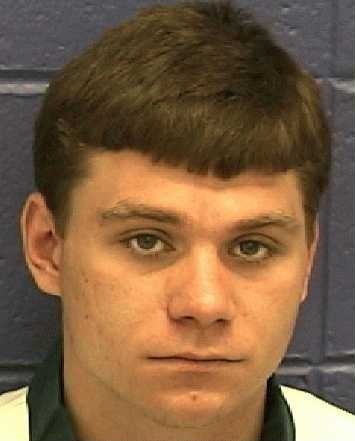
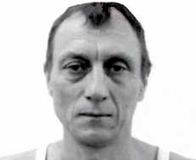
Joshua Daniel Bishop
Murderer Brian Kevin Rosenfeld
Murderer · USA · 1985
Brian Kevin Rosenfeld Brian Kevin Rosenfeld was sentenced to three concurrent l…
23 victims
Brian Kevin Rosenfeld
Murderer · USA · 1985
Brian Kevin Rosenfeld Brian Kevin Rosenfeld was sentenced to three concurrent l…
23 victims
 Russell Ellwood
Murderer · USA · 1991
Russell Ellwood was a former taxi driver. Authorities suspected him of killing…
20 victims
Russell Ellwood
Murderer · USA · 1991
Russell Ellwood was a former taxi driver. Authorities suspected him of killing…
20 victims
 Robert Martines Perez
Murderer · USA · 1994
Name: Robert Martines Perez · Other name used in proceedings: Robert Martinez P…
15 victims
Robert Martines Perez
Murderer · USA · 1994
Name: Robert Martines Perez · Other name used in proceedings: Robert Martinez P…
15 victims
 Billy Frank Vickers
Murderer · USA · 1993
Billy Frank Vickers Vickers was executed by lethal injection in Texas on Januar…
14 victims
Billy Frank Vickers
Murderer · USA · 1993
Billy Frank Vickers Vickers was executed by lethal injection in Texas on Januar…
14 victims
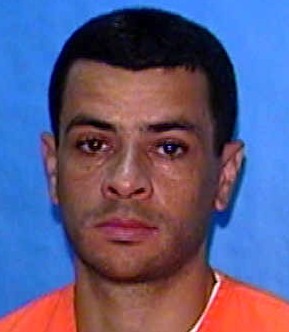 Rory Conde
Serial killer · USA · 1994
Rory Conde was convicted in Florida of the first-degree murder of Rhonda Dunn a…
6 victims
Rory Conde
Serial killer · USA · 1994
Rory Conde was convicted in Florida of the first-degree murder of Rhonda Dunn a…
6 victims
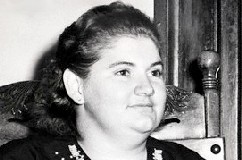 Martha Beck
Serial killer · USA · 1948
Martha Beck was executed by electrocution at Sing Sing prison in New York on Ma…
4 victims
Martha Beck
Serial killer · USA · 1948
Martha Beck was executed by electrocution at Sing Sing prison in New York on Ma…
4 victims
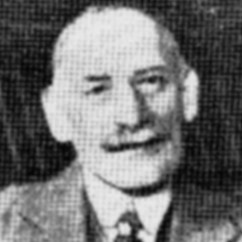 Harold Greenwood
Murderer? · United Kingdom · 1919
Harold Greenwood (1874 – 17 January 1929) was an English solicitor who was accu…
1 victim
Harold Greenwood
Murderer? · United Kingdom · 1919
Harold Greenwood (1874 – 17 January 1929) was an English solicitor who was accu…
1 victim
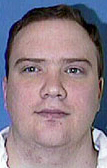 Ron Shamburger
Murderer · USA · 1994
Ron Scott Shamburger was executed by lethal injection in Texas on September 18,…
1 victim
Ron Shamburger
Murderer · USA · 1994
Ron Scott Shamburger was executed by lethal injection in Texas on September 18,…
1 victim
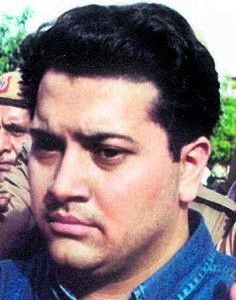 Manu Sharma
Murderer · India · 1999
Manu Sharma Manu Sharma — son of the India politician Venod Sharma; model-killi…
1 victim
Manu Sharma
Murderer · India · 1999
Manu Sharma Manu Sharma — son of the India politician Venod Sharma; model-killi…
1 victim
- Gender
- male
- Country
- USA
- Location
- Baldwin County, Georgia, USA
- Date of birth
- 1975
- Age at first offence
- 19
- Characteristics
- robbery, alcohol, drug addict, convicted rapist, rape
- Victim profile
- Leverett Lewis Morrison, 44
- Method of murder
- Beating with a blunt object
- Date(s) of murder
- June 9, 1994
- Years active
- 1994
- Date of arrest
- —
- Status
-
Sentenced to death
Sentenced to death on February 13, 1996
Background
Joshua Daniel Bishop was 22 years old when he was sentenced to death in Baldwin County on February 13, 1996 for the robbery and beating death of Leverett Lewis Morrison, 44.
After finding Bishop guilty of the crimes, the jury returned a verdict imposing a death sentence. The jury found, as the aggravating circumstance, that Bishop had murdered Morrison in the course of committing the additional capital felony of armed robbery under OCGA 17-10-30 (b) (2).
The grand jury indicted Joshua Daniel Bishop for the malice murder and armed robbery of Leverett Morrison. The State filed notice of its intent to seek the death penalty for the murder. The trial court entered judgments of conviction and sentences on the jury’s guilty verdicts. Bishop's motion for new trial was denied and he appealed.
The evidence at trial also included Bishop’s prior participation in the murder of Ricky Lee Wills, which resulted in another grand jury indictment for that murder.
The offence
Morrison drove Bishop and Bishop's co-indictee, Mark Braxley, to a bar. Bishop and Braxley decided to steal Morrison's car. The three left the bar around 11:00 p.m. and drove to Braxley's trailer.
Bishop reached into the sleeping Morrison's pocket for the car keys, but Morrison awoke and sat up. Bishop began to beat Morrison about the head and face with a blunt object. When Morrison was unconscious, Bishop took the car keys.
Eventually realizing that Morrison was dead, Bishop and Braxley wrapped and then loaded the body into the back seat of Morrison's car. They drove to a dumpster located a short distance from Braxley's trailer. After unsuccessfully attempting to toss Morrison's body into the dumpster, Bishop and Braxley left the body on the ground where it was discovered several hours later.
Bishop and Braxley then drove Morrison's car into the nearby woods, set it on fire, and walked back to Braxley's trailer to dispose of evidence of their crimes.
Bishop’s statement admitted that he delivered the blows with a wooden rod until Morrison stopped breathing, and described how Bishop and Braxley disposed of the body and burned the car.
Bishop subsequently confessed that, some two weeks prior to the murder of Morrison, he participated in the murder of Ricky Lee Wills and buried Wills' body in the woods near Braxley's trailer. After investigators recovered Wills' body, a grand jury indicted Bishop and Braxley for that murder.
Investigation
After Morrison was last seen alive leaving the bar with Bishop and Braxley around 11:00 p.m., Bishop and Braxley claimed Morrison left the trailer in his car about 2:00 or 2:30 a.m., but they were seen driving Morrison's car after 3:00 a.m. Morrison's body was found several hours later, less than a mile away from Braxley's trailer.
At the Jackson-Denno hearing, the officers who arrested and interviewed Bishop testified that he was coherent, that his answers were responsive to the questions, and that he did not appear to be under the influence of drugs or alcohol.
Arrest
Bishop argued that his statement should not have been admitted because it was the product of an unconstitutional warrantless arrest. A warrantless arrest was constitutionally valid if, at the moment the arrest was made, the facts and circumstances within the knowledge of the arresting officers and reasonably trustworthy information were sufficient to warrant a prudent man in believing that the accused had committed or was committing an offense.
The officers had reasonably trustworthy information that Morrison was last seen alive leaving the bar with Bishop and Braxley around 11:00 p.m., that Bishop and Braxley claimed Morrison left the trailer about 2:00 or 2:30 a.m., that Bishop and Braxley were seen driving Morrison's car after 3:00 a.m., and that Morrison's body was found several hours later, less than a mile away from Braxley's trailer.
These facts were sufficient to give the officers a particularized and objective basis for believing that Bishop murdered Morrison.
Trial
The trial court sustained Bishop's objection to the sheriff acting as bailiff, because the sheriff was a State's witness. The sheriff and chief deputy had also testified for the State. Bishop later asserted that the trial court erred by allowing the sheriff and chief deputy, who also testified for the State at trial, to perform certain ministerial functions on behalf of the court.
The court noted that contact between the jury and a witness for the State who was also an officer of the court was not grounds for automatic reversal. The factors to be considered included the type and duration of contact and the significance of the testimony. A brief encounter was insufficient to demonstrate a constitutional violation. In this case, the sheriff and chief deputy had no personal contact with the jurors; the only official contact occurred during the brief period when the sheriff acted as bailiff. The contact ended promptly upon Bishop's objection, and Bishop raised no further objection to contact with the jurors. The court found no reversible error under these circumstances.
Bishop also argued that the State erroneously alluded to a felony murder theory in the opening statement to the jury despite the indictment charging only malice murder. The reviewing discussion described that counsel asserted that, even if Bishop did not inflict the fatal blow, he was still guilty of Morrison's murder. This was described as not alluding to a felony murder theory, but rather addressing Bishop's guilt for malice murder under a party-to-the-crime theory. Bishop was on notice that he could be convicted of felony murder because he was indicted for both murder and armed robbery.
Bishop also contended the State produced no evidence to support the characterization in the opening statement. However, in Bishop’s statement he admitted that it was he who attempted to steal Morrison's car keys and who instigated the beating by administering the first crushing blows after which Morrison ceased breathing. In the same statement, Bishop admitted stealing Morrison's keys after the beating and suggesting to Braxley they dispose of the body. The singed hair on his hands indicated Bishop set fire to Morrison's car to destroy evidence of the crimes.
Over Bishop's objection, the trial court admitted numerous photographs of Morrison's body. None of the photographs depicted an alteration of the body as proscribed in Brown v. State. Photographs of a murder victim's body were described as admissible if they illustrated the nature and location of the wounds. The trial court examined each photograph and heard argument prior to admitting them into evidence, and the court found no error in the evidentiary ruling.
In his closing argument, Bishop asserted the State’s counsel erroneously asserted a personal belief in Bishop’s guilt. Bishop failed to object to any portion of the closing argument, and reversal was considered warranted only if there was improper argument and it was reasonably probable that it changed the result. The court discussed that comments similar to: "[A]nyway you . . . look at it, he's guilty." were considered in context as an expression of the State's position rather than personal opinion of counsel. The court also discussed comments such as: "[W]e're not going to bring something to court unless we can prove it and if we can't prove this is the murder weapon, we ain't going to produce it to you." The court described these remarks as references to the fact that no murder weapon had been recovered and as proper attempt to account for absence of tangible evidence.
The trial court’s pre-voir dire charge included an instruction on the sentence of life without parole, informing prospective jurors under OCGA 17-10-31.1 (d) (1) that such a sentence would result in incarceration for the remainder of the defendant's natural life and ineligibility for parole unless he was subsequently adjudicated to be innocent of the offense for which he was sentenced. Bishop argued that the qualifying phrase may have misled jurors into believing there was a potential loophole and may have caused them to reject the imposition of that sentence. The instruction was described as statutory language and the court held that the instruction was not misleading.
Prospective jurors who arrived late were allowed to read the trial court's pre-voir dire charge. The court acknowledged inconsistent treatment but found no prejudice because the prospective jurors thereafter underwent extensive voir dire and oral instructions were given at the guilt-innocence and sentencing phases.
Pre-trial rulings
Bishop urged that his inculpatory in-custody statement should not have been admitted because, as the result of antecedent drinking and smoking crack cocaine, he was unable to make a knowing waiver of his rights. The court held that whether waiver was knowing and voluntary depended on the totality of the circumstances. Bishop read Miranda warnings and signed a waiver of rights form. He affirmed he understood his rights, was aware of his surroundings, that his statement was voluntary, and that he was not required to respond. At the Jackson-Denno hearing, officers testified Bishop was coherent, responsive, and did not appear under the influence of drugs or alcohol. The trial court was authorized to find a knowing waiver under the totality of circumstances and the finding was upheld as not clearly erroneous.
Bishop also argued error in the trial court’s denial of an ex parte motion for funds to hire an expert to assist in challenges to the arrays of the grand and traverse juries. The court indicated the trial court granted Bishop’s request for funds to hire a “jury composition expert,” and Bishop made no further request. The court concluded it did not appear the services of an expert would have been needed to investigate a challenge to the arrays and Bishop had not shown reasonable probability that additional expert assistance was necessary to his defense and that without it the trial was rendered unfair.
Bishop further challenged the array of the grand jury based on a prior history of alleged discrimination in the selection of forepersons. The denial of that motion did not constitute error requiring reversal, where convictions and sentences were based on verdicts returned by a properly constituted traverse jury.
Jury selection
Bishop urged that the trial court should have disqualified prospective juror Ms. Baugh due to bias in favor of his guilt. Ms. Baugh initially expressed her belief that an indictee is more likely guilty than not, but the standard for disqualification required an opinion so fixed and definite that it would prevent the juror from setting the opinion aside and deciding the case based on evidence and the court’s charge. The court stated that Ms. Baugh subsequently stated she would hold the State to its burden of proof and would base her decision solely on the evidence adduced at trial. The trial court resolved equivocations in favor of qualification and was entitled to deference.
Bishop also contended the trial court should have disqualified Ms. Baugh and four other prospective jurors based on bias in favor of the death penalty. The court distinguished the circumstances from Pope v. State and addressed each juror:
Ms. Baugh: She stated she would probably vote for death in cases of "premeditated" murder. The court said this response did not require disqualification because "premeditated" murder was not a crime in Georgia and premeditation was not an aggravating circumstance affecting sentencing under OCGA 17-10-30. The court also discussed that Ms. Baugh volunteered she could vote to impose life without parole even in cases of "premeditated" murder.
Mr. Langston: He initially stated he would always vote for death, but after being told of bifurcated trial nature he said he could listen with an open mind and could vote for any of the three sentencing options even where there was an aggravating circumstance. The court stated his personal belief that murder “deserved” the death penalty did not disqualify him absent prevention or substantial impairment to perform duties in accordance with instructions and oath. The refusal to strike was upheld.
Mr. Williamson: He stated he had "pretty much made up his mind" to vote for death assuming there was a finding of a statutory aggravating circumstance, but other responses indicated he had not done so conclusively and irrevocably. The court described his other responses as including that he would listen to evidence in aggravation and mitigation before arriving at a sentence and that he could vote for any of the three sentencing options though he favored death in most cases.
Mr. Hurt: He was inclined to vote for death for more culpable forms of murder and believed in "an eye for an eye." The court noted he consistently indicated he could vote for any of the three sentencing options and that leaning toward a death sentence under specific circumstances did not necessarily mandate disqualification. The court concluded he would set aside personal beliefs and was qualified.
Ms. Lattimore: She initially stated she did not think she could vote for a life sentence with possibility of parole once convicted and an aggravating circumstance was found, but she later qualified her response, stating she was unsure how she would vote and would have to consider all of the evidence. She also stated she could not say she would always vote for death. The court found the voir dire supported qualification.
Bishop argued he should have been allowed to ask prospective jurors whether they would be more likely to vote for death if the defendant was under the influence of drugs at the time of the crimes. The court held the trial court did not abuse discretion in refusing because it called for prejudgment of sentence. The trial court did not prohibit Bishop from asking whether drug use could be a mitigating factor.
Bishop also contended the trial court erred by preventing questioning about attitudes toward various forms of murder such as "premeditated" murder. The court stated there was no such offense in Georgia and it was not improper to curtail questioning.
Sentencing
Evidence that Bishop had made prior threats and assaults on others was relevant to his character and was admissible in aggravation of his sentence.
Bishop argued admission of evidence that he murdered Wills was erroneous. The court held that the State could prove the defendant’s commission of another crime despite lack of conviction, as long as there had not been a previous acquittal. Evidence of Bishop’s murder of Wills was admissible in aggravation even though it did not pertain to a specific statutory aggravating circumstance. The jury could consider lawful evidence tending to show motive of the defendant, lack of remorse, general moral character, and predisposition to commit other crimes. The court found no error in the quantum of evidence admitted relating to Wills' murder.
Photographs of Wills’ body were admissible in the sentencing phase for the same reasons as photographs of Morrison’s corpse were admissible during the guilt-innocence phase.
At the sentencing phase, the trial court was not required to define or explain the function of mitigating circumstances, and it was not necessary that the trial court identify the mitigating circumstances offered by Bishop.
Appeals
Bishop’s death sentence review included consideration that the evidence supported the jury’s finding that Bishop murdered Morrison while committing the additional capital felony of armed robbery.
Bishop urged that because he suffered from “Intermittent Explosive Disorder,” which was triggered and aggravated by alcohol and drugs, he lacked the personal culpability constitutionally required for imposition of the death penalty. The court noted Bishop acknowledged he was not mentally ill and the psychiatrist who testified for Bishop did not find him to be mentally ill as defined by OCGA 17-7-131 (a) (2). The court stated it was for the jury to decide whether Bishop’s mental health and history of alcohol and drug abuse were sufficiently mitigating to justify a life sentence.
The court addressed that Bishop’s death sentence was not imposed under the influence of passion, prejudice, or other arbitrary factor under OCGA 17-10-35 (c) (1). The court held the death sentence was neither excessive nor disproportionate compared to penalties imposed in similar cases, considering both the crime and defendant. Bishop’s argument that his sentence was disproportionate to the life sentence received by Braxley was without merit. The court also held the death sentence was not rendered inappropriate by Bishop’s history of alleged abuse. The similar cases listed in the Appendix supported the imposition of the death sentence.
The opinion reflected dates for procedural history and decision timing: Decided July 16, 1997, and reconsideration denied July 30, 1997.
A separate special concurrence was authored by Fletcher, Presiding Justice, concurring specially to Division 8 and in judgment only to Division 6. Fletcher described an approval of a jury instruction on life without parole because it was part of the statutory language, but argued that the statutory phrase "unless he is subsequently adjudicated to be innocent of the offense for which he was sentenced" could cause problems when used in a jury instruction. Fletcher wrote that the phrase misleads the jury by suggesting that a person sentenced to life without parole may be eligible for parole, and suggested that if innocence is determined by a court or the State Board of Pardons and Paroles, the proper procedure would be to vacate the sentence or grant a pardon. Fletcher stated the phrase was not necessary to inform the jury about the meaning of life without parole and that none should be given.
Outcome
The grand jury indicted Bishop for the malice murder and armed robbery of Leverett Morrison. The State filed notice of intent to seek the death penalty for the murder. The jury found Bishop guilty of malice murder and armed robbery and returned a verdict imposing a death sentence. The jury found as the aggravating circumstance that Bishop murdered Morrison in the course of committing the additional capital felony of armed robbery under OCGA 17-10-30 (b) (2).
Bishop was sentenced to death on February 13, 1996.
Timeline
- June 25, 1994 — The crimes occurred.
- July 11, 1994 — A grand jury indicted Bishop.
- August 9, 1995 — The State filed its notice of intent to seek the death penalty.
- January 31 – February 12, 1996 — The trial was held.
- February 12, 1996 — The jury returned its verdicts.
- February 12 and 13, 1996 — The trial court sentenced Bishop on February 12 and 13, 1996.
- March 8, 1996 — Bishop filed a motion for new trial.
- September 19, 1996 — The trial court denied the motion for new trial.
- October 16, 1996 — Bishop filed his notice of appeal.
- March 11, 1997 — The case was orally argued.
- July 16, 1997 — The decision was issued; reconsideration was denied later.
- July 30, 1997 — Reconsideration was denied.
Other details
BISHOP v. THE STATE. S97P0205. (268 Ga. 286) (486 SE2d 887) (1997).
Roles and parties mentioned in the proceedings included: Mark Braxley (Bishop’s co-indictee), and the judges and counsel named included Justice Carley, Judge George, Fredric D. Bright (District Attorney), Thurbert E. Baker (Attorney General), Susan V. Boleyn (Senior Assistant Attorney General), and Wesley S. Horney (Assistant Attorney General), for appellee. Brian G. Combs and Reginald L. Bellury appeared for appellant.
Spotted an error, or have more information about this case?