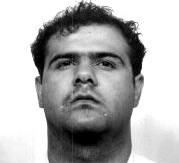
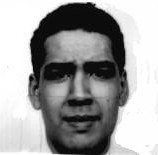
Jesse de la Rosa
Murderer Ervil LeBaron
Murderer · USA · 1972
Ervil Morrell LeBaron (1925 to August 16, 1981) was the leader of a polygamous…
35 victims
Ervil LeBaron
Murderer · USA · 1972
Ervil Morrell LeBaron (1925 to August 16, 1981) was the leader of a polygamous…
35 victims
 Brian Kevin Rosenfeld
Murderer · USA · 1985
Brian Kevin Rosenfeld Brian Kevin Rosenfeld was sentenced to three concurrent l…
23 victims
Brian Kevin Rosenfeld
Murderer · USA · 1985
Brian Kevin Rosenfeld Brian Kevin Rosenfeld was sentenced to three concurrent l…
23 victims
 Marvin Gray
Murderer · USA · 1975
Marvin Gray was convicted killer who claimed responsibility for 23 slayings and…
23 victims
Marvin Gray
Murderer · USA · 1975
Marvin Gray was convicted killer who claimed responsibility for 23 slayings and…
23 victims
 Yahweh ben Yahweh
Murderer · USA · 1980
Yahweh ben Yahweh was born and legally named Hulon Mitchell Jr. (October 27, 19…
23 victims
Yahweh ben Yahweh
Murderer · USA · 1980
Yahweh ben Yahweh was born and legally named Hulon Mitchell Jr. (October 27, 19…
23 victims
 Walter Kelbach
Spree killer · USA · 1966
Walter Kelbach was 28 years old. Myron Lance was 25 years old. Kelbach and Lanc…
6 victims
Walter Kelbach
Spree killer · USA · 1966
Walter Kelbach was 28 years old. Myron Lance was 25 years old. Kelbach and Lanc…
6 victims
 Yavuz Yapicioglu
Serial killer · Turkey · 1994
Yavuz Yapıcıoğlu (born 1967) was a Turkish serial killer and arsonist, nickname…
18 victims
Yavuz Yapicioglu
Serial killer · Turkey · 1994
Yavuz Yapıcıoğlu (born 1967) was a Turkish serial killer and arsonist, nickname…
18 victims
 Sidney Cooke
Murderer · United Kingdom · 1985
Sidney Cooke was sentenced for the manslaughter of Jason Swift to 19 years in p…
1 victim
Sidney Cooke
Murderer · United Kingdom · 1985
Sidney Cooke was sentenced for the manslaughter of Jason Swift to 19 years in p…
1 victim
 Miyoko Sumida
Serial killer · Japan · 2003
Miyoko Sumida was a Japanese serial killer who killed six people in a case invo…
6 victims
Miyoko Sumida
Serial killer · Japan · 2003
Miyoko Sumida was a Japanese serial killer who killed six people in a case invo…
6 victims
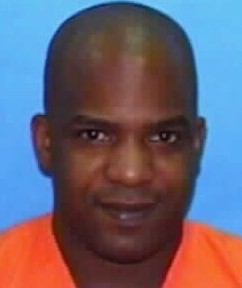 Henry Alexander Davis
Murderer · USA · 1987
Henry Alexander Davis was tried in the Tenth Judicial Circuit, Polk County. The…
1 victim
Henry Alexander Davis
Murderer · USA · 1987
Henry Alexander Davis was tried in the Tenth Judicial Circuit, Polk County. The…
1 victim
- Gender
- male
- Country
- USA
- Location
- Bexar County, Texas, USA
- Date of birth
- September 22, 1960
- Age at first offence
- 19
- Characteristics
- robbery
- Victim profile
- Masaoud Ghazali, 26 (convenience store clerk)
- Method of murder
- Shooting (.32 caliber pistol)
- Date(s) of murder
- August 22, 1979
- Years active
- 1979
- Date of arrest
- —
- Status
-
Executed
Executed by lethal injection in Texas on May 15, 1985
Case identification
Name: Jesse de la Rosa
Status / outcome
Jesse de la Rosa was executed by lethal injection in Texas on May 15, 1985.
Timeline
- August 22, 1979 — Jesse De La Rosa, aged 18 at the time, shot Masaoud Ghazali, a 27-year-old convenience store clerk at 7-Eleven, twice, once in the back and once in the face, during a robbery of a convenience store.
- August 27, 1979 — Police arrested De La Rosa at approximately 5:30 p.m.; officers arrived at the police station about 30 minutes later.
- April 13, 1984 — De La Rosa’s petition for a writ of habeas corpus and for a stay of execution was denied.
- April 24, 1984 — The district court issued a certificate of probable cause the next day, and a stay was granted by this court so De La Rosa could address the merits of his appeal.
- October 9, 1984 — The federal appeal decision was issued in Jesse de La Rosa, Petitioner-Appellant, v. State of Texas, Respondent-Appellee.
Background
Jesse De La Rosa was executed May 15, 1985.
De La Rosa was the first Hispanic to be executed in Texas since the death penalty was found constitutional in 1976, and he was the youngest to be executed in the nation since reinstating the death penalty.
According to De La Rosa’s public files, he had one previous conviction of trespassing.
The offence
In the early morning of August 22, 1979, De La Rosa and a companion robbed two convenience stores in San Antonio.
With a .32 caliber pistol, De La Rosa shot the clerk at each store.
At the 7-11 store, Masoud Ghazali, age 27, died from two wounds to his head. At the Stop & Go store, Patricia Johnson was also shot twice but survived to identify De La Rosa.
Deliveryman Rudy Martinez found Ghazali at 4:10 a.m. lying in a pool of blood on the floor of a walk-in cooler.
His fingerprints were found on a beer can near the cash register at the 7-11 store, and another print was taken from the door handle of the cooler in which Ghazali’s body was found.
De La Rosa confessed to these crimes.
A Texas jury found Jesse De La Rosa guilty of committing capital murder in the course of a robbery and determined that he would probably "commit criminal acts of violence that would constitute a continuing threat to society." Tex.Code Crim.Proc.Ann. Art. 37.071 (Vernon 1981).
The trial court then sentenced De La Rosa to death pursuant to article 37.071(e). After a hearing, the trial court denied a motion for new trial.
Investigation
During the investigation, officers found De La Rosa’s fingerprints on a beer can near the cash register at the 7-11 store.
Another fingerprint was taken from the door handle of the cooler in which Ghazali’s body was found.
Arrest
Police arrested De La Rosa at approximately 5:30 p.m. on August 27, 1979.
Trial
The Texas jury found De La Rosa guilty of capital murder in the course of a robbery and determined that he would probably "commit criminal acts of violence that would constitute a continuing threat to society." Tex.Code Crim.Proc.Ann. Art. 37.071 (Vernon 1981).
At the punishment phase, De La Rosa’s attorney told the jury that:
"by your verdict [i.e., guilty of capital murder], you have found that [De La Rosa] is to spend the rest of his life in the Texas Department of Corrections, a life sentence."
Later, De La Rosa’s attorney invoked the "horror of life in the Texas Department of Corrections" to show the adequacy of a life sentence, and said:
"Ladies and gentlemen of the jury, this is not a case in which society is going to be exposed to the presence of Jesse De La Rosa .... He is condemned to spend the minimum, the rest of his life in the Texas Department of Corrections .... [P]unish Jesse De La Rosa by making him forfeit his freedom for the rest of his life but do not, I beg you, do not make him forfeit his life."
Because defense counsel opened the door, the prosecutor addressed the possibility of parole, saying:
It's not proper for the State to talk about the Board of Pardons and Parole and what they do, but when she misleads the jury or in law they say "opens the door." I just don't want you to be misled in thinking that the life sentence necessarily means that the person spends the rest of his life in prison because that is strictly up to the Board of Pardons and Parole and you can't talk about what they do or how they decide it. But I didn't want you to be misled about that and I want you to remember that when you think about the proper disposition in this case.
De La Rosa’s confession was admitted and the trial court found that De La Rosa knowingly, intelligently, and voluntarily waived his Miranda rights and that he was never mistreated, threatened, coerced, or promised anything.
Before each statement, Detective Michalec read Miranda rights to De La Rosa, and De La Rosa later signed each statement before two witnesses.
The trial court concluded that De La Rosa freely confessed to the capital murder of Ghazali.
Admissibility of confession / Miranda issues
De La Rosa did not claim that he did not receive Miranda warnings.
His principal contention was that police officers, after reading the standard Miranda rights card, proceeded to explain what the recited language meant in a manner that was misleading and inadequate.
De La Rosa argued that the paraphrased Miranda warnings improperly linked his right to have an attorney to some point in the future.
De La Rosa suggested that his intelligence, evaluated as between borderline retarded and dull normal, heightened the inadequacy of the warnings because he could not fully understand the formal, recited language and therefore relied on explanations.
De La Rosa argued that he made no knowing waiver of his rights prior to making his confession, and the trial court made findings to the contrary.
Police officers possessing an arrest warrant entered a house looking for De La Rosa.
De La Rosa exited through a rear window to encounter and be arrested by Officer Vaquera.
Officer Vaquera was carrying a card with Miranda rights printed in English and in Spanish.
Officer Vaquera first read De La Rosa the warnings in Spanish and then repeated them in "street-type Spanish" to ensure that all was understood.
Detective Michalec, who had known De La Rosa for several months, then took over, reciting the Miranda warnings in English.
Detective Michalec explained De La Rosa's rights in "common everyday language."
After De La Rosa was taken to the police station, Michalec asked him if he wanted to give a confession and De La Rosa replied that he did not know.
Michalec asked if he wanted an attorney present, and De La Rosa said that he would rather talk to his brother, who was also at the police station in another room.
After De La Rosa met with his brother and a friend, he told Michalec that he wanted to tell him everything.
Michalec initially took a statement about the shooting and robbery at the Stop & Go store and then typed up a second statement concerning the Ghazali killing.
The state trial court found that De La Rosa was given Miranda warnings along with explanations four times before he confessed.
Dr. Charles Bisbee testified that his verbal I.Q. indicated borderline intelligence, falling above mentally retarded but below dull normal.
Bisbee stated that an examination of De La Rosa revealed no thought disorder and that De La Rosa would have difficulty comprehending written Miranda warnings but would understand them better, although not completely, if given orally.
Bisbee also stated that De La Rosa could understand the warnings if they were explained to him in simple language.
Dr. Betty Schroeder, a psychologist called by the prosecution, gave Miranda warnings to De La Rosa in a test situation.
Schroeder stated that he understood them completely then and would have comprehended them at the time of his arrest, even under stress.
Schroeder tested De La Rosa on the Wechsler Adult Intelligence Test; his verbal I.Q. was evaluated as borderline, and his performance I.Q. was "well within normal limits."
De La Rosa focused on testimony by Michalec that, while explaining Miranda rights, he stated that "it will take some time" before a lawyer would be appointed.
De La Rosa argued that the case was like others in which Miranda explanations were ruled inadequate because "the right to appointed counsel was linked to some future point in time after the police interrogation."
In response, the appellate court described warnings given to De La Rosa, including statements that De La Rosa had a right to have a lawyer present to advise him before and during questioning and that if he was too poor to hire a lawyer, the court would appoint a lawyer for him free of charge now or at any other time.
The appellate court concluded that De La Rosa was fully informed of his constitutional rights.
Delay before magistrate / confession admissibility
on August 27, 1979**, and officers arrived at the police station about 30 minutes later.
Detective Michalec took the first confession between 6:45 p.m. and 8:00 p.m., and the second between 8:00 p.m. and a little after 10:00 p.m.
De La Rosa was taken before the magistrate for an initial appearance at approximately 10:30 p.m.
De La Rosa claimed that the delay in appearing before the magistrate was unreasonable, rendering his confession inadmissible.
The night magistrate was scheduled to come on duty at 8:00 p.m.
De La Rosa conceded that no magistrate was available until that time but contended that Michalec should have stopped taking the confession and gone before the magistrate.
Michalec testified that, in accordance with practice, he did not interrupt the confession to take De La Rosa to a magistrate.
Even assuming the time gap between arrest and initial appearance was unreasonable, the appellate court stated that the claim did not rise to constitutional significance and required determination of whether any delay was causally related to the confession.
The trial court found that De La Rosa confessed of his own free will, unaffected by any threat or coercion.
The Texas Court of Criminal Appeals held that the confession was not the result of any delay in taking De La Rosa before a magistrate.
Jury issues / parole discussion
After sentencing, attorneys for De La Rosa moved for a new trial, alleging that improper remarks were introduced during jury deliberations during the sentencing phase.
Two jurors mentioned that a life sentence did not mean imprisonment for life because of the possibility of parole.
Another juror, Elmo Franklin, revealed that he had a stepfather who, after being released from prison on a murder charge, killed again and was sent back to prison.
In response, the trial court ordered a hearing, and every juror testified.
Six jurors remembered some discussion of parole.
Seven jurors remembered Franklin's mention of his relative's experience.
Three jurors indicated that Franklin had said that it was easier to kill a second time.
Most jurors recalled that the comments occurred before the verdict was reached in the sentencing phase.
One or two jurors testified that the statements were made after the final vote.
Every juror testified that the extraneous comments had no effect in his or her deliberative process and that each reached a decision based solely on the evidence presented at trial.
At the post-trial hearing, juror Helen Davis testified that the only recollection she had of parole being mentioned in the jury room was after a juror indicated that a life sentence meant that De La Rosa would automatically be in prison for life.
Davis said that that was not necessarily true, but that it was up to the Board of Pardons and Parole.
Juror Ethel Hester stated that whether a life sentence meant "life forever in prison" was up to the Parole Board and that a life-sentenced prisoner could get out on parole.
Hester indicated that it could be after five or seven years.
Foreman Mike Hrncir testified that he "instructed them that as far as we know and as far as we're concerned, that the sentence of life meant life and we can't consider anything else because we were not the Board of Pardons and Parole."
Hrncir emphasized that parole had no bearing on the issue and that the jury could not do anything about it.
After an isolated comment, Hrncir again admonished the jury, saying:
"After I told them life meant life, it was dropped, the issue was not considered any more or discussed."
The appellate court held that De La Rosa failed to make a showing that the parole discussion deprived him of a fair and impartial trial.
Jury issues / Franklin and voir dire
On direct appeal, De La Rosa argued that the conviction should be reversed because juror Franklin withheld information during voir dire.
The Court of Criminal Appeals held that no question was calculated to bring out the information Franklin allegedly withheld.
In a state habeas petition, De La Rosa argued that Franklin held a highly prejudiced opinion that motivated him to withhold information and that De La Rosa was thereby precluded from exercising a challenge for cause pursuant to article 35.16(a)(9), Tex.Code Crim.Proc.Ann. (Vernon 1966), or a remaining peremptory challenge.
The trial court rejected the claim, adopting reasoning that Franklin did not withhold information, no juror misconduct occurred, and no new evidence was received by the jury.
On federal appeal, De La Rosa argued that Franklin’s statement about his stepfather’s experience during jury deliberations showed Franklin was actually biased and that prejudice denied De La Rosa a fair and impartial jury.
The appellate court concluded it could not find actual bias merely because Franklin omitted mentioning the story about his stepfather.
The appellate court quoted a two-part question asked by the prosecutor and Franklin’s response:
"Have you ever had the occasion to be interested in the outcome of a criminal case? Have you ever had a particular case that caught your eye and you followed it, and watched the papers, and read about it?"
"Well, I can't recall anything that I followed through. I read occasionally but just didn't follow through on it."
The appellate court also described Franklin’s answers and testimony about voir dire, including that when defense counsel asked Franklin whether he had any close friends or associates involved in law enforcement, Franklin mentioned that his grandson’s uncle was on the San Antonio police force.
After defense counsel noted Franklin was being very thorough, Franklin replied that he had no associations that would affect his ability to serve on the jury and that he would be able to render a verdict according to the law and the case.
After mentioning that his house had been burglarized, Franklin indicated that such an incident would not cause him to have any special feelings that would affect him in rendering a verdict.
At the end of defense counsel’s voir dire, Franklin affirmed that he would be true to the law and to the facts.
He later told the trial judge that he understood that his verdict was to be based on the evidence heard from the witness stand under oath and nothing else.
At the hearing on the new trial motion, Franklin admitted that he related the story about his stepfather but noted that it was a casual remark made in conversation.
Foreman Hrncir testified that he indicated to Franklin that such a comment was not appropriate.
No further discussion ensued.
The trial judge denied the motion for new trial without comment, as provided by article 40.07, Tex.Code Crim.Proc.Ann. (Vernon 1979).
Sentencing
The trial court sentenced De La Rosa to death pursuant to article 37.071(e).
A motion for new trial was denied after a hearing.
Appeals
On direct appeal, the Texas Court of Criminal Appeals affirmed the conviction and sentence on direct appeal, De La Rosa v. State, 658 S.W.2d 162 (Tex.Crim.App.1983) (en banc).
The Supreme Court denied a petition for writ of certiorari. --- U.S. ----, 104 S.Ct. 201, 78 L.Ed.2d 175 (1983).
After sentencing, De La Rosa petitioned for a writ of habeas corpus and for a stay of execution; those were denied on April 13, 1984.
Ten days later, the Texas Court of Criminal Appeals denied a stay and habeas relief.
De La Rosa applied in federal district court for a stay and for a writ of habeas corpus pursuant to 28 U.S.C. Sec . 2254; those were denied on April 24, 1984.
The next day, the district court issued a certificate of probable cause.
This court granted a stay of execution so that De La Rosa could address the merits of his appeal.
The appellate court affirmed the district court’s denial of habeas relief, and the stay of execution was vacated.
The appellate judgment stated: the judgment of the district court was AFFIRMED; the stay of execution was VACATED.
Other details
Trial counsel and pardon parole evidence
Ron Guyer, De La Rosa’s attorney, presented new evidence to the State Board of Pardons and Parole on May 7, 1985.
Judge H.F. Garcia denied the new evidence.
The new evidence was that there were three men instead of two as previously believed.
A witness could testify that De La Rosa did not pull the trigger but it was his accomplice, Alcorta Garcia, now serving a life sentence.
De La Rosa denied that he killed Ghazali but stated that he would rather die than reveal the killer.
Ralph Lopez, De La Rosa’s attorney, said about the Supreme Court:
“They say because Jesse waited so long, it’s really not new evidence.”
Guyer said:
“Jesse didn’t do it, everyone knew he didn’t do it, even the police. He was not mean-spirited.”
Guyer felt the jury didn’t care about the new evidence presented, saying:
“They just wanted it to be a fast case, and since the jury had already said ‘death penalty’, why go on.”
Guyer said:
“Jesse’s death has no meaning”
and:
“It’s almost like a ritual. Everybody is concerned about crime and somehow Jesse De La Rosa being executed is supposed to give the idea that we’re doing something about it. This really shows the dark-side qualities of human beings.”
Execution attendance and last words
Judge Roy Barrera, the judge who set De La Rosa’s execution date, was a witness to the execution.
Barrera viewed the execution from a different room then De La Rosa’s family and friends in hopes of lessening their grief.
De La Rosa’s last words, spoken in Spanish, were:
“Christ, forgive my brothers and sisters for the sins I’ve committed. God forgive me. God, I give my life for my brothers and sisters.”
Case citations and procedural posture
Jesse de La Rosa, Petitioner-Appellant, v. No. 84-1362. Federal Circuits, 5th Cir. October 9, 1984.
Appeal from the United States District Court for the Western District of Texas.
Before REAVLEY, RANDALL and WILLIAMS, Circuit Judges.

Spotted an error, or have more information about this case?