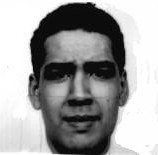
Jose de la Cruz
Murderer Brian Kevin Rosenfeld
Murderer · USA · 1985
Brian Kevin Rosenfeld Brian Kevin Rosenfeld was sentenced to three concurrent l…
23 victims
Brian Kevin Rosenfeld
Murderer · USA · 1985
Brian Kevin Rosenfeld Brian Kevin Rosenfeld was sentenced to three concurrent l…
23 victims
 Yahweh ben Yahweh
Murderer · USA · 1980
Yahweh ben Yahweh was born and legally named Hulon Mitchell Jr. (October 27, 19…
23 victims
Yahweh ben Yahweh
Murderer · USA · 1980
Yahweh ben Yahweh was born and legally named Hulon Mitchell Jr. (October 27, 19…
23 victims
 Russell Ellwood
Murderer · USA · 1991
Russell Ellwood was a former taxi driver. Authorities suspected him of killing…
20 victims
Russell Ellwood
Murderer · USA · 1991
Russell Ellwood was a former taxi driver. Authorities suspected him of killing…
20 victims
 Francisco García Escalero
Serial killer · Spain · 1987
Francisco García Escalero was born on May 24, 1948 in Madrid, Spain. He was des…
11 victims
Francisco García Escalero
Serial killer · Spain · 1987
Francisco García Escalero was born on May 24, 1948 in Madrid, Spain. He was des…
11 victims
 Judith Hawkey
Murderer · USA · 2003
Judith Hawkey was convicted for orchestrating the death of her former husband,…
1 victim
Judith Hawkey
Murderer · USA · 2003
Judith Hawkey was convicted for orchestrating the death of her former husband,…
1 victim
 Samuel Leonard Boyd
Murderer · Australia · 1982
Samuel Leonard Boyd was sentenced to 5 consecutives sentences of life imprisonm…
4 victims
Samuel Leonard Boyd
Murderer · Australia · 1982
Samuel Leonard Boyd was sentenced to 5 consecutives sentences of life imprisonm…
4 victims
 Barry Lee Fairchild
Homicide · USA · 1983
Barry Lee Fairchild was convicted of the kidnap, rape and murder of a 22-year-o…
1 victim
Barry Lee Fairchild
Homicide · USA · 1983
Barry Lee Fairchild was convicted of the kidnap, rape and murder of a 22-year-o…
1 victim
 Daniel Patrick Hauser
Murderer · USA · 1995
Daniel Patrick Hauser was from Dublin, California and was adopted. He pleaded n…
1 victim
Daniel Patrick Hauser
Murderer · USA · 1995
Daniel Patrick Hauser was from Dublin, California and was adopted. He pleaded n…
1 victim
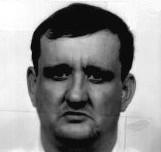 David Wayne Stoker
Murderer · USA · 1986
David Wayne Stoker (born October 26, 1987 referenced in the record as “David St…
1 victim
David Wayne Stoker
Murderer · USA · 1986
David Wayne Stoker (born October 26, 1987 referenced in the record as “David St…
1 victim
- Gender
- male
- Country
- USA
- Location
- Nueces County, Texas, USA
- Date of birth
- April 26, 1968
- Age at first offence
- 19
- Characteristics
- robbery, rape?, drug addict, abuse
- Victim profile
- Domingo Rosas, 24 ( partially paralyzed epileptic)
- Method of murder
- St abbing with a kitchen knife
- Date(s) of murder
- June 1, 1987
- Years active
- 1987
- Date of arrest
- 2 days after
- Status
-
Executed
Executed by lethal injection in Texas on May 4, 1999
Case record: Jose de la Cruz
Background
Jose de la Cruz was 19 years old at the time of the murder of Domingo Rosas. At the time of execution, de la Cruz was 31 years old.
Domingo Rosas was 24 years old. Rosas was partially paralyzed and mentally impaired. Authorities said Rosas had been disabled since the age of 3 after a television antenna pierced his face and entered his brain.
De la Cruz was on parole for burglary when he killed Domingo Rosas.
De la Cruz blamed his criminal behavior on inhaling spray paint fumes. He said his addiction to inhaling spray paint began at age 10, got him high, and allowed him to fantasize. “It was mind-altering,” he said.
The offence
De la Cruz stabbed Domingo Rosas to death. The attack occurred while Rosas was in his wheelchair. Authorities said Rosas’ neck was broken and it appeared the attack began while he was in his wheelchair.
De la Cruz killed Rosas in order to steal Rosas’ property. De la Cruz stole Rosas’ credit cards, driver’s license, television, video recorder, and stereo. De la Cruz sold the stolen goods for about $80.
During the Friday night before the murder, de la Cruz was a guest in Rosas’ home and played a drinking game called “quarters” with Rosas until early Saturday morning. After leaving Rosas’ home, de la Cruz returned and killed Rosas and stole a television, VCR, and stereo.
The Friday night and early Saturday events were followed by Saturday morning activity in which de la Cruz was observed driving around with a television in his car. Later that day, de la Cruz and his friend Michael Rios tried to sell a television to Michael’s uncle, Joe Rios. Joe Rios declined but directed the pair to Ray and Irma Flores, who paid de la Cruz $80 for Rosas’ belongings.
Later that night, de la Cruz was arrested for public intoxication. The arresting officer found de la Cruz staggering in the road near a borrowed car that de la Cruz had run into a ditch. De la Cruz smelled like paint and seemed intoxicated. The officer placed de la Cruz in the patrol car.
Inside the ditched car, the officer discovered a large blood-stained knife and a bottle of medicine prescribed to Rosas.
De la Cruz volunteered that the knife was his and repeatedly asked whether it would be returned. De la Cruz then announced at his booking that he was Domingo Rosas, the victim.
De la Cruz was released from jail and was later arrested again a few days after the killing. De la Cruz entered Rosas’ bank and attempted to withdraw money using Rosas’ bank identification card. The bank, knowing that Rosas was dead, notified the police, and de la Cruz was arrested on suspicion of murder. By that time, authorities knew Rosas had been murdered.
After his arrest for Rosas’ murder, de la Cruz told his trial counsel that he did not commit the murder but had delivered the stolen property to a “fence.” Counsel explained that the state might be willing to arrange a plea agreement if de la Cruz could recover the stolen property, and that any deal with the state would be unenforceable unless de la Cruz was being truthful about his role.
Without finalizing any plea agreement, de la Cruz led police to some of the stolen property, which was recovered with de la Cruz’s fingerprints.
The state presented evidence at trial. The state produced evidence that de la Cruz’s clothing and the knife recovered from the ditched car were both stained with type-A blood, the same blood type as Rosas. Blood spatters on de la Cruz’s pants indicated that the wearer had forcefully stabbed a seated victim.
Investigation
After de la Cruz withdrew money from Rosas’ savings account at Nueces National Bank, the teller noticed a discrepancy in the signature. The teller also remembered reading about Rosas’ murder and reported de la Cruz to the police.
When de la Cruz was arrested for public intoxication after the killing, an arresting officer retrieved a bloody knife from de la Cruz’s car. The knife was later tested for Rosas’ blood and admitted as evidence.
Arrest
De la Cruz was arrested for public intoxication after he identified himself as Rosas. He was released from jail the next day before Rosas’ body was discovered.
De la Cruz was later arrested again when he attempted to withdraw money from Rosas’ savings account and used Rosas’ bank identification card at Rosas’ bank.
De la Cruz became the 11th condemned inmate to be put to death in Texas that year.
Trial
The trial was put on hold when one of the jurors could not stay for the duration of the trial and District Judge Joaquin Villarreal granted a mistrial.
A court reporter spoke with another juror, and the juror revealed that he had already made up his mind about de la Cruz’s guilt before hearing the defense’s testimony. The defense attorney asked for another mistrial but was declined because one had already been granted.
Michael Rendon, de la Cruz’s brother-in-law, testified that de la Cruz returned the morning after the murder with Miguel Rios, who was being held for aggravated robbery in connection with the murder of Rosas.
Testimony from Rios’ family members proved that Michael Rios joined de la Cruz that night after the murder.
After the trial de la Cruz told reporters that Rios didn’t do it.
On June 7, 1988, de la Cruz was convicted of robbery and murder and sentenced to death.
De la Cruz made a comment that he wanted to watch how the judicial system operates when he rejected a plea agreement for 50 years imprisonment. De la Cruz declined any appeals after he was proven guilty, although the decision was automatically appealed to the Texas Court of Criminal Appeals.
Sentencing
De la Cruz was sentenced to death on June 7, 1988.
In the appeal process, de la Cruz claimed that drugs and little family support was his reason for his criminal actions.
All appeals were denied.
Appeals
De la Cruz appealed the decision three times even though he had volunteered for the death penalty, which meant he would not appeal the decision.
De la Cruz’s appeal was denied by the Texas Court of Criminal Appeals, and he had an appeal rejected by a federal appeals court more than a year prior to his execution.
Outcome
De la Cruz declined to make a last statement.
As the drugs took effect during the execution, de la Cruz took one deep breath and grunted three times before he stopped breathing.
Execution / Aftermath
De la Cruz was executed by lethal injection in Texas on May 4, 1999. He was pronounced dead at 6:23 p.m., 9 minutes after the lethal injection was started.
De la Cruz said: “I've already made amends with myself,” in a recent death row interview. “I'm at total peace with my case. I'm not innocent. That man had every right to live just like I did.”
Nueces County District Attorney Carlos Valdez said: “There are some cases where there perhaps is a struggle,” “In this case, there was absolutely no justification for the killing. The victim was in a wheelchair and couldn't even defend himself.”
De la Cruz said: “You could say I was stupid,” and “It's sad it took this. “I had many opportunities to reform but never took them. I've made a hard struggle to educate myself. I was belligerent, hostile. But since I've come here, I've calmed down a lot. I have grown.”
De la Cruz was described as a Texas parolee and as having inhaled spray paint fumes. He was executed Tuesday for stabbing and robbing a disabled Corpus Christi man almost a dozen years earlier.
De la Cruz had been released from prison after serving less than 4 months of a 5-year sentence.
De la Cruz asked that no additional legal maneuvers be taken on his behalf.

Spotted an error, or have more information about this case?