Horace Dunkins
Murderer Ervil LeBaron
Murderer · USA · 1972
Ervil Morrell LeBaron (1925 to August 16, 1981) was the leader of a polygamous…
35 victims
Ervil LeBaron
Murderer · USA · 1972
Ervil Morrell LeBaron (1925 to August 16, 1981) was the leader of a polygamous…
35 victims
 Brian Kevin Rosenfeld
Murderer · USA · 1985
Brian Kevin Rosenfeld Brian Kevin Rosenfeld was sentenced to three concurrent l…
23 victims
Brian Kevin Rosenfeld
Murderer · USA · 1985
Brian Kevin Rosenfeld Brian Kevin Rosenfeld was sentenced to three concurrent l…
23 victims
 Marvin Gray
Murderer · USA · 1975
Marvin Gray was convicted killer who claimed responsibility for 23 slayings and…
23 victims
Marvin Gray
Murderer · USA · 1975
Marvin Gray was convicted killer who claimed responsibility for 23 slayings and…
23 victims
 Yahweh ben Yahweh
Murderer · USA · 1980
Yahweh ben Yahweh was born and legally named Hulon Mitchell Jr. (October 27, 19…
23 victims
Yahweh ben Yahweh
Murderer · USA · 1980
Yahweh ben Yahweh was born and legally named Hulon Mitchell Jr. (October 27, 19…
23 victims
 Genildo Ferreira do Franca
Spree killer · Brazil · 1997
Genildo Ferreira de Franca died in a shootout after he released two hostages un…
15 victims
Genildo Ferreira do Franca
Spree killer · Brazil · 1997
Genildo Ferreira de Franca died in a shootout after he released two hostages un…
15 victims
 Timothy Hendron
Murderer · USA · 2010
Timothy Hendron, a 51-year-old ABB employee and former supervisor, committed su…
3 victims
Timothy Hendron
Murderer · USA · 2010
Timothy Hendron, a 51-year-old ABB employee and former supervisor, committed su…
3 victims
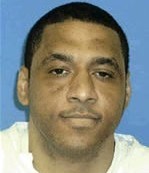 Kenneth Foster
Murderer · USA · 1996
Kenneth Foster, Jr. (born October 22, 1976) was a prisoner formerly on death ro…
1 victim
Kenneth Foster
Murderer · USA · 1996
Kenneth Foster, Jr. (born October 22, 1976) was a prisoner formerly on death ro…
1 victim
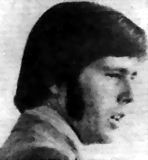 Wayne Clifford Boden
Serial killer · Canad a · 1969
Wayne Clifford Boden was a Canadian serial killer and rapist active from 1968 t…
4 victims
Wayne Clifford Boden
Serial killer · Canad a · 1969
Wayne Clifford Boden was a Canadian serial killer and rapist active from 1968 t…
4 victims
- Gender
- male
- Country
- USA
- Location
- Jefferson County, Alabama, USA
- Date of birth
- February 25, 1961
- Age at first offence
- 19
- Characteristics
- rape
- Victim profile
- Lynn M. McCurry (female, 26)
- Method of murder
- St abbing with knife 67 times
- Date(s) of murder
- May 26, 1980
- Years active
- 1980
- Date of arrest
- Next day
- Status
-
Executed
Executed by electrocution in Alabama on July 14, 1989
Background
Horace Dunkins was executed by electrocution in Alabama on July 14, 1989.
The offence
Horace Franklin Dunkins, Jr. was convicted of rape and murder. The victim was Lynn M. McCurry, a 26-year-old mother of four. Dunkins and an accomplice were convicted of the 1980 rape and murder of a woman from Warrior, Ala. The victim was raped and then stabbed 66 times while tied to a tree.
Investigation
Two sheriff's deputies arrested Horace Franklin Dunkins, Jr. and transported him along with a co-worker to the Jefferson County Courthouse. After the deputies read Dunkins his rights, they began to interrogate him. After a few questions, Dunkins stated: "Before I talk anymore now, I would like to talk to my lawyer or either my mama or somebody...." After this statement, the deputies asked a few more questions and arranged a lineup.
The police then returned Dunkins and his co-worker to their place of employment. At some point during the day, Dunkins agreed to take a polygraph test. There was some confusion over who initiated the idea of taking a polygraph test: Dunkins, Dunkins's co-worker, or the sheriff's deputies.
There was also confusion over how Dunkins's decision to take the test was described. The Alabama Court of Criminal Appeals, the Alabama Supreme Court, and the district court described Dunkins's decision to take the test differently. There was some confusion over who initiated the idea of taking a polygraph test: petitioner, petitioner's co-worker or the sheriff's deputies.
The next morning, Sergeant House picked up Dunkins at work and brought him to the Sheriff's office for the polygraph test. After the test Dunkins was returned to his job. Later that day House brought Dunkins back for more questioning. An hour or so later Dunkins signed a waiver of his rights and confessed his complicity in the crime.
Arrest
On May 27, 1980, two sheriff's deputies arrested Horace Franklin Dunkins, Jr.
Trial
A Jefferson County Circuit Court jury convicted Dunkins and sentenced him to death.
Dunkins presented the argument that the admission of the May 28 confession violated his fifth amendment right to counsel under Miranda v. Arizona and Edwards v. Arizona. Dunkins argued that under Miranda his expression of desire to speak with an attorney precluded any further questioning, and that under Edwards he did not waive his right to have counsel present by responding to further police-initiated investigation.
Respondent argued that Edwards did not bar the admission of Dunkins's confession because the police honored Dunkins's request, and because Dunkins was not continually in custody between the time of his assertion of the right to counsel and his confession. The court held that the break in custody provided a substantial opportunity to speak with those Dunkins wished to consult, and that the admission of the subsequent confession did not violate Edwards.
Sentencing
Dunkins was sentenced to death by a Jefferson County Circuit Court jury.
Appeals
Direct appeal and collateral attack in Alabama
After unsuccessfully challenging his conviction and sentence on direct appeal and on collateral attack in the Alabama courts, Dunkins filed a habeas petition in the district court.
Habeas corpus and appeal to the Eleventh Circuit
The district court denied the habeas petition and Dunkins brought this appeal.
The appeal decision described a procedural history in which the United States Court of Appeals, Eleventh Circuit, on petition for rehearing, withdrew its previous opinion dated May 27, 1988, and substituted the following opinion. The petition for rehearing was otherwise denied.
In the appeal, Dunkins also argued that his waiver of his Miranda rights was not voluntary, knowing and intelligent. Dunkins contended that a psychological assessment performed after his arrest revealed he was "functioning at the high mild range of mental retardation" and argued that he could not have waived his rights voluntarily and intelligently.
The court held that the waiver was voluntary and knowing and intelligent. The court found that mental retardation did not by itself prevent a defendant from voluntarily waiving constitutional rights, and it found no police overreaching or coercion.
The court also described the evidence before the trial court at the suppression hearing and trial, stating that there was evidence indicating Dunkins behaved in such a way that he understood his rights and waived them knowingly and voluntarily. The court noted that on direct appeal, the Alabama Court of Criminal Appeals agreed that both statements were completely voluntarily given after a knowing and intelligent waiver of constitutional rights, citing Dunkins v. State.
The claim that Dunkins did not make a knowing and intelligent waiver because he was "moderately retarded and functionally illiterate" first appeared in a coram nobis petition. Dunkins introduced a psychiatric report from Bryce State Hospital at the coram nobis hearing. The report stated:
[Mental examination] revealed no delusions or hallucinations, though he did have a preoccupation with his legal situation and the possibility of going to jail concerned him greatly, but in an appropriate way.... [Petitioner's] judgment and insight were fair; attention span and memory were within normal range; calculations and general information store were within normal range. .... The psychological assessment revealed that Mr. Dunkins is functioning at the high mild range of mental retardation with his adaptive behaviors falling within the borderline range. Test results are not suggestive of organic impairment.
At the coram nobis hearing, Dunkins's trial counsel testified that Dunkins's parents told him that Dunkins "didn't have any real problems other than being slow." Dunkins's trial counsel also testified: "I never had any real trouble communicating with him. He was able to discuss fully with me the events...."
Faced with this evidence, the coram nobis court ruled that Dunkins's confession was properly admitted at trial. On the second appeal, the Alabama Court of Criminal Appeals reaffirmed its prior holding that Dunkins's waiver was knowing, intelligent and voluntary. The court explained:
The circumstances surrounding the petitioner's confession indicate that he did in fact understand and voluntarily waive his rights. Moreover, a person functioning in the high mild range of mental retardation, such as the petitioner, can intelligently waiver their rights. It is the opinion of this court that petitioner did in fact voluntarily waive his rights and his confession was properly admitted. Dunkins v. State, 489 So.2d 603, 610 (Ala.Crim.App.1985) (citations omitted).
The Eleventh Circuit found that the waiver was voluntary, knowing and intelligent and that his subsequent confession was properly admitted at trial. The court also stated that all evidence supported the state court's findings and that Dunkins presented no new evidence of any mental impairment.
Dunkins argued finally that he was denied effective assistance of counsel both at the trial level and on direct appeal. The Eleventh Circuit reviewed the record and found that Dunkins's counsel performed admirably in formulating and pursuing the defense strategy and that he failed to satisfy both performance and prejudice prongs of Strickland v. Washington.
The district court's denial of the petition for habeas corpus was affirmed.
Other details
Dunkins's jury sentence and execution occurred after the Supreme Court refused late Thursday to block his execution. The appeal record described that the Supreme Court had said the Constitution did not bar execution of mentally retarded murderers. The Court voted 7 to 2, with Justices William J. Brennan and Thurgood Marshall dissenting.
Alabama officials said the first throw of the electrical switch at 12:08 failed to kill Dunkins. The execution took two jolts of electricity, nine minutes apart, to complete the execution. After the first jolt failed to kill the prisoner (who was mildly retarded), the captain of the prison guard opened the door to the witness room and stated "I believe we've got the jacks on wrong." Because the cables had been connected improperly, it was impossible to dispense sufficient current to cause death. The cables were reconnected before a second jolt was administered.
Death was pronounced 19 minutes after the first electric charge. At a post-execution news conference, Alabama Prison Commissioner Morris Thigpen said, "I regret very very much what happened. [The cause] was human error."
Officials said the second jolt occurred at 12:17 and Dunkins was declared dead 10 minutes later.
Dunkins and an accomplice were convicted of the 1980 rape and murder of a 26-year-old mother of four. The accomplice was given a life sentence.
A juror later signed an affidavit saying she never would have voted for the death penalty had she known of Dunkins's mental retardation.
Dunkins was 28 years old at execution. He was executed at Atmore, Ala. The previous procedural description in the appeal record stated that he was a suspect in the rape and murder of Lynn McCurry.
Dunkins's lawyers argued that his death sentence should be overturned because the jury was never given evidence of his retardation, and they argued that he waived his right to a lawyer before his interrogation by the police without any understanding of his legal rights.
Alabama officials argued that the jury was given evidence about Dunkins's learning deficiencies that gave them an understanding of his mental impairment even if he was not termed mentally retarded, and they said his I.Q. of 69, at the borderline of retardation, made him responsible for his actions.
Ed Carnes, head of the capital punishment division of the Alabama Attorney General's Office, asked: "If you're going to have a death penalty, if you don't have it for a crime like this, what do you have it for?" Stephen D. Ellis said: "What happened was brutal and unjustifiable in and of itself. That it followed a gross miscarriage of justice made it that much worse." Dunkins's lawyer argued: "This was an indigent, mentally retarded man," and also said: "There was absolutely no interest in protecting his rights or making sure his conviction and death sentence were fair, and in this case they were not."
Dr. George S. Baroff, a professor of psychology at the University of North Carolina, testified as an expert witness called by Dunkins's lawyers. He said: "We're on a slippery slope now where these people are going to be killed all over the country," and "This thing is going to get a lot hotter."
Mr. Dunkins's I.Q. was described as 69 in Alabama officials' argument and as 65-69 in execution-related description. The evidence about his mental retardation was described as never presented to a jury in the execution-related description, and as presented later through post-conviction matters.
Spotted an error, or have more information about this case?