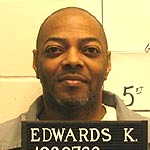
Kimber Edwards
Murderer Russell Ellwood
Murderer · USA · 1991
Russell Ellwood was a former taxi driver. Authorities suspected him of killing…
20 victims
Russell Ellwood
Murderer · USA · 1991
Russell Ellwood was a former taxi driver. Authorities suspected him of killing…
20 victims
 Robert Martines Perez
Murderer · USA · 1994
Name: Robert Martines Perez · Other name used in proceedings: Robert Martinez P…
15 victims
Robert Martines Perez
Murderer · USA · 1994
Name: Robert Martines Perez · Other name used in proceedings: Robert Martinez P…
15 victims
 Billy Frank Vickers
Murderer · USA · 1993
Billy Frank Vickers Vickers was executed by lethal injection in Texas on Januar…
14 victims
Billy Frank Vickers
Murderer · USA · 1993
Billy Frank Vickers Vickers was executed by lethal injection in Texas on Januar…
14 victims
 Terry Lyn Short
Murderer · USA · 1995
Terry Lyn Short was convicted in Oklahoma County of first-degree murder and fiv…
1 victim
Terry Lyn Short
Murderer · USA · 1995
Terry Lyn Short was convicted in Oklahoma County of first-degree murder and fiv…
1 victim
 Robert Gary Girts
Murderer · USA · 1992
Robert Gary Girts was a Poland Township native who worked at a funeral home in…
1 victim
Robert Gary Girts
Murderer · USA · 1992
Robert Gary Girts was a Poland Township native who worked at a funeral home in…
1 victim
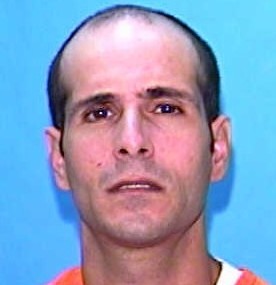 Pablo San Martin
Murderer · USA · 1991
Pablo San Martin was indicted on counts that included First-Degree Murder and o…
2 victims
Pablo San Martin
Murderer · USA · 1991
Pablo San Martin was indicted on counts that included First-Degree Murder and o…
2 victims
 Dennis Edgecomb
Murderer · USA · 2010
Dennis Edgecomb pleaded guilty to murder at the beginning of the sentencing hea…
1 victim
Dennis Edgecomb
Murderer · USA · 2010
Dennis Edgecomb pleaded guilty to murder at the beginning of the sentencing hea…
1 victim
 Noura Jackson
Murderer · USA · 2005
Noura Jackson (born March 17, 1987) was an American criminal convicted of commi…
1 victim
Noura Jackson
Murderer · USA · 2005
Noura Jackson (born March 17, 1987) was an American criminal convicted of commi…
1 victim
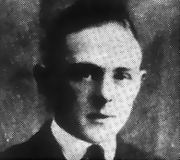 Ernest Brown
Murderer · 1933
Ernest Brown was executed by hanging at Armley prison in Leeds on February 6, 1…
1 victim
Ernest Brown
Murderer · 1933
Ernest Brown was executed by hanging at Armley prison in Leeds on February 6, 1…
1 victim
- Gender
- male
- Country
- USA
- Location
- St. Louis County, Missouri, USA
- Date of birth
- March 29, 1964
- Age at first offence
- 36
- Characteristics
- murder for hire
- Victim profile
- Kimberly Cantrell (his ex-wife)
- Method of murder
- Shooting
- Date(s) of murder
- August 22, 2000
- Years active
- 2000
- Date of arrest
- 5 days after
- Status
-
Sentenced to death
Sentenced to death June 27, 2002
Overview
Kimber Edwards was convicted of first-degree murder for hiring someone to kill his ex-wife, Kimberly Cantrell, and he was sentenced to death.
Timeline
- 1990 — Kimber Edwards and Kimberly Cantrell divorced; Cantrell received primary physical custody of their daughter, Erica, and Edwards was ordered to pay child support.
- 1995 — Edwards’ child support obligation was raised to $351 per month.
- March 2000 — Edwards was charged with failing to pay any of his child support obligation for one year; he pleaded not guilty and his case was set for a court appearance on August 25, 2000.
- August 21, 2000 — Donnell Watson testified that Edwards went to Ortell Wilson’s apartment; Wilson carried a black bag to work that morning.
- August 22, 2000 — Cantrell was last seen leaving her place of employment around 5:06 p.m.; Brandon, age 12, heard shots and a woman’s scream around 5:15 to 5:30 p.m.; Christopher Harrington told police he saw a black man with a black backpack banging on Cantrell’s door in the late afternoon.
- August 22, 2000 — Edwards traveled to his rental property-related location on Palm Street in St. Louis as part of his account; he later confessed to hiring “Michael” for $1,600 to kill Cantrell.
- August 23, 2000 — Fourteen-year-old Erica Edwards called her aunt in the evening to see whether her aunt knew where Cantrell was.
- August 23, 2000 — Erica’s aunt, along with Cantrell’s mother-in-law and another friend, went to Cantrell’s house and discovered Cantrell’s body about 9:30 p.m.; she had been shot twice in the head at close range.
- August 24, 2000 — Detectives drove to Edwards’ home and arrived about 3:00 a.m.; they informed Edwards that Cantrell was dead and asked him, his wife, and the children to accompany them to the police station.
- August 25, 2000 — Christopher Harrington’s description was addressed during the investigation; the case was set for a court appearance on this date.
- August 26, 2000 — A police officer related to the victim arrested Edwards on an unrelated charge alleging Edwards interfered while the officer was trying to ticket him for having cars parked on the grass; while Edwards was held, Wilson was questioned and led police to a vacant building where the murder weapon was found.
- August 27, 2000 — University City police arrested Edwards for Cantrell’s murder in the afternoon as he was being released by St. Louis police; Edwards waived Miranda rights and gave an oral and written statement.
- August 28, 2000 — Detectives again spoke with Edwards, re-read Miranda rights, received a written waiver, and re-interviewed him after Wilson’s statement differed.
- June 27, 2002 — The court sentenced Edwards to death.
- 26/08/2003 — The Supreme Court of Missouri handed down the opinion in State of Missouri v. Kimber Edwards (SC84648).
- 2003 — The Supreme Court of Missouri affirmed the judgment.
Background
Kimber Edwards and Kimberly Cantrell divorced in 1990. Cantrell received primary physical custody of their daughter, Erica, and Edwards was ordered to pay child support.
In 1995, Edwards’ child support obligation was raised to $351 per month.
The offence
Kimberly Cantrell was found dead with two gunshot wounds to the head at close range. She had been shot twice in the head at close range.
Edwards’ conduct included hiring another person to kill Cantrell, for a price Edwards stated as $1,600. At trial, the jury found Edwards guilty of first-degree murder and found one statutory aggravating circumstance: that Edwards had hired Ortell Wilson and/or a person known as “Michael” to murder Kimberly Cantrell.
Investigation
Christopher Harrington told police that he saw and heard a black man wearing a black backpack banging on Cantrell’s door in the late afternoon of August 22, and that the man walked away after there was no answer.
Brandon, Cantrell’s 12-year-old neighbor, told police that he heard shots and a woman’s scream around 5:15 to 5:30 p.m. while he was home watching television.
Ortell Wilson was a tenant in one of Edwards’ rental properties and matched the description from the witnesses. Detectives interviewed Wilson and photographed him. They seized a black backpack from Wilson’s apartment containing rubber fingertips, and Christopher Harrington later picked Wilson out of a photographic show-up.
Edwards’ interrogation and statements were central to the case. Edwards waived his Miranda rights and told police he had hired someone named “Michael” to kill Cantrell and that Edwards had helped in the murder. Edwards also gave additional statements after the police re-interviewed him.
Detectives found a gun and a box of ammunition after Wilson led them to a vacant building; the gun had recently been fired and three rounds were missing. Bullets found in Cantrell’s apartment were determined to be from the weapon to which Wilson led police.
Arrest
Edwards was arrested August 27, 2000, for Cantrell’s murder in the afternoon as he was being released by St. Louis police. The police had previously arrested him on an unrelated charge on August 26, 2000.
Edwards waived Miranda rights and signed a waiver of those rights.
Trial
Guilt phase
A jury found Edwards guilty of first-degree murder. The jury also found the existence of one statutory aggravating circumstance and recommended the death penalty.
At trial, the prosecutor called Donnell Watson, Wilson’s roommate. Watson testified that Edwards went to Wilson’s apartment on August 21, 2000, and that on August 22 Watson and Wilson drove together to their place of employment. Watson testified that Wilson typically carried a bag with him to work and that on that morning he carried a black bag. Watson testified that after the men got off work at about 4:00 p.m., Wilson asked Watson whether Watson could drop him off in University City at a location 200-300 yards from Cantrell’s apartment, and that Wilson returned home around 7:30 p.m. Watson testified that Edwards came to the apartment around 8:00 p.m.
Hughie Wilson testified that in the spring or summer of 2000 Edwards asked whether Hughie knew where to get a “throwaway” gun. Hughie also testified that in early August 2000 he saw a gun on a table in Wilson’s bedroom while Edwards and Wilson were present. Hughie testified that when Edwards saw Hughie, Edwards told Ortell Wilson to put the gun away and that Wilson did. Hughie testified that the gun looked similar to the weapon later identified as the murder weapon.
Edwards filed a motion to suppress his statements confessing to hiring “Michael” to kill Cantrell on grounds that the statements were the product of physical and psychological coercion. That motion was overruled.
During Edwards’ testimony, he denied having met with Ortell Wilson on August 22, 23, or 24. Edwards denied causing anyone to kill his ex-wife and denied having any connection with her death. Edwards also testified that his confessions were coerced and untrue.
Voir dire and jury selection issues
Edwards challenged two peremptory strikes under Batson v. Kentucky, related to jurors identified as Laverne Evans and Ronald Burton. The Supreme Court of Missouri concluded the trial court did not clearly err in rejecting the Batson challenge to the strike of Juror Evans and did not clearly err in determining that the strike of Juror Burton was not pretextual.
The Supreme Court of Missouri discussed the prosecutor’s explanation for striking Juror Burton based on occupation as a postal worker and provided guidance that trial courts should consider strikes based on occupation carefully, assessing them for pretext.
The Supreme Court of Missouri also addressed an Edwards claim that the court erred in refusing to let Edwards’ attorney ask potential jurors whether they would be troubled by the fact that Edwards was accused of killing “the mother of his child.” The court held this refusal did not abuse its discretion.
Suppression of statements
The Supreme Court of Missouri held that police-elicited statements Edwards made to police in which he confessed to hiring “Michael” to kill Cantrell were properly admitted and were not the product of coercion. The Supreme Court of Missouri stated that Edwards signed Miranda waivers of his right to counsel and that his familiarity with police procedures as a correctional officer supported the conclusion that coercion was not established.
Edwards’ claims included arguments about invocation of right to counsel, but the Supreme Court of Missouri held the trial court did not err in overruling the motion to suppress and admitting his confessions.
Statements attributed to non-testifying Ortell Wilson
Ortell Wilson did not testify. The Supreme Court of Missouri held that the trial court properly admitted Wilson’s hearsay statements for a limited purpose to show officers’ subsequent conduct in the investigation, and that careful steps were taken to avoid improper inferences.
Evidence of criminal nonsupport and related discovery
The Supreme Court of Missouri held the trial court properly overruled objections to evidence that Edwards had been charged with criminal nonsupport for not paying child support for more than a year. The court found this evidence relevant to the prosecution’s theory that Edwards killed Cantrell to avoid paying child support.
The Supreme Court of Missouri also held that the trial court properly overruled objections related to evidence excluded or disregarded as a sanction for a discovery violation.
Comments and continuance
The Supreme Court of Missouri addressed Edwards’ argument that denial of a continuance violated his rights. The court held that the trial court did not abuse its discretion in denying Edwards’ request for a continuance a day before trial.
Sentencing
During the penalty phase, Edwards chose not to testify again. The state presented victim impact witnesses: the brother and sister of Ms. Cantrell.
Edwards presented nine witnesses described as family, friends, and co-workers who testified to his good behavior and his love for his family. Edwards’ mother also testified about his childhood.
The jury found one statutory aggravating circumstance: that Edwards hired Ortell Wilson and/or a person known as “Michael” to murder Kimberly Cantrell. The jury recommended death, and the court sentenced Edwards to death.
Edwards was sentenced to death on June 27, 2002.
Appeals
Supreme Court of Missouri opinion and result
The Supreme Court of Missouri affirmed the judgment and the death sentence.
The Supreme Court of Missouri’s points included conclusions that:
- the trial court did not clearly err in rejecting Edwards’ Batson challenge(s);
- the voir dire restriction did not require reversal;
- Edwards’ statements confessing to hiring “Michael” were properly admitted and not coerced;
- limited admission of Wilson’s statements for subsequent conduct was not an abuse of discretion;
- evidence about criminal nonsupport was properly admitted;
- the trial court’s sanction for a discovery violation by ordering jury disregard of two comments was not an abuse of discretion;
- the trial court did not abuse its discretion in denying a continuance; and
- errors relating to a no-adverse-inference instruction during the penalty phase were treated as harmless beyond a reasonable doubt.
The Supreme Court of Missouri also held that Edwards’ death sentence did not result from bias, prejudice, or other arbitrary factors; that sufficient evidence supported the statutory aggravating circumstance; and that the sentence was not excessive or disproportionate compared with similar cases.
Concurrence
Judge Richard B. Teitelman concurred and emphasized careful judicial scrutiny of peremptory strikes based on occupation and other similar attributes, and cautioned about cumulative errors and their potential prejudicial impact.
Outcome
The Supreme Court of Missouri affirmed Edwards’ conviction for first-degree murder and affirmed the sentence of death.
Spotted an error, or have more information about this case?