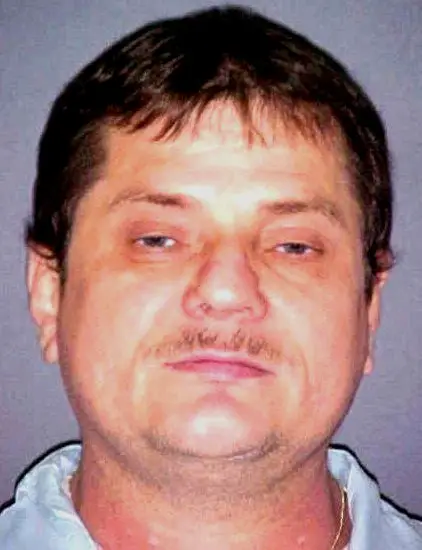
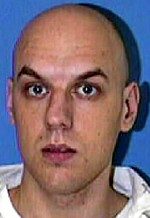
Terry Lyn Short
Murderer Brian Kevin Rosenfeld
Murderer · USA · 1985
Brian Kevin Rosenfeld Brian Kevin Rosenfeld was sentenced to three concurrent l…
23 victims
Brian Kevin Rosenfeld
Murderer · USA · 1985
Brian Kevin Rosenfeld Brian Kevin Rosenfeld was sentenced to three concurrent l…
23 victims
 Russell Ellwood
Murderer · USA · 1991
Russell Ellwood was a former taxi driver. Authorities suspected him of killing…
20 victims
Russell Ellwood
Murderer · USA · 1991
Russell Ellwood was a former taxi driver. Authorities suspected him of killing…
20 victims
 Robert Martines Perez
Murderer · USA · 1994
Name: Robert Martines Perez · Other name used in proceedings: Robert Martinez P…
15 victims
Robert Martines Perez
Murderer · USA · 1994
Name: Robert Martines Perez · Other name used in proceedings: Robert Martinez P…
15 victims
 Billy Frank Vickers
Murderer · USA · 1993
Billy Frank Vickers Vickers was executed by lethal injection in Texas on Januar…
14 victims
Billy Frank Vickers
Murderer · USA · 1993
Billy Frank Vickers Vickers was executed by lethal injection in Texas on Januar…
14 victims
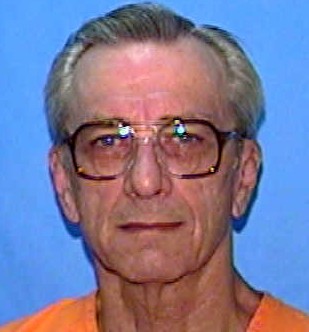 James Milton Dailey
Murderer · USA · 1985
James Milton Dailey was sentenced to death in Pinellas County, Florida. The cas…
1 victim
James Milton Dailey
Murderer · USA · 1985
James Milton Dailey was sentenced to death in Pinellas County, Florida. The cas…
1 victim
 John Mills
Murderer · USA · 1995
John Mills was sentenced to death on October 18, 1996 in Knox County for the st…
1 victim
John Mills
Murderer · USA · 1995
John Mills was sentenced to death on October 18, 1996 in Knox County for the st…
1 victim
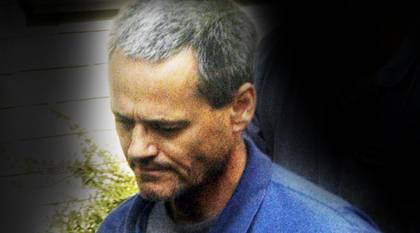 Ulf Olsson
Murderer · Sweden · 1989
Ulf Olsson (1951–), also known as Helénmannen (“the Helén man”) in Sweden, was…
2 victims
Ulf Olsson
Murderer · Sweden · 1989
Ulf Olsson (1951–), also known as Helénmannen (“the Helén man”) in Sweden, was…
2 victims
 Judy Valot
Murderer · USA · 1998
Judy Valot was convicted of second-degree murder in the killing of her boyfrien…
1 victim
Judy Valot
Murderer · USA · 1998
Judy Valot was convicted of second-degree murder in the killing of her boyfrien…
1 victim
- Gender
- male
- Country
- USA
- Location
- Oklahoma County, Oklahoma, USA
- Date of birth
- August 22, 1960
- Age at first offence
- 35
- Characteristics
- arson
- Victim profile
- Ken Yamamoto (male, 22)
- Method of murder
- Fire ( gasoline bomb )
- Date(s) of murder
- January 8, 1995
- Years active
- 1995
- Date of arrest
- Same day (surrenders)
- Status
-
Executed
Executed by lethal injection in Oklahoma on June 17, 2008
Case summary
Terry Lyn Short was convicted in Oklahoma County of first-degree murder and five counts of attempting to kill after former conviction of two or more felonies, and was sentenced to death. He was executed by lethal injection in Oklahoma on June 17, 2008.
Short’s conviction arose from a firebomb attack connected to his former relationship with Brenda Gardner and her sister Tammy Gardner and their children. The fire started in Tammy’s apartment and spread rapidly, causing Ken Yamamoto’s apartment to collapse. Ken Yamamoto, who had been sleeping, suffered burns to ninety-five percent of his body and died several hours later. The fire was started by a gasoline bomb.
Witnesses testified that Short had threatened to “burn Brenda and her family up.” A search of Short’s hotel room revealed a journal containing statements about losing Brenda and needing her to “go on in my life.” Gasoline was found on Short’s clothing.
Just before the execution began, Short cried and told officials, “I have nothing to say.” His last meal was 10 pieces of fried chicken.
Timeline
- January 8, 1995 — A fire started in Tammy Gardner’s apartment after Short threw a gasoline-filled bottle into the apartment where Ken Yamamoto lived; Yamamoto suffered severe burns and died several hours later.
- April 21, 1997 — Short was convicted in Oklahoma County of the first-degree murder of Ken Yamamoto and five counts of attempting to kill after former conviction of two or more felonies.
- October 17, 1997 — Short’s Petition in Error was filed in the Oklahoma Court of Criminal Appeals.
- April 29, 1998 — Short’s brief was filed.
- August 21, 1998 — The case was submitted to the Court.
- January 26, 1999 — Oral argument was held.
- April 2004 — The U.S. Supreme Court lifted the temporary moratorium on capital punishment executions and ruled lethal injection is constitutional.
- June 17, 2008 — Short was executed by lethal injection in Oklahoma at 6:08 p.m.
The offence
Ken Yamamoto was 22 years old and lived in an Oklahoma City apartment directly above the apartment of Short’s former girlfriend, Brenda Gardner, her sister Tammy, and Tammy’s children. After Tammy’s apartment fire started, Brenda, Tammy, and the children escaped. Robert Hines, the father of one of Tammy’s children, was also present and escaped with serious injuries.
Short was linked to the attack through testimony and forensic evidence. Yamamoto suffered burns to ninety-five percent of his body. He was conscious when taken to the hospital, but he died several hours later.
Background
Short had been abusive to Brenda Gardner and on several occasions threatened to kill Brenda and her family. Marjorie Long testified that in 1994 she rented an Oklahoma City apartment to Brenda and Short and stated that after Short ransacked the bedroom and broke a window, she took his name off the lease. Long also testified that after driving with Brenda, Short threw rocks at her car and tried to run her off the road; Short told Long, “I'll just get some gas and pour it on your mother and set her on fire.”
Brenda Gardner testified that Short had threatened her and her family and had shown her how to make a firebomb using a bottle, gasoline, wax, and a towel. Brenda admitted to having broken up with Short on December 26, 1994, but stated she saw him almost daily from December 28 through January 4, 1995, when she and Short were charged with shoplifting.
Detective and witness testimony also addressed prior threats. Oklahoma City police officer Sergeant Chuck Wheeler testified that on December 26, 1994, he answered a call that Brenda was being held against her will by a male, Short, and took Brenda to her sister’s apartment despite Short’s protests.
Janet Gardner testified that she accompanied Brenda to court on the shoplifting charge and that Short was getting angry and wanted Brenda to “take the rap for it.” Janet testified that Short “said she'd better or else.” Hines testified that he went to the courthouse on January 4 and told Short, “Don't be threatening my family.” Hines testified that Short started threatening him at that point.
Short’s threats included statements recalled by other witnesses. Short’s friend Keith Partain testified that about a week before the fire, Short remarked that “he was going to burn Brenda and her family up.” Partain thought Short was joking. Another friend, Linda Gonzalez, testified that Short seemed depressed about having broken up with Brenda before the fire, and testified she saw him at about 7 p.m. that evening and that he seemed to be “happy like he always is.”
Short’s aunt testified that about three days before the fire she had seen Short in a red coat stained with gasoline and oil, and that the coat looked about the same as before the fire.
Investigation and evidence
On the night of the fire, Brenda Gardner testified that at about 3:00 a.m. on January 8, 1995, she and her sister were in the apartment with two sleeping children and heard a noise at the front door as though someone was trying to break in. Brenda testified that the noise stopped and that about thirty minutes later Hines arrived at the apartment. Hines could not enter through the jammed front door and was let in through the patio door. Brenda looked out the patio door at about 4:00 a.m. and noticed Short standing by Hines’s truck. Brenda testified Short was wearing a red jacket. She testified that Short turned his back and appeared to be lighting a cigarette. Brenda testified: “Then I seen a bigger flame, and at that time I looked up at Robert, and then the next thing I know the window was shattered and Robert was on fire.” Brenda testified she did not see Short throw anything.
Later that day, Short telephoned his cousin, David Davis, asked Davis to pick him up, and Davis brought Short a change of clothes. Davis testified Short denied involvement in the fire bombing. After changing, Short surrendered to Oklahoma City police.
Oklahoma City Detective Mike Burke testified that when Short came into the Oklahoma County jail he was not wearing socks. Burke searched Davis’s vehicle and retrieved a red coat that tested positive for gasoline. The coat contained three disposable lighters, some rolling paper, and a package of leaf tobacco. Short’s sneakers also tested positive for gasoline, and Burke testified he found no socks in the vehicle.
Homicide Detective Robert Mark Easley testified that he searched what was Short’s registered room at the Melrose Motel. Easley found clothing in a white plastic bag, and a bottle of lighter fluid. Easley also recovered a legal pad containing writing about Brenda. The legal pad included excerpts read by Easley, including: 1-4-95 . . . the last time I seen her. 1-5-95 . . . still no word from her. My life is over with her and I know it, but I do love her. 1-7-95, still no word from her. I guess she found somebody else. I only hope I know I still have a chance as long as she did not have sex with nobody. 1-8-95 . . . I need her to go on in my life. She is all I got.
Easley identified photographs he took of items in the motel room, including a bottle cap without the liner, one with the liner, the blue liner to a bottle cap, and an empty two-liter bottle of RC Cola.
Arrest and surrender
After the fire and police information, Short requested transportation from his cousin, David Davis. Davis picked up Short and brought him a change of clothes. Short surrendered to Oklahoma City police after changing clothes.
Trial
Charges and jury findings
Short was tried by jury and convicted of:
- First Degree Murder (Count I)
- Five counts of Attempting to Kill, After Former Conviction of Two or More Felonies (Counts II-VI)
The jury found the existence of three aggravating circumstances and recommended the punishment of death. For the attempting-to-kill counts, the jury recommended one hundred (100) years imprisonment for Counts II-IV and two hundred (200) years imprisonment for Counts V and VI.
Prior threats and relationship evidence
Evidence at trial included testimony regarding Short’s abusive behavior and threats toward Brenda and her family, including threats made to Brenda Gardner, her sister Janet, and Keith Partain.
Witness testimony on the firebombing
The state presented testimony from Brenda Gardner and Robert Hines regarding seeing Short outside near the time of the fire. Hines initially stated he was certain the man was Short, but on cross-examination admitted he assumed it was Short because Brenda and Tammy told him Short had been outside earlier.
Forensic and expert evidence about the firebomb
An expert testified for the state that a “Molotov cocktail” had been thrown into the flat. A defense expert testified that the fire scene was not consistent with a firebomb having started the fire.
Jailhouse informant testimony and excluded witness
Jay Brown, a jailhouse informant, testified that Short admitted starting the fire after finding Hines and Brenda Gardner having sex, and that Short scrawled derogatory comments about Gardner on the wall of the jail cell. Brown testified in exchange for leniency on charges he was facing.
The defense sought to present testimony from another inmate, Mark Bayless, to refute Brown’s testimony. The trial judge refused to allow Bayless to testify because the defense revealed the intention to present him too late. The appellate analysis later concluded the exclusion was an appropriate sanction for the discovery violation and that Bayless was not a material witness.
Confession and corroboration
Short raised issues on appeal regarding the admissibility of his confession, including whether the state provided sufficient independent evidence supporting its trustworthiness. The appellate analysis found sufficient corroborative evidence to show the confession’s trustworthiness.
Sentencing
During the sentencing phase, the jury recommended death for the murder after finding three aggravating circumstances:
- Short knowingly created a risk of death to more than one person;
- the murder was especially heinous, atrocious, or cruel;
- Short constituted a continuing threat to society.
The Oklahoma Court of Criminal Appeals addressed aggravators and related issues. It also addressed victim impact evidence and prosecutorial arguments in relation to sentencing.
Victim impact evidence
The state introduced victim impact testimony from Ken Yamamoto’s mother, Kiyoka Yamamoto. The appellate decision described the victim impact statement as emotional but within evidentiary guidelines.
Appeals and habeas corpus
Short’s direct appeal included the following cited case references in the record:
- Short v. State, 980 P.2d 1081 (Okla. Crim. 1999) (Direct Appeal)
- Short v. Sirmons, 472 F.3d 1177 (10th Cir. 2006) (Habeas)
In Short v. Sirmons, the U.S. Court of Appeals held that:
- The exclusion of testimony of Short’s cellmate at the guilt stage did not violate Short’s Sixth Amendment right to compulsory process.
- The victim impact statement, although containing irrelevant information and being highly emotional, did not render Short’s sentencing hearing fundamentally unfair.
- Trial counsel’s failure to object to the victim impact statement was not prejudicial to Short.
In the Oklahoma Court of Criminal Appeals decision, the appellate court addressed, among other issues:
- Exclusion of Bayless’s testimony as an appropriate sanction for discovery violation.
- Admission of photographs of drawings on Short’s jail cell wall.
- Issues regarding corroboration of Short’s confession and admission of evidence.
- Challenges involving victim impact evidence.
- Challenges to aggravating circumstances.
Outcome and execution
Short was executed by lethal injection in Oklahoma on June 17, 2008 at 6:08 p.m. in the Oklahoma State Penitentiary.
For his last meal, Short requested 10 pieces of fried chicken. Just before the execution began, Short cried and told officials, “I have nothing to say.”
Other details
The record identified that executions were resumed after the U.S. Supreme Court ruled lethal injection is constitutional and not cruel or unusual punishment. Short was described as the first person executed in Oklahoma since that ruling. The execution was witnessed by family members, and Short declined to deliver last words into a microphone.
Spotted an error, or have more information about this case?