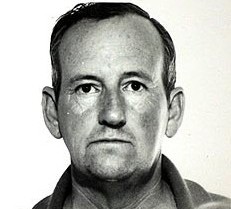
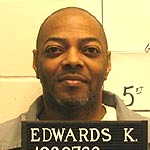
Mack Ray Edwards
Serial killer Richard Kuklinski
Serial killer · USA · 1949
Richard “Iceman” Kuklinski was sentenced to life in prison in 1988. He died in…
100 victims
Richard Kuklinski
Serial killer · USA · 1949
Richard “Iceman” Kuklinski was sentenced to life in prison in 1988. He died in…
100 victims
 Ottis Toole
Serial killer · USA · 1961
Ottis Elwood Toole (sometimes misspelled as “Otis”) was an American serial kill…
65 victims
Ottis Toole
Serial killer · USA · 1961
Ottis Elwood Toole (sometimes misspelled as “Otis”) was an American serial kill…
65 victims
 Juan Vallejo Corona
Serial killer · USA · 1960
Juan Vallejo Corona was a native of Mexico, born in 1934. He moved to Yuba City…
25 victims
Juan Vallejo Corona
Serial killer · USA · 1960
Juan Vallejo Corona was a native of Mexico, born in 1934. He moved to Yuba City…
25 victims
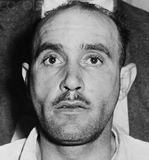 Raymond Fernandez
Serial killer · USA · 1947
Raymond Martinez Fernandez was executed by electrocution at Sing Sing prison in…
17 victims
Raymond Fernandez
Serial killer · USA · 1947
Raymond Martinez Fernandez was executed by electrocution at Sing Sing prison in…
17 victims
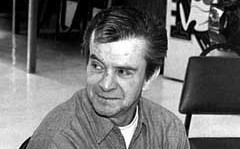 Carroll Edward Cole
Serial killer · USA · 1948
Carroll Edward Cole, also known as “Eddie,” was born in Sioux City, Iowa on May…
15 victims
Carroll Edward Cole
Serial killer · USA · 1948
Carroll Edward Cole, also known as “Eddie,” was born in Sioux City, Iowa on May…
15 victims
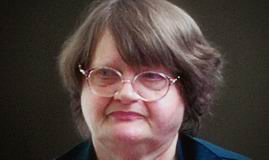 Mary Jane Fonder
Murderer · USA · 2008
Mary Jane Fonder (born July 5, 1942) was an American criminal who murdered Rhon…
1 victim
Mary Jane Fonder
Murderer · USA · 2008
Mary Jane Fonder (born July 5, 1942) was an American criminal who murdered Rhon…
1 victim
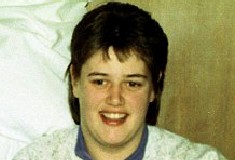 Beverley Allitt
Serial killer · United Kingdom · 1991
Beverley Allitt was a nurse who suffered from the mental illness Munchausen’s S…
4 victims
Beverley Allitt
Serial killer · United Kingdom · 1991
Beverley Allitt was a nurse who suffered from the mental illness Munchausen’s S…
4 victims
 Iwao Hakamada
Mass murderer · Japan · 1966
Iwao Hakamada (袴田巖) was a Japanese professional boxer. Hakamada was born on Mar…
4 victims
Iwao Hakamada
Mass murderer · Japan · 1966
Iwao Hakamada (袴田巖) was a Japanese professional boxer. Hakamada was born on Mar…
4 victims
 John Ausonius
Murderer · Sweden · 1991
John Ausonius (born Wolfgang Alexander Zaugg on July 12, 1953), also known in t…
1 victim
John Ausonius
Murderer · Sweden · 1991
John Ausonius (born Wolfgang Alexander Zaugg on July 12, 1953), also known in t…
1 victim
 Stephen Grant
Murderer · USA · 2007
February 14, 2007 — Stephen Grant contacted the Macomb County sheriff's departm…
1 victim
Stephen Grant
Murderer · USA · 2007
February 14, 2007 — Stephen Grant contacted the Macomb County sheriff's departm…
1 victim
 Darrell Glenn Carr
Murderer · 1991
Darrell Glenn Carr was sentenced to death on March 10, 1993.
1 victim
Darrell Glenn Carr
Murderer · 1991
Darrell Glenn Carr was sentenced to death on March 10, 1993.
1 victim
- Gender
- male
- Country
- USA
- Location
- Los Angeles County, California, USA
- Date of birth
- 1919
- Age at first offence
- 34
- Characteristics
- rape, child killer, kidnapping, sexual abuse, torture
- Victim profile
- Stella Darlene Nolan, 8 / Gary Rochet, 16 / Donald Allen Todd, 13 / Don Baker, 13, and Brenda Howell, 11 / Roger Madison, 16
- Method of murder
- Shooting
- Date(s) of murder
- 1953 - 1970
- Years active
- 1953–1970
- Date of arrest
- March 5, 1970 ( surrenders )
- Status
-
Died in custody
Sentenced to death in 1971; committed suicide by hanging himself in his cell in San Quentin on October 30, 1971
Case record: Mack Ray Edwards
Background
Mack Ray Edwards was an American serial killer who murdered at least six children in Los Angeles County between 1953 and 1970. He was born in Arkansas and moved to Los Angeles County in 1941. He worked as a heavy equipment operator contracted by Caltrans, and he helped build freeways. He was married and a father of two by early 1970. He logged an arrest for vagrancy in 1941 prior to finding work as a heavy-equipment operator. He also sexually molested at least one girl before marrying a young wife in 1946 and moving to California a year later.
The offence
Kidnapping in Sylmar and police surrender
On March 5, 1970, burglars kidnapped three girls from their home in Sylmar, California. The girls were ages 12 to 14. Two girls escaped that day and returned home, but the third girl remained missing. The next day, Edwards entered a Los Angeles police station and surrendered. He walked to the front desk of the Los Angeles police station, handed the duty officer a loaded handgun, and announced his name as Mack Ray Edwards. He reportedly said, "I have a guilt complex." He named his teenage accomplice in the kidnapping and directed police to the Angeles National Forest, where the still-missing girl was found unharmed. Before authorities could take his statement down, the prisoner told them there were "other matters" to discuss. He then confessed to multiple murders of children.
Murder admissions and claimed crime span
After his arrest, Edwards confessed to half a dozen murders dating from the early 1950s. He claimed that his crimes were motivated by an urge for sex. Police were initially skeptical of a 12-year gap in his killing, but he was adamant that he had confessed to all the murders. He maintained that there were no more victims and demanded immediate execution after being sentenced to death for three of the murders.
Edwards told authorities he killed Stell Nolan, 8, in 1953, and that he committed the double-murder of Don Baker, 13, and Brenda Howell, 11, in 1956. He insisted he had not killed again until his slaying of 16-year-old Gary Rochet in November 1968. The child-killers last two victims were Roger Madison, 16, just three weeks after Rochet, and Donald Todd, 13, on May 16, 1969.
Confessed victims and recovered remains
Edwards was convicted of the murders of three children:
- Stella Darlene Nolan, age 8, of Compton, who disappeared June 20, 1953.
- Gary Rochet, age 16, of Granada Hills, who was found after having been shot to death on November 26, 1968.
- Donald Allen Todd, age 13, of Pacoima, who disappeared May 16, 1969.
Edwards confessed to three additional killings, but bodies were not recovered for those additional confessed murders, so they were not officially charged:
- Don Baker, 13, and Brenda Howell, age 11, of Azusa, who disappeared August 6, 1956. Howell was Edwards' sister-in-law.
- Roger Madison, 16, of Sylmar, disappeared December 16, 1968.
Edwards later led detectives to Nolan's remains. He directed officers to a section of the Santa Ana Freeway, where the skeletal remains of Stella Nolan were unearthed from an eight-foot-deep grave. Edwards maintained that Roger Madison was buried beneath the Ventura Freeway, but authorities declined to search for the burial site by plowing up the highway. Edwards claimed he disposed of another victim under the Ventura Freeway.
Detectives were unable to locate where Edwards had disposed of the bodies of his other five victims, but bodies were recovered for three of the confessed crimes, which were the ones charged.
Investigation
Investigation actions and later reopened cases
Detectives and investigators reopened missing-child and cold-case matters decades later, believing they were tied to Edwards. Police involvement included the LAPD cold case unit, Pasadena police, Torrance police, the Los Angeles County Sheriff's Department, and the California state Department of Justice. Investigators considered multiple possible links among other disappearances, and they used ground-penetrating radar and cadaver dogs in searches.
- An NPR report described that alongside a freeway near Los Angeles on October 6, 2008, law enforcement officials hoped to locate the remains of 15-year-old Roger Madison, the likely victim of a serial killer. The report described Edwards turning himself in two years after Madison left his home in Sylmar and confessing to the murders of six children. It also described that after Edwards’ confession, he led police to sites where three victims were recovered and that the other three bodies, including Madison’s, were never found. It described ground penetrating radar and cadaver dogs indicating human remains in a specific area along an offramp on the Ventura freeway.
- A Pasadena Star-News report described that police relabeled the case of Tommy Bowman as a homicide and believed Tommy was the victim of Mack Ray Edwards. It stated that author Weston DeWalt had suggested this earlier with a team of investigators, and that Pasadena police cold-case detectives believed Edwards had killed additional children.
- A Los Angeles Times report described that police planned to send corpse-sniffing dogs to a half-mile stretch of a Thousand Oaks freeway looking for remains of another possible victim, and it described ground-penetrating radar checks for bodies buried at Edwards’ former home in Sylmar. It also described detectives using a letter Edwards wrote apparently confessing to killing a Redondo Beach boy and the fact that the case interest was sparked by Weston DeWalt’s research into Tommy Bowman’s disappearance.
LAPD and Pasadena cold-case evidence described in the reports
Investigators discovered a letter from Edwards to his wife Mary from death row, in which Edwards stated he "left out" Tommy Bowman from his confession to police. Another described letter included a line that appeared to recant parts of Edwards’ original confession, but it also discussed knowledge of Tommy Bowman. The Los Angeles Times report included the quotation:
- "I was going to add one more to the first statement" and "that was the Tommy Bowman boy that disappeared in Pasadena, but I felt I would really make a mess of that one, so I left him out of it." The same letter was described as being seized in an October search of Edwards’ widow’s home.
Pasadena police described a jailhouse exchange involving a man named Roberto, who was described as having been locked in a Los Angeles County Jail cell flanked by Manson on one side and Edwards on the other. DeWalt described Edwards as talking about different children he had murdered, and DeWalt described learning the number of stories Edwards told Roberto as "Upward of 20."
A National City police department representative described that detectives had looked into Edwards as a suspect in the vanishing of Mary Lou Olson and determined there was no connection.
Investigators described that 12-year hiatus skepticism existed because Edwards insisted he had stopped killing for a decade, but investigators did not believe him.
Arrest
On March 5, 1970, Edwards entered a Los Angeles police station with a loaded handgun, surrendered, and announced his name as Mack Ray Edwards. He reportedly said, "I have a guilt complex." He confessed to the triple-kidnapping of three young girls from their home in Sylmar that had occurred on the previous day and directed officers to the Angeles National Forest, where the missing girl was found unharmed. During his surrender, he volunteered to discuss "other matters," which were related to sex murders and his murders of children.
Trial
Edwards confessed to molesting and murdering six children after surrendering to police. After three bodies were recovered, Edwards pleaded guilty to three counts of murder. He was sentenced to death. He told the jury:
- "I want the chair; that's what I've always wanted," and later he told the court:
- "Six is all there is," and "There's not any more. That's all there is." He twice attempted suicide before trial—slashing his stomach with a razor blade on March 30 and gulping an overdose of tranquilizers on May 7.
"My lawyer told me there are a hundred of men waiting to die in the chair. I'm asking the judge if I can have the first man's place. He's sitting there sweating right now. I'm not sweating. I'm ready for it." He also told reporters:
Sentencing
After pleading guilty to three counts of murder, Edwards was sentenced to death. He wanted the death penalty, and he demanded execution before the appeals process could complete.
Appeals
Edwards faced mandatory appeals after being sentenced to death for three of the murders, and no California inmate had been executed since 1967. He shortened the process by committing suicide.
Outcome
On October 30, 1971, Edwards committed suicide by hanging himself with a television cord in his death-row cell in San Quentin. The materials also described prior unsuccessful attempts at suicide, and Edwards took his own life on his third attempt on October 30, 1971.
Other details
Possible and suspected victims
Edwards may have committed other murders, but his own account was inconsistent: while in prison he claimed to have killed 18 children, but in an interview with the Los Angeles Times he said the number was only six. The 12-year span between Baker and Howell’s disappearances and Rochet’s shooting led investigators to suspect Edwards may have claimed more victims in between.
As of March 2007, the Los Angeles Police Department was investigating the possibility of Edwards’ involvement in the disappearance of:
- Tommy Bowman, 8, of Redondo Beach, who disappeared in Pasadena on March 23, 1957.
Edwards was also considered a suspect in the disappearances of:
- Bruce Kremen of Granada Hills, 6, who disappeared from a YMCA camp in Angeles National Forest on July 12, 1960.
- Karen Lynn Tompkins, 11, who disappeared on August 18, 1961.
- Dorothy Gale Brown, 11, who disappeared on July 3, 1962; her body was recovered from the ocean off of Marina Del Rey. She had been molested and drowned.
The materials described that a coded confession and an "anti-confession" letter were involved in developing suspicion regarding Tommy Bowman. The anti-confession was described as recanting much of Edwards’ confession and identifying a man named "Billy the cripple." Police investigators dismissed the anti-confession as an invention born of Edwards’ psychosis, but later parts of the letter were treated as significant.
Car and staged neighborhood context in accounts of missing children
One report described that Edwards walked into the LAPD station on March 6, 1970, and said he wanted to clear his conscience, and that he had been arrested, pleaded guilty to three of the slayings, and was sentenced to death. Another report described Edwards forcing the girls to write a note telling their parents that they were running away from home before taking them to a remote area near Newhall. It also described that the girls were former neighbors of Edwards and recognized him, that none was assaulted, and that Edwards decided to tell his story to police because he feared he would be identified.
Additional details from later reports
- The NPR report quoted author Weston DeWalt saying: "Mack Ray Edwards had a relationship with [Madison's] family, had dinner in their home," and also said: "Roger Madison trusted Mack Ray Edwards. And Mack Ray Edwards lured him into an orange grove, and stabbed him multiple times, and killed him."
- The Los Angeles Times report quoted a police detective characterizing DeWalt: "His work has allowed us to go back in time and open up a lot of windows."
- The Los Angeles Times report included a quotation from Detective Vivian Flores: "I looked at it and I thought: This face looks familiar, but why?" and also: "There's a lot of families who do not know what happened to their children."
- The Los Angeles Times report included Eldon Bowman quotes about the search: he recalled that after Tommy vanished, the family refused to go home and searched around the clock, and he later said: "Tommy is never far from my mind."
- The Pasadena Star-News report included Detective John Dewar quotes: "Everybody needs to know about Mack Ray, who may be one of the most prolific child killers in history," and: "DeWalt's done a magnificent job, and I have to give him credit for everything we've been able to do up to this point. I'd hire him any day as a detective here."
- The Pasadena Star-News report included DeWalt quotes: "I absolutely believe he's responsible for the disappearance of Tommy Bowman," and also: "The issue, in my mind, is that in these cases, he should be considered a suspect," and: "The trick for me ... is how to to leave the those trails behind when you go home at night."
- The Pasadena Star-News report included quotations from Eldon Bowman: "I never understood how the Police Department could classify it as a missing (person) when neighbors saw this strange guy, Mack Ray, following Tommy out of the Arroyo, and even did a composite drawing," and: "They didn't have to," and: "I've been aware of what was going on. Probably so - 50 years is a long time to expect something else."
- The Pasadena Star-News report included Detective Vivian Flores quotes: "I think a lot of people take missing persons as very trivial," and: "You know, kids that run away and then come home. He didn't come home. He never came home."
- The Pasadena Star-News report included Flores: "Does that mean that I forget about that child that never came home? No. We have an obligation. He deserves," and also: "just as much as much as all the other homicide victims, to be found, and to be brought back to his family."
- The Pasadena Star-News report included Detective Diane Harris quotes: "I keep them in the back of my mind -- they're always there," and: "I can actually even tell you what their names are without looking at them."
- The Pasadena Star-News report included Harris again: "He could have been not killing people during that time frame, but I doubt it."
- The Pasadena Star-News report included additional quotes from law enforcement and investigators about the need for closure and ongoing efforts.
Dates and age details for principal victims mentioned
- Stella Darlene Nolan, age 8, disappeared June 20, 1953; her skeletal remains were unearthed from an eight-foot-deep grave near the Santa Ana Freeway section directed by Edwards.
- Don Baker, age 13, disappeared August 6, 1956.
- Brenda Howell, age 11, disappeared August 6, 1956.
- Gary Rochet, age 16, found after being shot to death on November 26, 1968.
- Roger Madison, age 16, disappeared December 16, 1968.
- Donald Allen Todd, age 13, disappeared May 16, 1969.
- Tommy Bowman, age 8, disappeared in Pasadena on March 23, 1957.
- Bruce Kremen, age 6, disappeared July 12, 1960.
- Karen Lynn Tompkins, age 11, disappeared August 18, 1961.
- Dorothy Gale Brown, age 11, disappeared July 3, 1962; her body was recovered from the ocean off of Marina Del Rey.
Places mentioned
Edwards’ movements and the investigations involved places including Arkansas, Los Angeles County, Sylmar, Compton, Granada Hills, Pacoima, Azusa, Angeles National Forest, Ventura Freeway, Santa Ana Freeway, San Gabriel Mountains, San Quentin, Foothill Station, Redondo Beach, Pasadena, Altadena Drive, Mount Baldy Road, Marina Del Rey, Thousand Oaks freeway, Newhall, Simi Valley, Enid (Oklahoma), Modoc Road near La Cumbre Country Club, and National City.
Methods and descriptions mentioned
The materials described hanging with a television cord or an electrical cord, a loaded handgun used during surrender, and the use of heavy equipment associated with Caltrans work. They also described killings as including shooting and stabbing, and one victim described as molested and drowned.
Spotted an error, or have more information about this case?