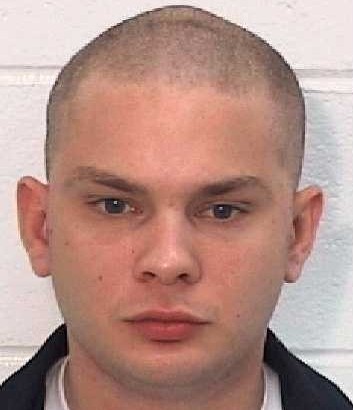
John Anthony Esposito
Murderer Russell Ellwood
Murderer · USA · 1991
Russell Ellwood was a former taxi driver. Authorities suspected him of killing…
20 victims
Russell Ellwood
Murderer · USA · 1991
Russell Ellwood was a former taxi driver. Authorities suspected him of killing…
20 victims
 Robert Martines Perez
Murderer · USA · 1994
Name: Robert Martines Perez · Other name used in proceedings: Robert Martinez P…
15 victims
Robert Martines Perez
Murderer · USA · 1994
Name: Robert Martines Perez · Other name used in proceedings: Robert Martinez P…
15 victims
 Billy Frank Vickers
Murderer · USA · 1993
Billy Frank Vickers Vickers was executed by lethal injection in Texas on Januar…
14 victims
Billy Frank Vickers
Murderer · USA · 1993
Billy Frank Vickers Vickers was executed by lethal injection in Texas on Januar…
14 victims
 Isaac Wood
Murderer · USA · 1855
Isaac L. Wood was a Livingston Republican mentioned in July 1858 execution cove…
2 victims
Isaac Wood
Murderer · USA · 1855
Isaac L. Wood was a Livingston Republican mentioned in July 1858 execution cove…
2 victims
 Maoupa Maake
Serial killer · S outh Africa · 1996
Maoupa Maake (Maoupa Cedric Maake; also known as the Wemmer Pan Killer) was a s…
27 victims
Maoupa Maake
Serial killer · S outh Africa · 1996
Maoupa Maake (Maoupa Cedric Maake; also known as the Wemmer Pan Killer) was a s…
27 victims
 Rudy Esquivel
Murderer · USA · 1978
June 9, 1986 — Rudy Ramos Esquivel was executed by lethal injection in Texas. ·…
1 victim
Rudy Esquivel
Murderer · USA · 1978
June 9, 1986 — Rudy Ramos Esquivel was executed by lethal injection in Texas. ·…
1 victim
 William Balfour
Murderer · USA · 2008
William Balfour was sentenced to three consecutive life sentences plus 120 year…
3 victims
William Balfour
Murderer · USA · 2008
William Balfour was sentenced to three consecutive life sentences plus 120 year…
3 victims
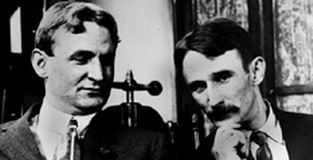 James & John McNamara
Mass murderer · USA · 1910
James B. (“J.B.”) McNamara · John J. (“J.J.”) McNamara · The brothers were Iris…
21 victims
James & John McNamara
Mass murderer · USA · 1910
James B. (“J.B.”) McNamara · John J. (“J.J.”) McNamara · The brothers were Iris…
21 victims
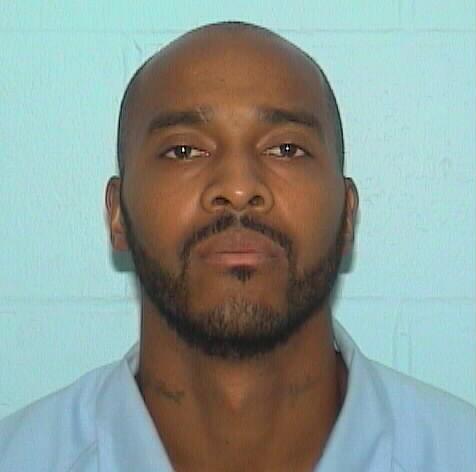 Anthony Townser
Murderer · USA · 1993
Anthony Townser Anthony Townser was sentenced to 75 years in prison in Illinois…
3 victims
Anthony Townser
Murderer · USA · 1993
Anthony Townser Anthony Townser was sentenced to 75 years in prison in Illinois…
3 victims
- Gender
- male
- Country
- USA
- Location
- Georgia/Texas, USA
- Date of birth
- 1975
- Age at first offence
- 21
- Characteristics
- armed robbery, kidnapping, robbery
- Victim profile
- Lola Davis, 90 / Lawrence Merrill Snider and Marguarite Bertha Snider
- Method of murder
- Bludgeoned to death / Beating with a tire iron
- Date(s) of murder
- September 19, 1996 / October 3, 1996
- Years active
- 1996
- Date of arrest
- —
- Status
-
Sentenced to death
Sentenced to death in Georgia on October 2, 1998
Case record: John Anthony Esposito
Background
John Anthony Esposito was convicted in Georgia of murdering Lola Davis and related crimes and was sentenced to death.
Esposito abducted elderly people with his girlfriend, Alicia Woodward, and murdered them. A jury convicted Esposito of murdering Lola Davis and related crimes and fixed his sentence at death after finding statutory aggravating circumstances beyond a reasonable doubt.
The offence
On September 19, 1996, Esposito's co-conspirator Alicia Woodward persuaded Lola Davis to give her a ride from a parking lot in Lumberton, North Carolina.
Woodward directed Davis to a nearby location where Esposito entered Davis's automobile. Esposito and Woodward forced the elderly Davis, without the use of any weapons, to drive to a nearby parking lot and to move to the passenger seat of her automobile.
Esposito removed one thousand dollars and Davis's checkbook from her purse. Woodward drove Davis's automobile to a local bank where she cashed a check for three hundred dollars that she and Esposito had forced Davis to write.
Woodward and Esposito drove Davis to a remote location in Morgan County, Georgia, where Esposito led Davis into a hayfield, forced her to kneel, and beat her to death with tree limbs and other debris.
After murdering Davis, Esposito and Woodward drove Davis's automobile to Alabama where they disposed of Davis's automobile and purse.
Evidence at trial showed that Davis's automobile contained fingerprints, palm prints, and footprints matching Esposito and Woodward. Saliva on a cigarette butt found in the automobile contained DNA consistent with Esposito's DNA.
During the sentencing phase, evidence showed that after murdering Davis, Esposito and Woodward traveled to Oklahoma, abducted an elderly couple, illegally obtained money using the couple's bank card, and then drove the couple to Texas where Esposito beat them to death with a tire iron.
An FBI agent testified during the sentencing phase that Esposito described his and Woodward's plan to abduct and murder yet another elderly woman for money.
The prosecution described the murdered elderly couple as Lawrence Merrill Snider and Marguarite Bertha Snider. Lawrence Snider was killed less than two weeks before his 91st birthday, and Marguarite Snider was 86 at the time of her death. The bodies of the Sniders were discovered in Texas on Oct. 3, 1996, and both had been beaten to death with a tire iron from the trunk of their car.
Investigation
Esposito and Woodward were observed unlawfully possessing a BB gun in Colorado's Mesa Verde National Park by a park ranger. The park ranger called for assistance after Esposito was uncooperative when instructed to lay down the gun.
Park rangers determined the automobile Esposito and Woodward were driving had been reported missing under suspicious circumstances and that there was a warrant for their arrest.
Evidence presented during the trial showed that investigators had an arrest warrant issued within two days of Lola Davis being reported missing by her husband, with additional information coming in part involving an investigation and information received from Woodward's mother, who reported Woodward asking for money to be wired to Lumberton where Davis was reported missing.
Arrest
At approximately 3:00 p.m., a park ranger informed Esposito he was under arrest and gave Miranda warnings required by Miranda v. Arizona.
As each portion of his Miranda warnings was read, Esposito stated "yeah" and nodded affirmatively. Esposito was then asked if he understood his warnings, but before he answered, the park ranger stated that he had no questions for Esposito.
Persons who observed Esposito testified that he did not appear to be under the influence of drugs or alcohol.
Later that evening, two FBI agents arrived at the jail where Esposito and Woodward were being held. The agents interviewed Woodward first, then interviewed Esposito from 11:35 p.m. until 12:22 a.m.
One FBI agent testified that Esposito was asked before being questioned if he remembered and understood the warnings he had received earlier that day, particularly the warning that he was not required to speak with authorities. Esposito responded that he was willing to make a statement.
Trial
The trial was in Baldwin County after a change of venue from Morgan County. The trial began on September 23, 1998, and the jury found Esposito guilty on all counts on September 30, 1998.
A jury convicted Esposito of murdering Lola Davis and related crimes and fixed his sentence at death after finding beyond a reasonable doubt statutory aggravating circumstances.
The statutory aggravating circumstances were:
- that the murder was committed during the commission of an armed robbery and a kidnapping with bodily injury; and
- that the murder was outrageously or wantonly vile, horrible, or inhuman in that it involved depravity of mind.
Esposito contended that the trial court erred by denying his motion to suppress a confession he made to two FBI agents during an interview conducted on the night of his arrest. The appellate court found no error.
During the guilt-innocence phase, the parties planned a jury view of the murder scene. The parties agreed that the trial judge, the court reporter, and the attorneys would not attend. The chief deputy sheriff of Morgan County, an investigator in Esposito's case who had already served as a witness for the state, was permitted to accompany the jury to the scene and to tell the jury where the body was found. The defendant did not object to this procedure.
The appellate court stated that although the procedure was not raised as an enumeration of error, it was troubling and should not be used in the future.
Esposito was adjudged guilty and the appellate court affirmed his convictions and sentences.
Sentencing
The jury fixed the sentence for the malice murder at death on October 2, 1998.
The trial court vacated the felony murder conviction by operation of law and sentenced Esposito to death for the malice murder, life imprisonment for the armed robbery, and twenty years imprisonment for the motor vehicle hijacking.
The appellate court found that the sentence of death was not imposed under the influence of passion, prejudice, or any other arbitrary factor.
The appellate court also found that Esposito's sentence of death was neither excessive nor disproportionate to the penalties imposed in similar cases.
Appeals
The case was identified as ESPOSITO v. THE STATE (273 Ga. 183) (538 SE2d 55) (2000). It was decided October 30, 2000, and reconsideration was denied November 30, 2000.
Esposito argued that execution by electrocution was cruel and unusual punishment. The appellate court concluded there was not a sufficient proffer of evidence to compel a present finding that Georgia's practice of execution by electrocution was cruel and unusual punishment under the state or federal constitutions.
A special concurrence by CARLEY stated full concurrence in Divisions 1, 2, 5, and 6 and the judgment, but wrote separately due to disagreement with Divisions 3 and 4. In the special concurrence, CARLEY stated inability to agree with those divisions because of absence of any proffer of evidence and very recent rulings on the issue.
A partial concurrence and partial dissent by SEARS stated concurrence in the majority's affirmance of Esposito's adjudication of guilt, but dissented to Division 3(b) and to the affirmance of the death penalty only to the extent that it required death by electrocution. Chief Justice Benham joined SEARS in the partial concurrence and partial dissent.
Justice Thompson joined the special views as stated in the opinions. Justice Hunstein joined in Division 2 and Justice Hines joined in Division 1 as stated.
Outcome
The appellate court affirmed Esposito's convictions and sentences.
The jury sentence for malice murder remained death.
Other details
Lola Davis was 90 years old.
Esposito was 33 and awaiting execution on Georgia's death row at the Georgia Diagnostic and Classification prison in Jackson. His girlfriend Alicia Woodward was 31 and serving a life sentence at Pulaski State Prison in Hawkinsville.
The crimes included murdering Lola Davis and related crimes.
Alexander Cain (The Union-Recorder, February 02, 2009) described the case circumstances and that a crew filmed in the courtroom. The filming included Chief Investigator Mark Robinson and Investigator Randy Ellis providing informational assistance for Fredric D. Bright's interview. The crew filmed exterior shots of downtown Milledgeville, the Baldwin County Courthouse, Georgia Military College, the Old Governor's Mansion, North Liberty Street homes, and the Georgia Bureau of Investigation office, and interior shots of the courtroom where Esposito was tried.
In discussing the case, Fredric D. Bright, District Attorney, made statements. He said: "It was savage. There’s no excuse for beating a 90-year-old lady to death. It was obvious she had not put up a fight. I knew right away it had to be a death penalty case," and he stated: "We didn’t know who she was but she was obviously beaten to death." Bright also said: "She was supposed to come back by 2 p.m. and when she didn’t return her husband called the Lumberton Police Department," and he said: "We had an arrest warrant issued within two days of Lola Davis being reported missing by her husband." He further said: "We tried him first under a death sentence in Georgia. The case has been withheld the whole way," and: "I’ll be watching [the completed episode], but it’s not about me. It’s about the case." Bright said: "It was a big case which stretched across the entire country and involved law enforcement from North Carolina, Georgia, Alabama, Oklahoma, Texas and Colorado. We literally went to every single crime scene and talked to every witness." He said: "This case would be to me the epitome of an awesome investigation which required the complete cooperation of all those law enforcement agencies involved." Bright said about the motivations behind the killings: "They went hunting for elderly people to kill. He would have kept killing until he got caught — those are not my words but his," and: "He admitted that in Colorado [where they were captured] they were looking for another person to kill." He said: "He showed no mercy or remorse in his killing. When he was captured, he stated ‘I don’t have any remorse. I don’t have a conscience.’" Bright said he would be flown to Colorado to continue his interview for the ID Network from the scene where Esposito and Woodward were captured. Bright also said: "Everybody watches ‘CSI.’ People are fascinated with solving crimes and courts. We’ve used a lot of what people would see on ‘CSI.’ We had 258 exhibits [during the trial]," and: "People are fascinated by serial killers."
The co-executive producer Anne Rothwell stated: "It’s a show about the psychology of couples who kill. Esposito and Woodward are classic examples of when two people get together and start feeding off each other’s psychology. It’s not just a coincidence when two people like this come together," and she stated: "The Esposito case — tried in Baldwin County after an accepted change of venue from the Morgan County location where Davis’ body was discovered outside Madison in September 1996 — will air later this year as the seventh episode of 13 for the show’s second season." Rothwell also stated: "The Esposito and Woodward episode of “Wicked Attraction” — currently still unnamed — featuring Esposito’s trial in Milledgeville will air later this year, according to Rothwell."
Legal timeline details from the appellate opinion included: Esposito was indicted by a Morgan County grand jury on December 2, 1996, for malice murder, felony murder, armed robbery, and hijacking a motor vehicle. The state filed notice of its intent to seek the death penalty for the murder on January 31, 1997. The trial court granted an unopposed motion to change venue and moved the trial to the Superior Court of Baldwin County. A further motion to change venue made at the end of voir dire in Baldwin County was denied. Esposito filed a motion for a new trial on October 29, 1998, and a hearing was held on June 30, 1999. The trial court denied the motion for a new trial on September 16, 1999.
Esposito filed a notice of appeal on October 11, 1999. The appeal was docketed in this Court on January 6, 2000, and oral arguments were heard on April 17, 2000.
Fredric D. Bright, District Attorney, Thurbert E. Baker, Attorney General, Susan V. Boleyn, Senior Assistant Attorney General, and Karen A. Johnson, Assistant Attorney General, appeared for appellee. Roy R. Kelly III and W. Dan Roberts appeared for appellant.

Spotted an error, or have more information about this case?